
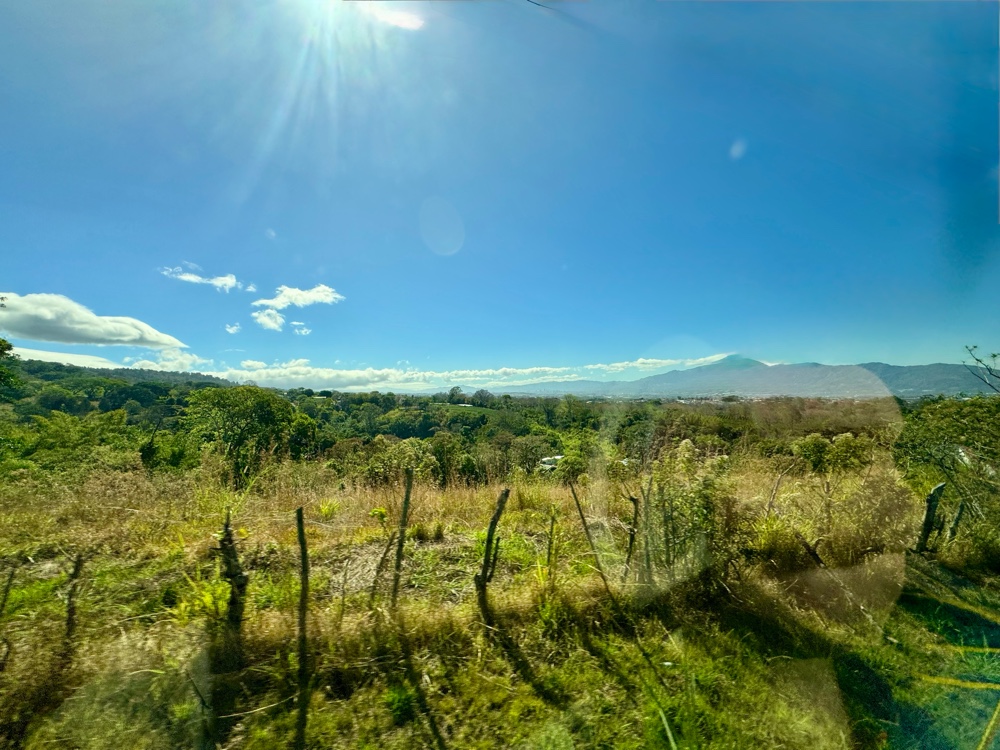
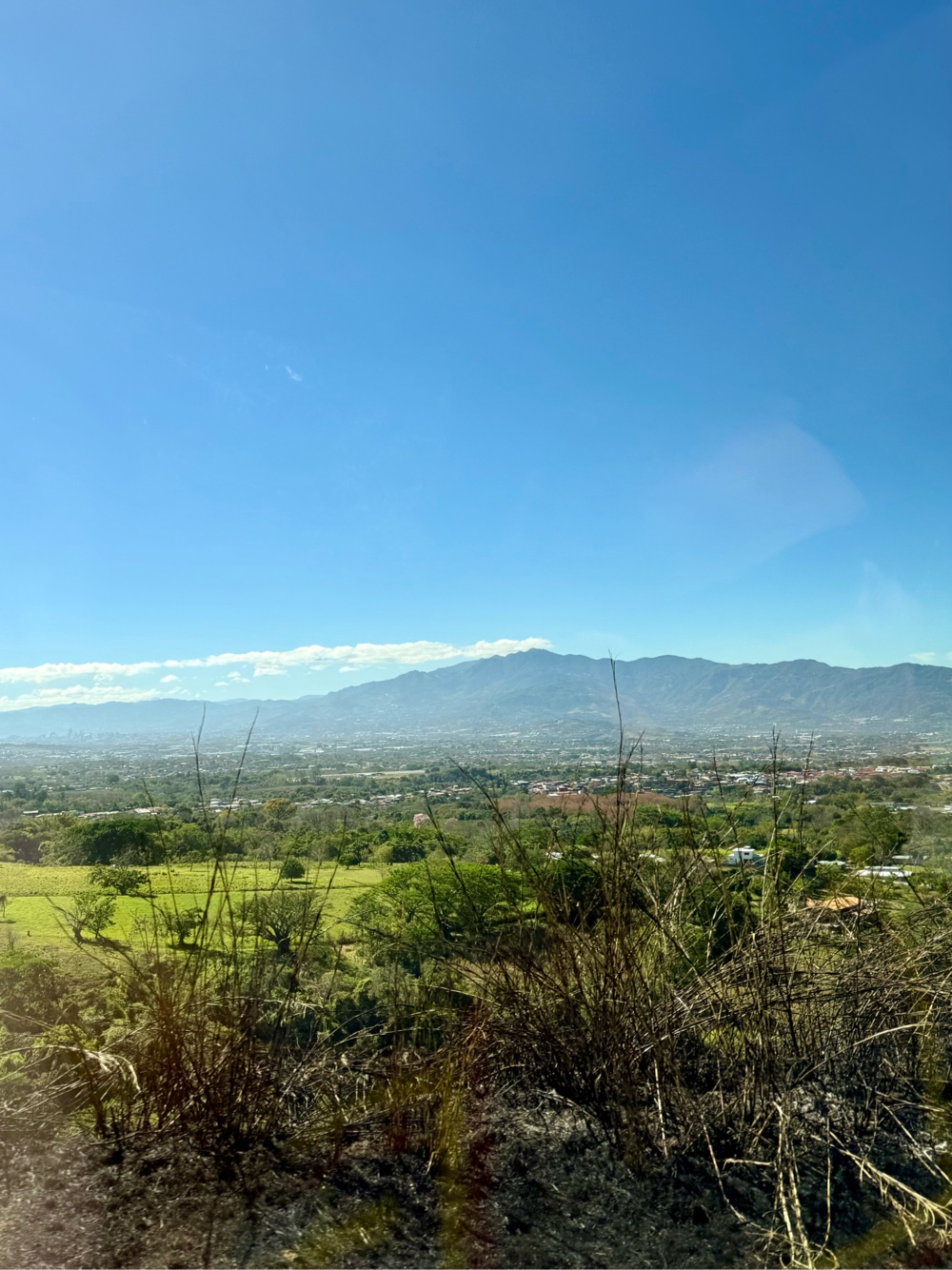
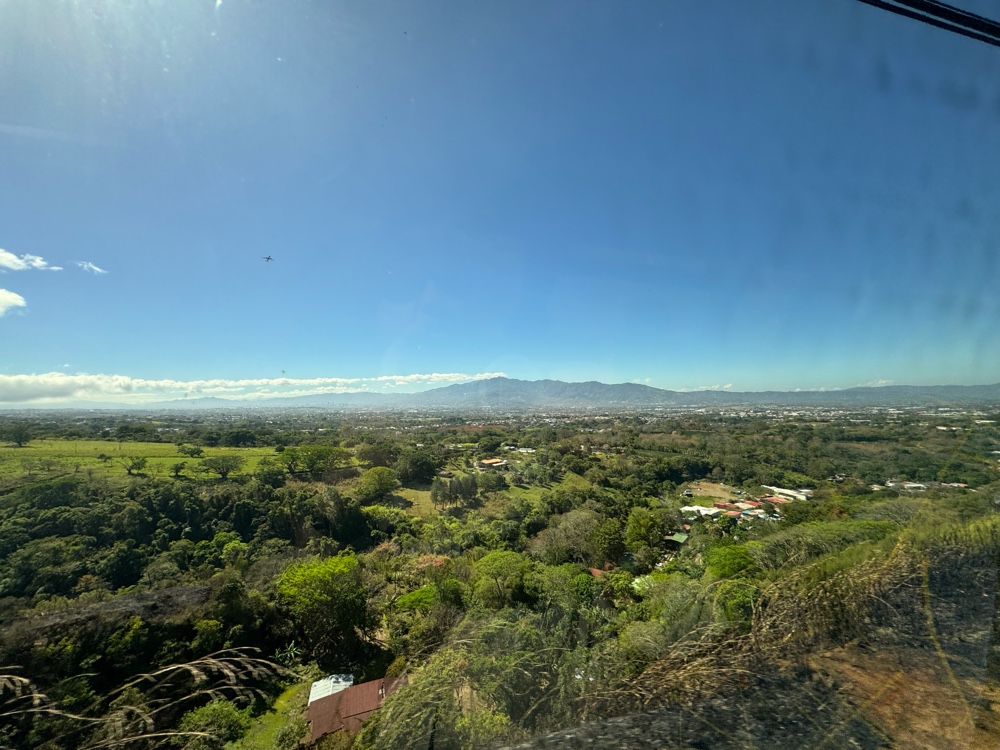
We headed out for the day with wide views of the city as we drove into the valley. Our first stop is a coffee farm, but the bus ride itself turned into a lesson about Costa Rica. Victor uses every minute well, and the students were very attentive to his stories.
One of the first things he told us is that Costa Rica hasn’t had an army since 1949. It’s one of only a few countries in the world that made that choice. The money that might have gone to a military now goes into education and healthcare, which helps explain why the literacy rate here is so high.
As we drove, we crossed part of an active volcanic area. For a country this small, the geology is intense. There are 112 volcanoes, so it’s normal for cars to get coated in volcanic ash after a windy day. Earthquakes are part of daily life too. With more than 500 faults, the country gets around 30 small quakes a week. Victor reminded us again of his emergency rule. If something happens, head to either the pool or the bus, because those are the places he’ll check first.
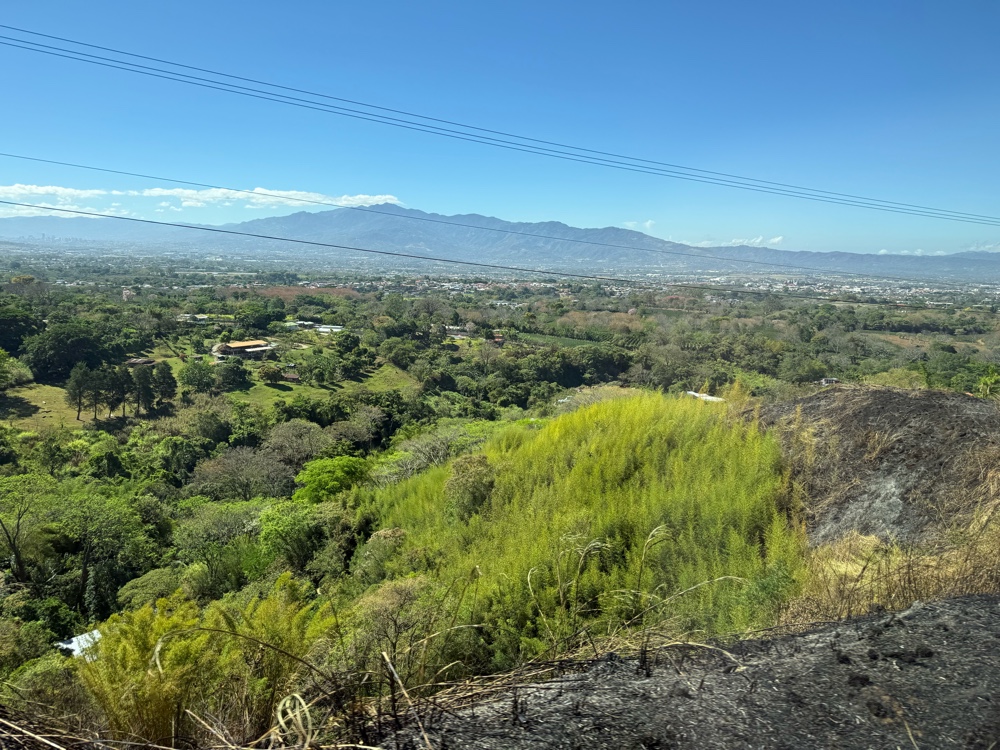
The valley we are driving through holds a huge share of the population. Of the five million people who live in Costa Rica, about 30 to 50 percent live right here. Hills surround the valley, and the Pacific Ocean sits just beyond them. The geography works like a shield. Storms from the Pacific lose strength before reaching the valley, and hurricanes from the Atlantic are blocked by the mountains on the Caribbean side. Because of this, the temperature stays almost the same year round.
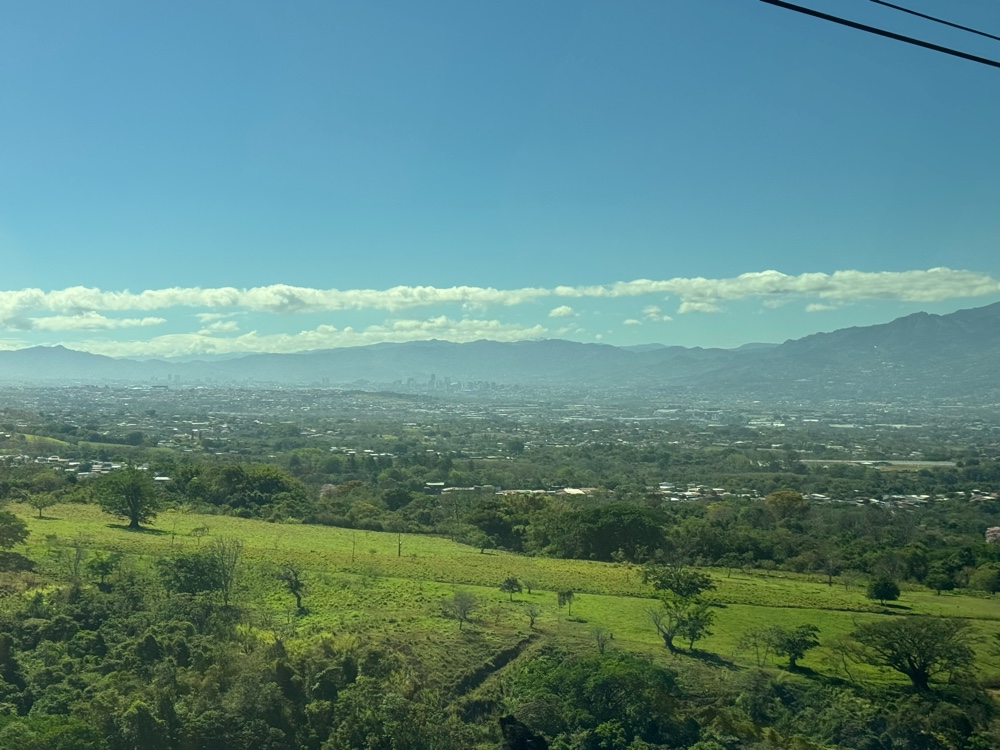
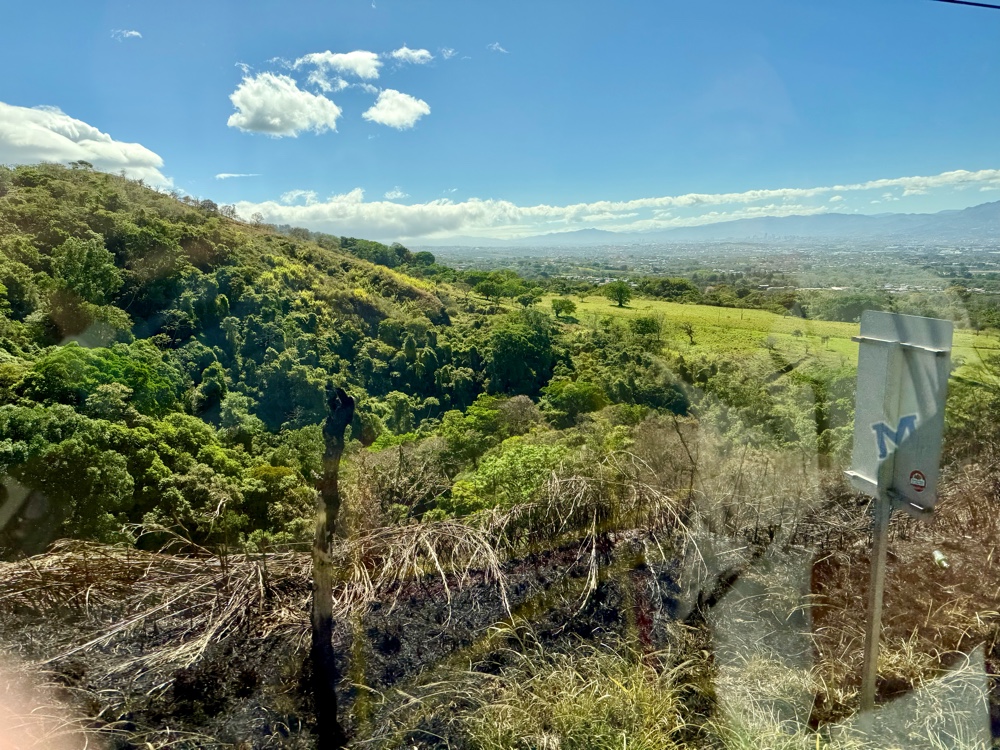
The metro area sits between two major mountain chains. One runs along the Pacific, and the other is a volcanic chain that faces the Caribbean. This is why the land is so fertile. Water collects in the mountains and flows down into the valley all year long. Costa Rica has so much clean water that the average family’s monthly bill is around $20. Victor said his mom pay just $6 per month! You’re basically paying for the pipes, not the water itself.
Then came the part that surprised most of the students. From Mexico to Argentina, only two countries can safely drink tap water almost everywhere: Chile and Costa Rica. Victor shared that Costa Rica’s tap water is often cleaner than what you find in half the states back home. So everyone could refill water bottles all day without worrying.
As we got closer to the farm, Victor explained what a wet mill is. It’s the place where coffee cherries are processed after picking. The one we were visiting dates back to the late 1800s. It has been remodeled, but it still works in the traditional way.
He pointed out a large green building as we passed. That was a modern wet mill. Farmers drop off their harvest and don’t see it again until it’s processed. One person runs the whole thing using computers and sensors. These mills are sealed because the beans are meant for export. Even a tiny bit of dust from a visitor could contaminate the batch. Coffee for export isn’t roasted here. It gets roasted in the country where it will be sold, which is why everything has to stay so sterile.
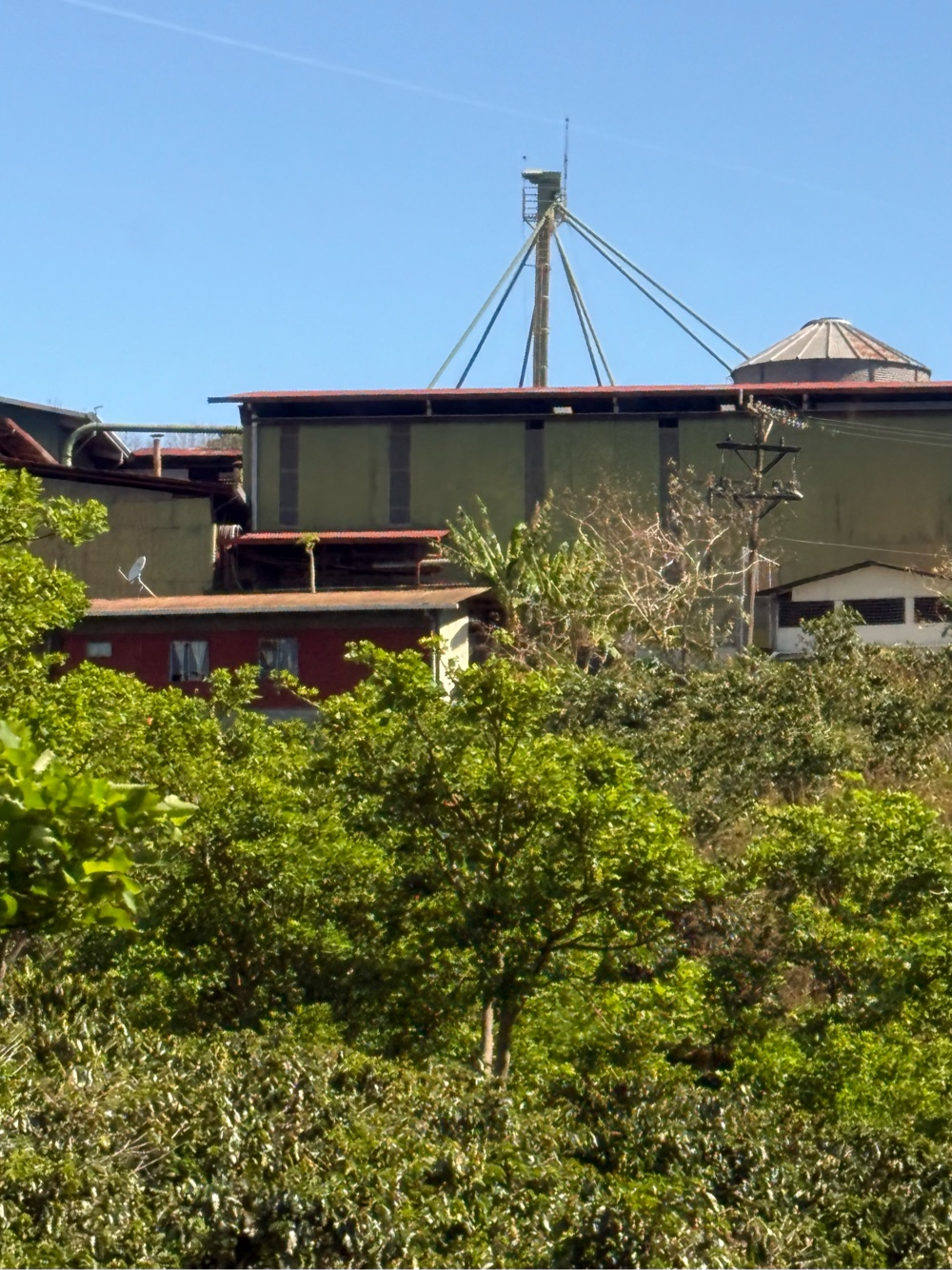
But the mill we were heading to serves the local market, so we’re allowed to tour it. Local coffee is roasted before it’s sold, which kills any bacteria and makes it safe to handle.
Victor said we are catching the very end of the coffee season, which runs until late February or early March. The drive up the hillside was dotted with small towns and family farms, each with their own patch of coffee trees.
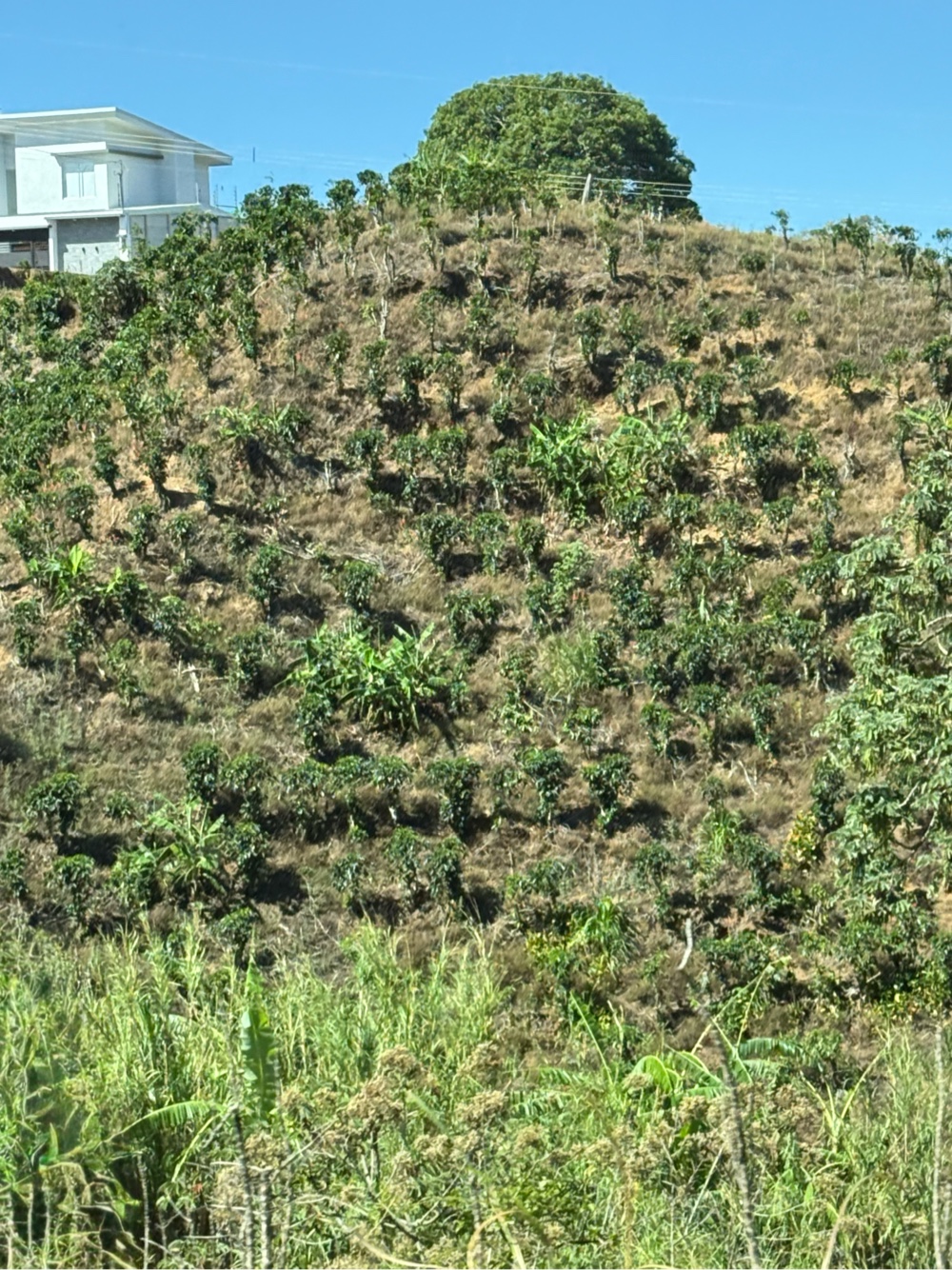
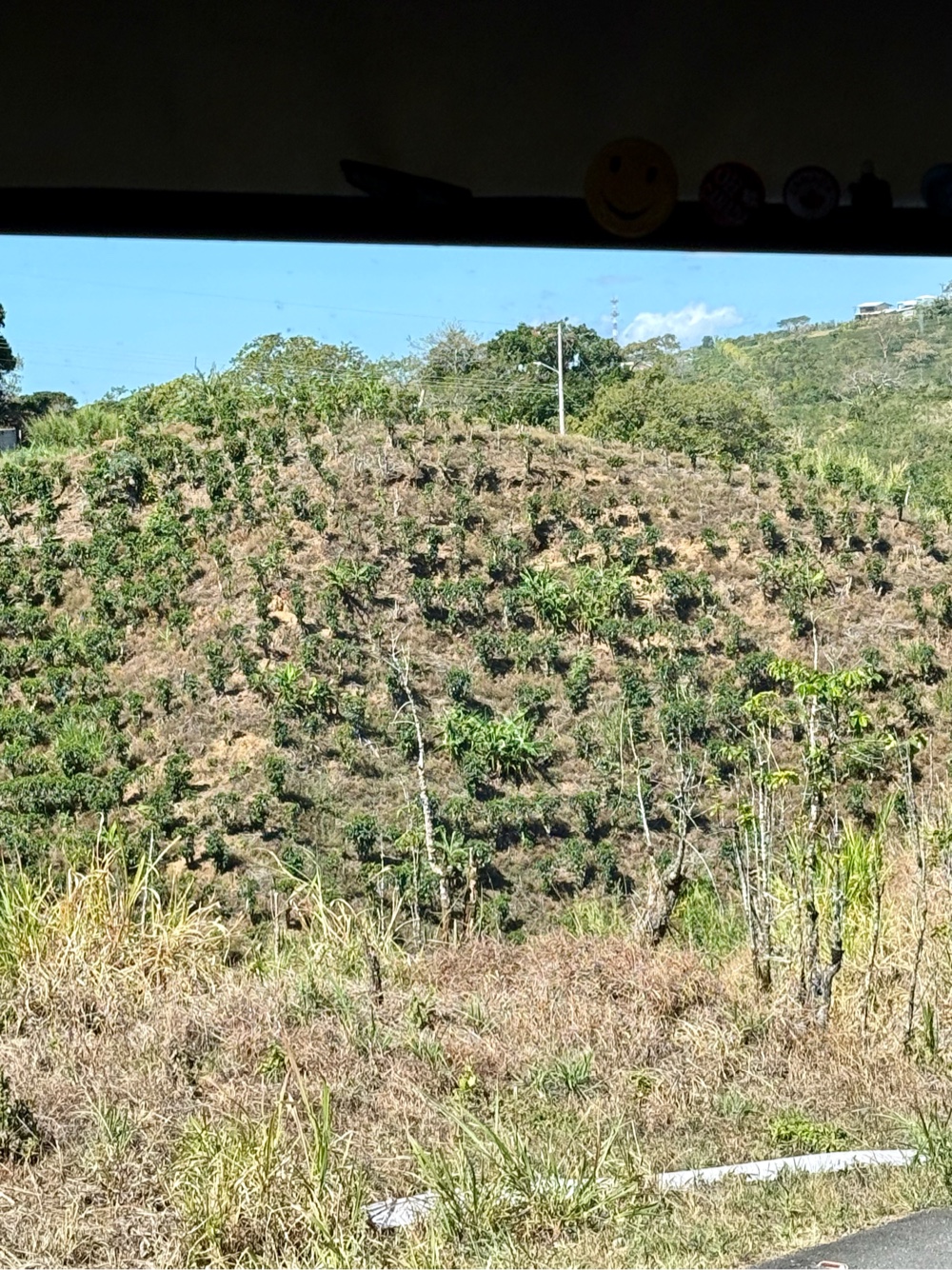
He also talked about the school calendar. In Costa Rica, school ends on the last Friday in November and starts again on the second Monday in February. That long break lines up with coffee season. Years ago, kids helped on the farms, just like kids in the United States used to help with harvests. Even though that’s not as common anymore, the school calendars in both countries never changed.
By the time we reached the farm, it felt like we already understood the place a little better!

No comments:
Post a Comment