Menu

Thursday, March 12, 2026

Kayaking on Lake Arenal

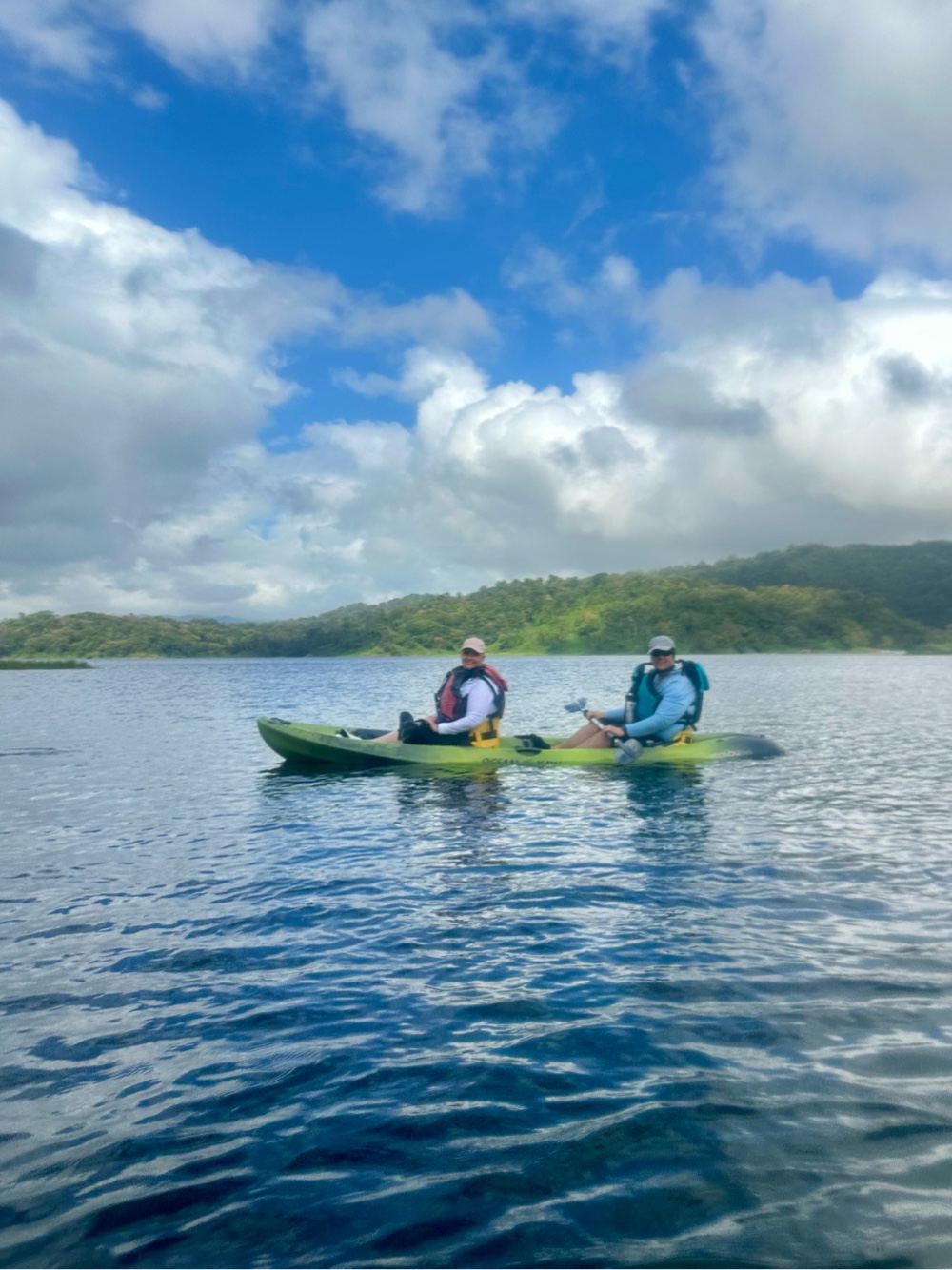
Our first activity this morning was kayaking on Lake Arenal, which sits at the base of the Arenal Volcano. It’s the second biggest lake in Central America. Only the huge lake in Panama that supports the Panama Canal is bigger. This artificial lake actually exists because of the volcano that it shares its name with. 
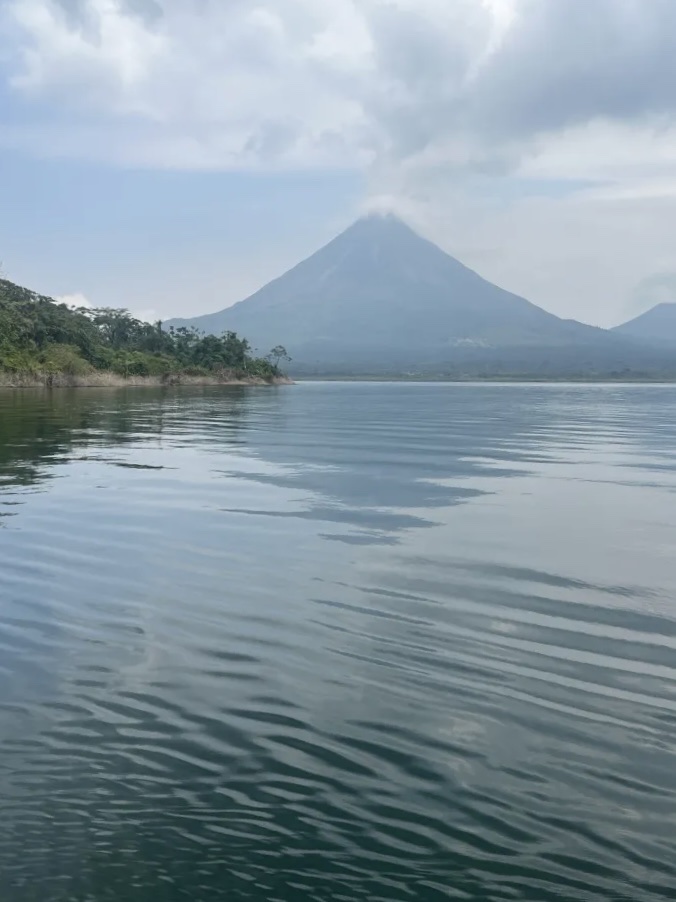
The Arenal volcano was formed only about 7 thousand years ago, which makes it a baby in volcano years. Arenal is one of the most studied volcanoes in Central America because it erupts in a very predictable pattern when active. Arenal used to be considered extinct until it erupted in 1968 with almost no warning. From 1968 to 2010 Arenal Volcano stayed active almost nonstop. After 2010 the volcano entered a quiet phase. Scientists still monitor it closely because it’s young and capable of waking back up.
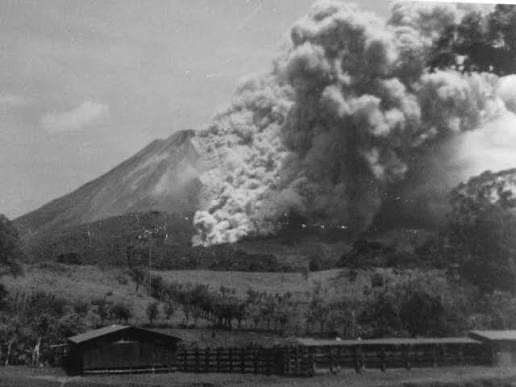


The 1968 eruption destroyed two towns and killed about 90 people. The old town of Arenal was destroyed by the lava flow. They later flooded out the town to build the dam and lake, to serve as a protected burial ground for those who died. The builders even reused lava rock to build the dam. The lake was finished in 1978 and finally fully filled by 1983. Costa Rica worked with Japan to build it. The water here feeds several hydro plants that supply a major part of Costa Rica’s electricity. Today the lake also acts as a natural barrier that helps protect the area from future eruptions. Win-win for the country!
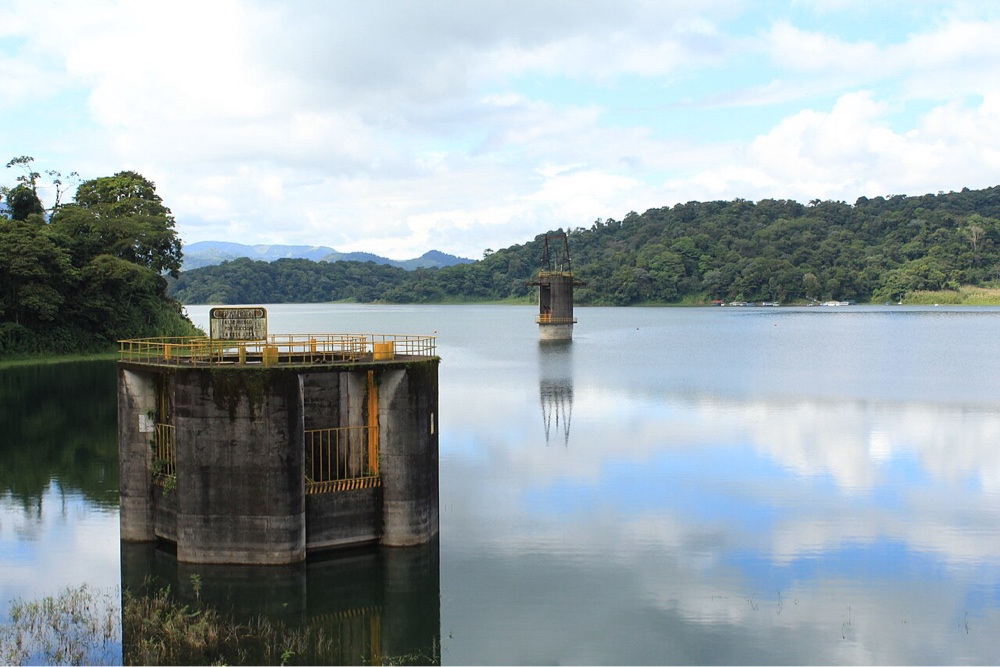

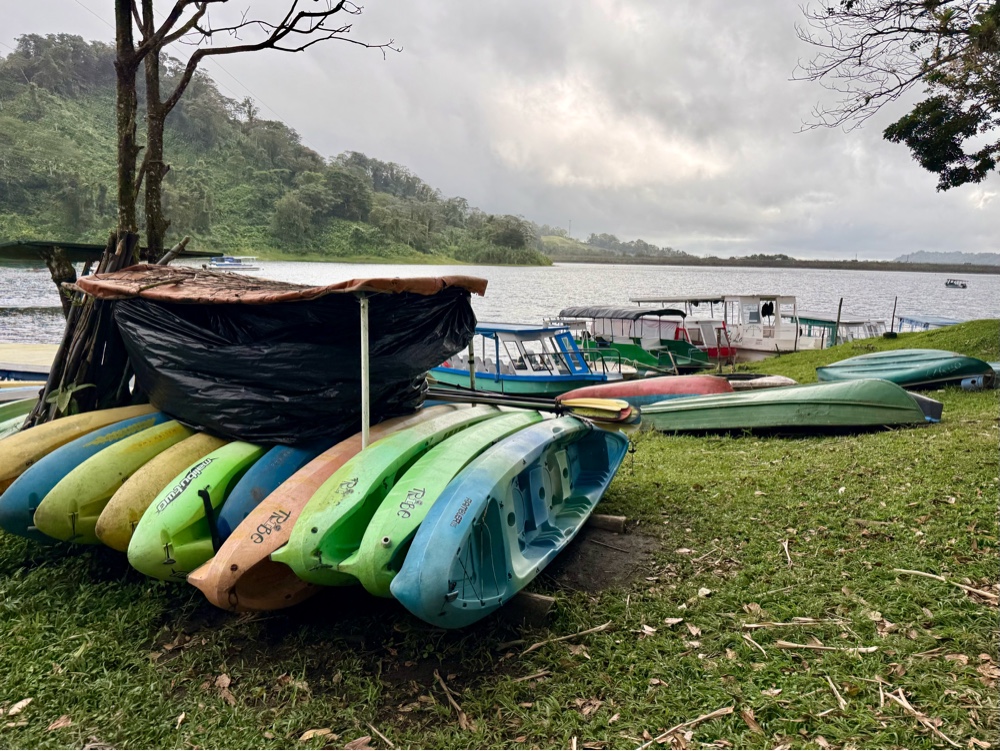
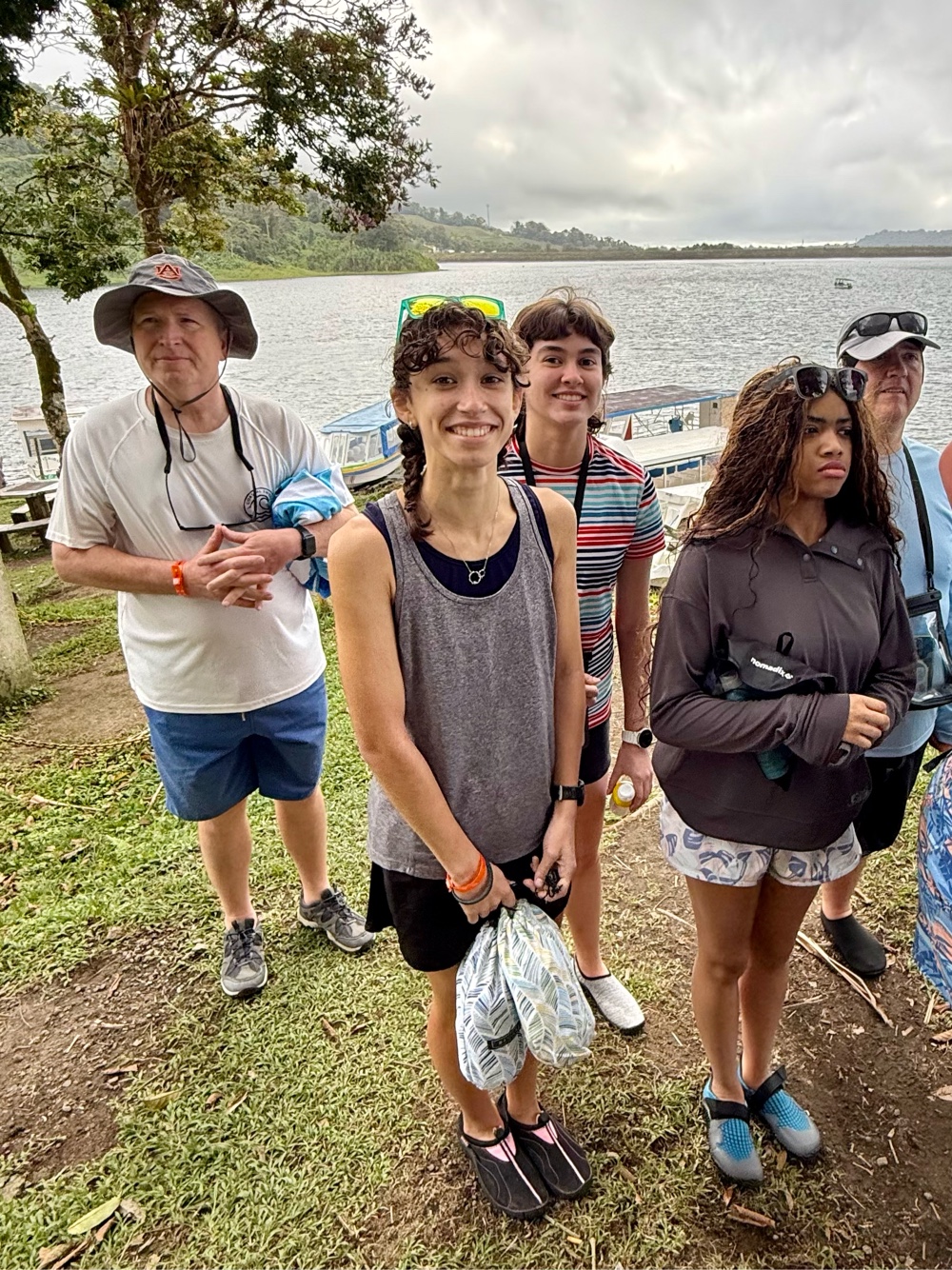
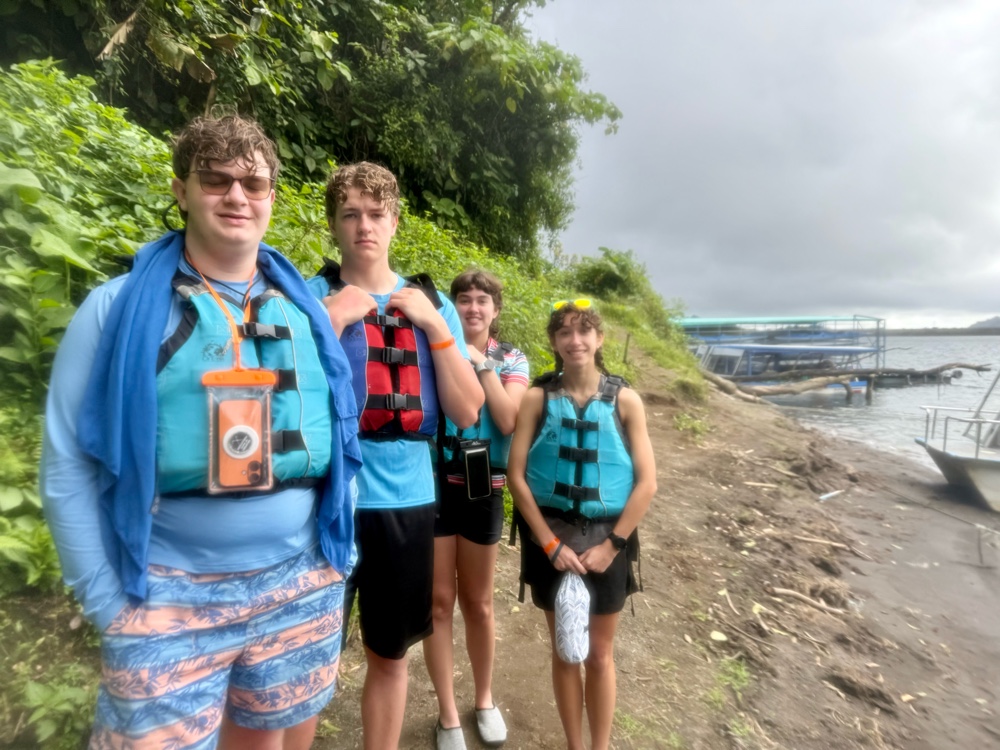
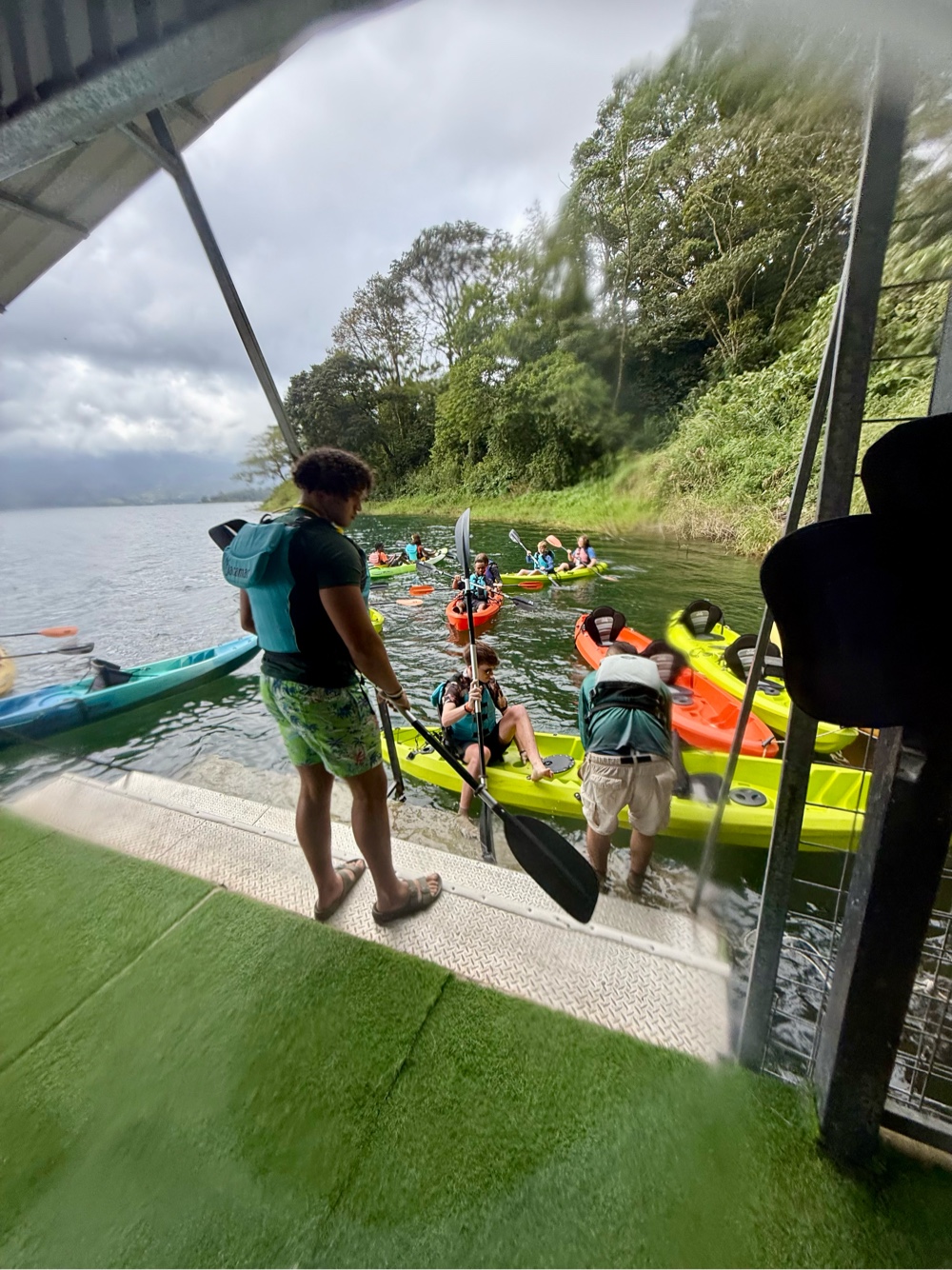
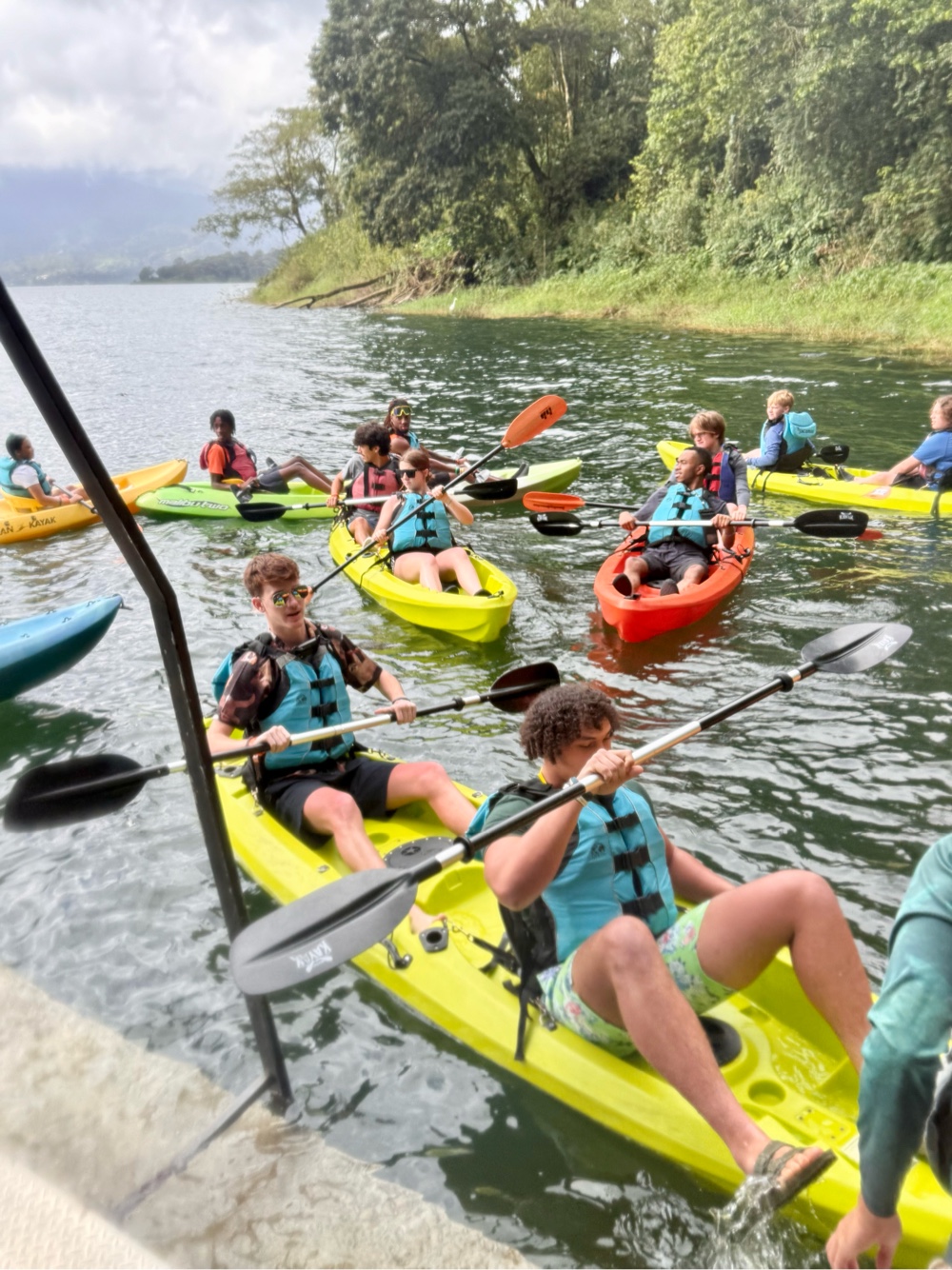
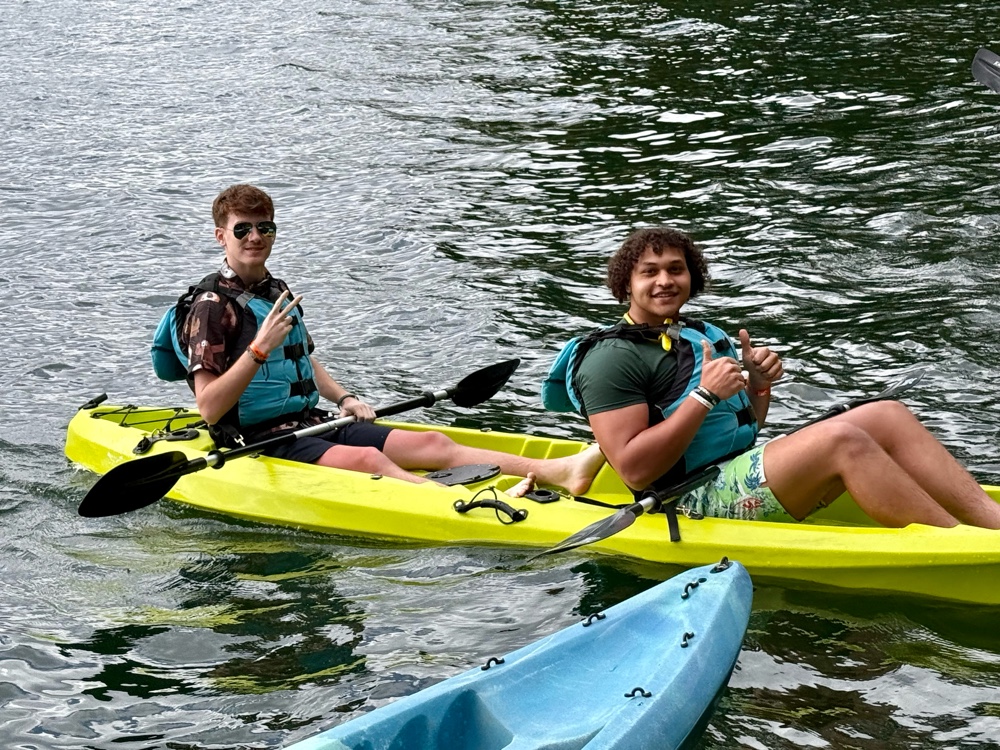
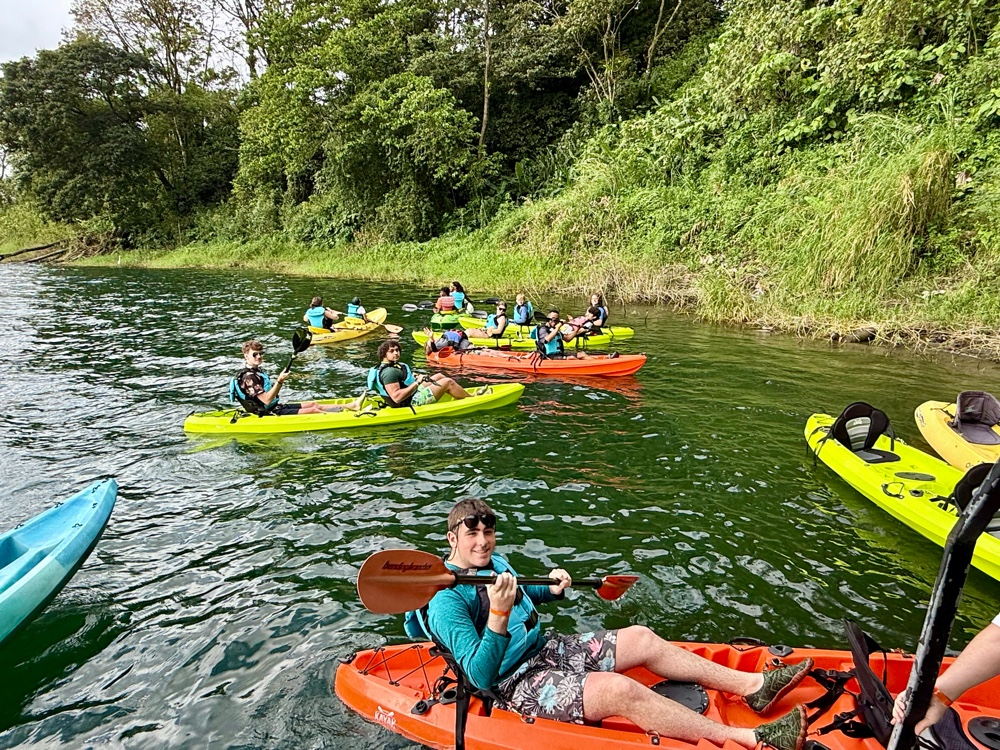
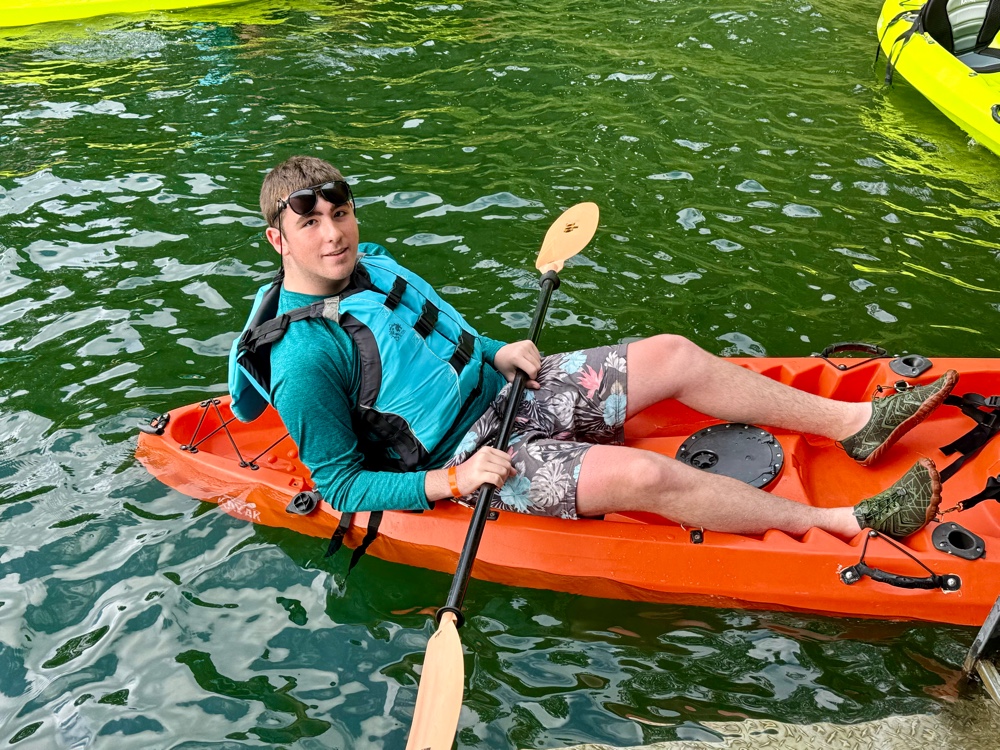
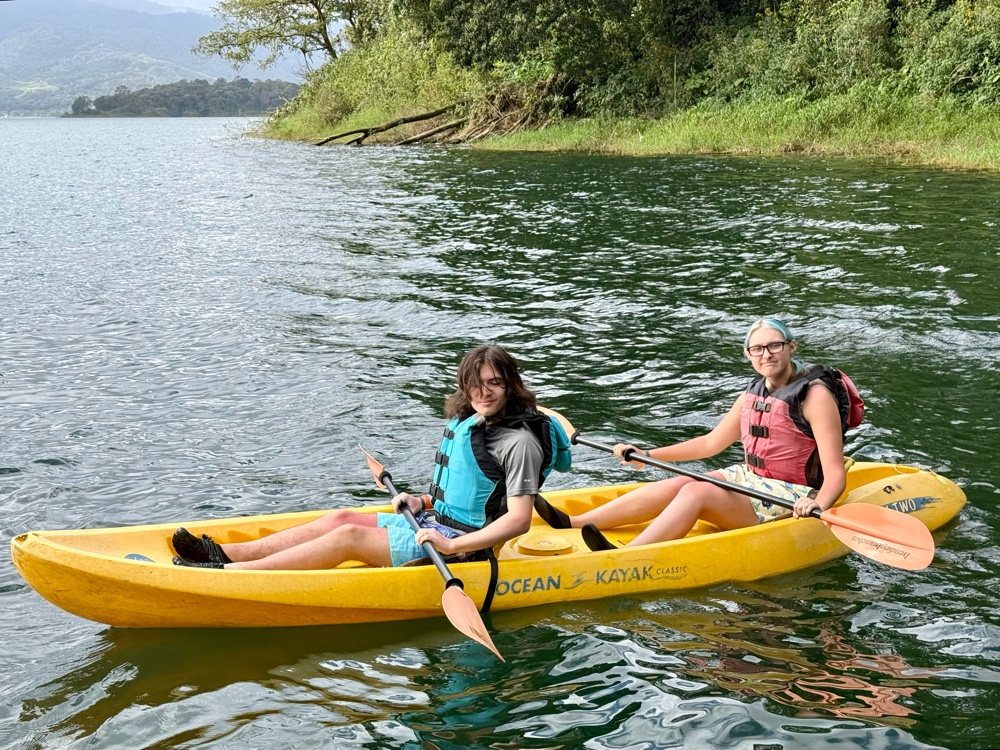
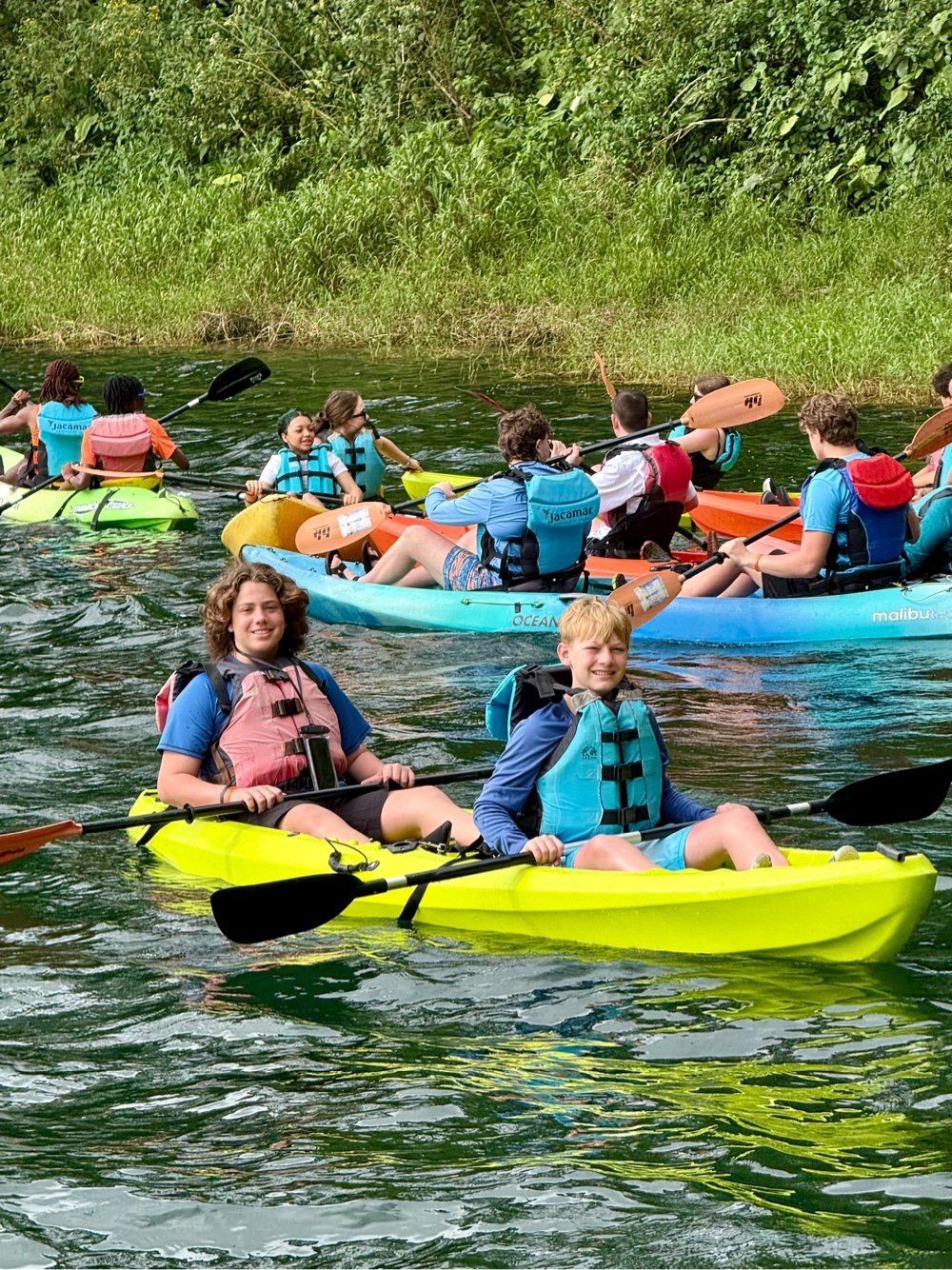
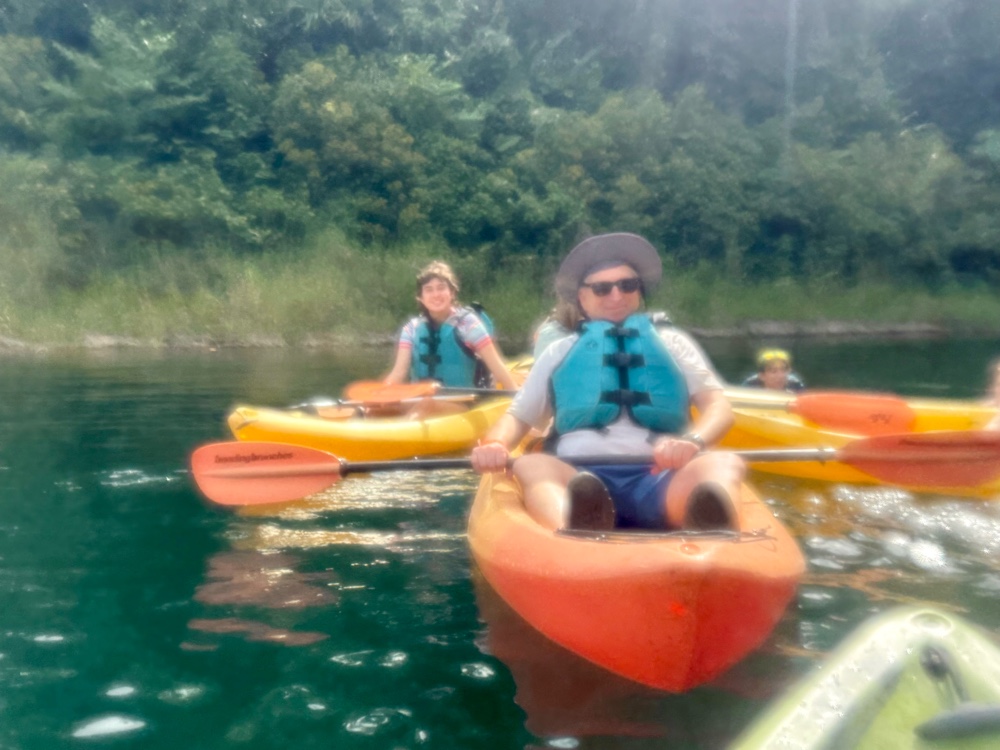
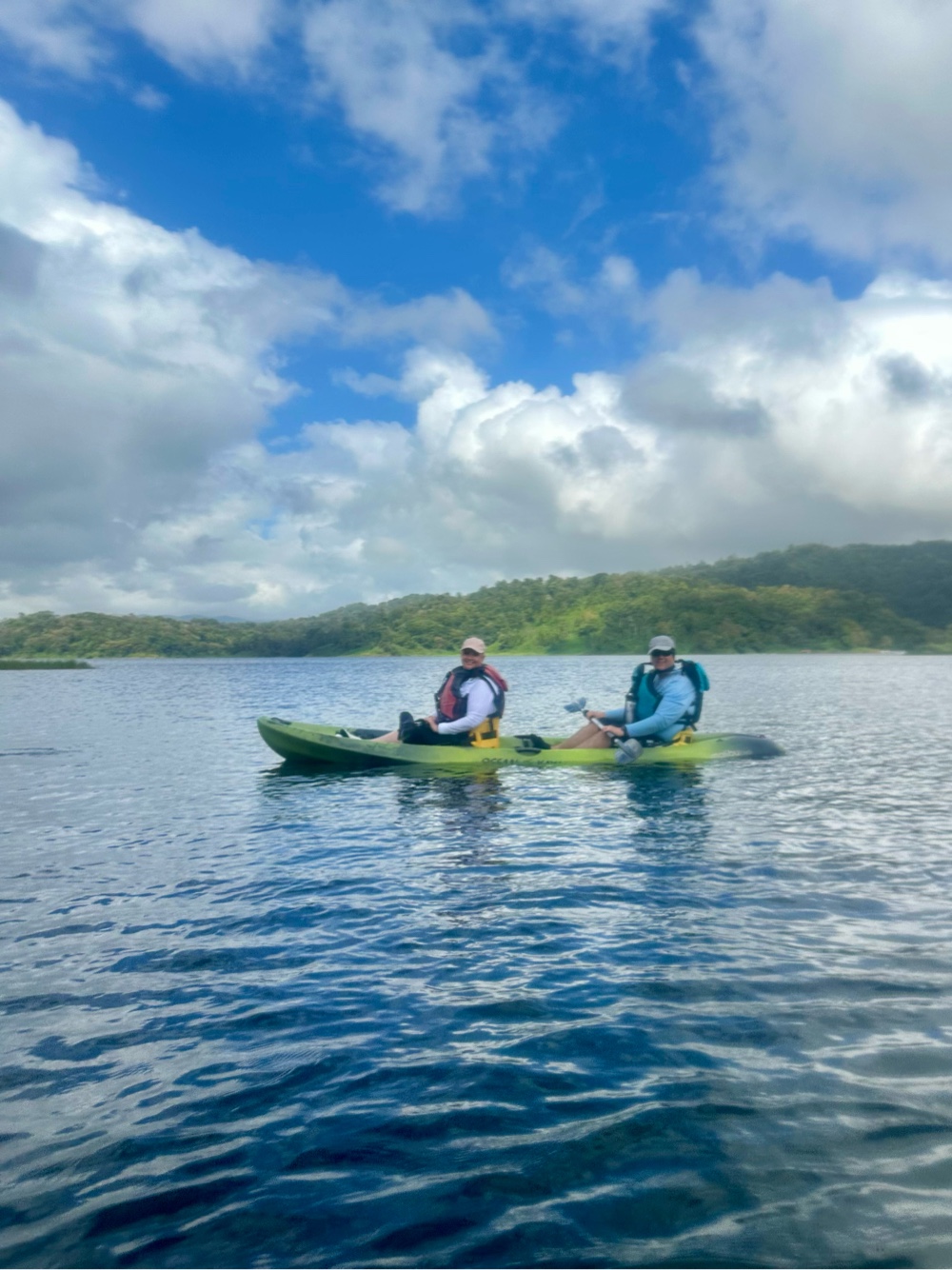
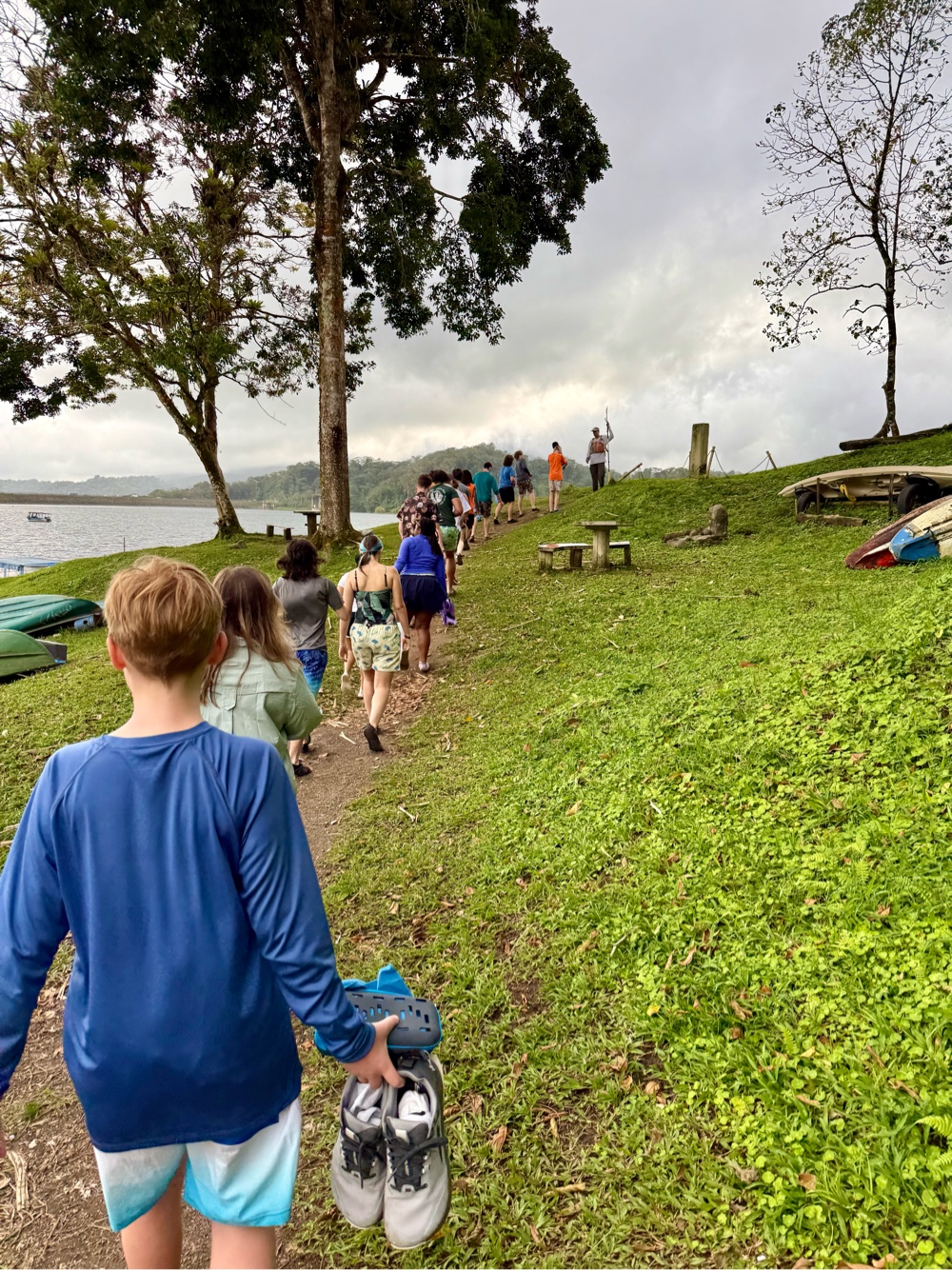
Kayaking on Lake Arenal sounded peaceful on paper, but in reality it was a hard core upper body workout with the wind! We got fitted for life jackets and oars and into the double kayaks. 


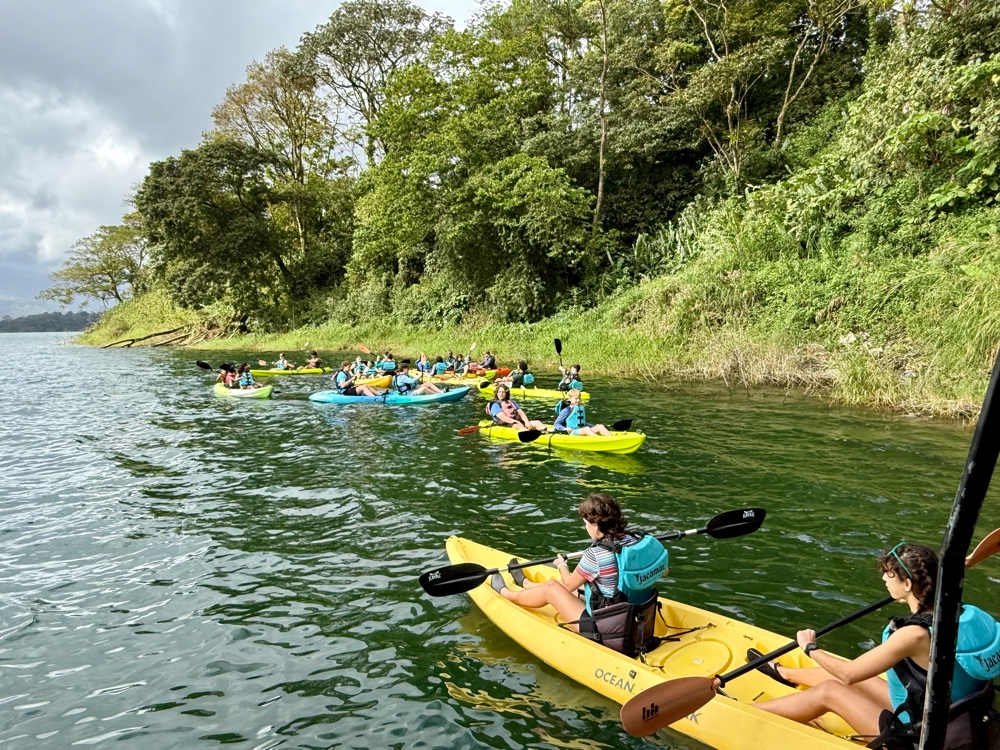
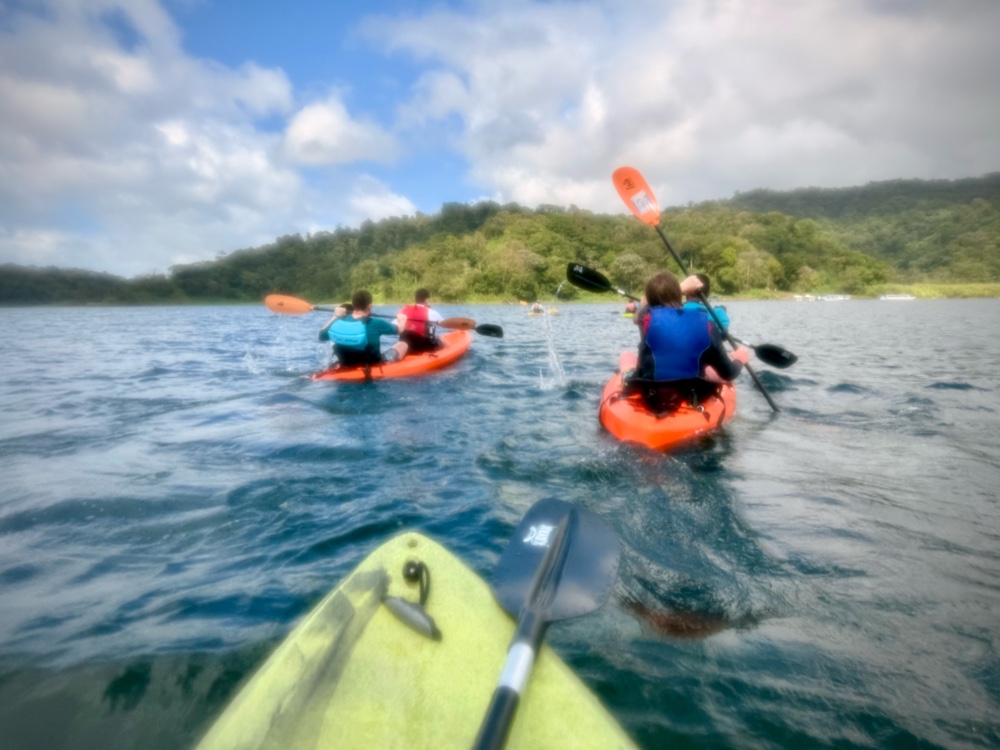
We left the launch area and headed across the width of the lake near the dam. You could see how wide the lake becomes near that end. The wind funnels through that stretch, which explains why our kayaks kept drifting sideways if anyone stopped paddling for even two seconds. But the views were worth it. Volcano behind us, rolling hills around us, and a lake that looks like it’s been here forever even though it’s younger than 75% of the chaperones.
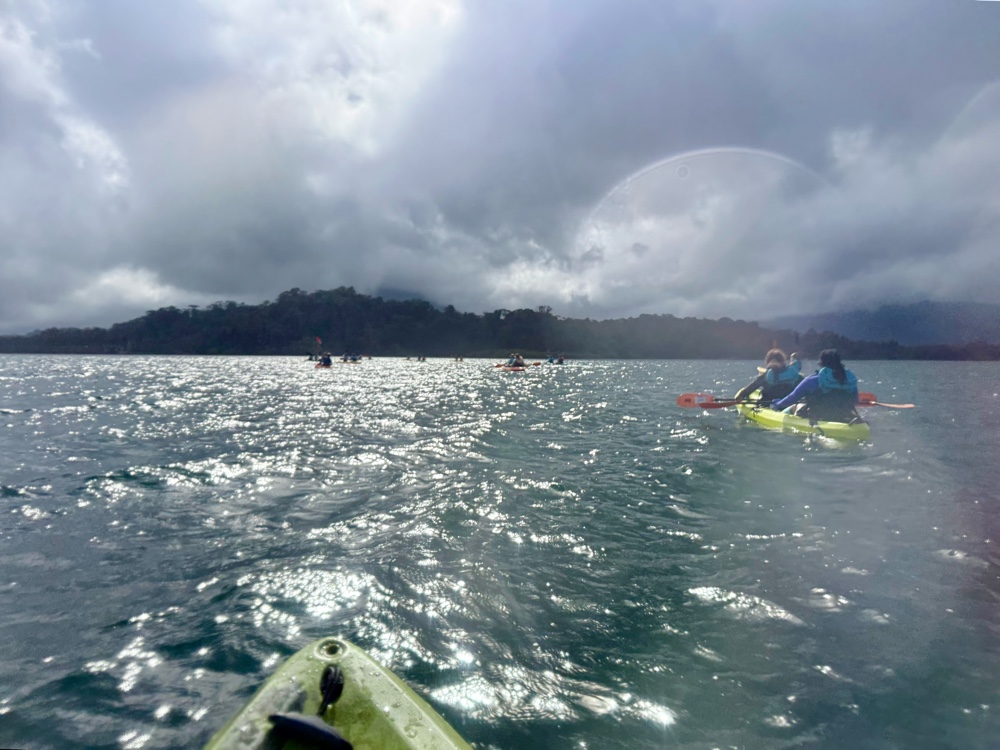
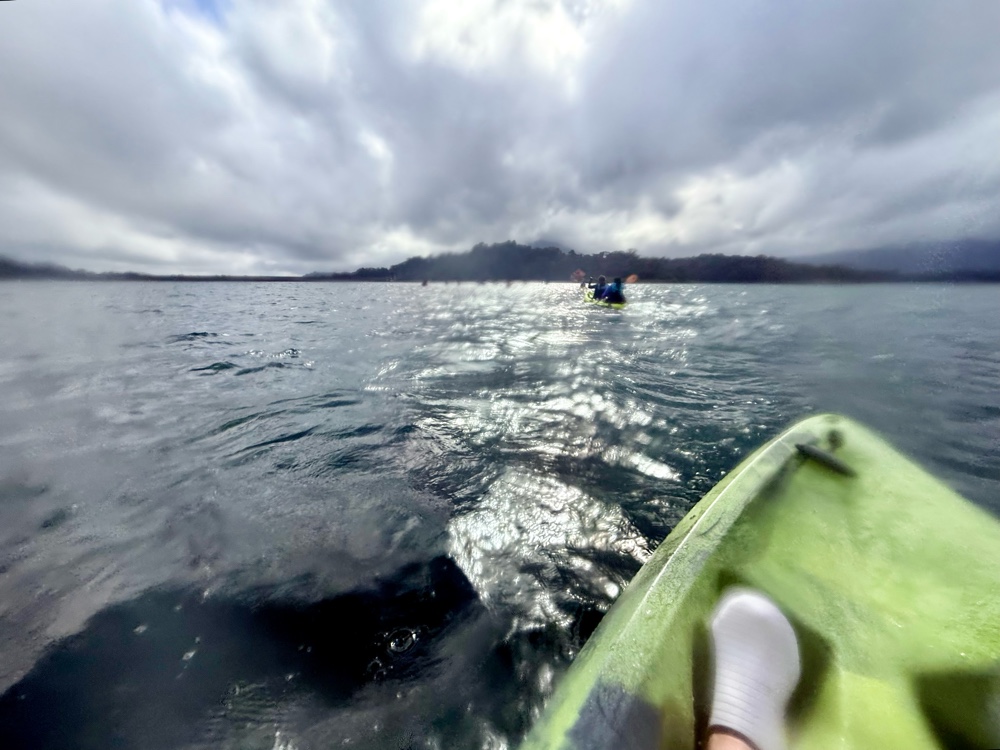
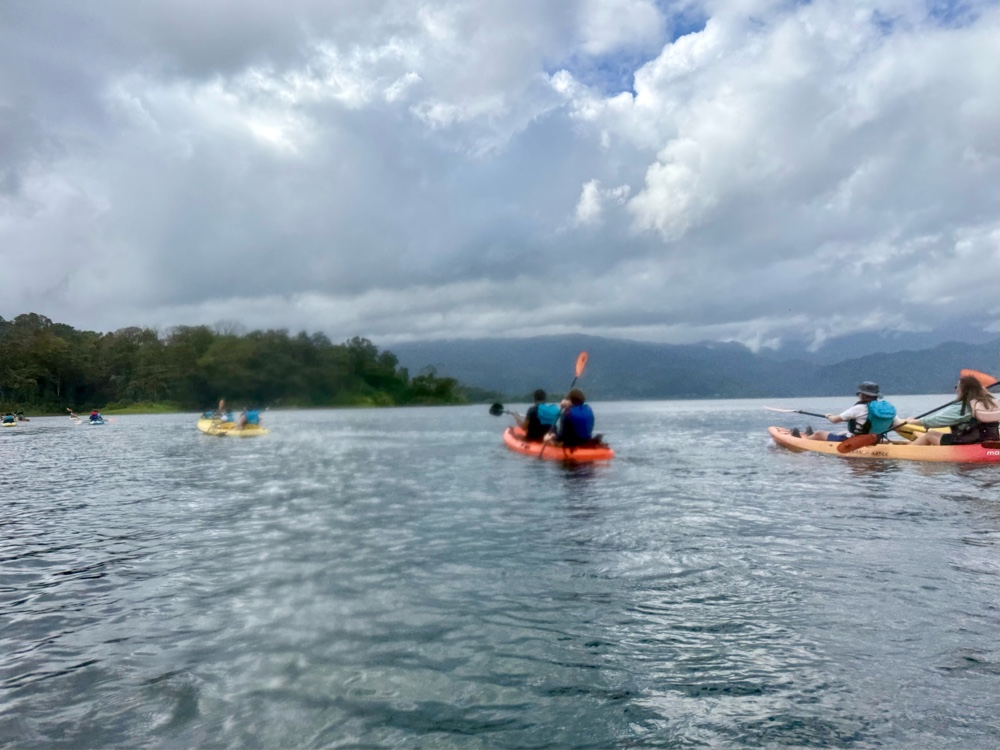


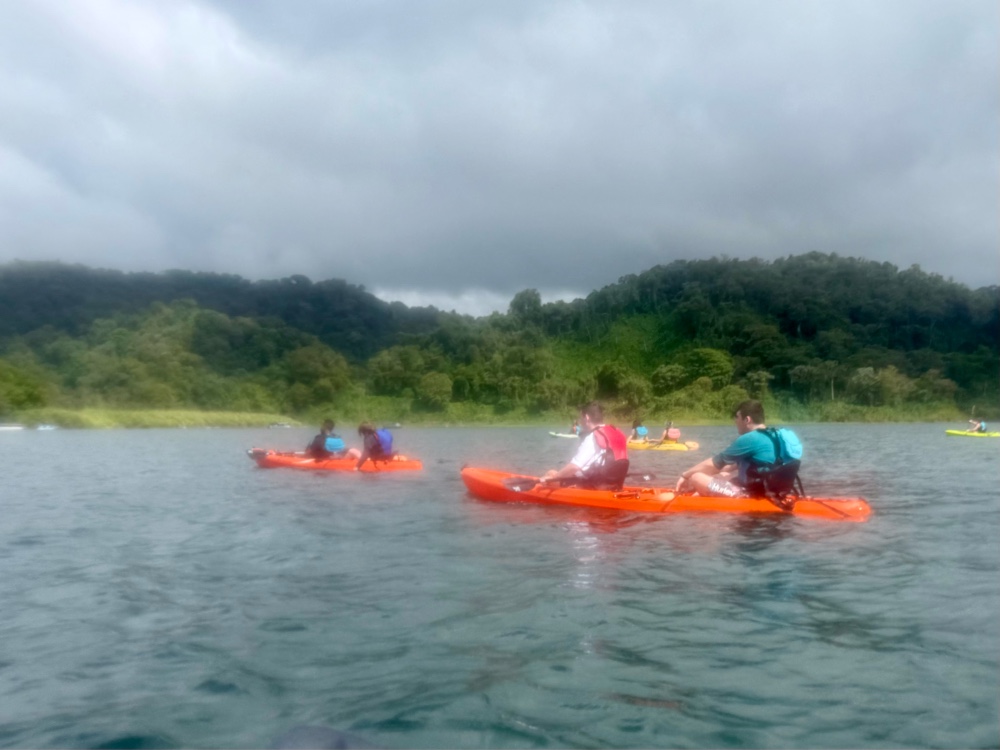
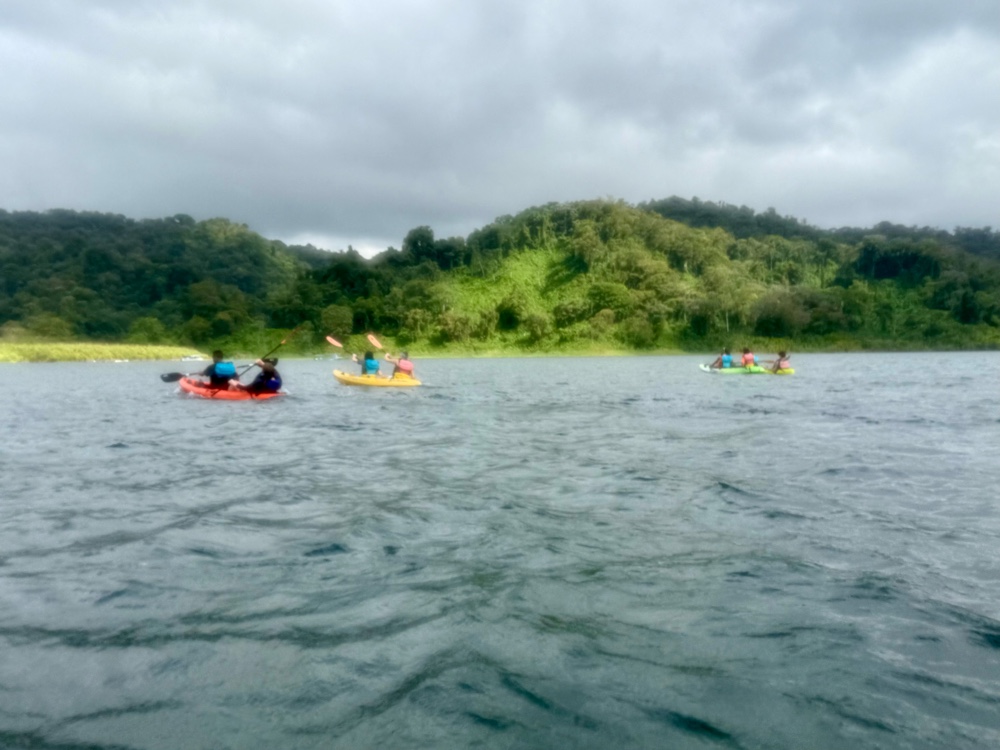
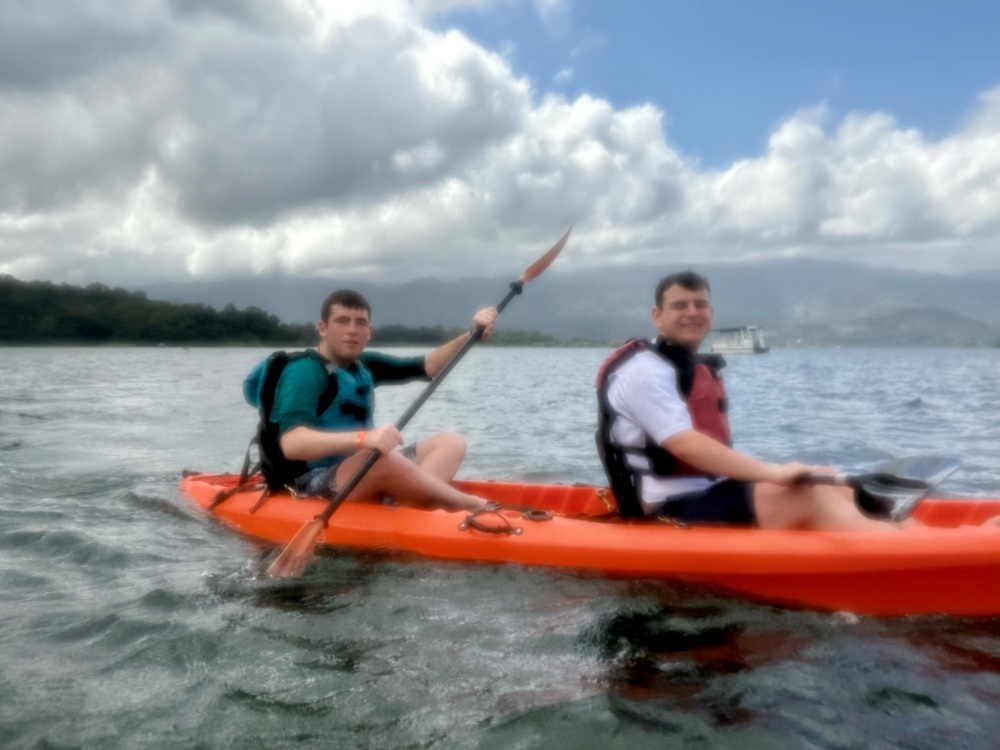
Some of us had to immediately learn how to actually paddle in a two person kayak. Some pairs figured out a rhythm fast. Some have kayaked all over Lake Norman and took off across the water. Others argued their way through it while they figured out the steering.  And yes, several kayaks tipped and sent kids into the lake even before we got to the designated swimming area. It definitely reminded me of bumper cars on water! I am so proud of our kids though for cheering each other on and helping everyone back into their kayaks. 
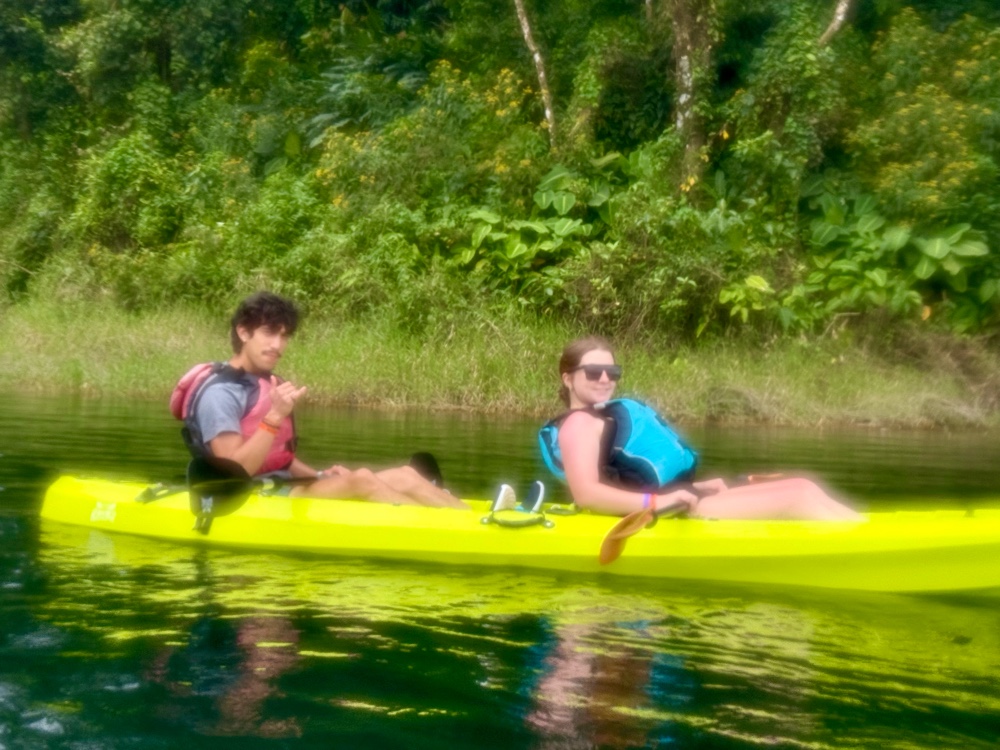


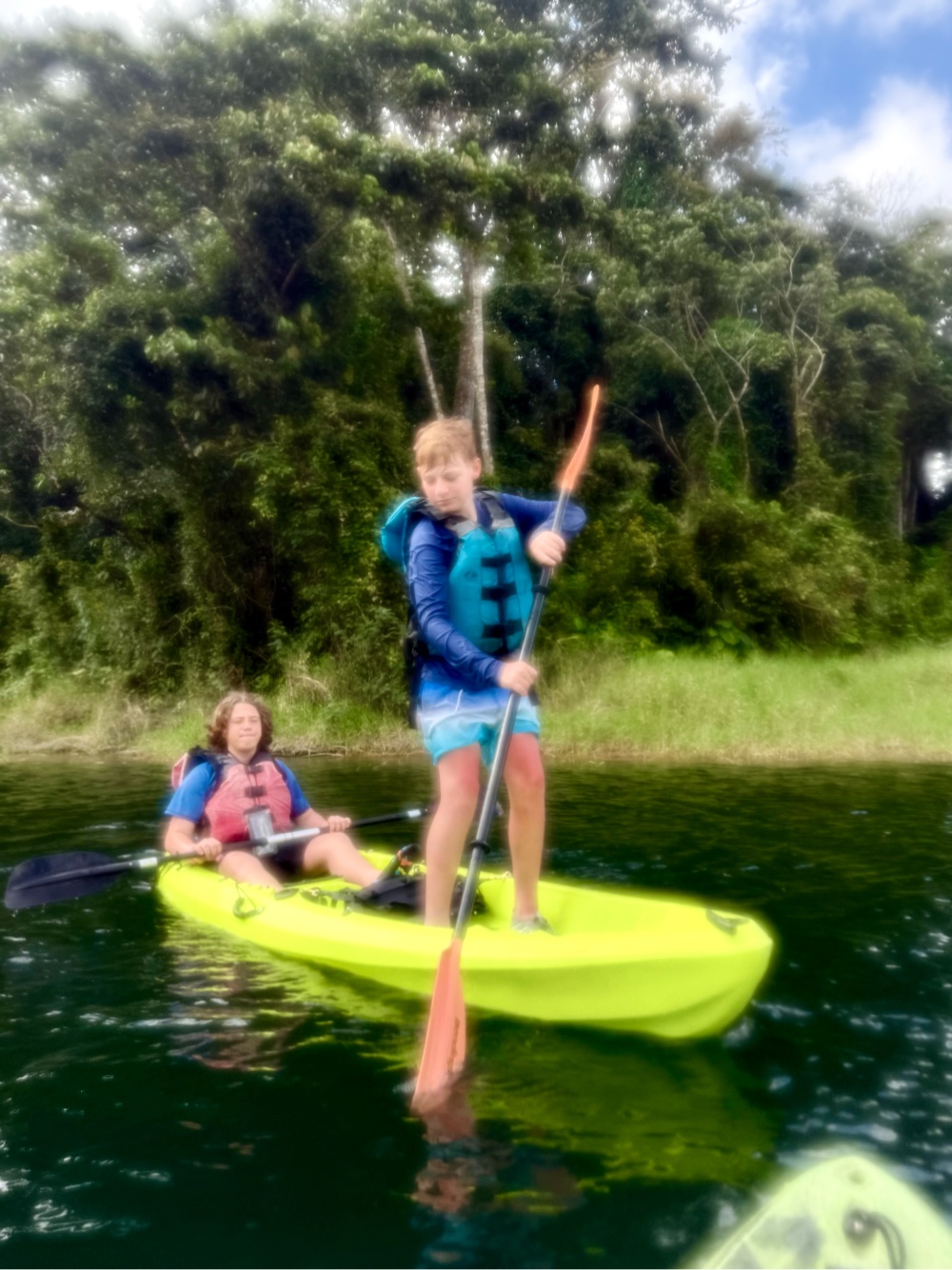
We did a bit of a triangle route across the lake, going from shore to shore point, stopping to swim or “balance board”, or race and splash. It was quite an upper body workout. I think we were all glad it was kind of cloudy and not the full heat of the sun. 
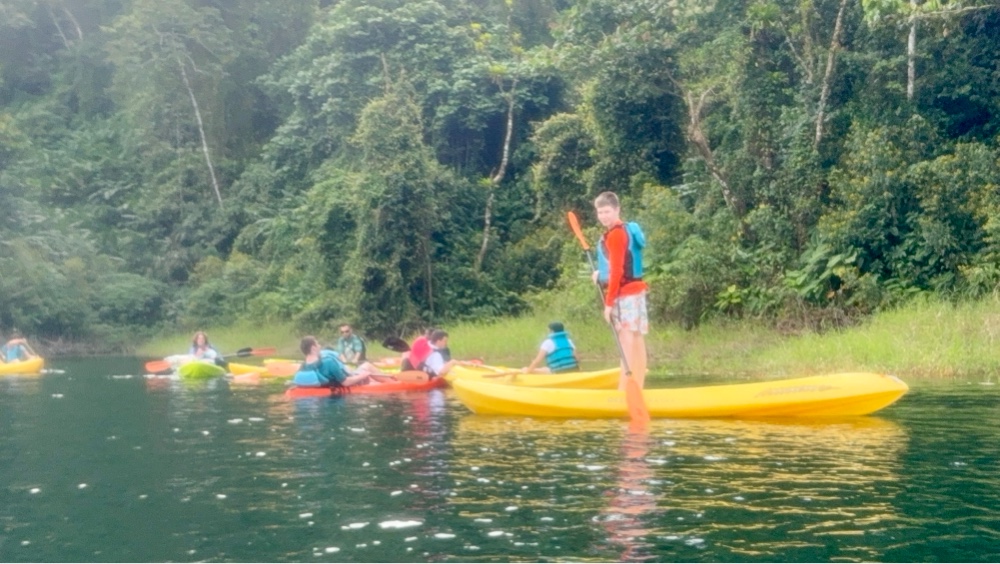


By the time we got back to shore, everyone was tired, wet, and proud of themselves. The wind, the teamwork, the falling in, the near (and real) collisions, the zigzag routes across the lake…definitely a great memory that blended adventure with history and a little bit of science!

Wednesday, March 11, 2026

Rainforest Night Walk


It was a quiet ride to the hotel after our hike at La Fortuna. We checked in, changed, and headed to dinner at a restaurant next door. It was nice that students had a choice for dinner of two different pastas, hamburgers, or traditional rice and beans with a protein of choice. It was nice out on the patio and joying the fresh air. 

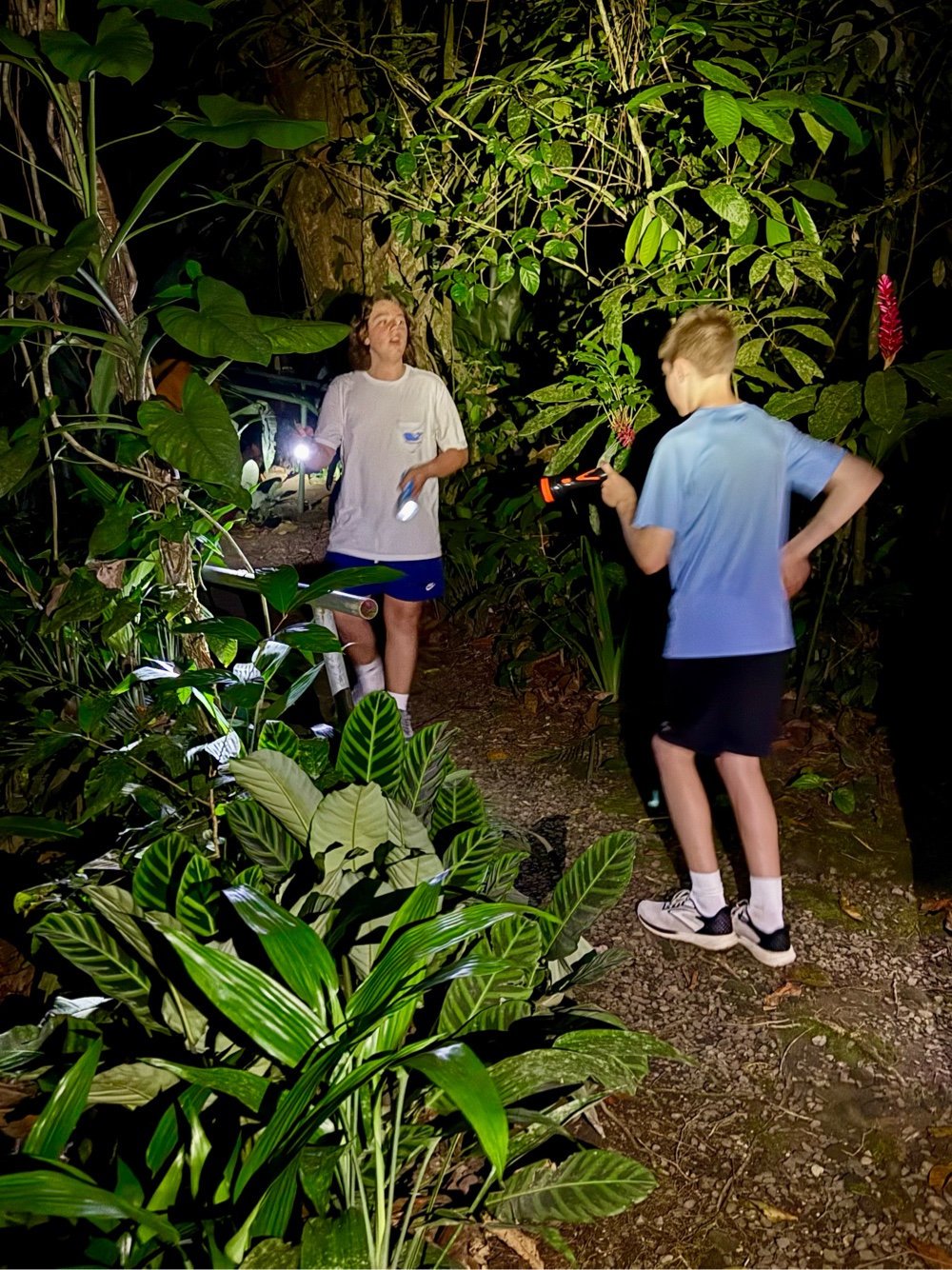
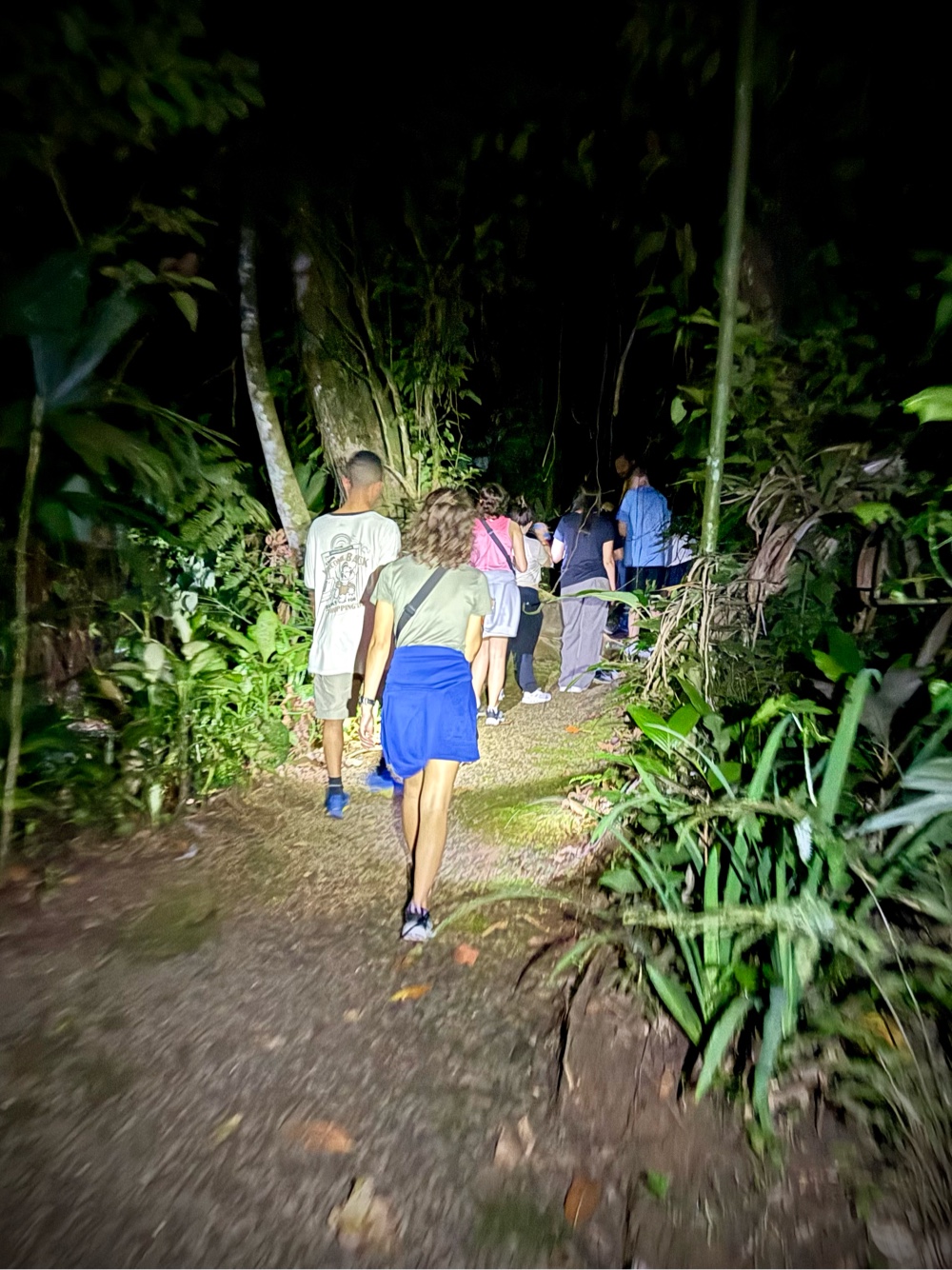
After dinner, it was time for our list big activity of the day (so much activity! Rafting! Stair climbing! Swimming in waterfall pools!). We started our night walk at 8 pm. It was hot, buggy, and everyone was tired, but the guides came in with big energy. They were dramatic, funny, and fully committed, which made the kids even more wound up as we broke into chaperone groups and headed into the dark. We were told not to wear our head lamps since they can blind both guides and animals so we were given flashlights to use. Once our eyes adjusted, the forest felt completely different from the daytime version we’d gotten used to.


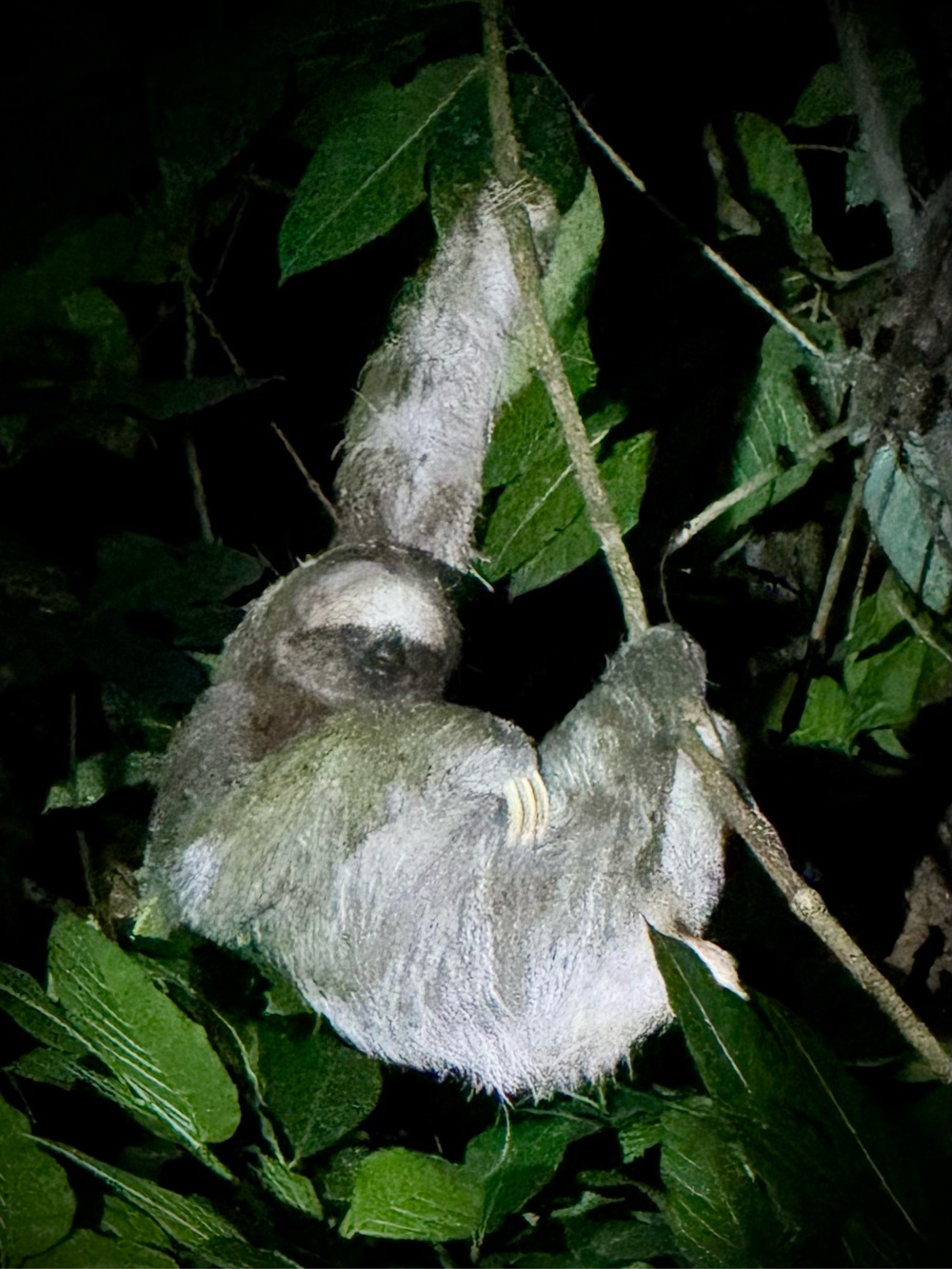
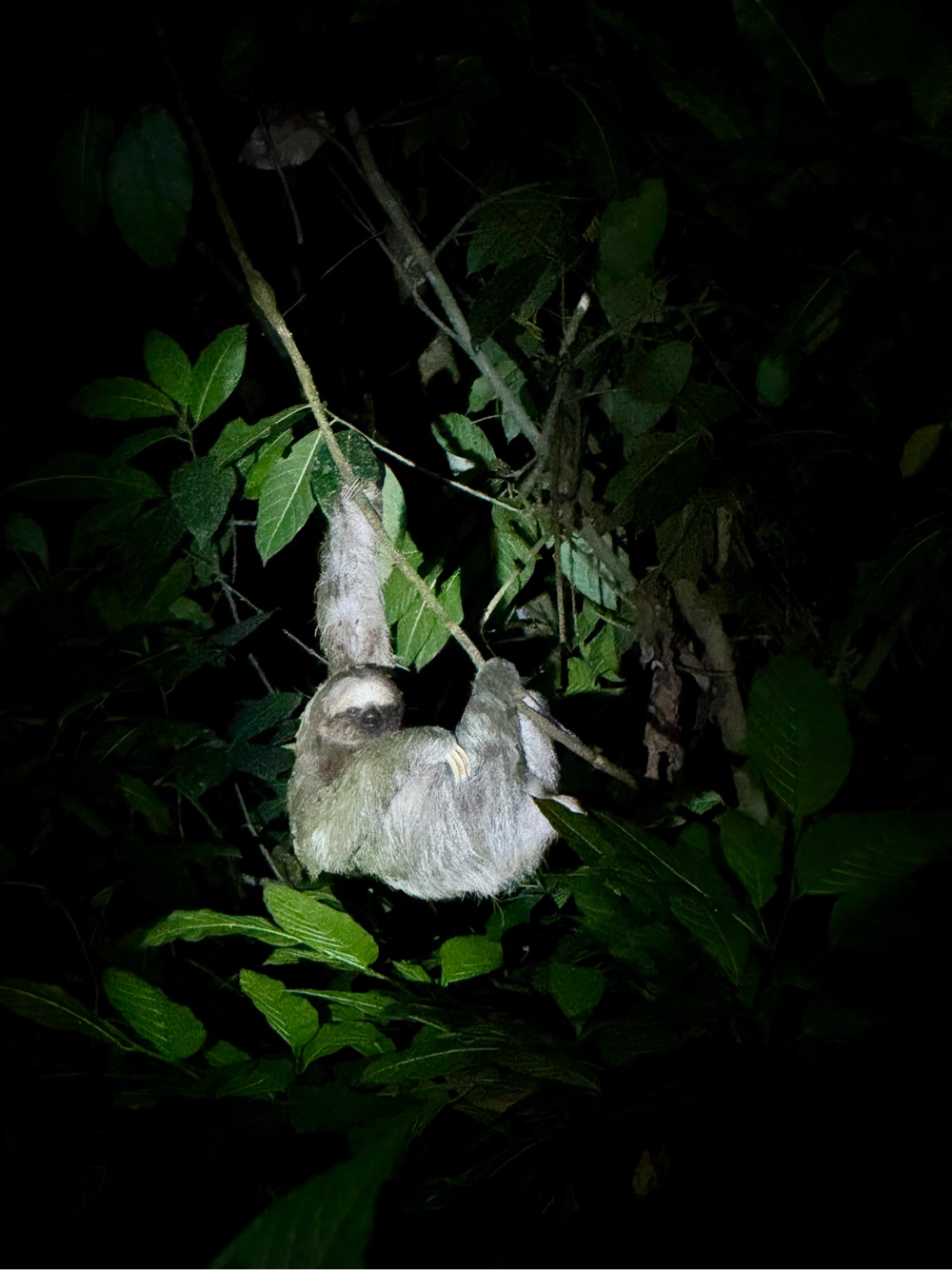
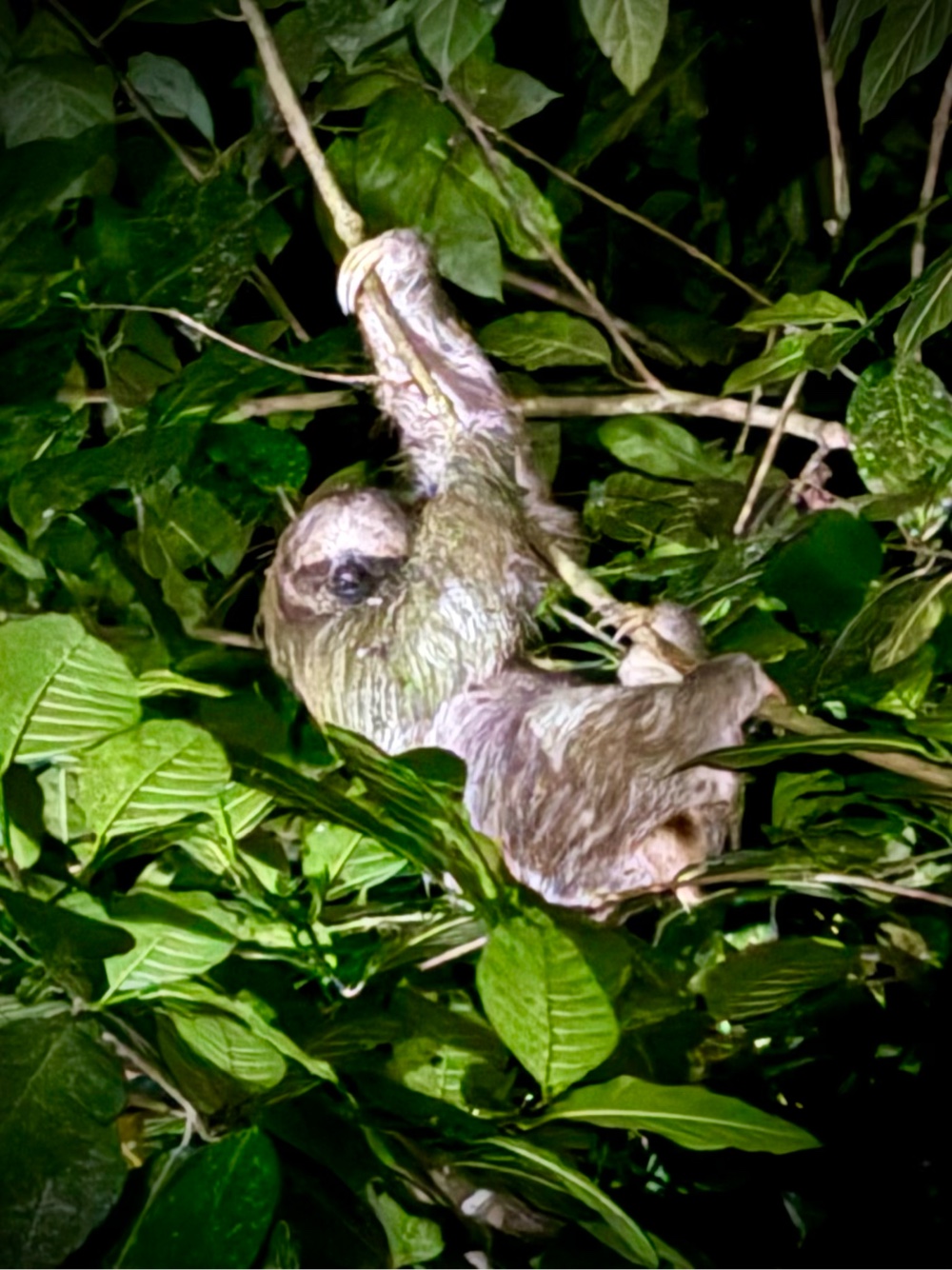
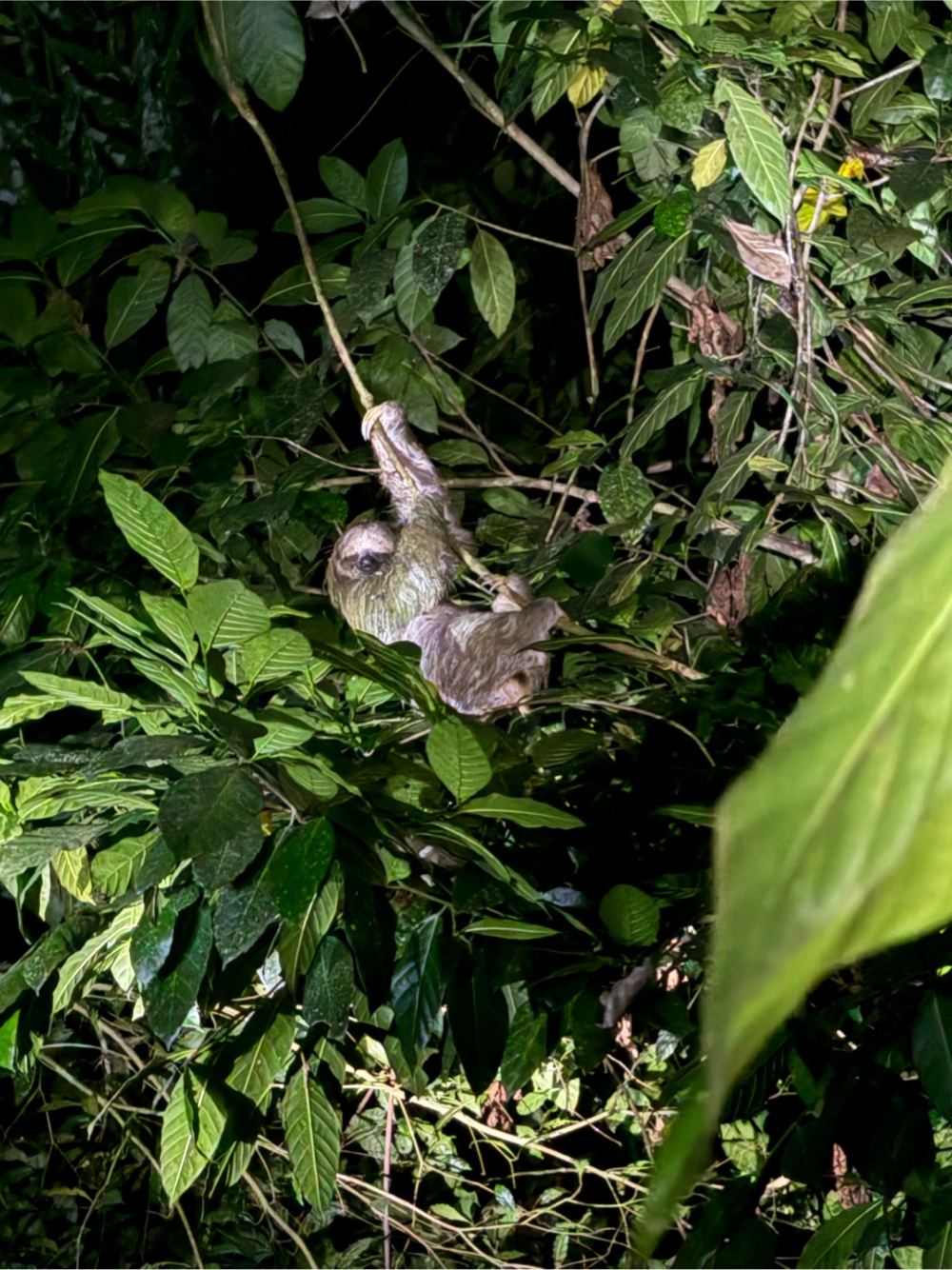
Our first finds were several sloths high in the canopy. Sloths move slowly because their leaf diet doesn’t give them much energy. Their fur hosts algae and tiny insects, turning each one into its own ecosystem. Everyone aimed their flashlights high into the branches to try and catch them moving and snap a picture in the dark.


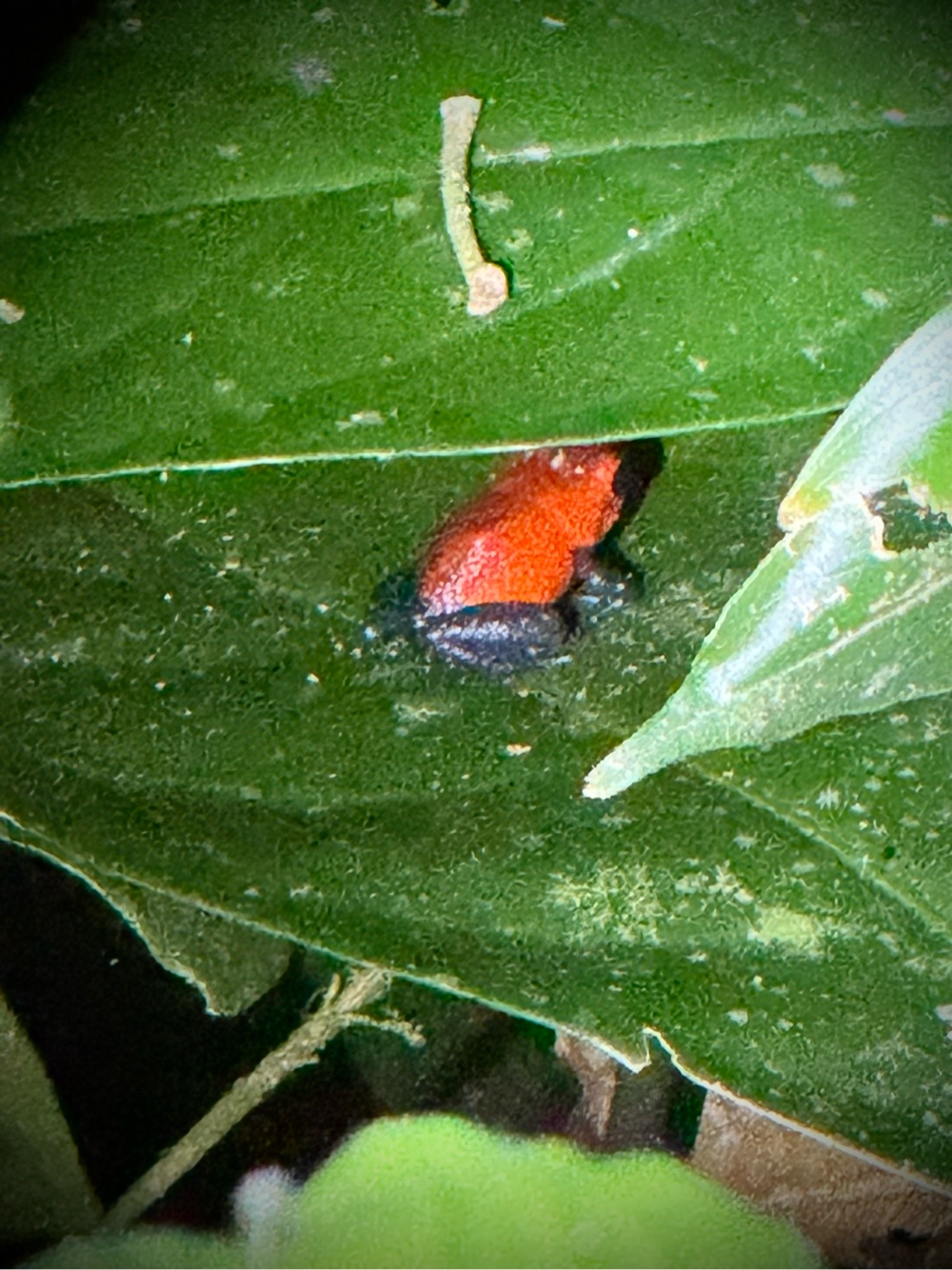
We found another red poison dart frog resting on a leaf. These frogs’ natural toxins come from the ants and mites they eat. Our guide pointed out that frogs are extremely sensitive to chemicals in the environment. Even something as simple as people spraying strong insect repellent can harm them if it gets on the leaves and washes into the places where they live.

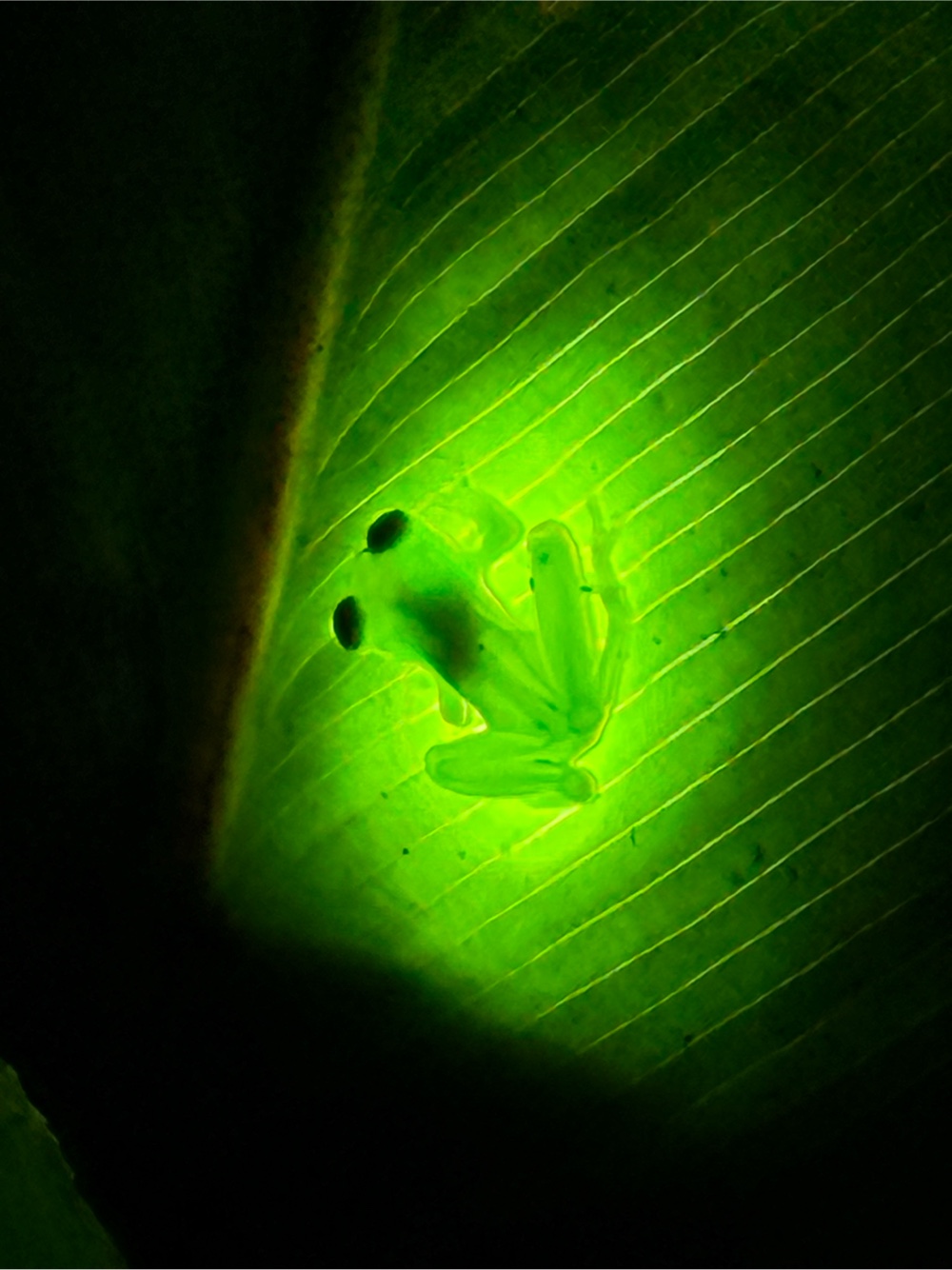
The glass frog was the one that stopped everyone. Under the flashlight beam, you could see its organs through its skin. Scientists aren’t sure why they evolved this way but they think the transparency helps break up its shape so predators can’t spot it when it rests on a leaf. Their presence signals a healthy, clean ecosystem.


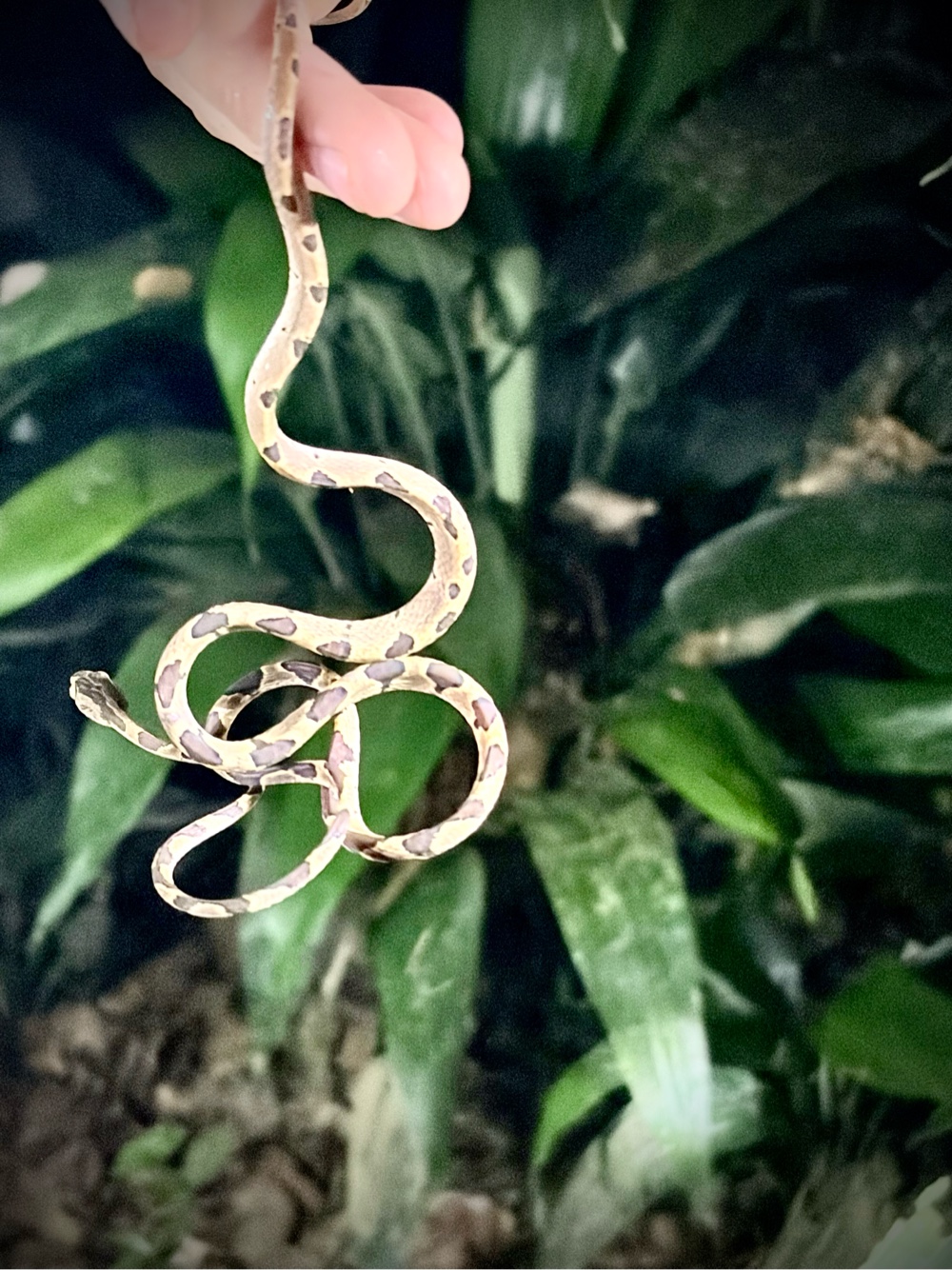
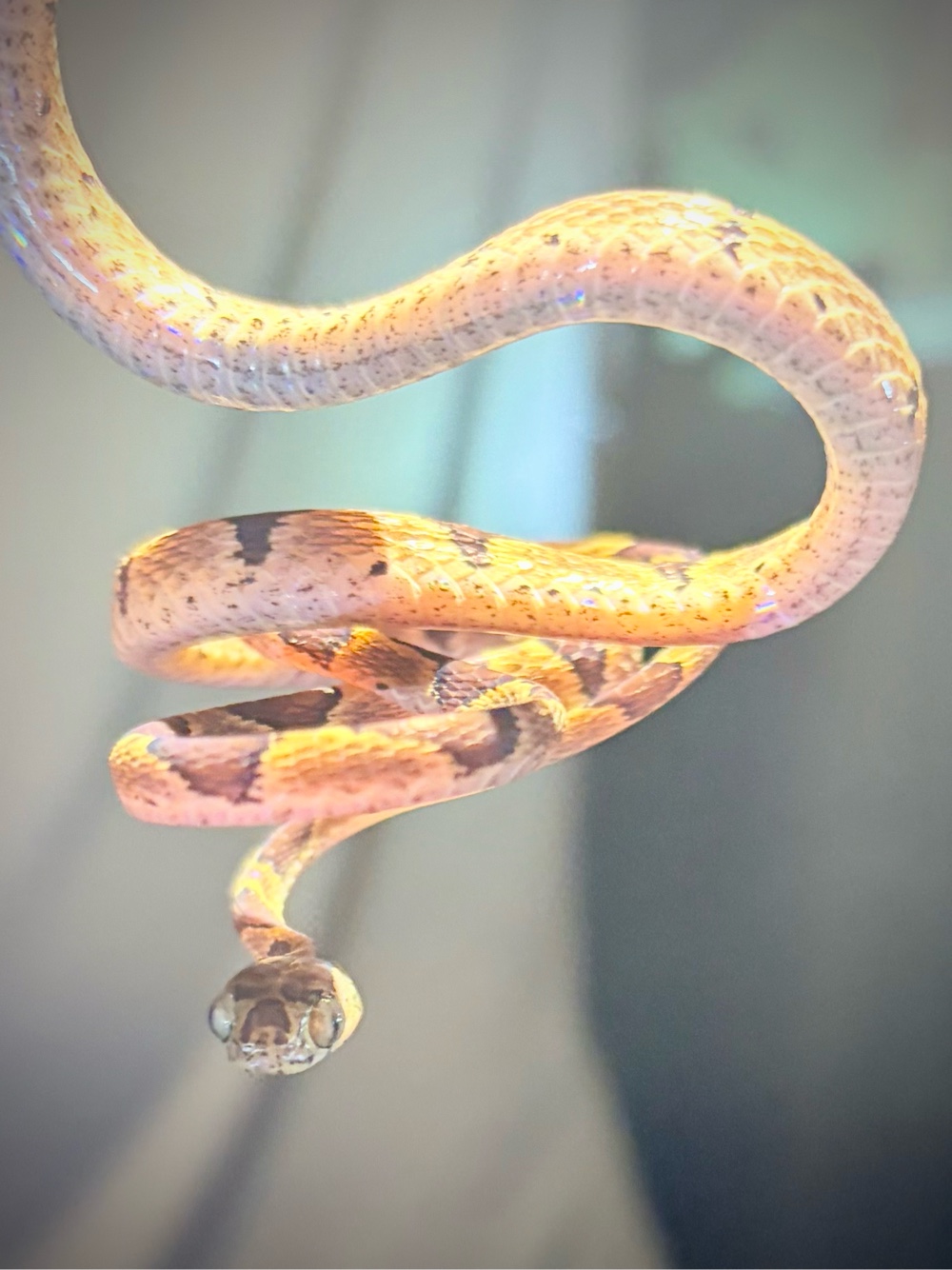
Most rainforest snakes aren’t aggressive. They hide in low branches at night because that’s when they hunt frogs and insects. Many rely on staying perfectly still as their main defense, which is why we could get close as long as we didn’t touch anything. One guide was able to identify a snake as non venomous so he picked it up for one group to see. 


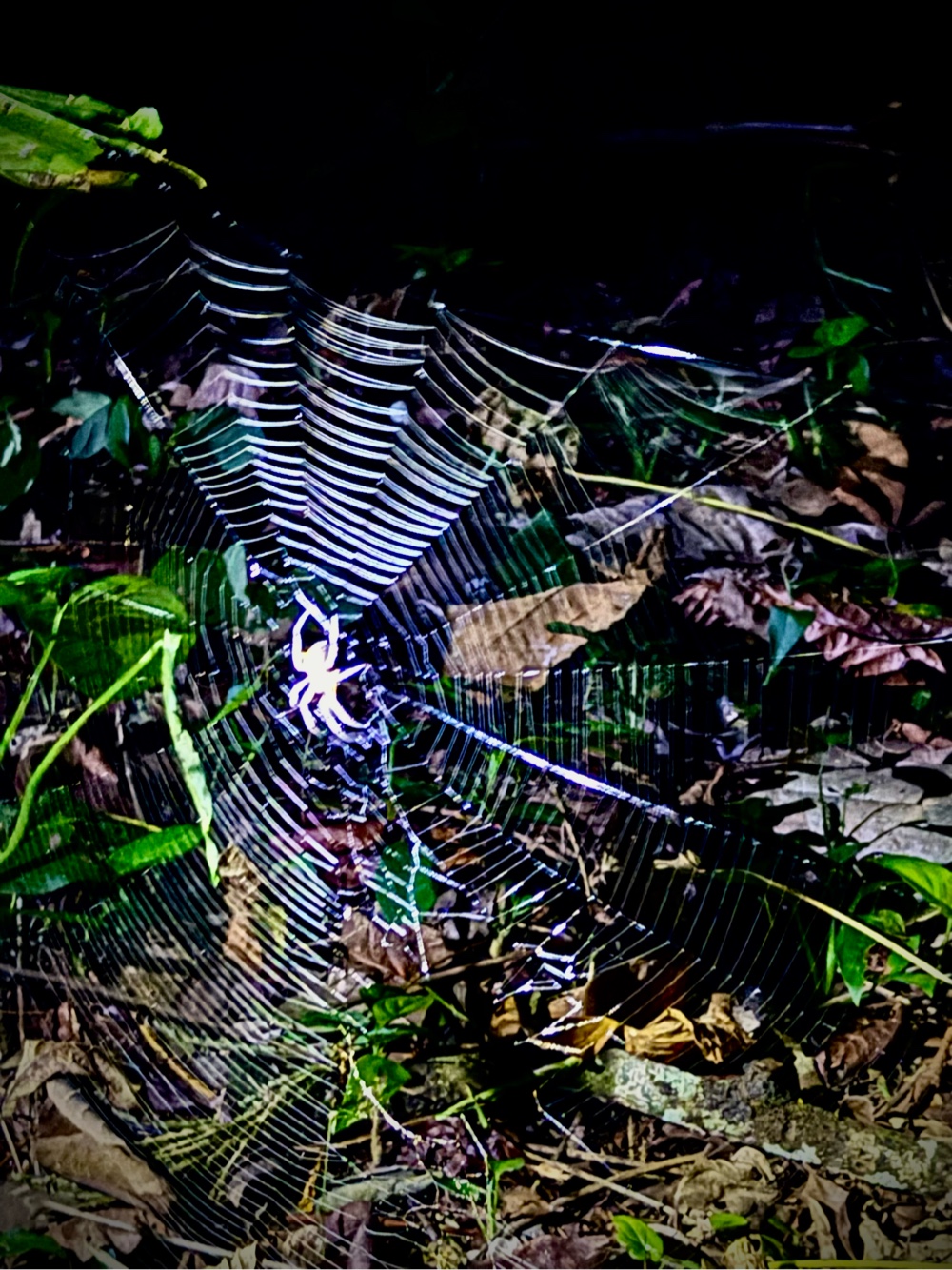
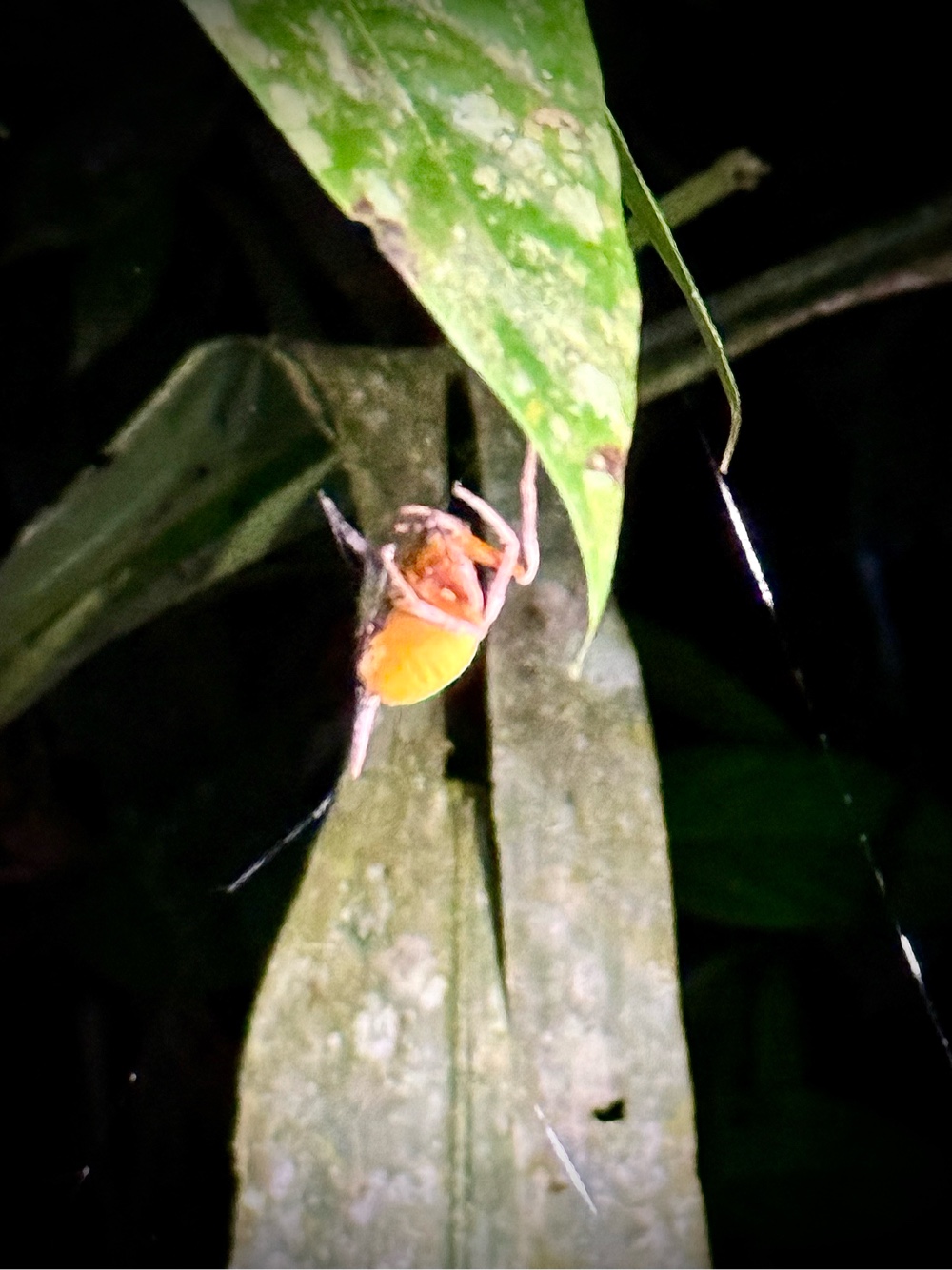
If you shine a light across the forest floor, spiders’ eyes reflect like tiny pinpoints. That reflection comes from a layer behind the retina, similar to what cats have. It was eerie to see the webs glowing in the dark as the spiders traveled along them. We saw several different species.


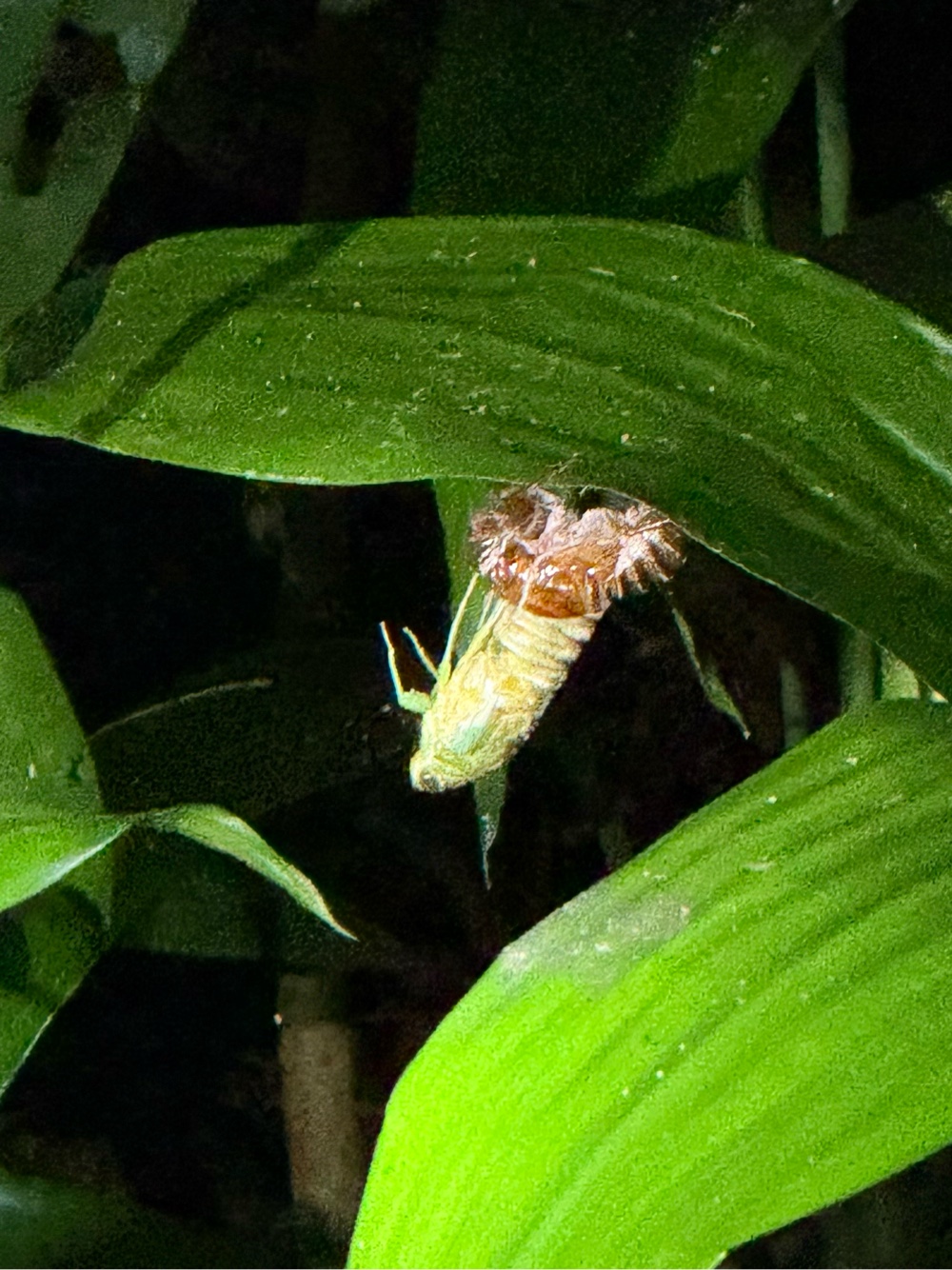
The caterpillars here are tiny but wild. Some have spines that sting, others mimic snakes or bird droppings to avoid being eaten. It’s giving Don’t Eat Me vibes! The rainforest is full of odd survival strategies, even in the smallest creatures. 

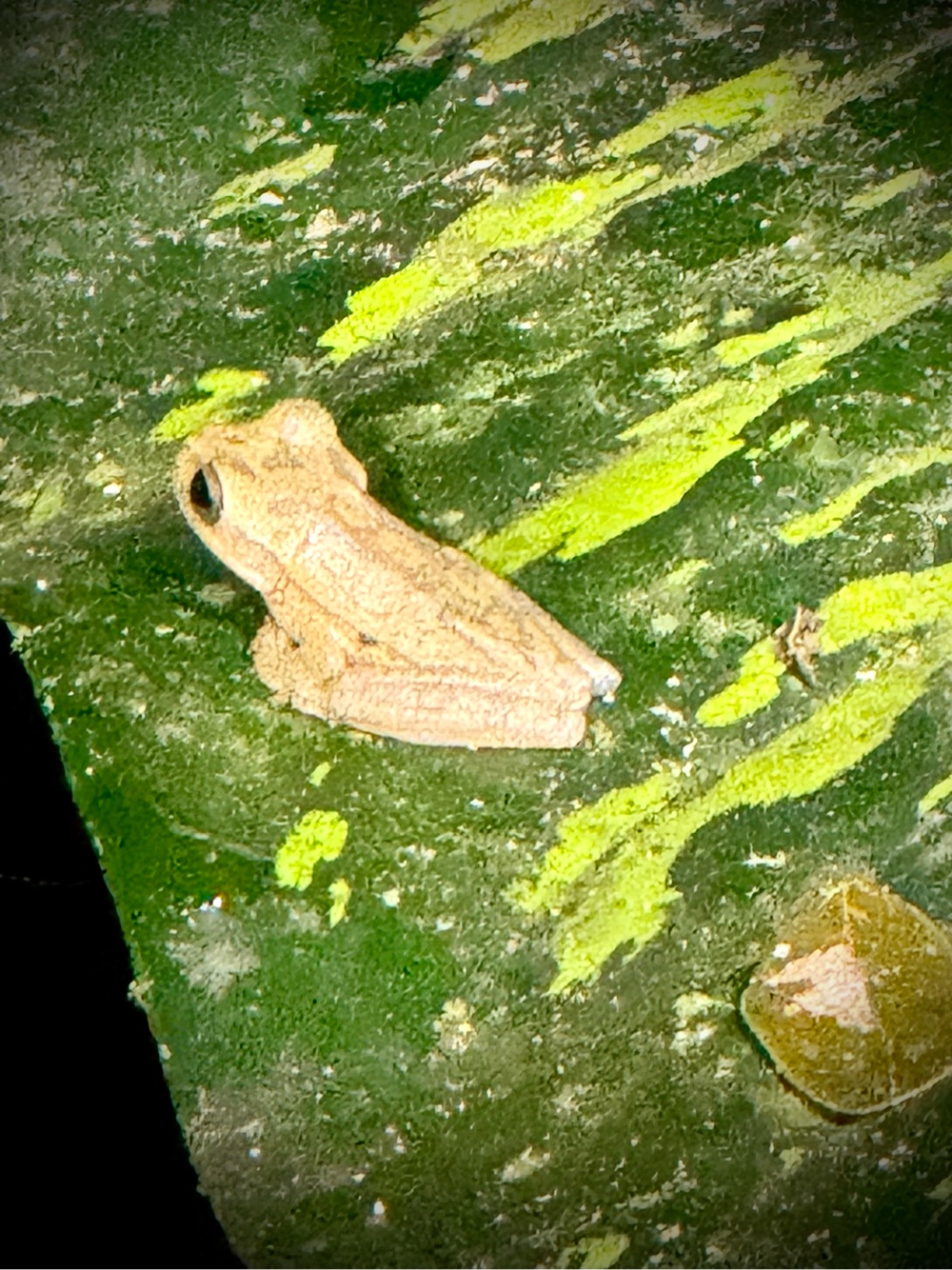
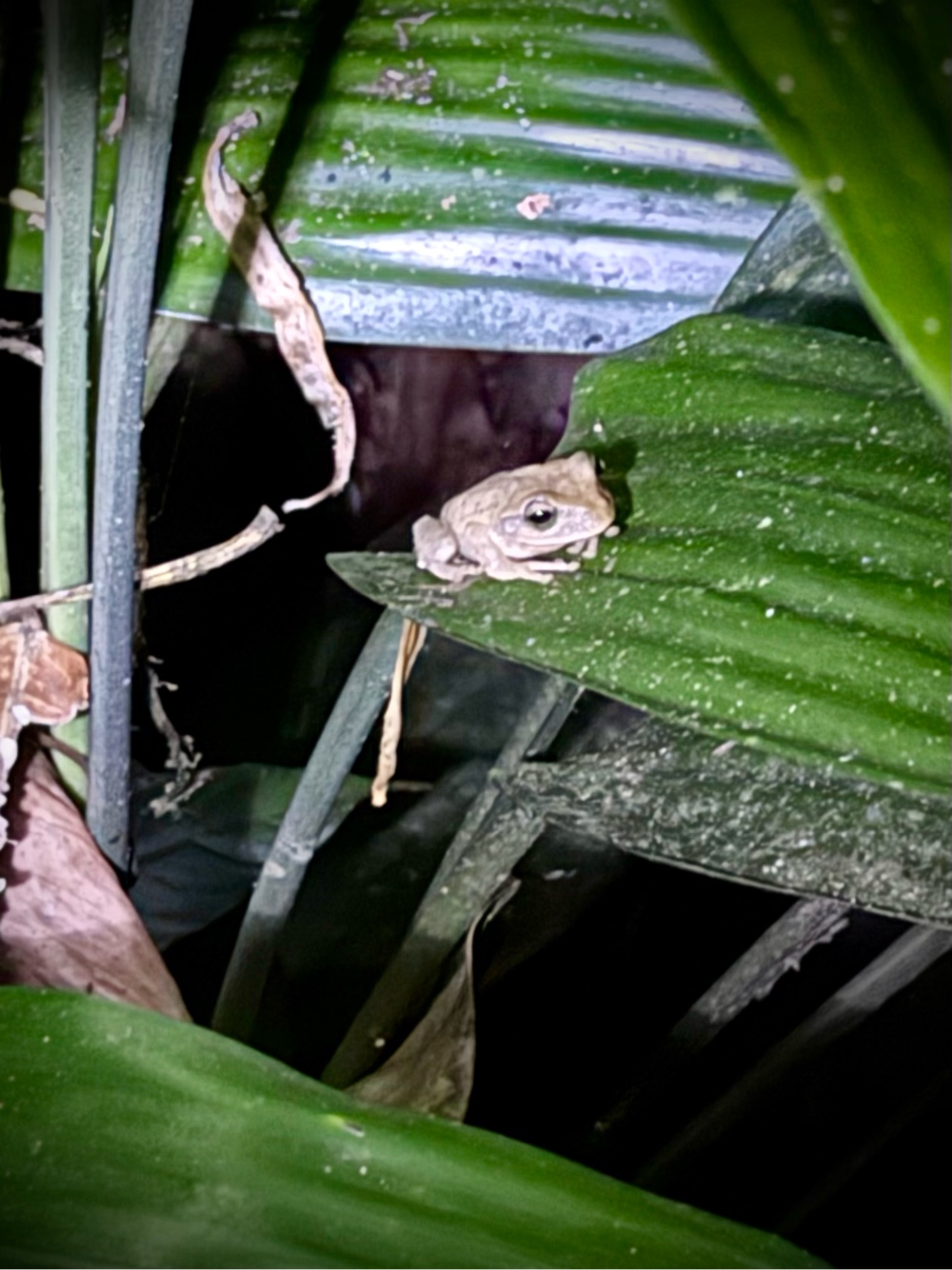
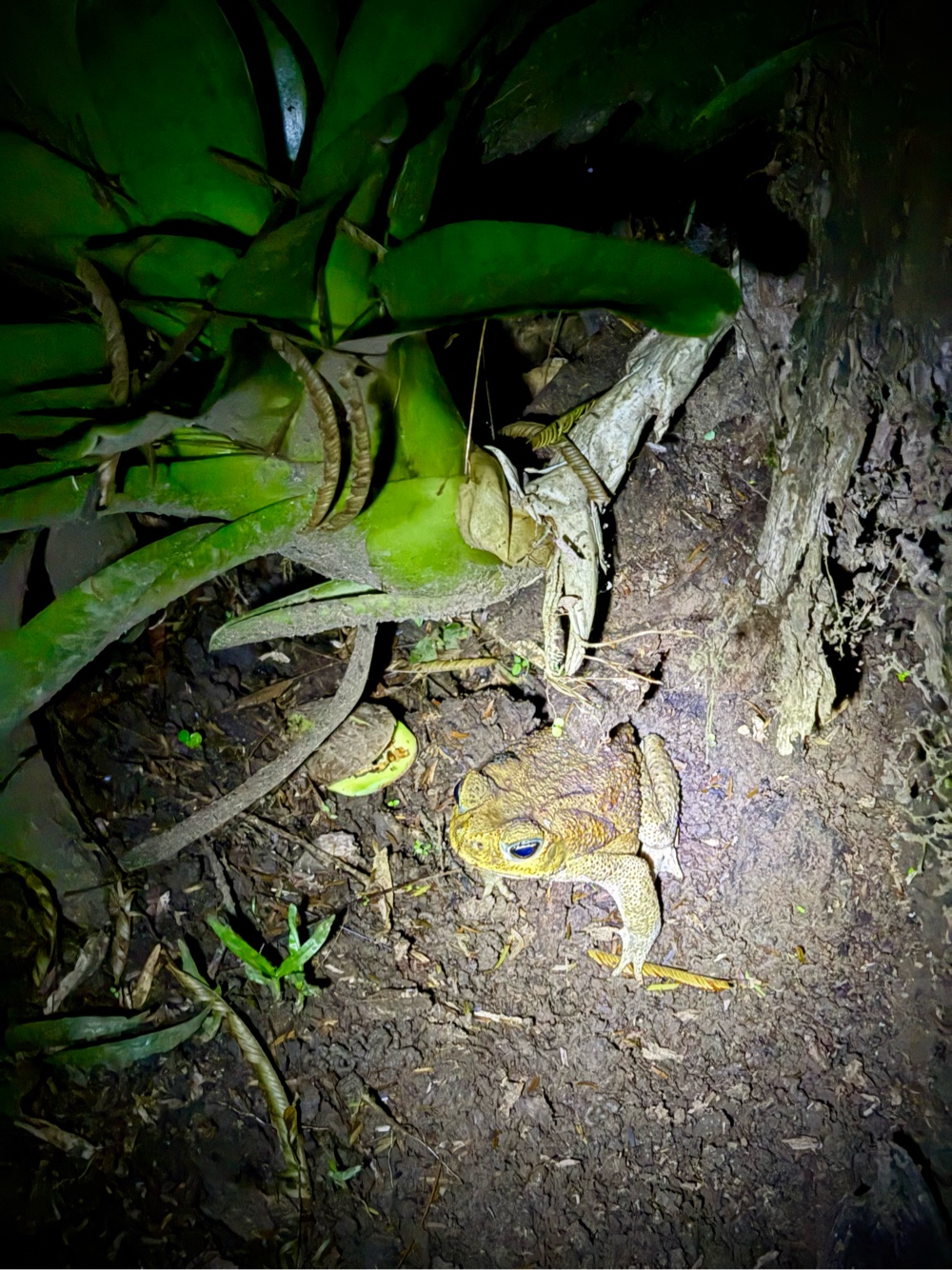
Crickets, frogs, and toads were everywhere. Many call only at night to avoid predators. Their presence tells you the ecosystem is still functioning, because amphibians are usually the first to decline when water or habitat quality drops.


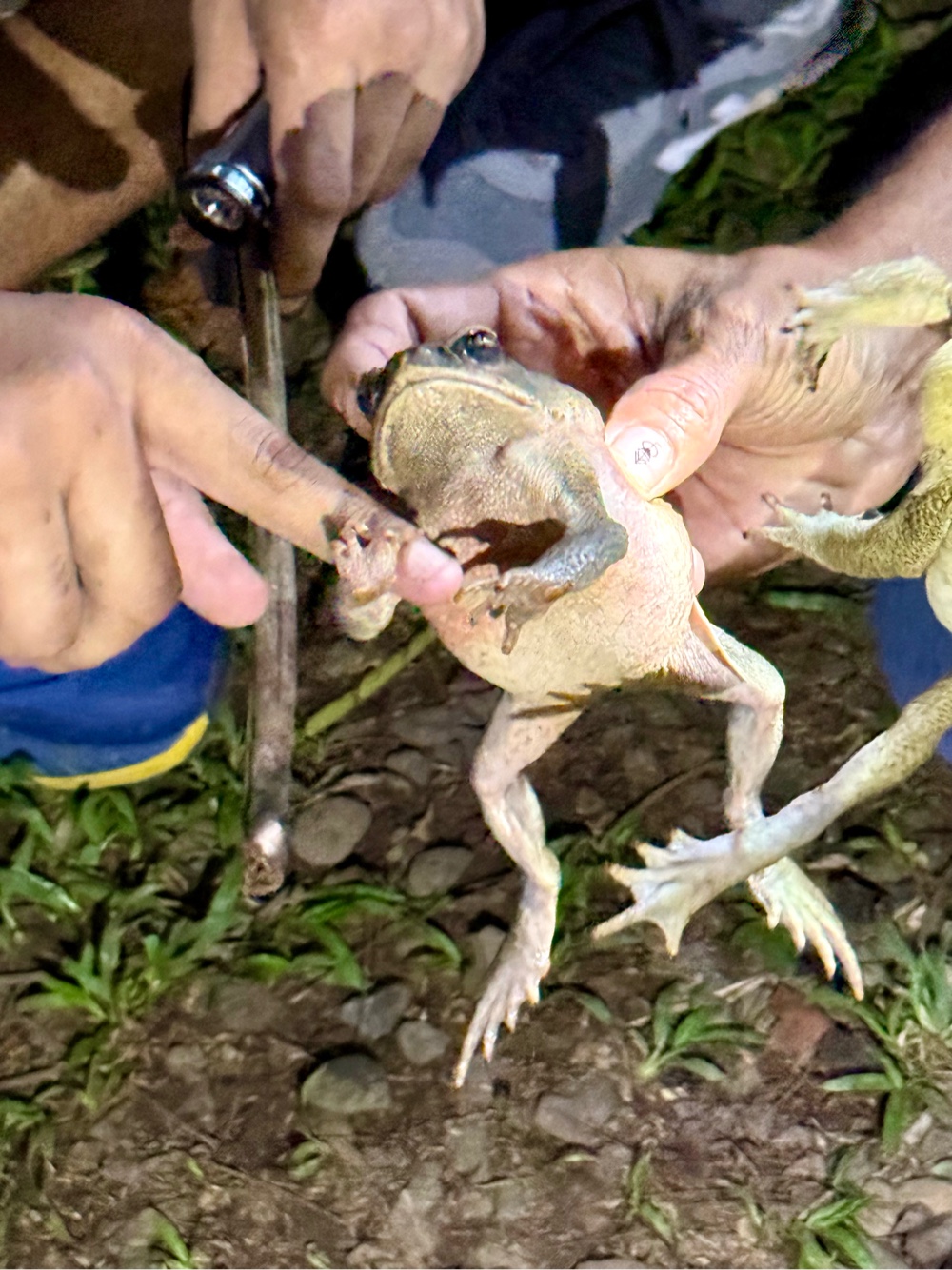
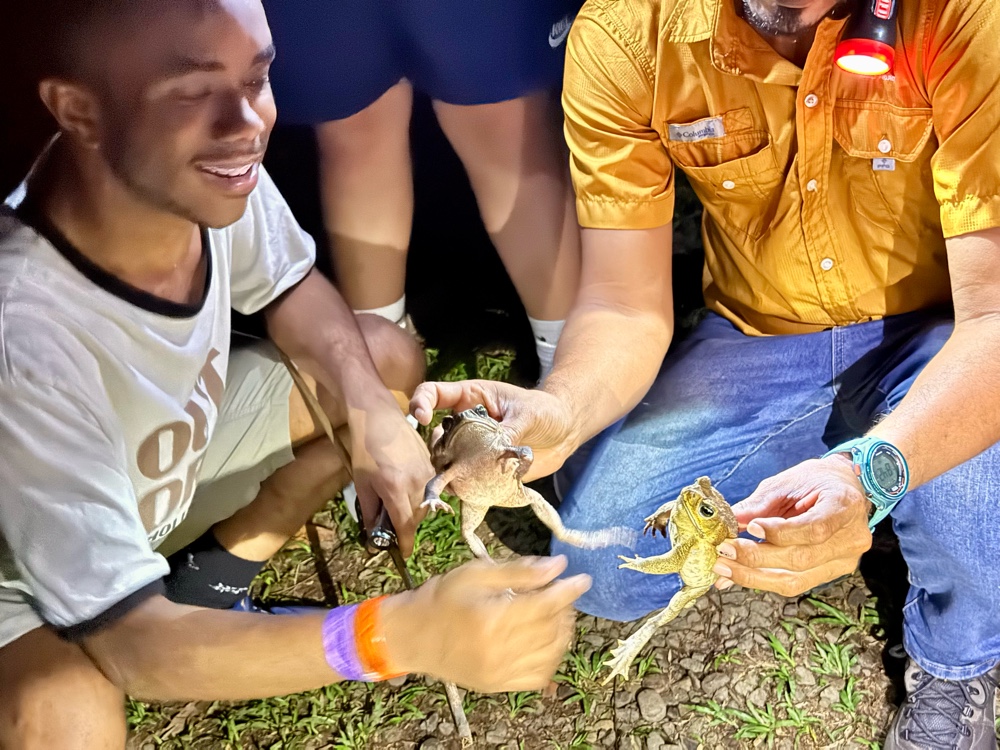
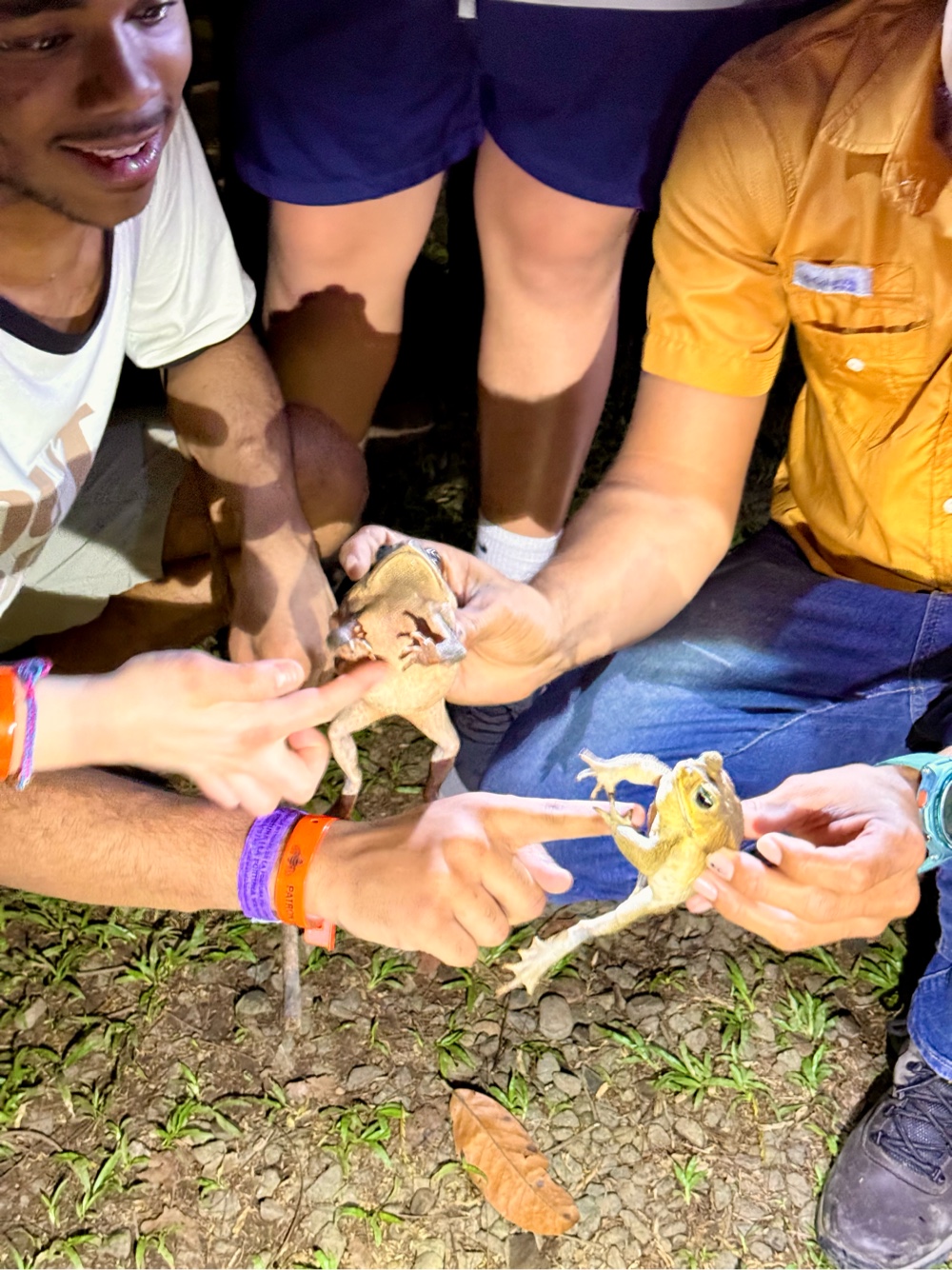
Our guide even found a pair of toads that let them be handled briefly before hopping away. 


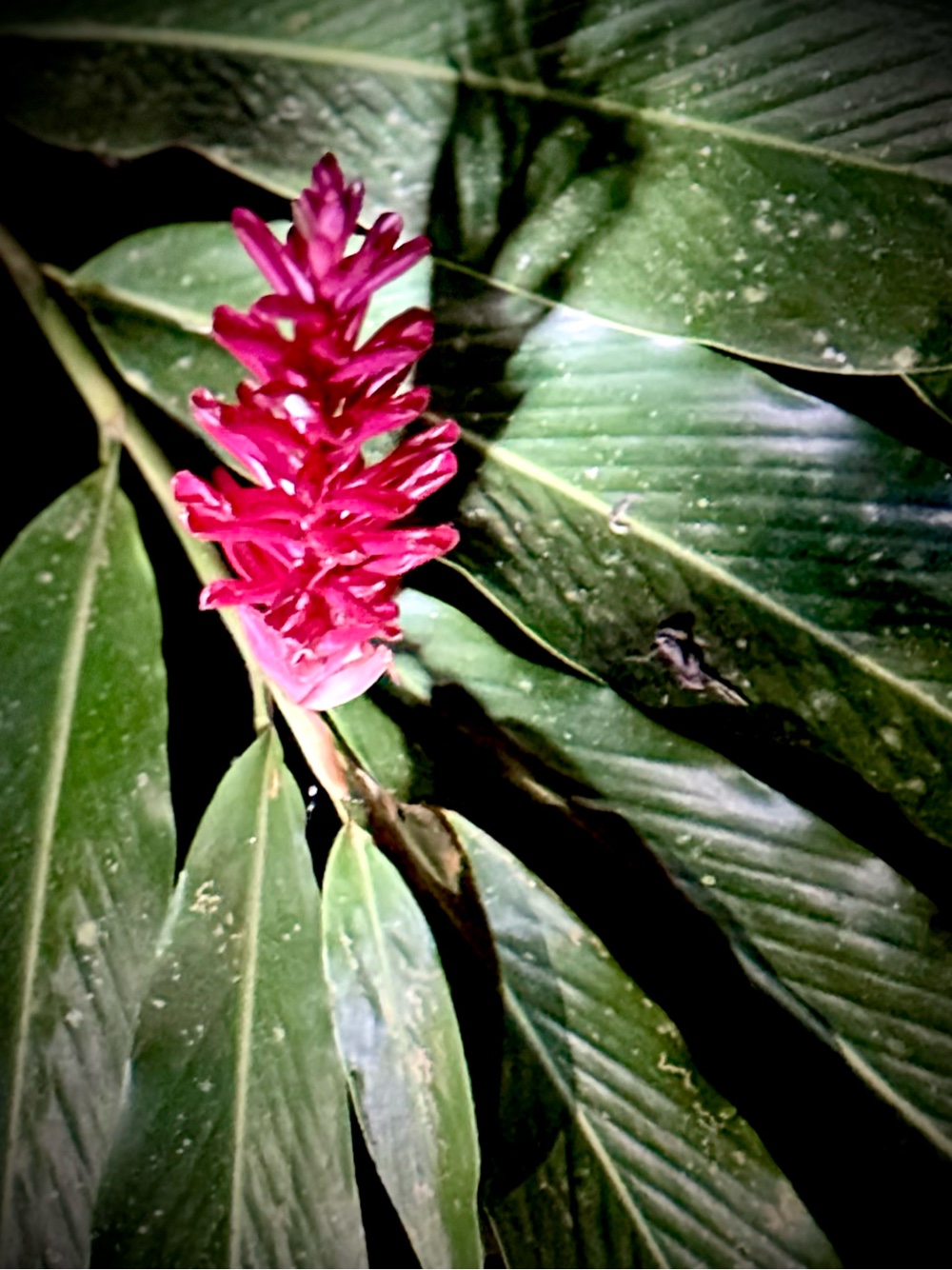
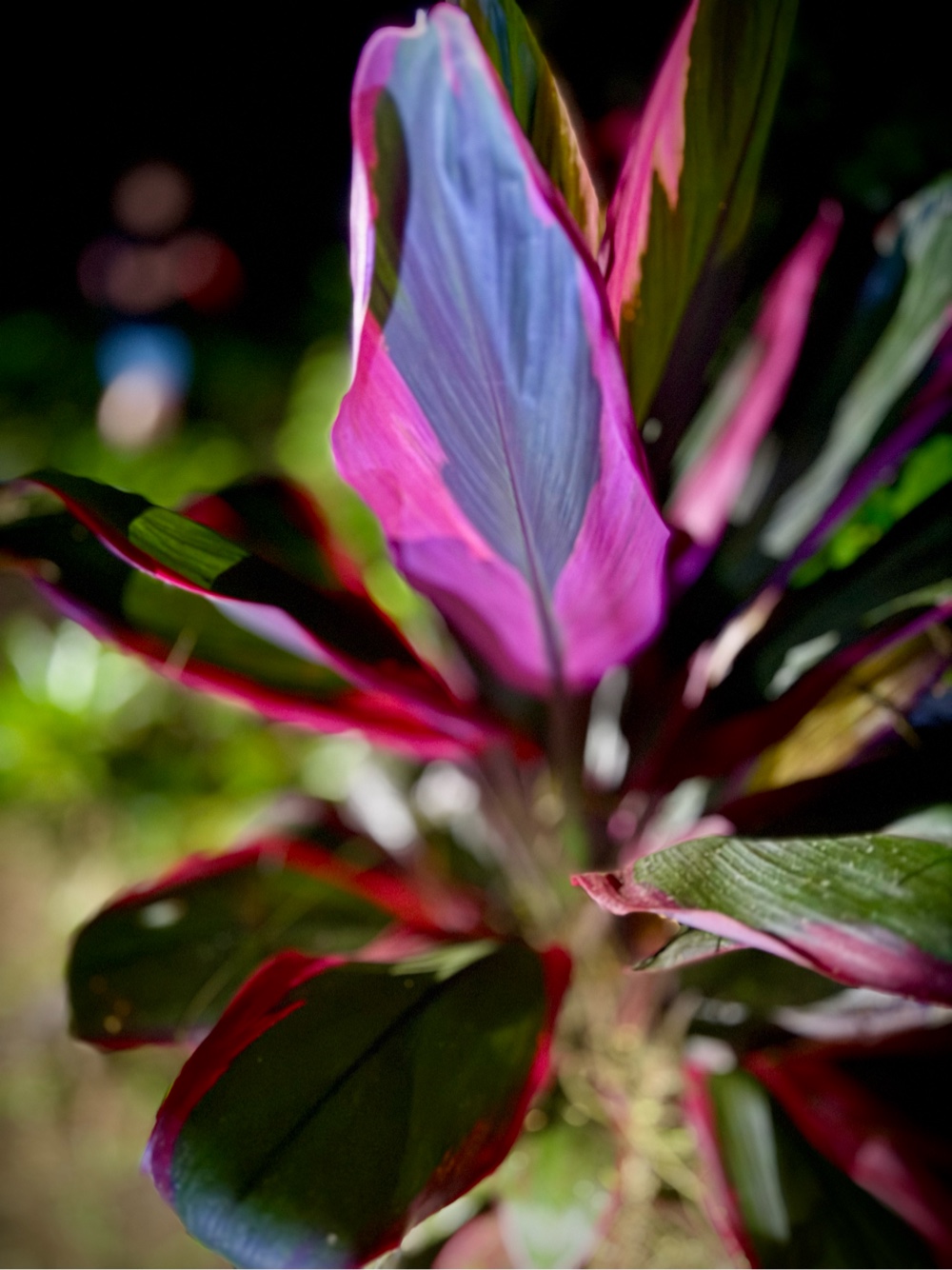
Even the leaves in the rainforest looked more dramatic at night. Ferns bigger than people, and splashes of color on various flowers and plants. 


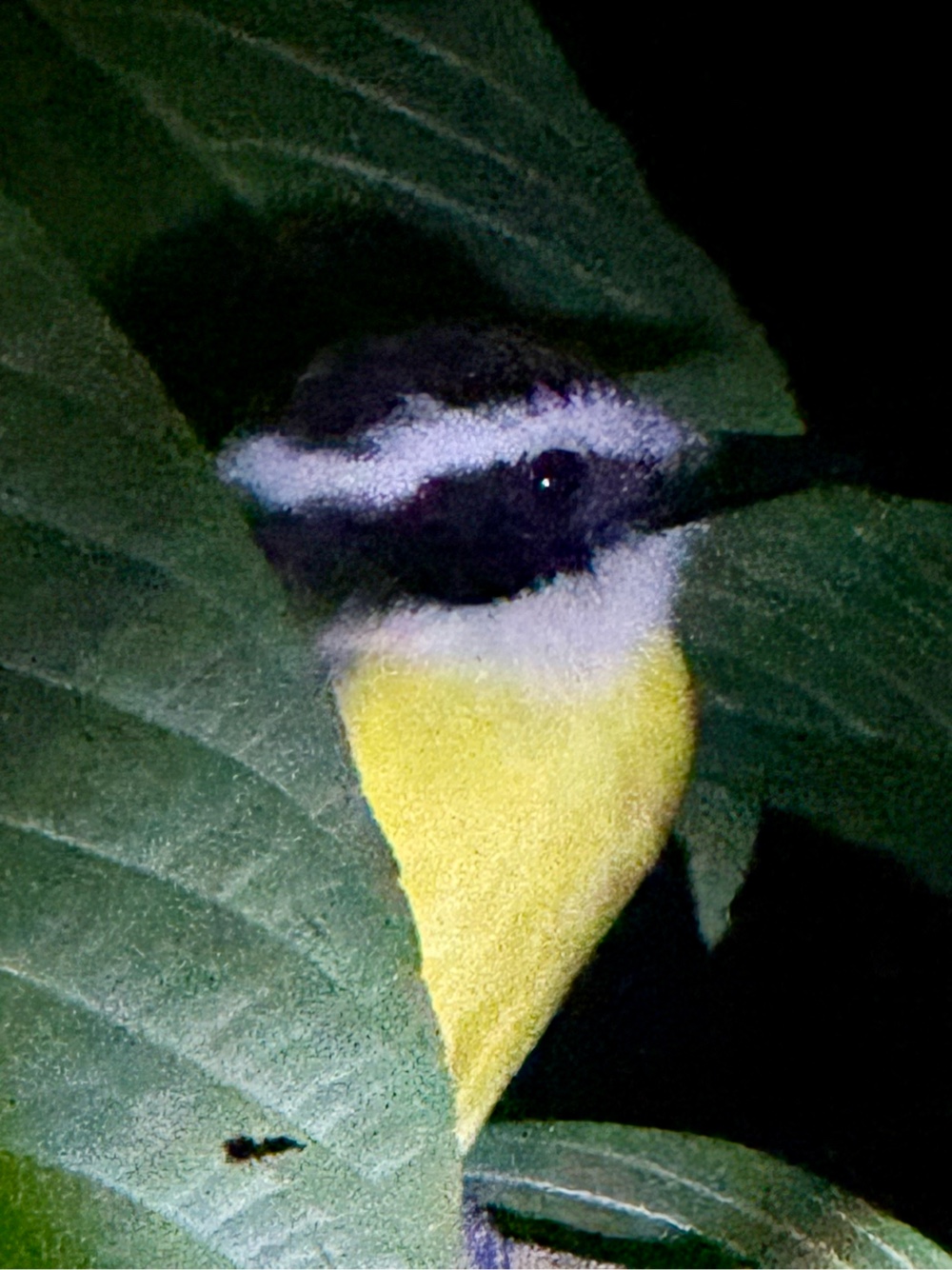
Cool bird… no idea what it is!


We stopped in a grove and turned off all of the lights to sit in the darkest dark. Every once in a while we could see lightning bugs flickering beneath the trees. During lightning bug season, we learned the entire forest is lit up like a Christmas tree. Each species with its own pattern. Some use their flash to attract mates. Others use it to confuse prey. It was the quietest moment of the walk.

By the time we looped back, the kids were sweaty, tired, and calmer than when we began. The night walk was one of those experiences that looks and sounds completely different once the sun goes down. Although it was hot and tiring after our long day, the kids were glad we did it.