
Inside the reserve, we did a chocolate workshop to see how chocolate is actually made. This was part learning, part tasting, and a whole lot of fun. It’s a long process, and it has changed a lot over the last 500 plus years into the bars and drinks we recognize now.
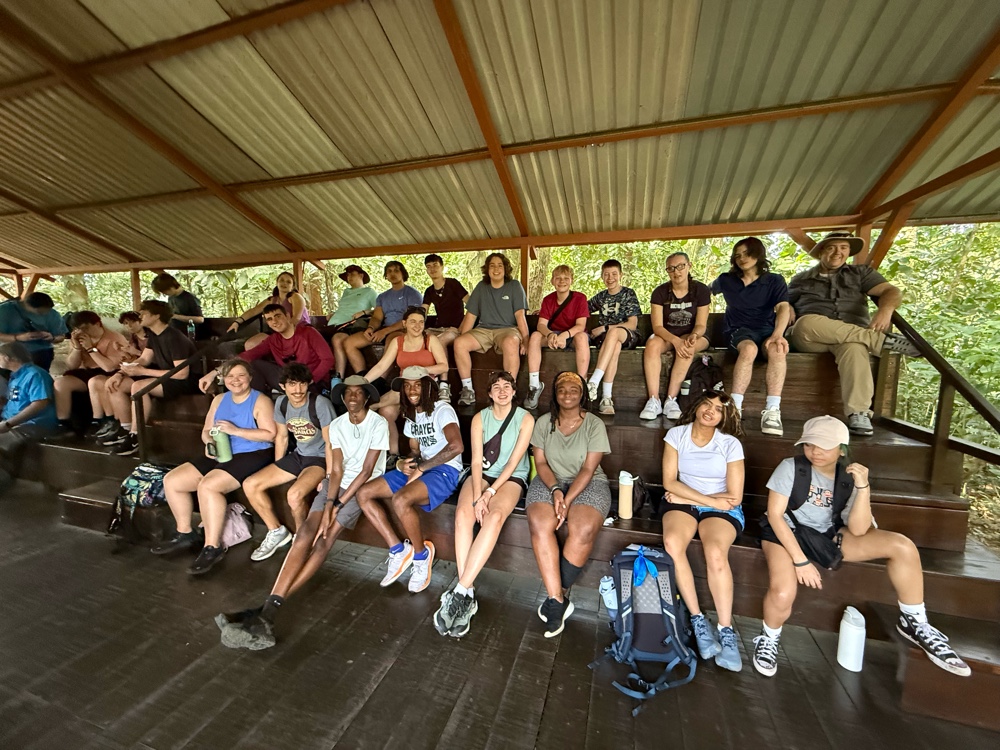
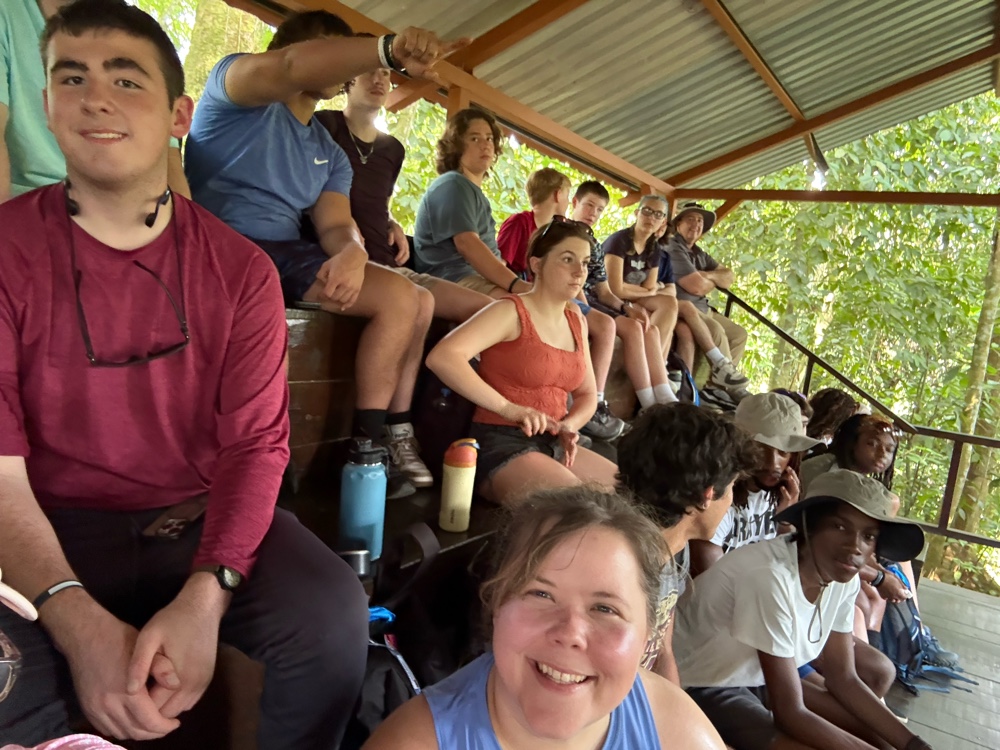
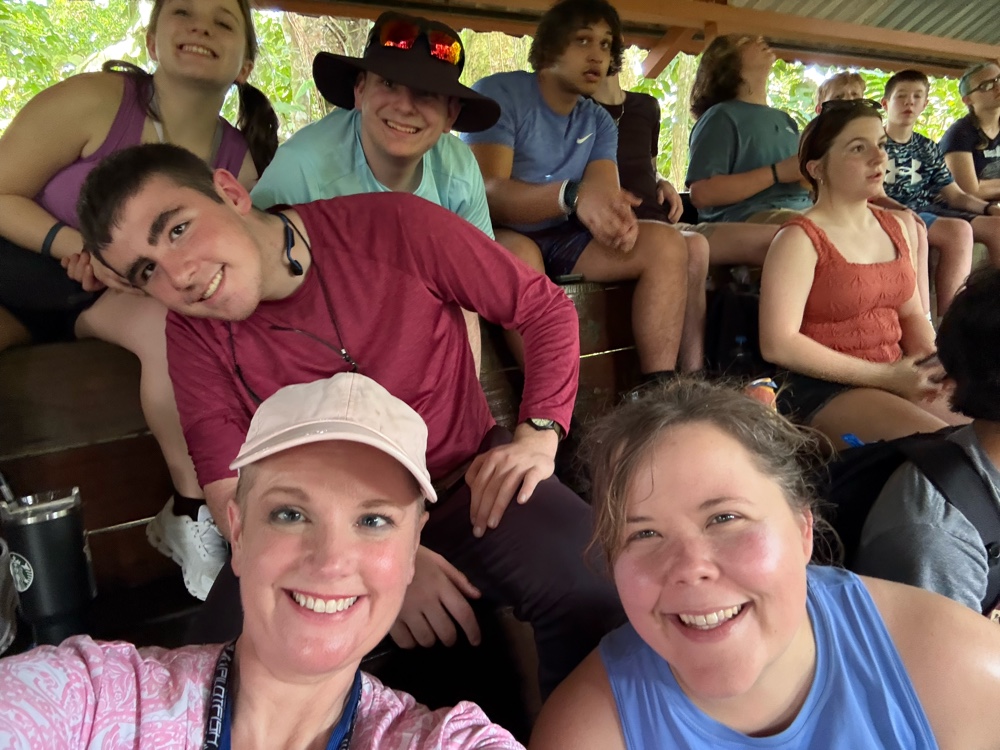
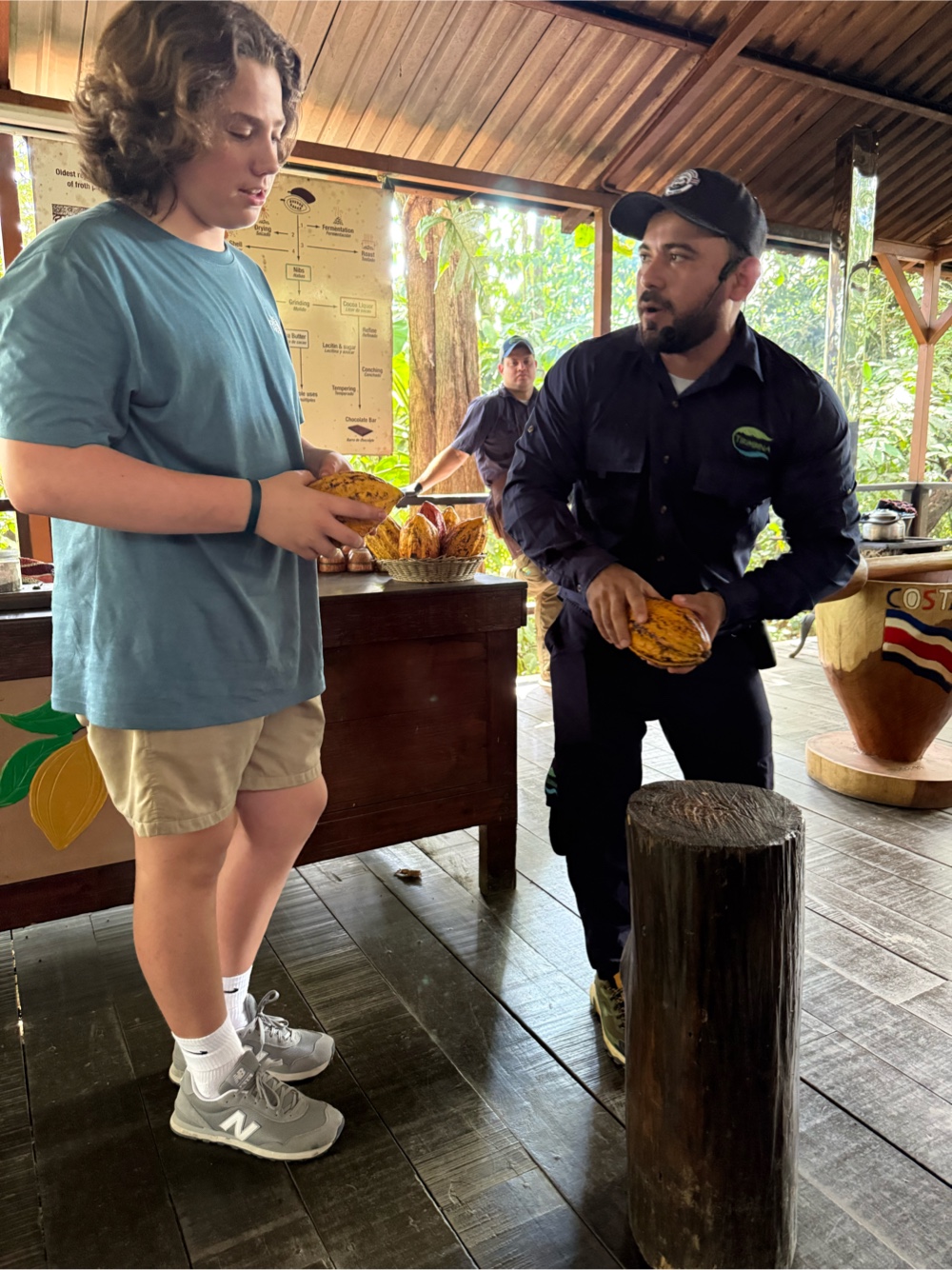
Cacao trees grow best in shade, so farmers plant them under bananas or other taller crops. When the pods ripen they turn yellow, orange, or red depending on the variety. Our guide had the kids guess how many seeds are inside. Guesses were all over the place. Most pods hold around 30 to 60 seeds.
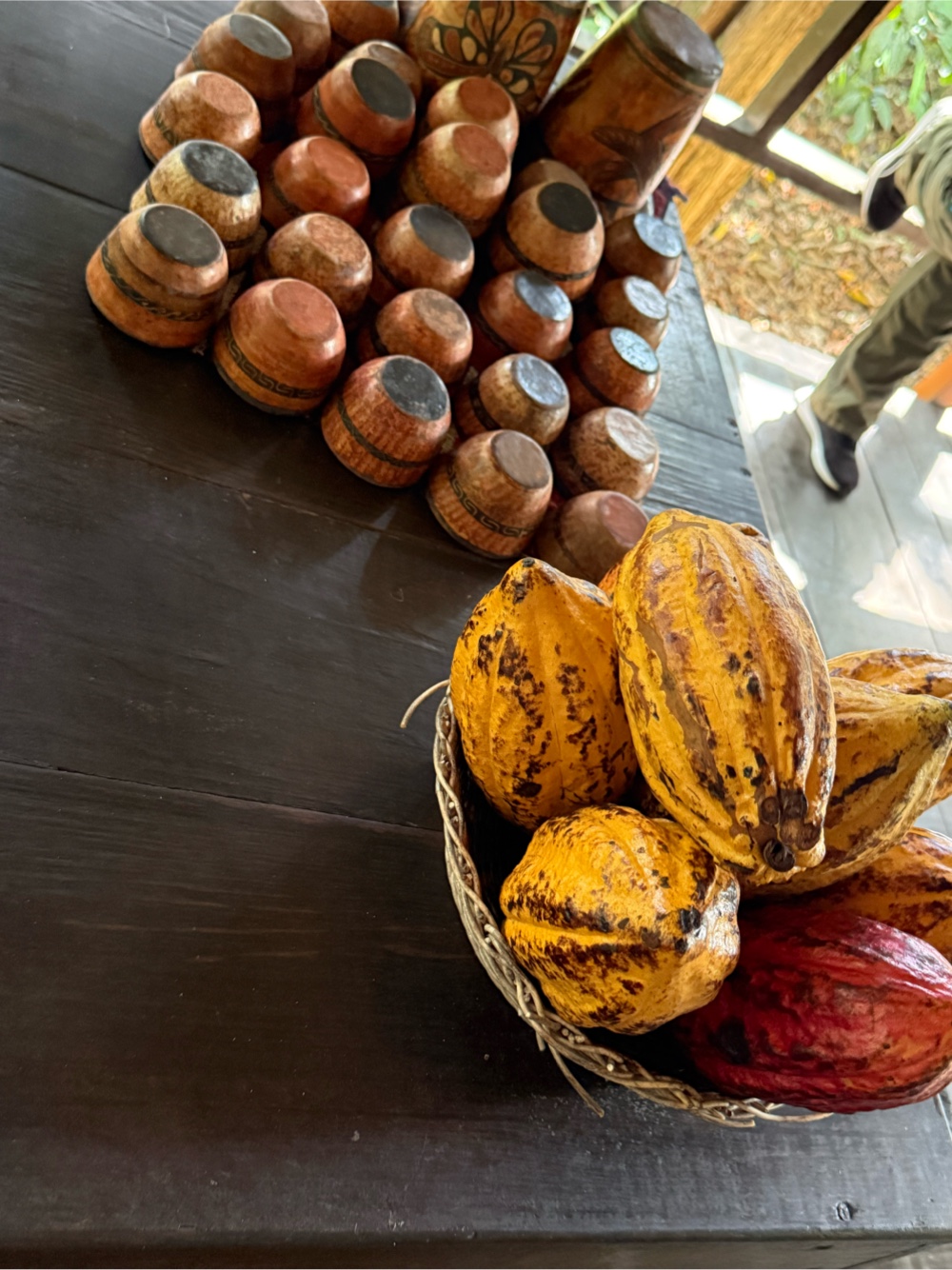
To demonstrate how we open the pod, he offered two methods and of course the group picked the “monkey method,” which involves a dramatic slam and sound effects.
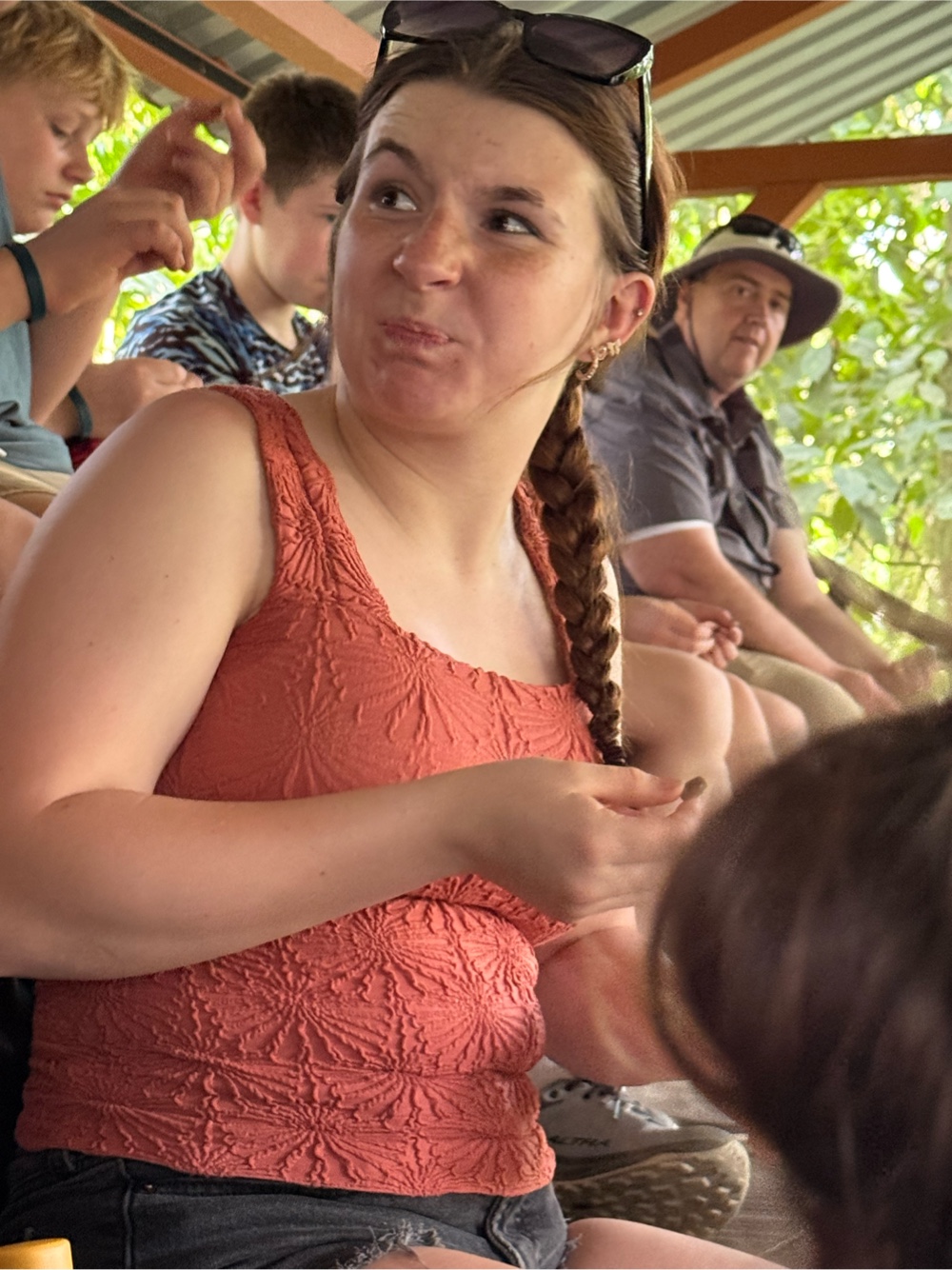
Inside the pod is white pulp around each seed. The pulp is sweet and tropical, almost like lychee or mashed banana. We all tasted the raw seed at this stage. It has no chocolate flavor at all. Sticky, bitter, and nothing like what it eventually becomes.
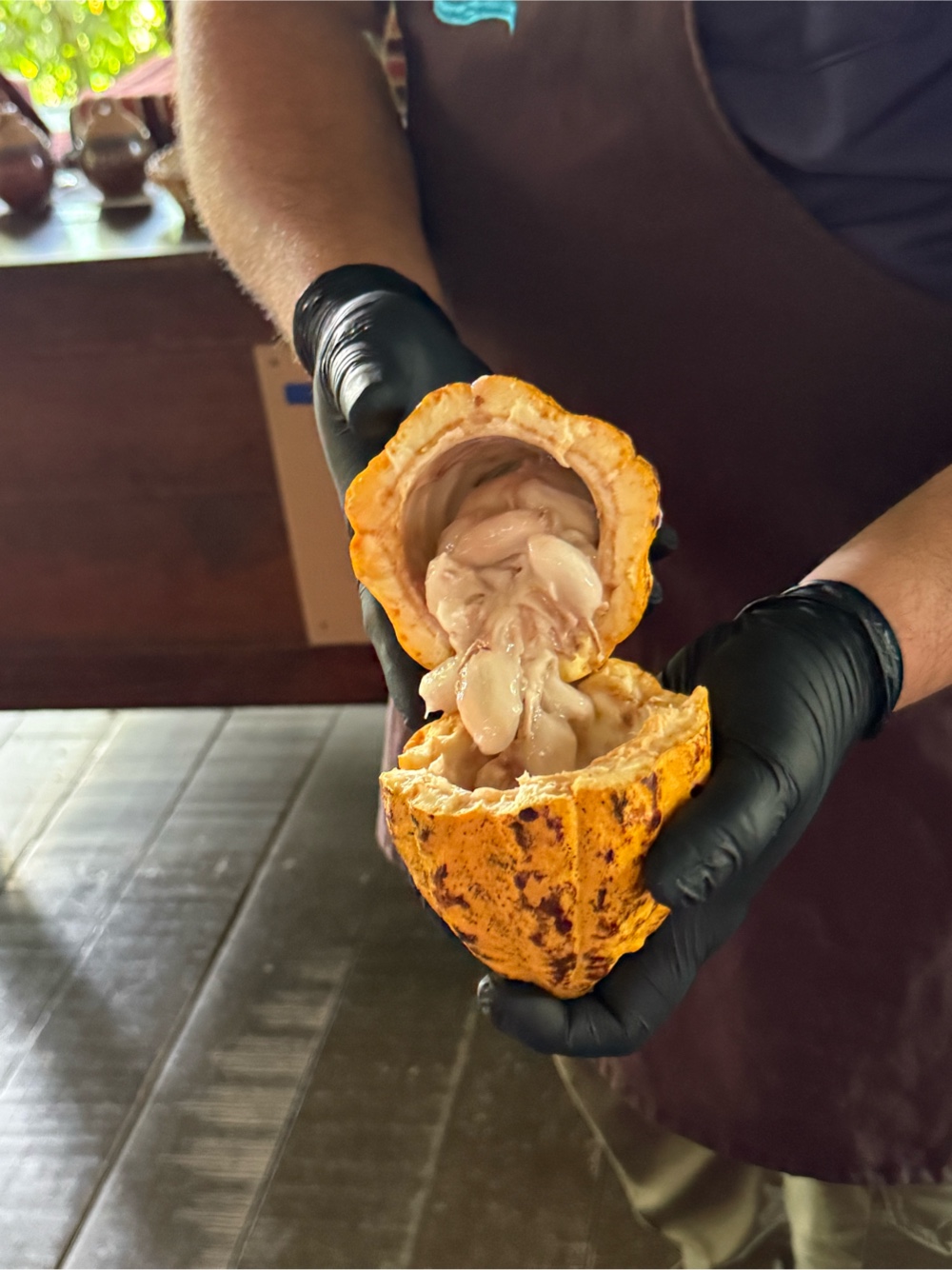
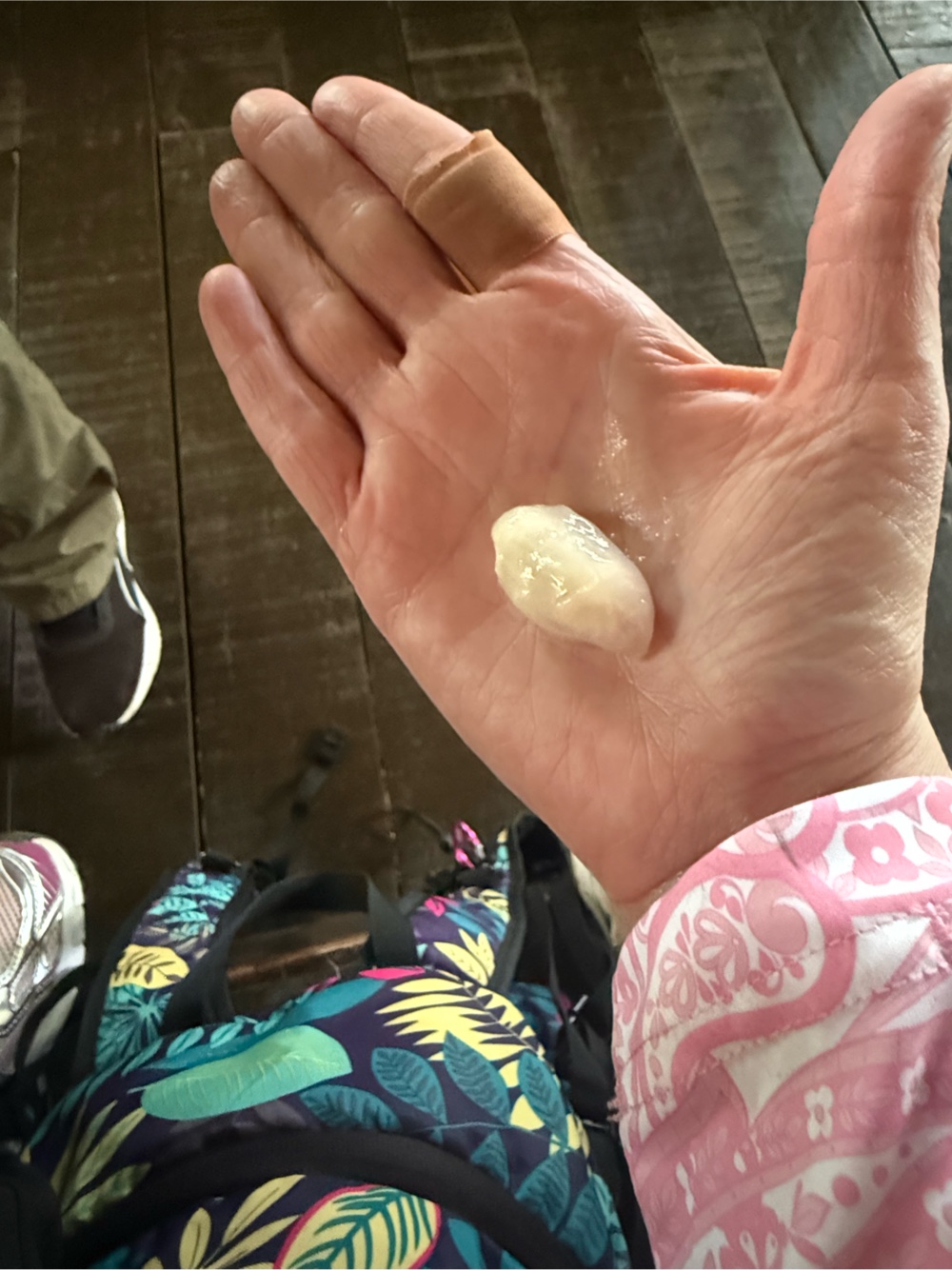
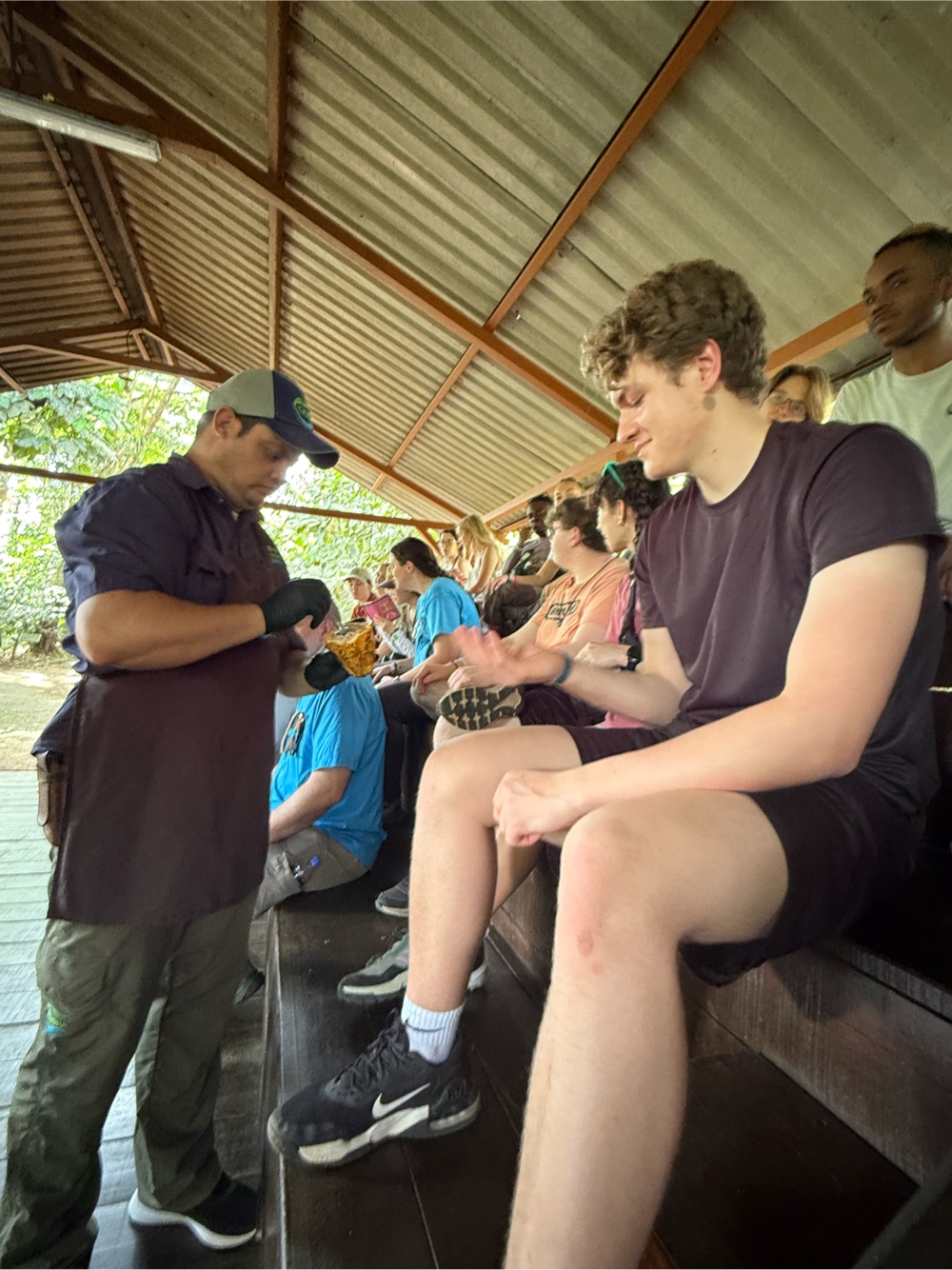
Once the seeds are scooped out, the real work starts. They have to ferment to develop any chocolate flavor. Fermentation darkens the seeds, creates heat, and starts to produce the smell everyone associates with chocolate. After that they dry for 8 to 12 days using boxes that are rotated between sun and rain locations. When you open a batch after drying, the aroma finally starts to make sense. We smelled this stage.
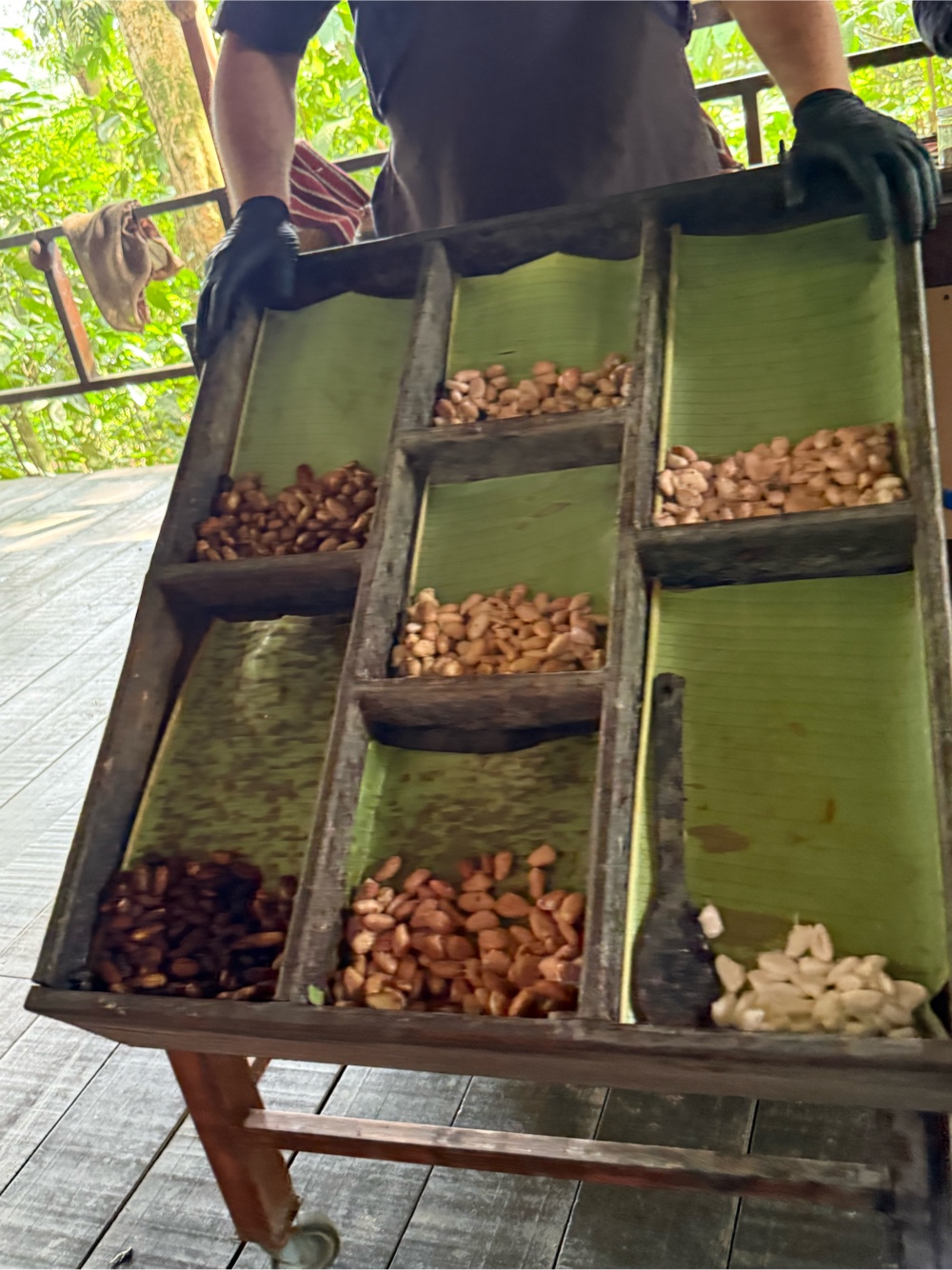
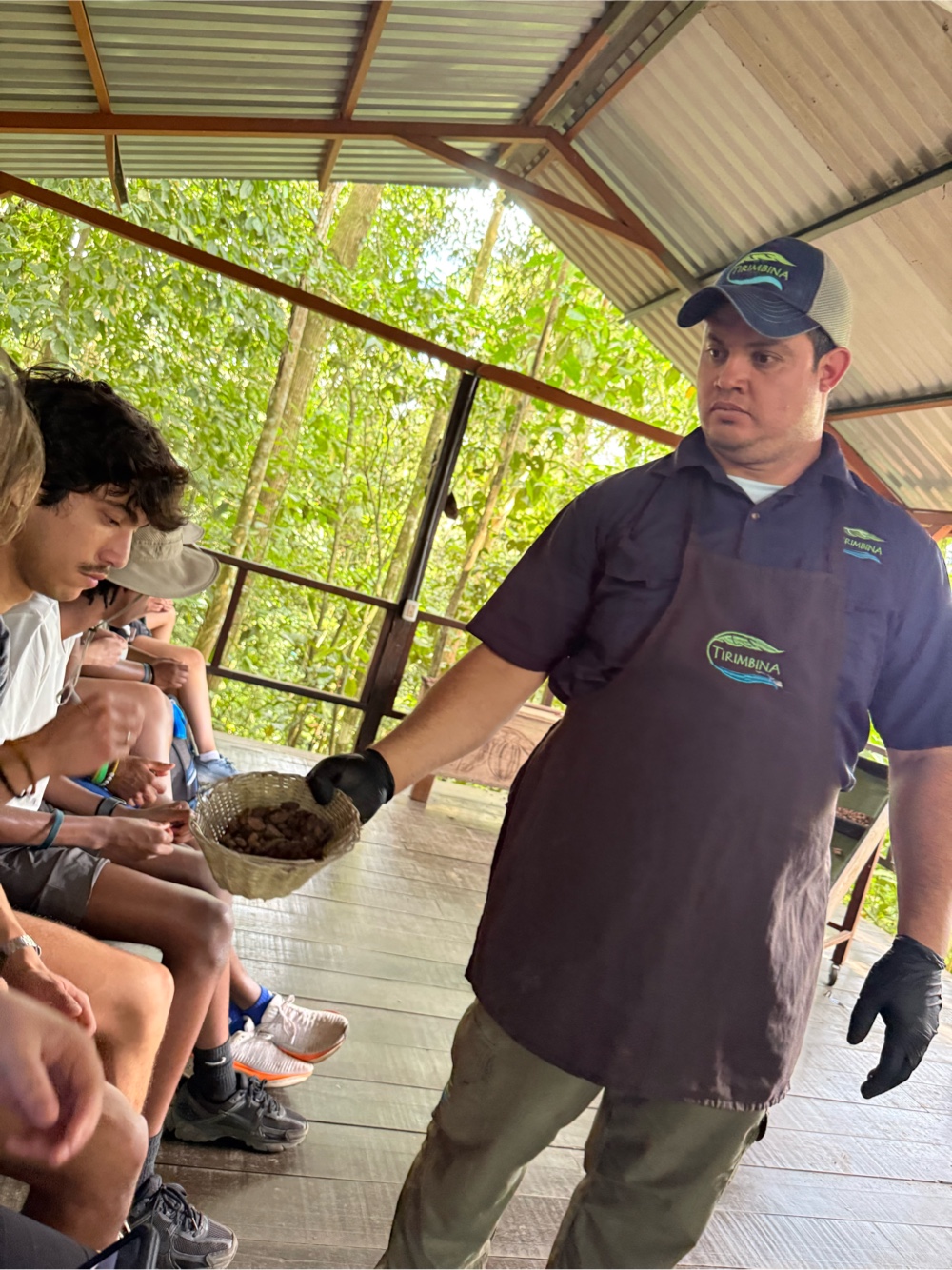
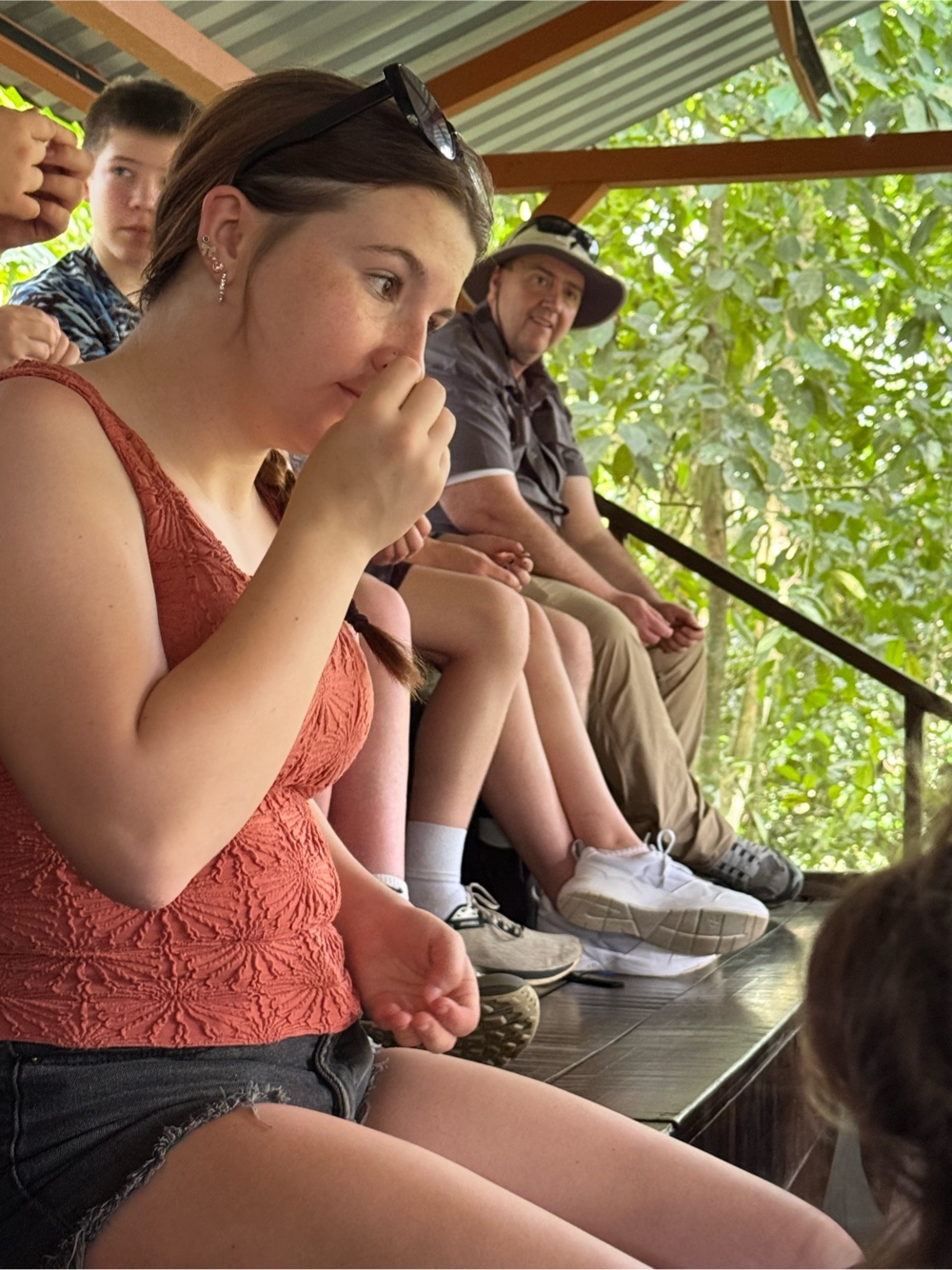
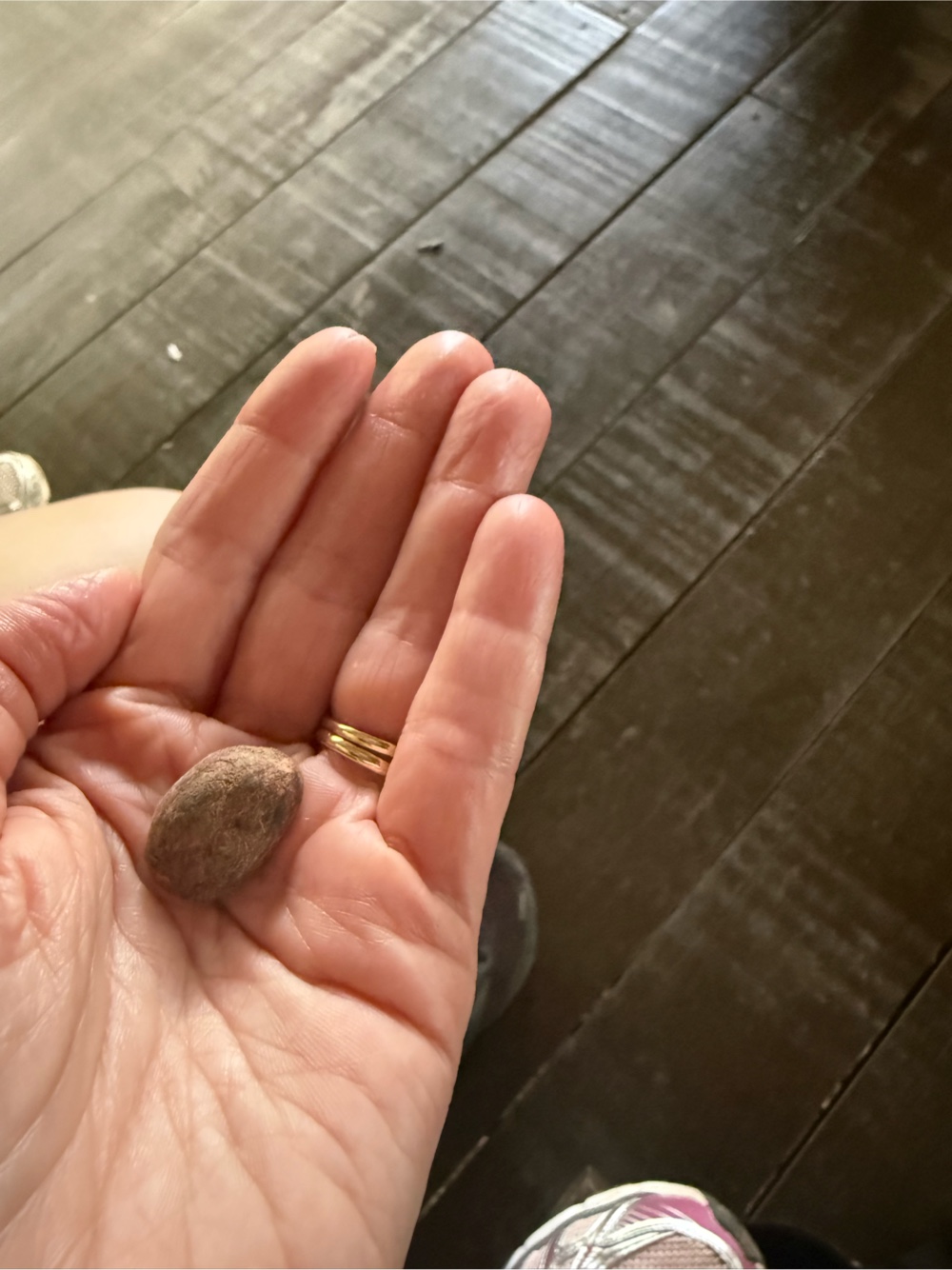
From there the beans get roasted, similar to coffee. Medium heat for about 25 minutes. We tasted the roasted beans as well, and they finally had a hint of chocolate but were still far from sweet.
Next comes shelling and grinding. The roasted beans are cracked to remove the shell, leaving cocoa nibs.
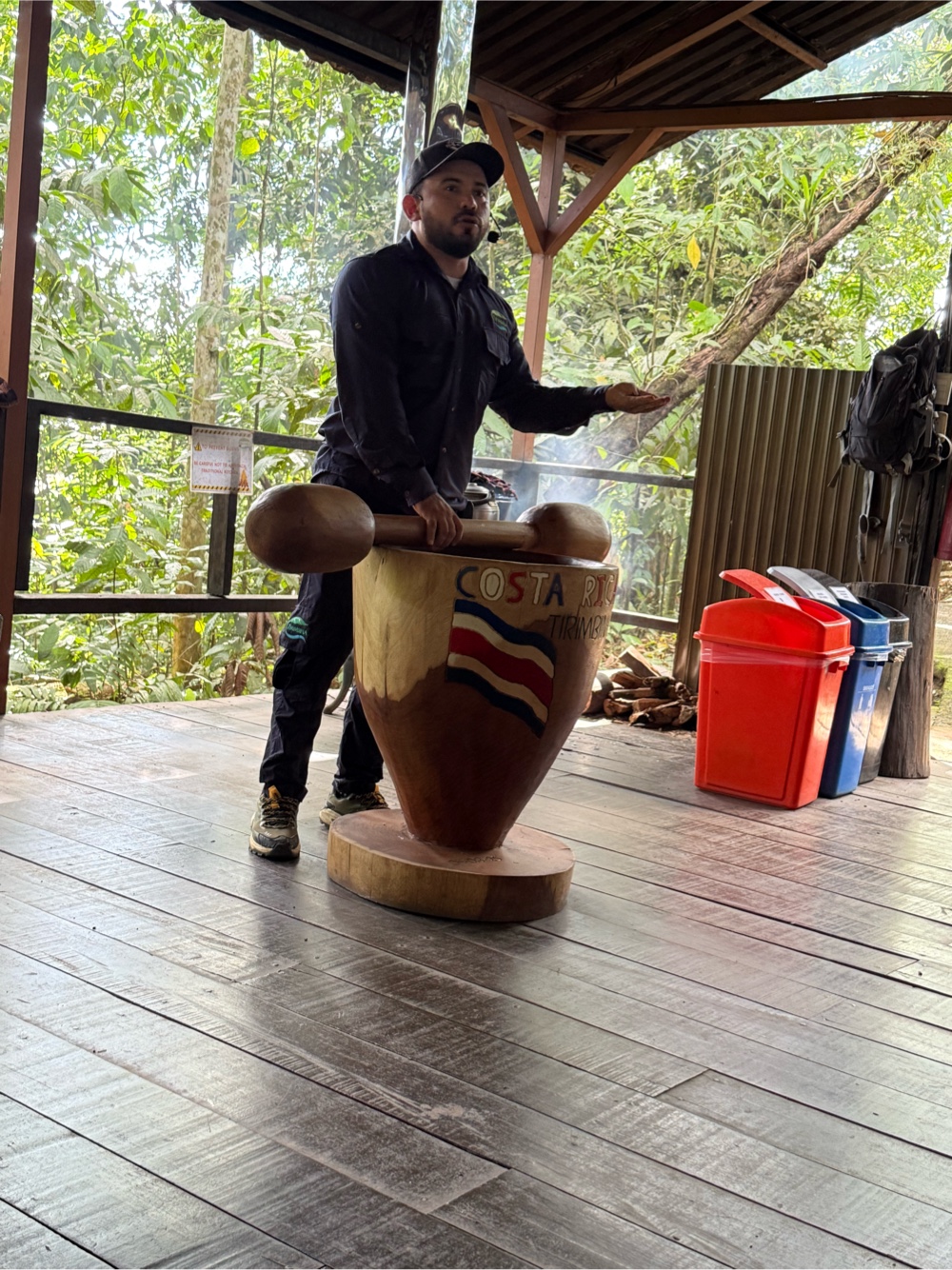
Grinding the nibs on a heated stone turns them into a paste. The friction heats the stone fast, so by the time we were working the nibs, the rock was almost too hot to touch on the edges.
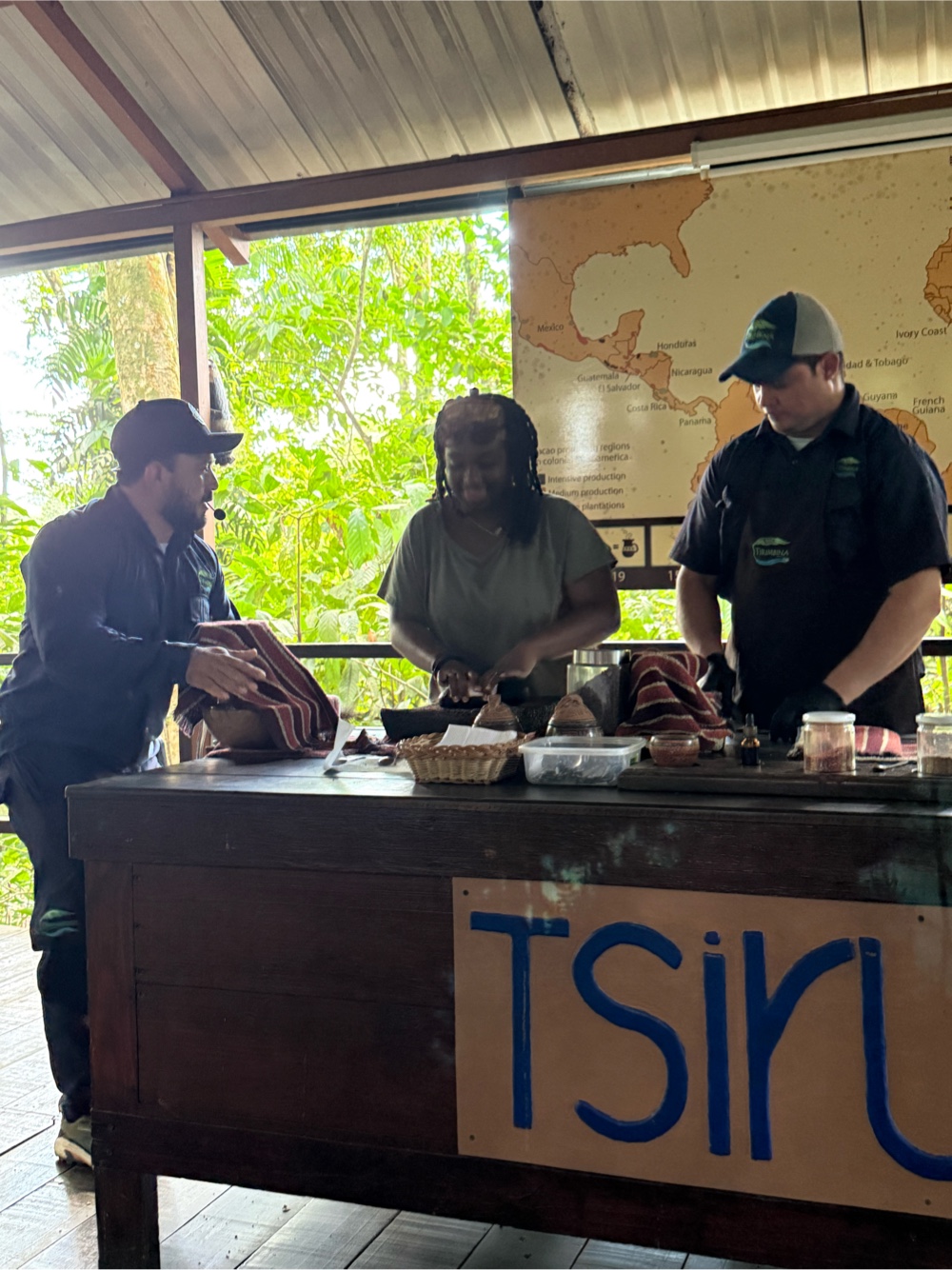
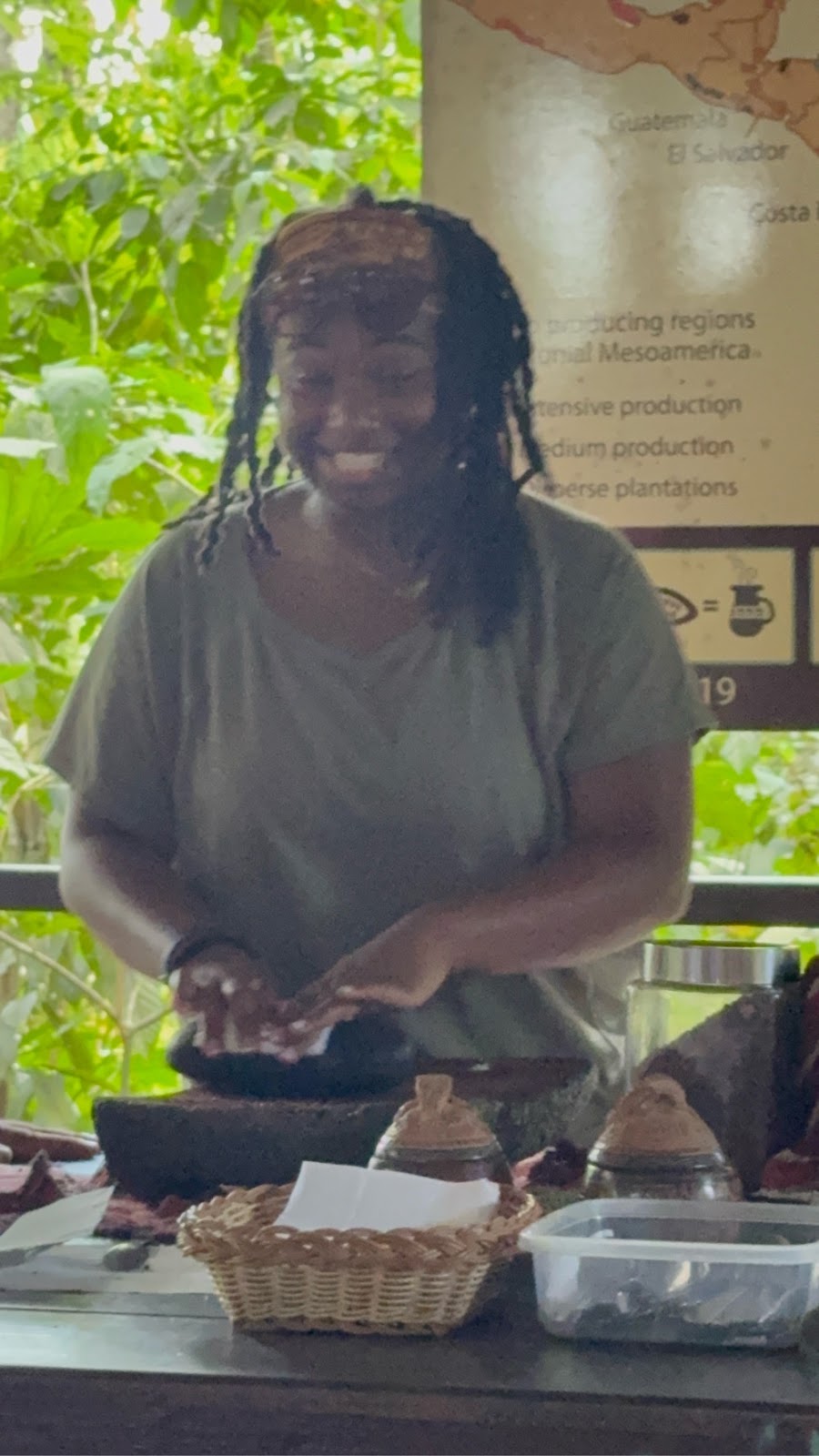
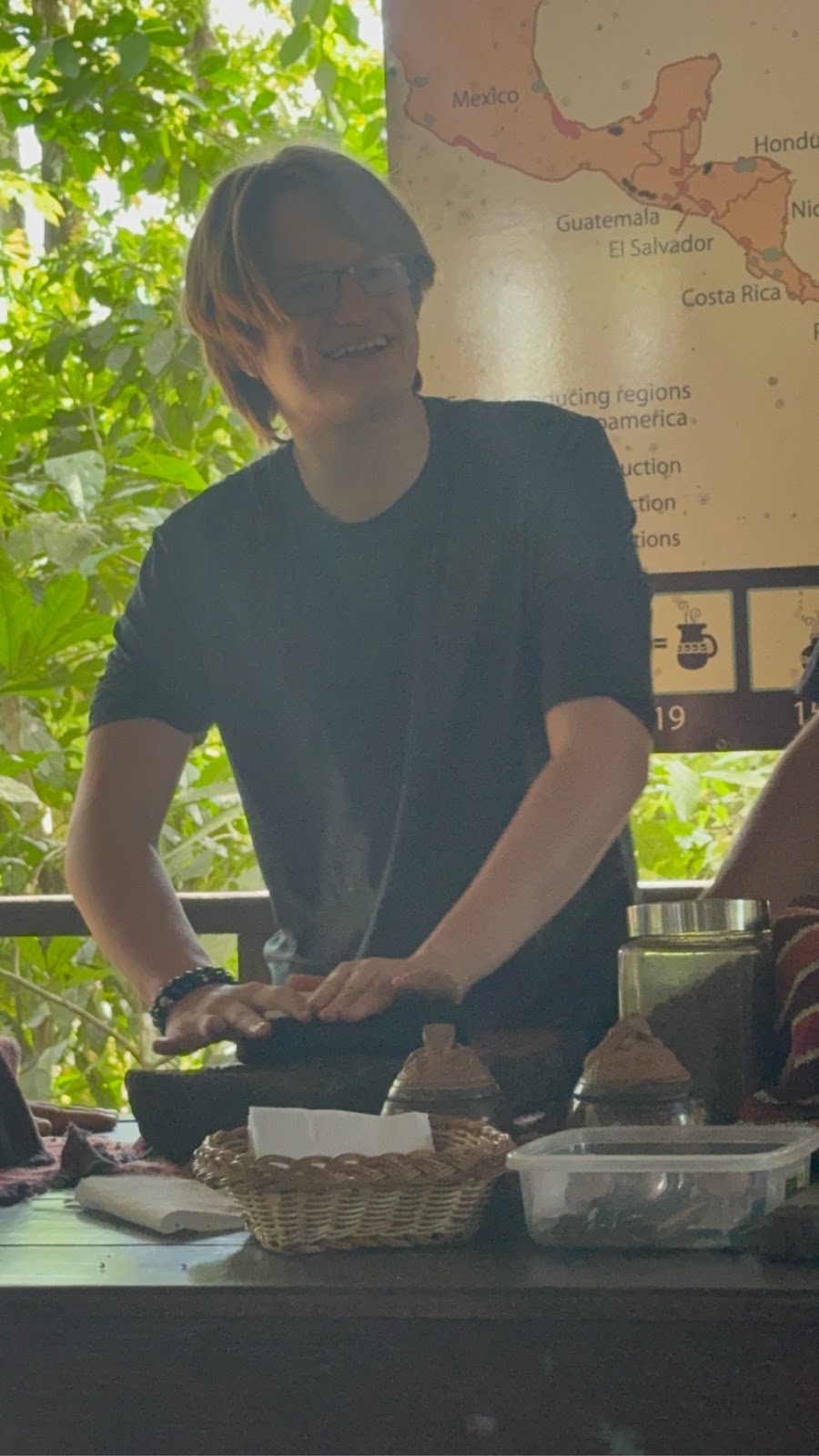
While grinding, our guide added cinnamon and sugar. Both melted into the paste and changed the smell immediately. Several students got to try their hand at making the paste and further grinding the nibs. The kids had to “dance” while doing it because that’s how it was traditionally done, so several of our students took that job very seriously while others provided the music.
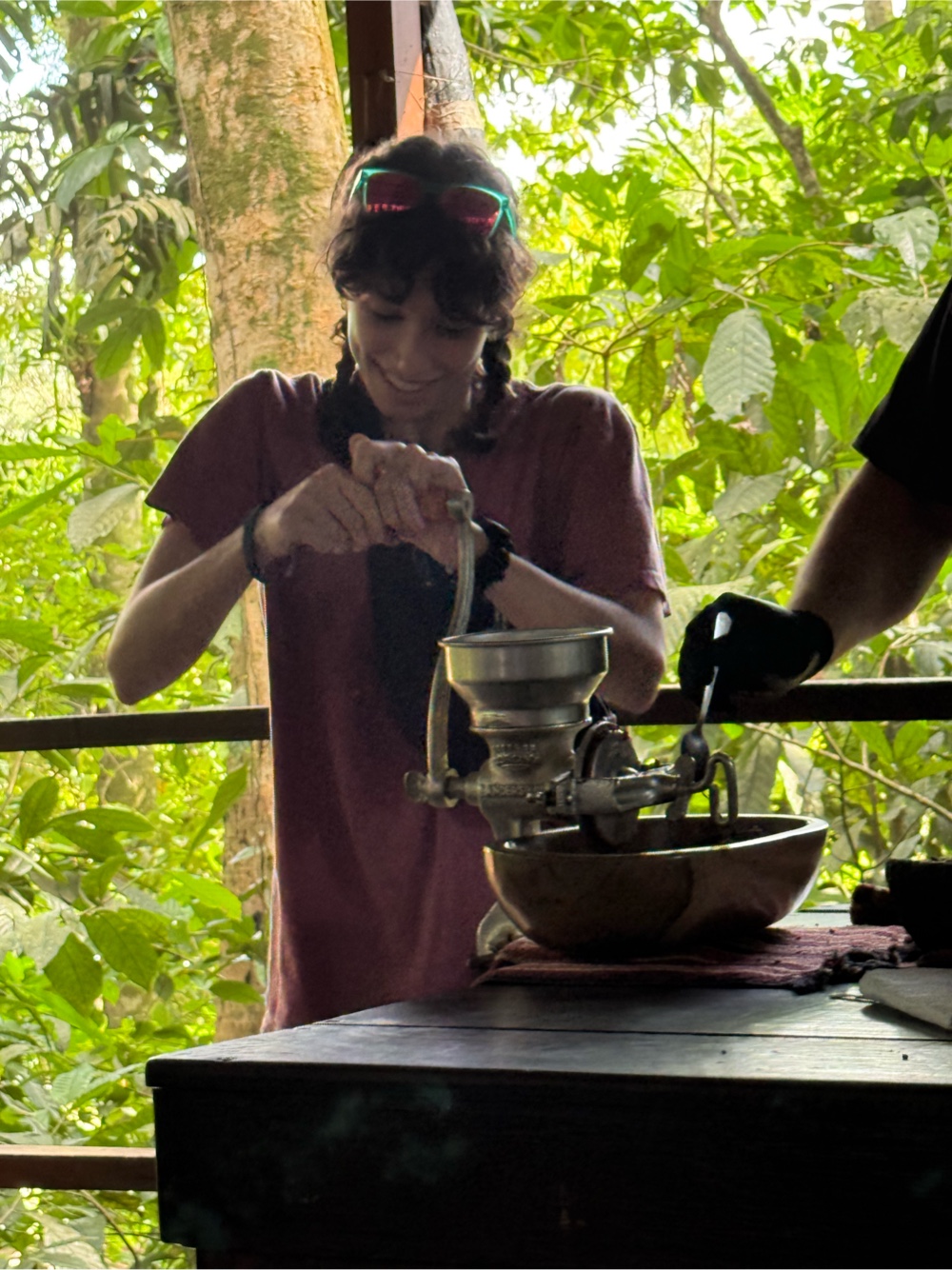
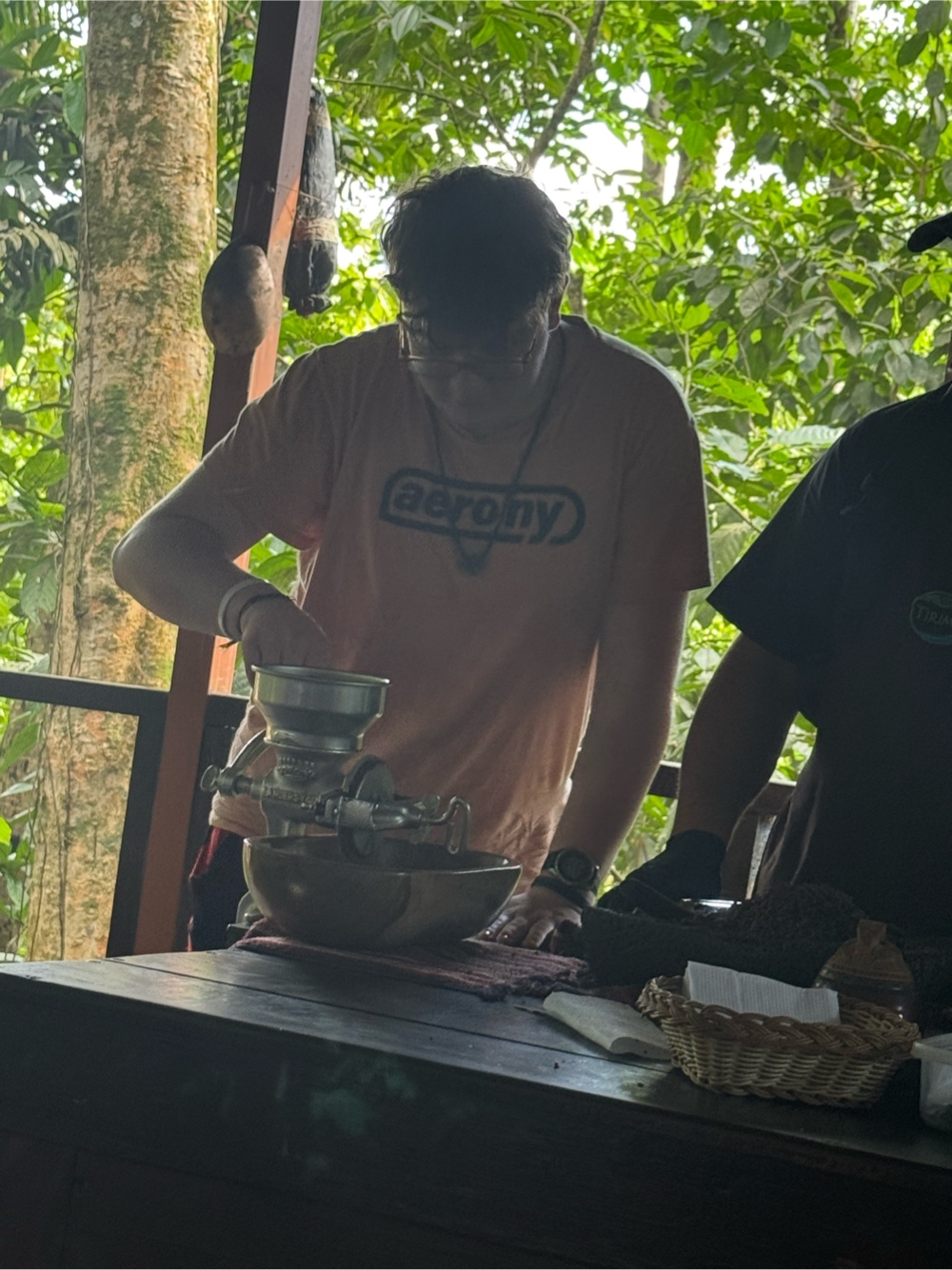
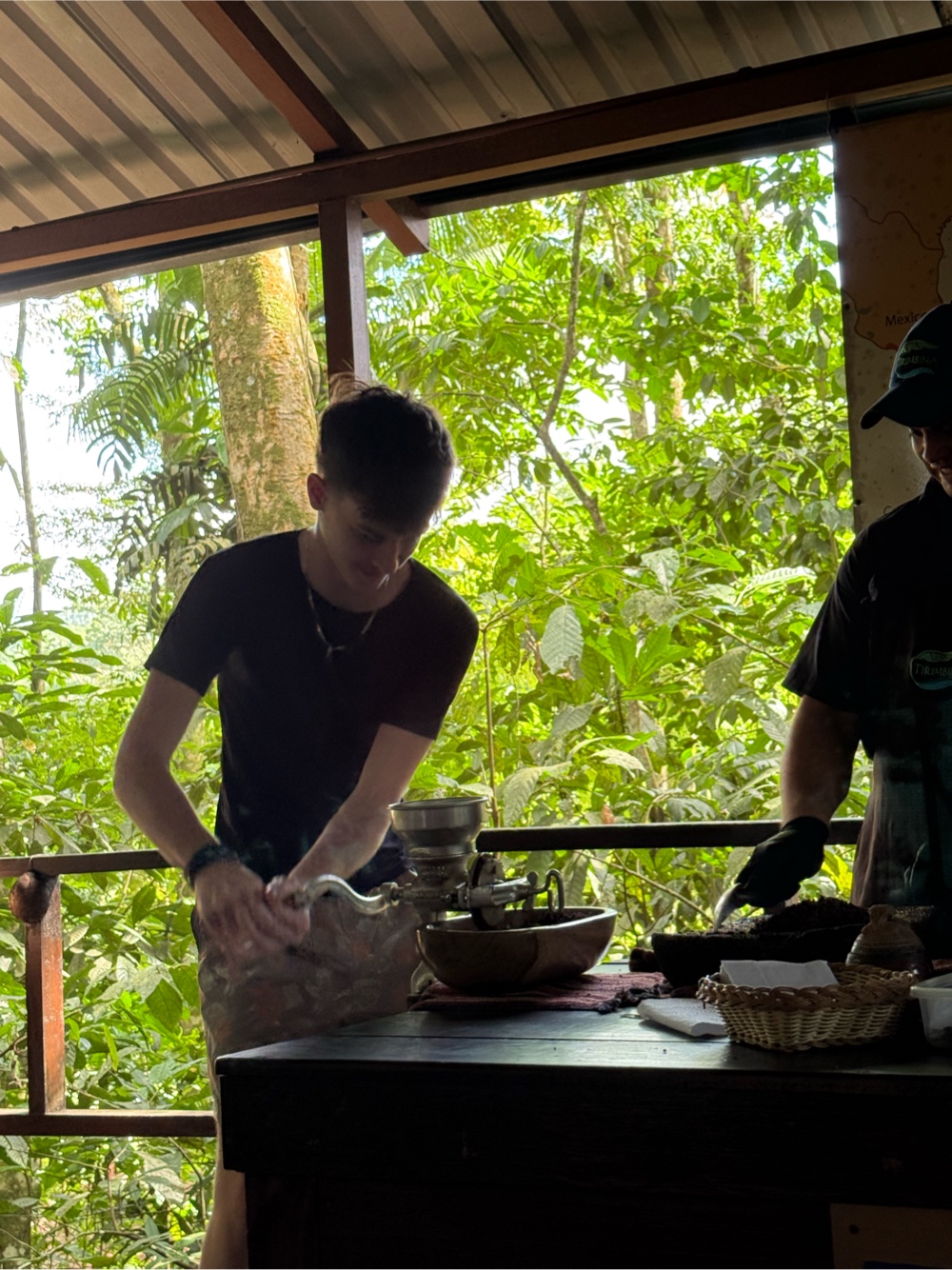
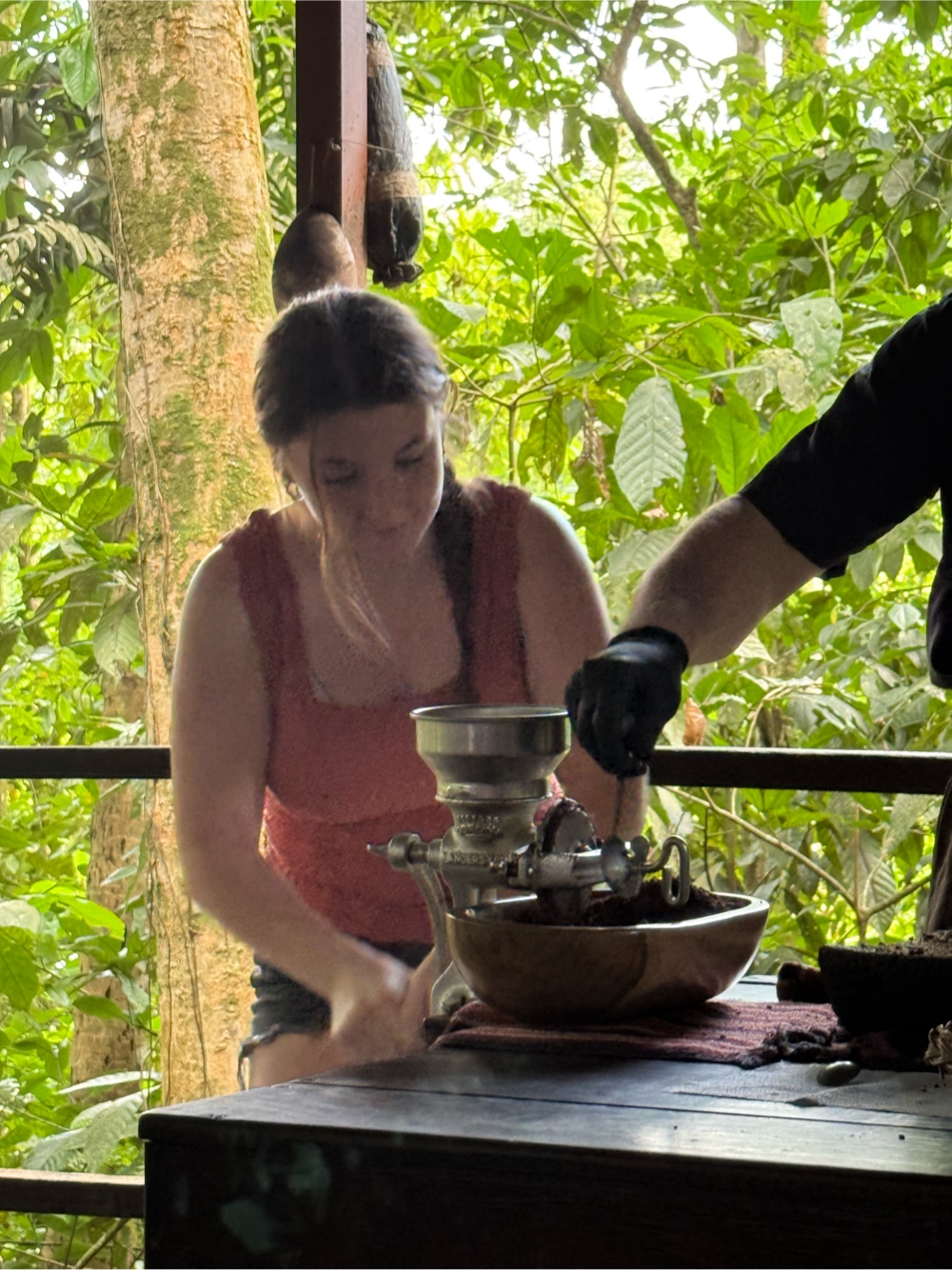
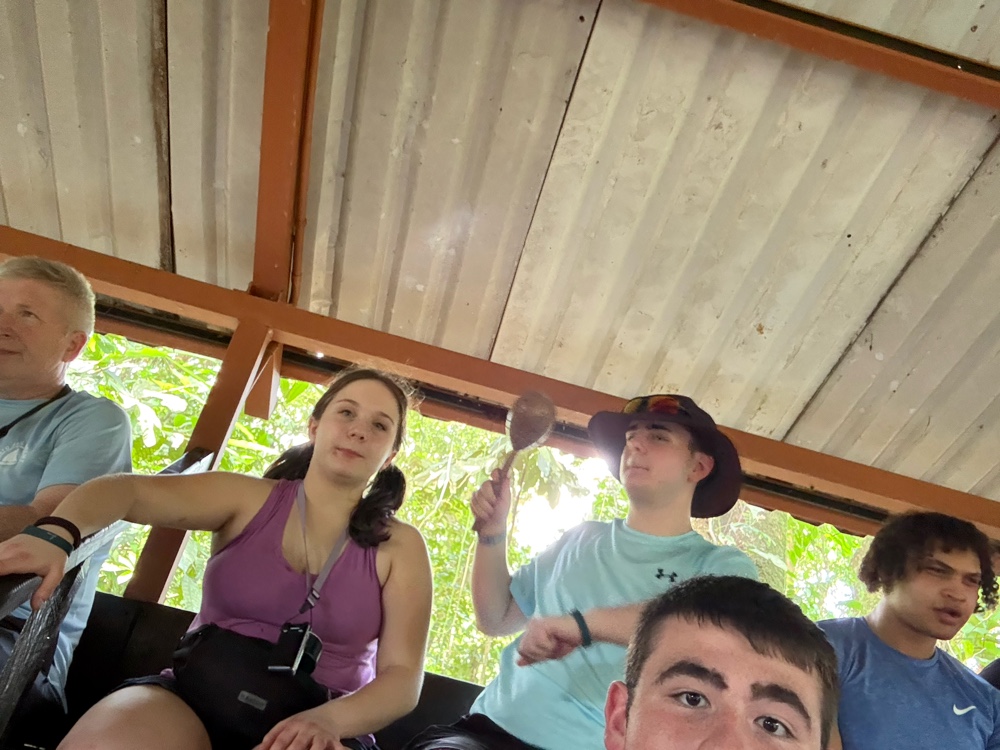
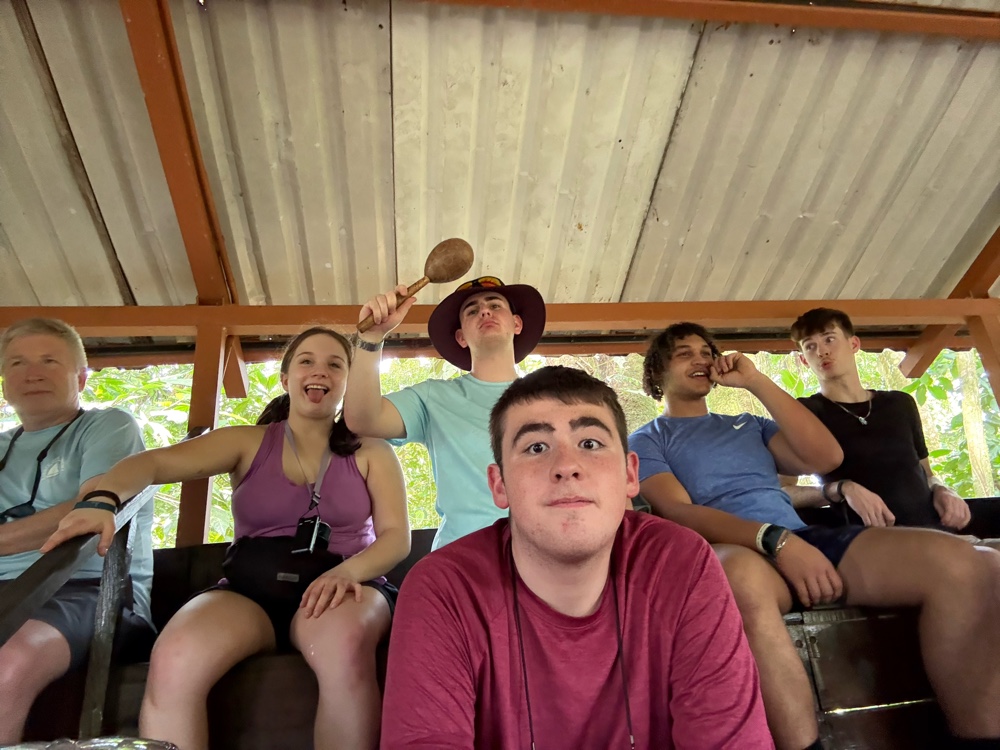
Then it was time for for another taste of our paste. Getting sweeter!
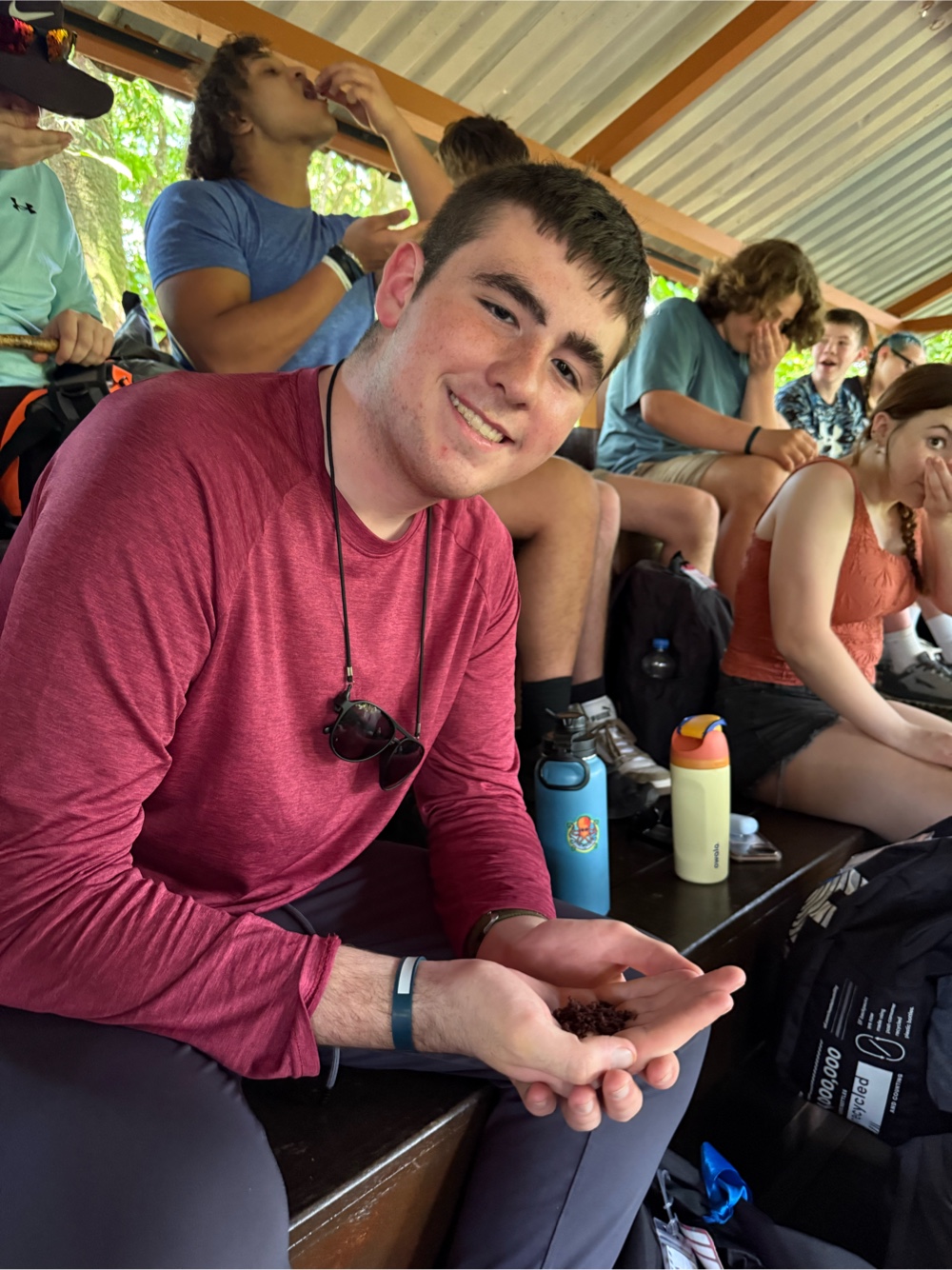
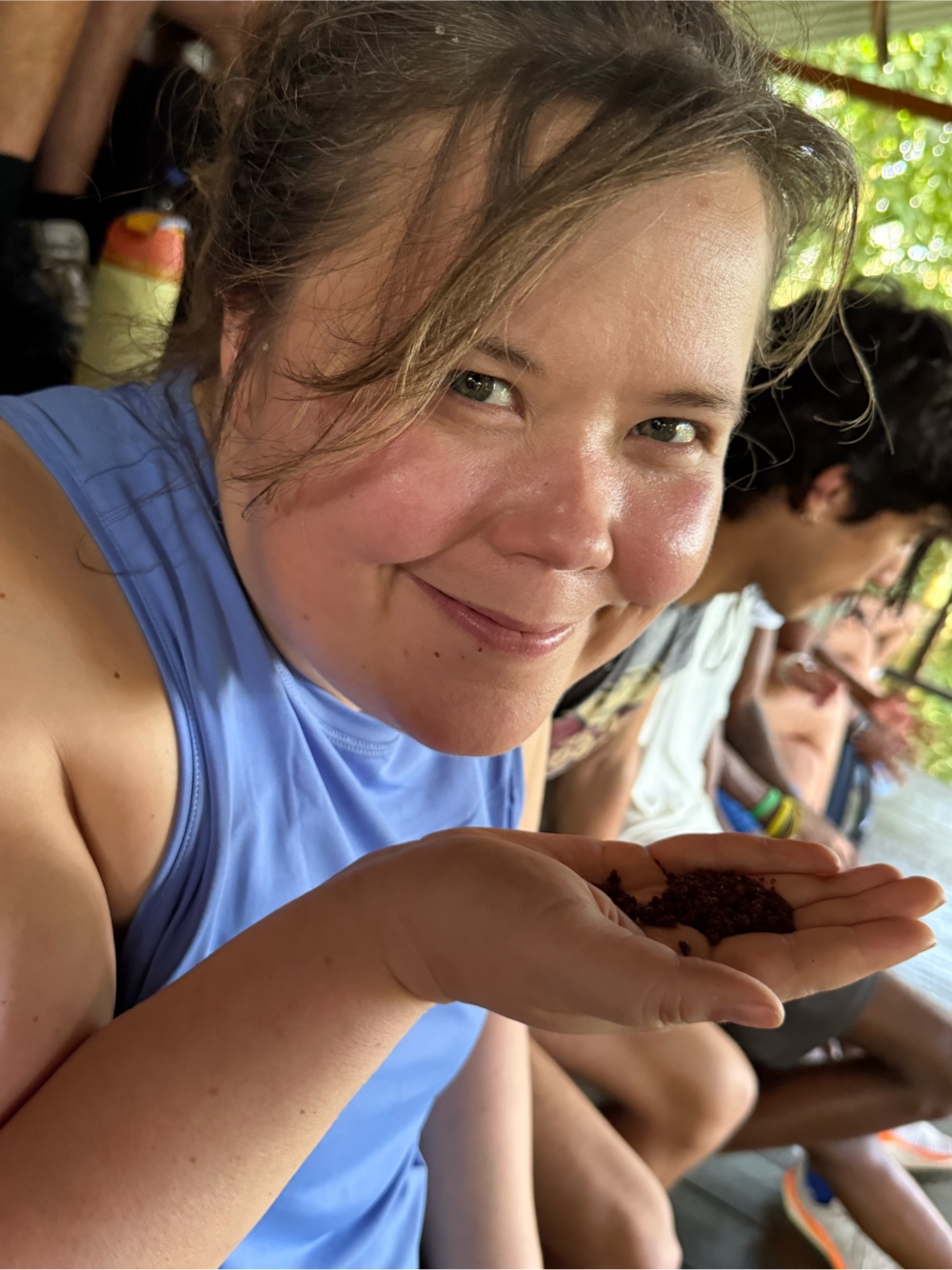
After that we made the paste into cacao agua, the original drink made from cacao. First we tasted the plain version with just cacao and water, whisked and poured back and forth to aerate it.
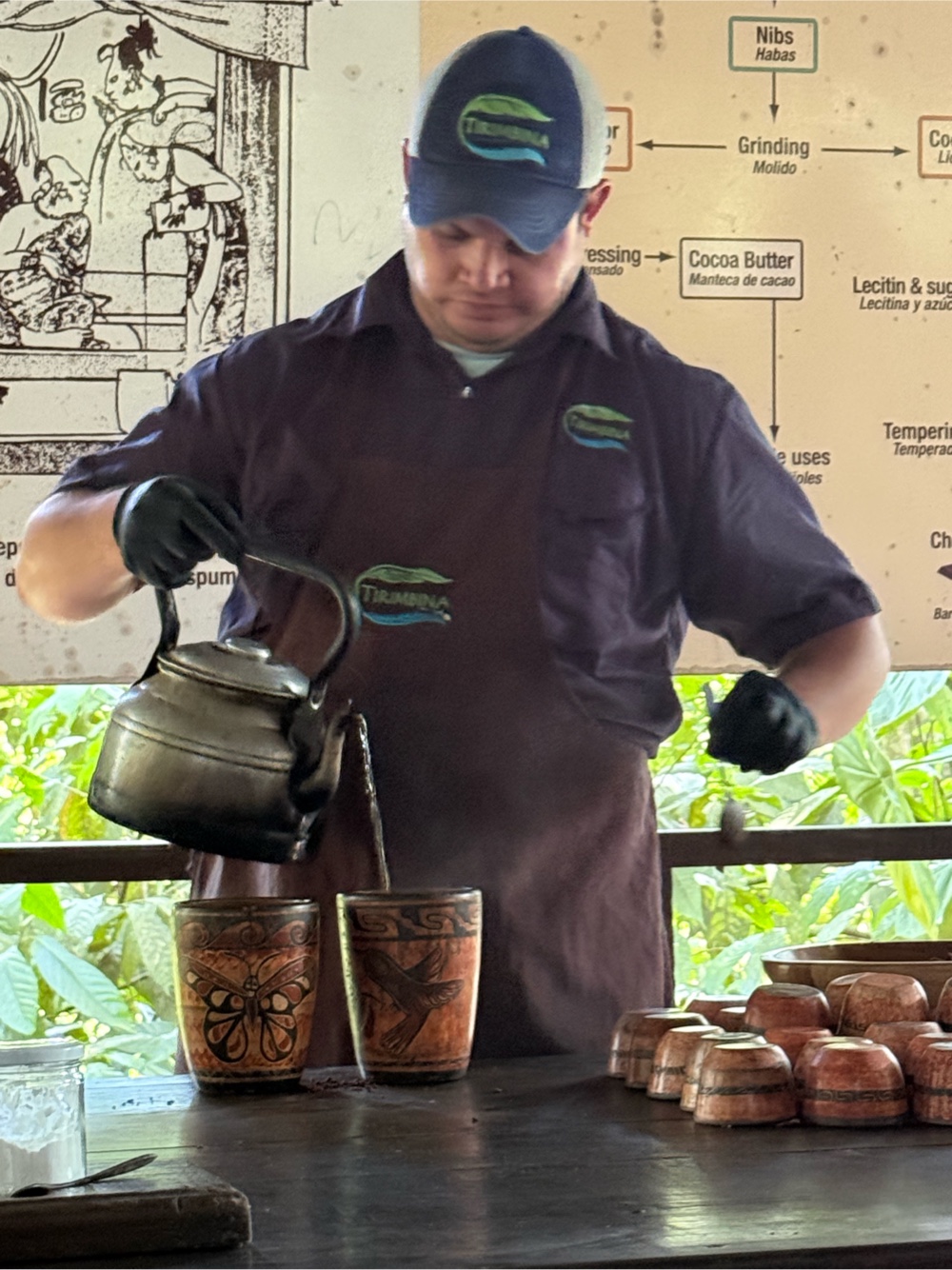
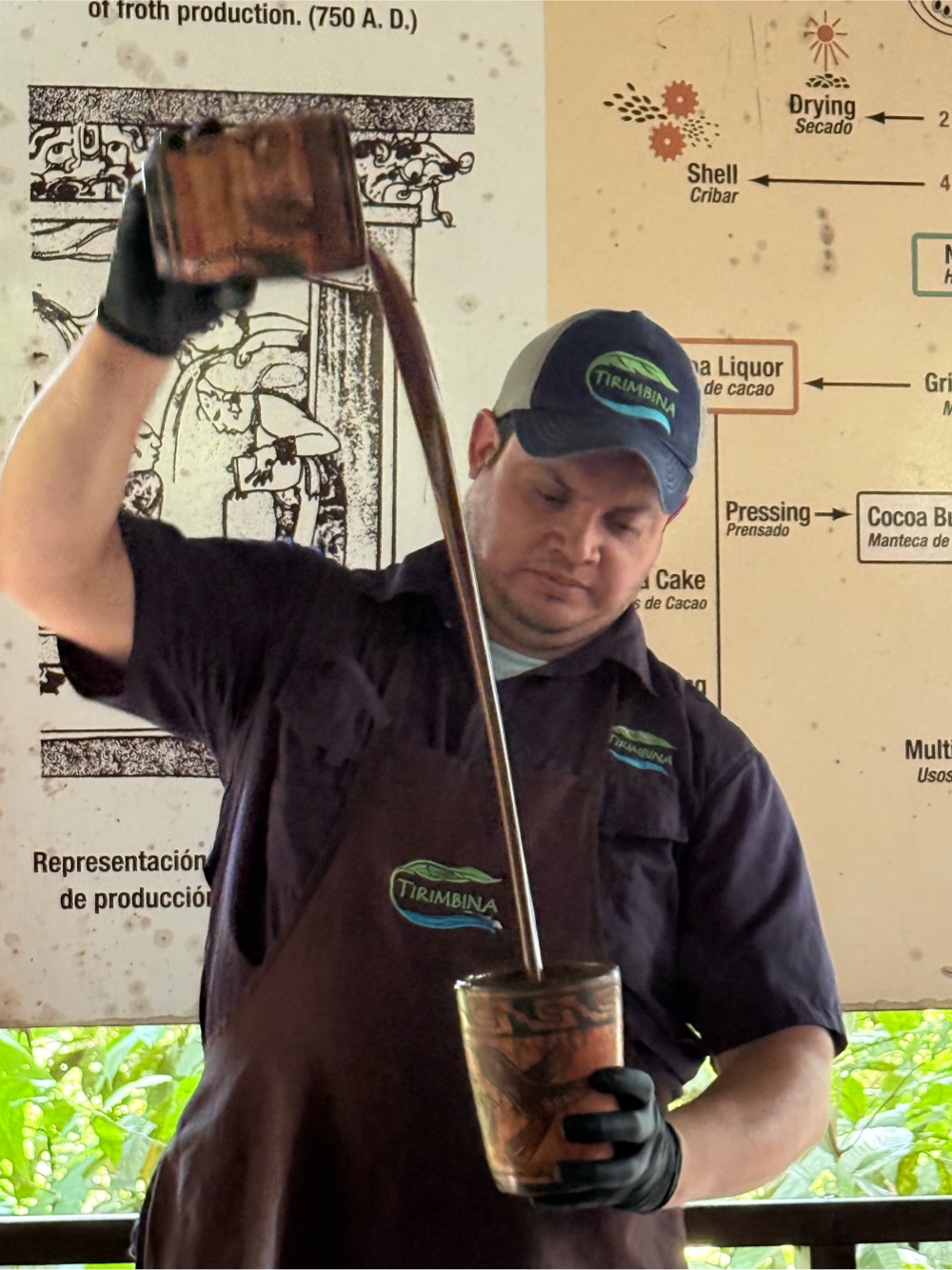
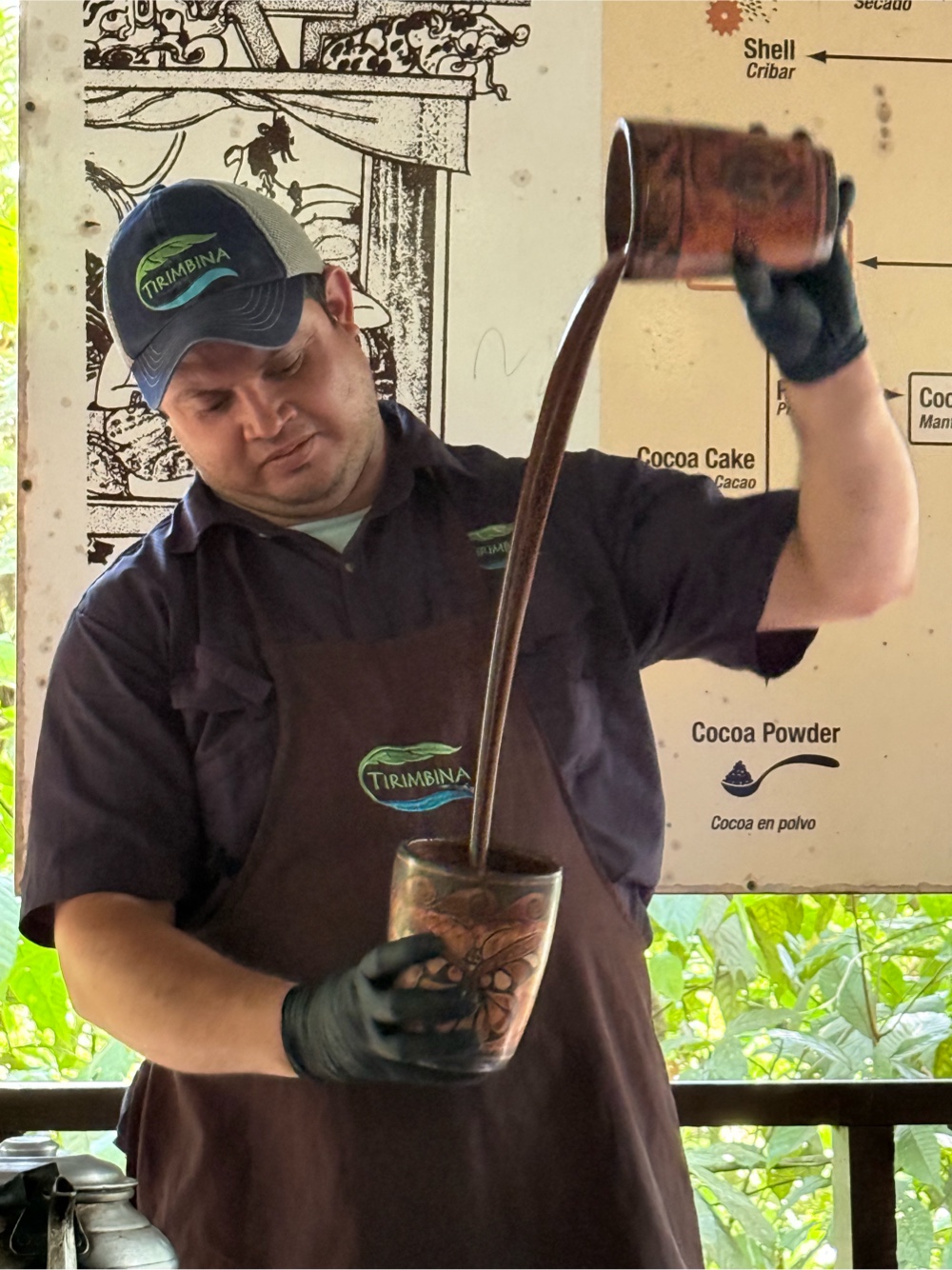
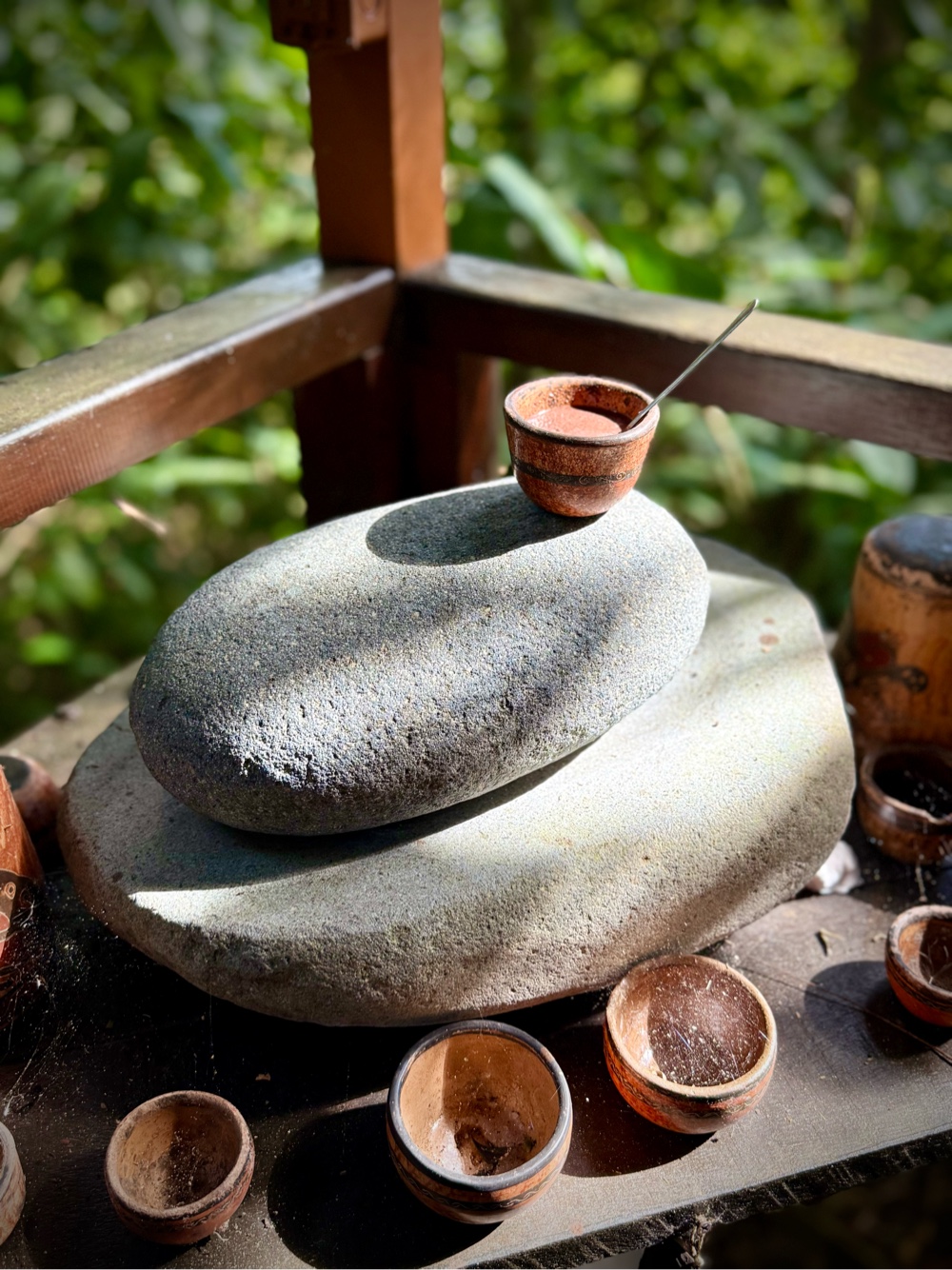
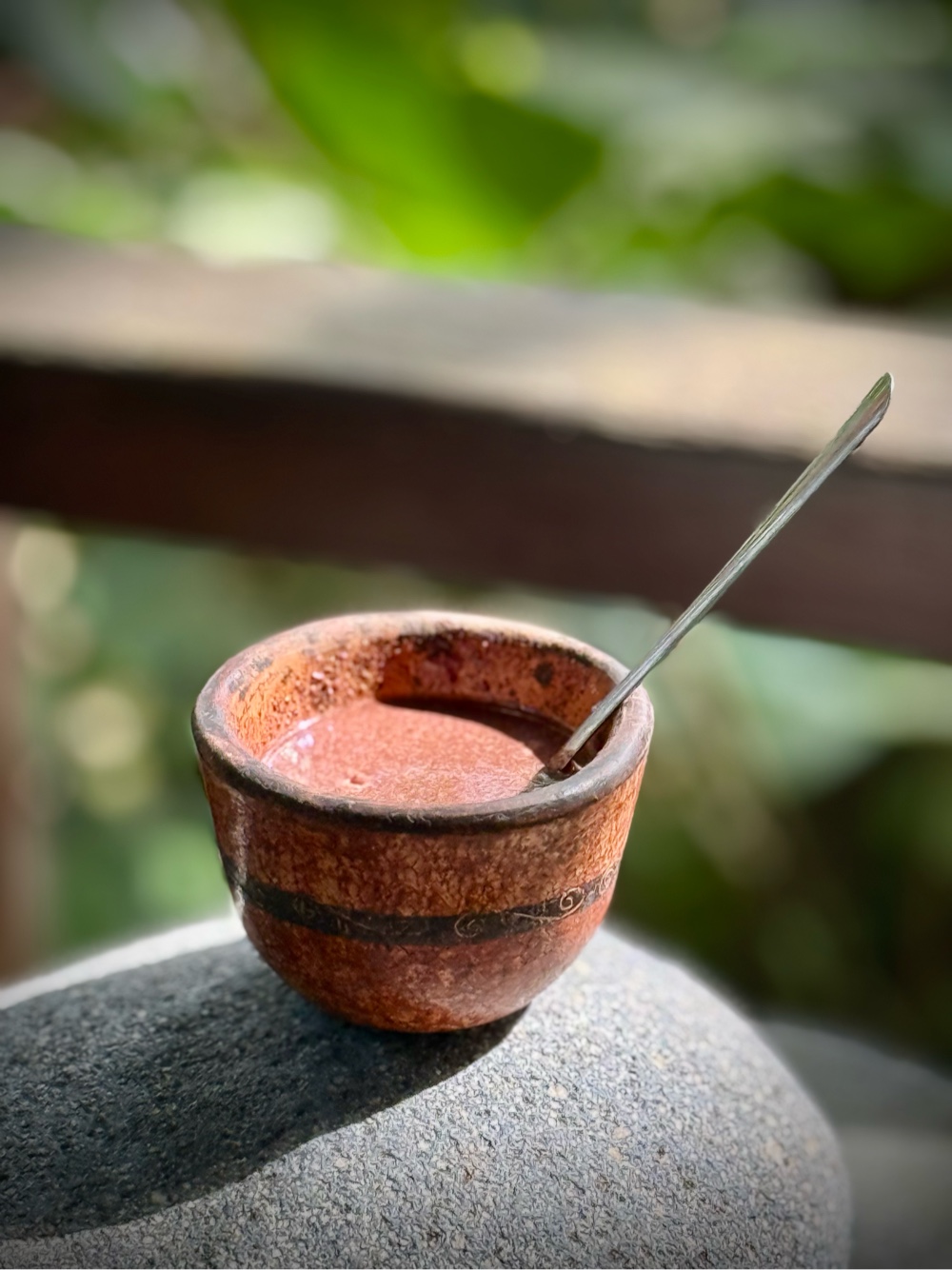
It’s earthy and bitter, nothing like modern hot chocolate. As options we added vanilla, chili, nutmeg, pepper, cornstarch, sugar, or milk to customize our own versions.
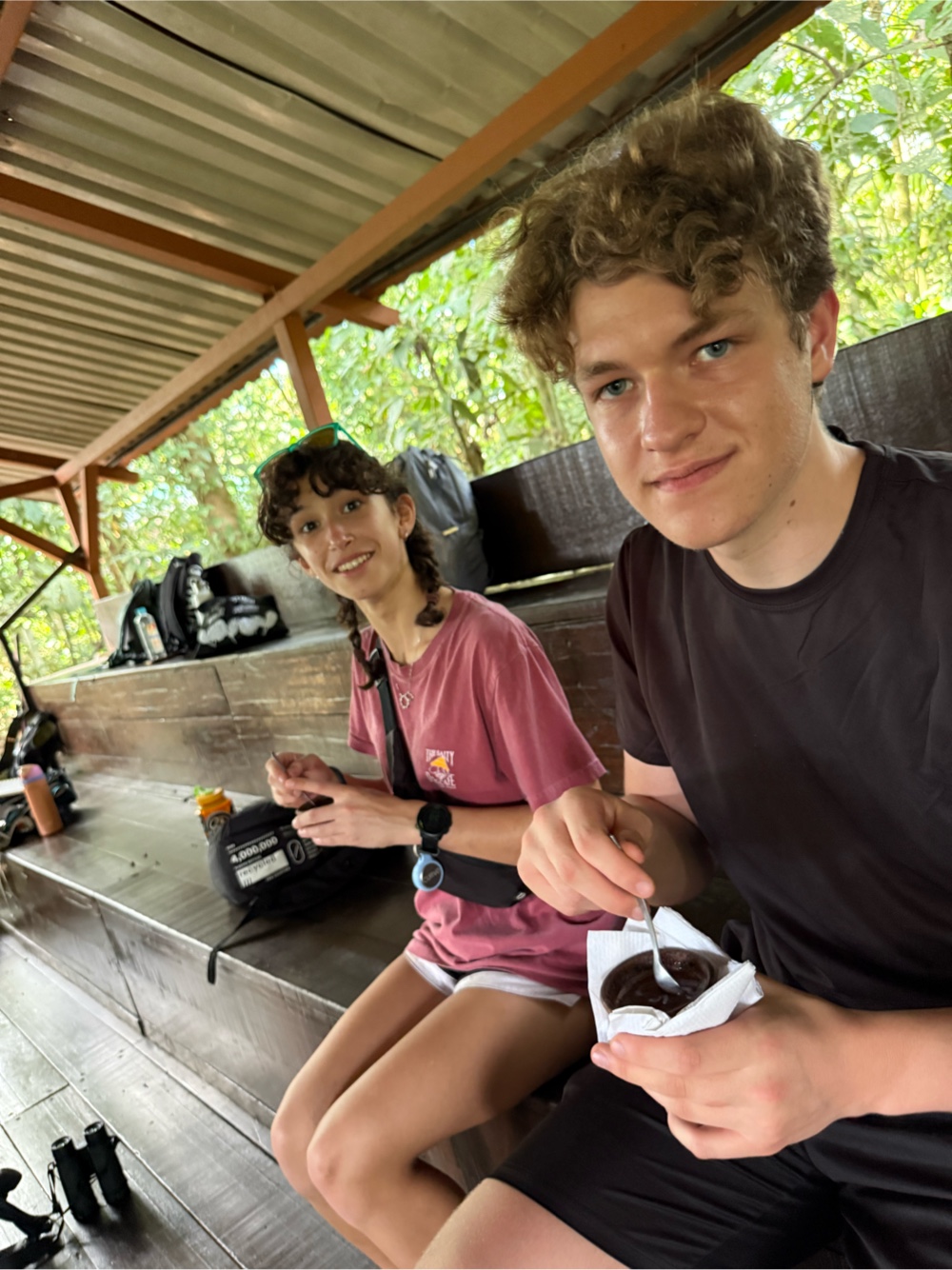
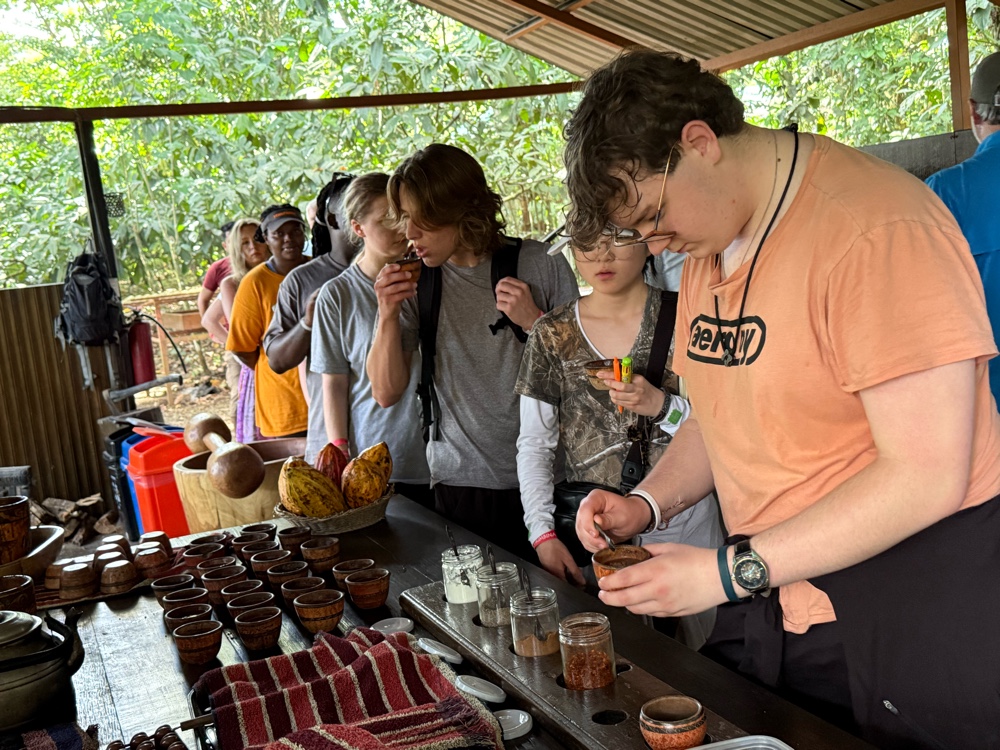
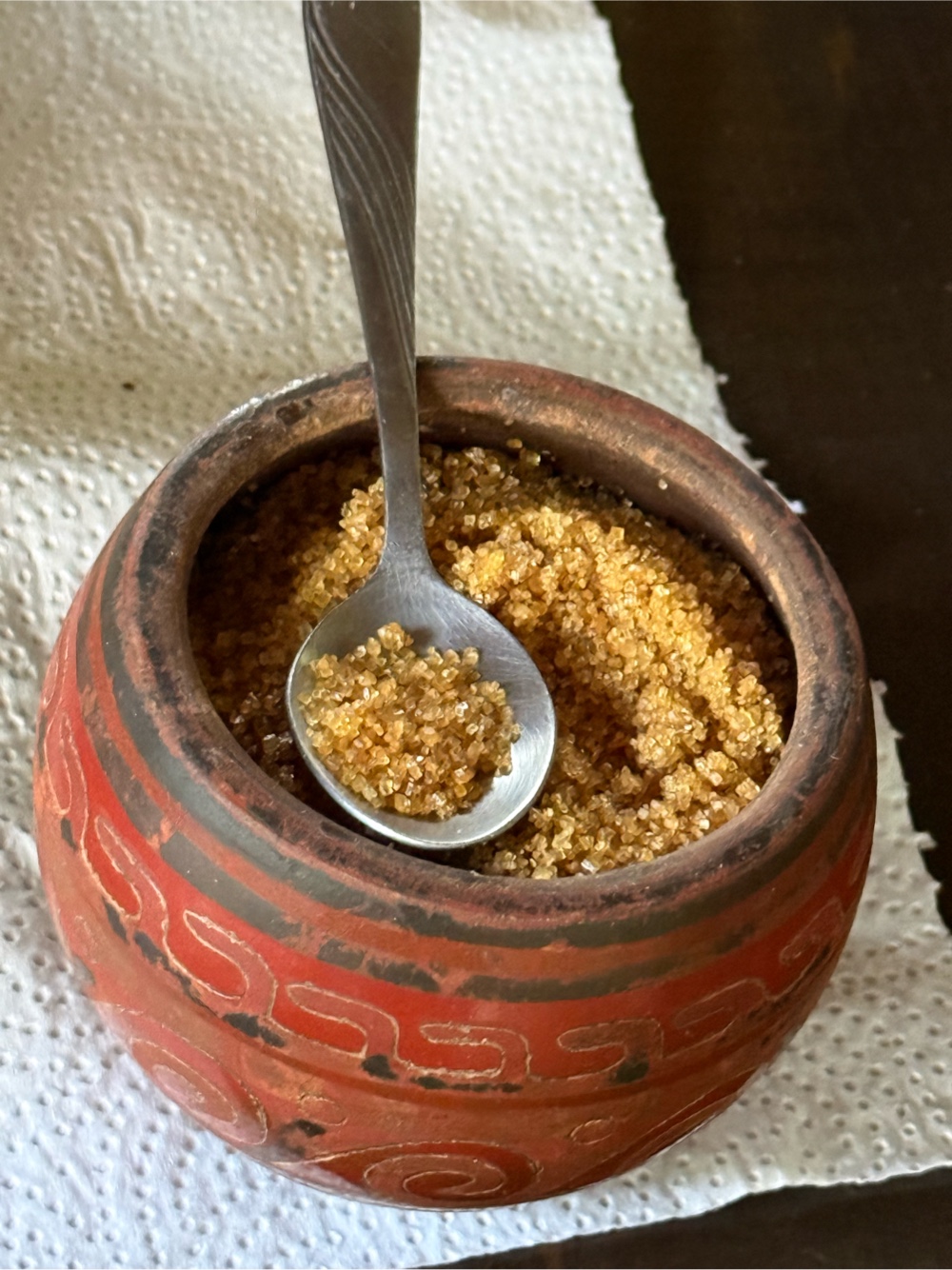
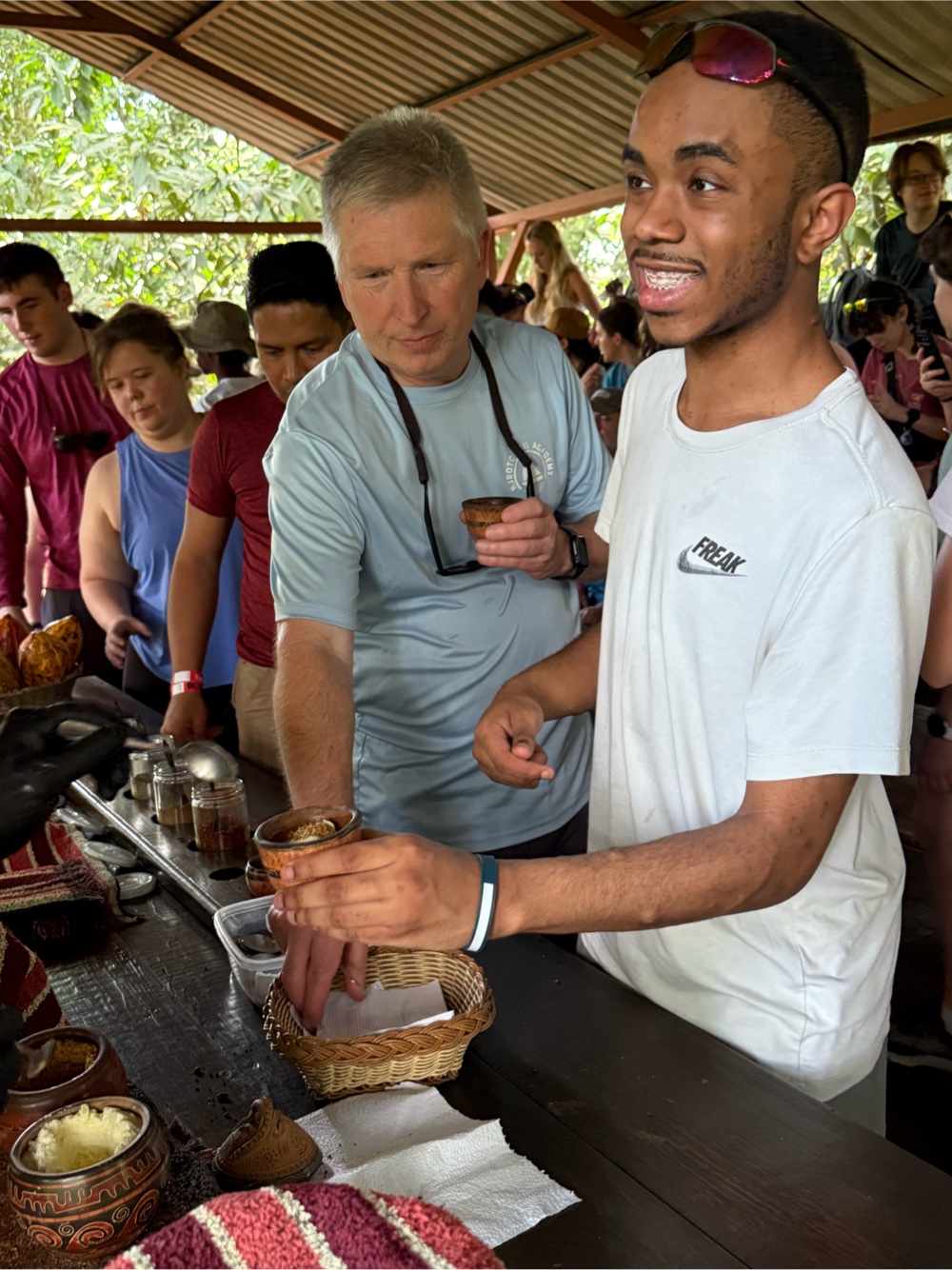
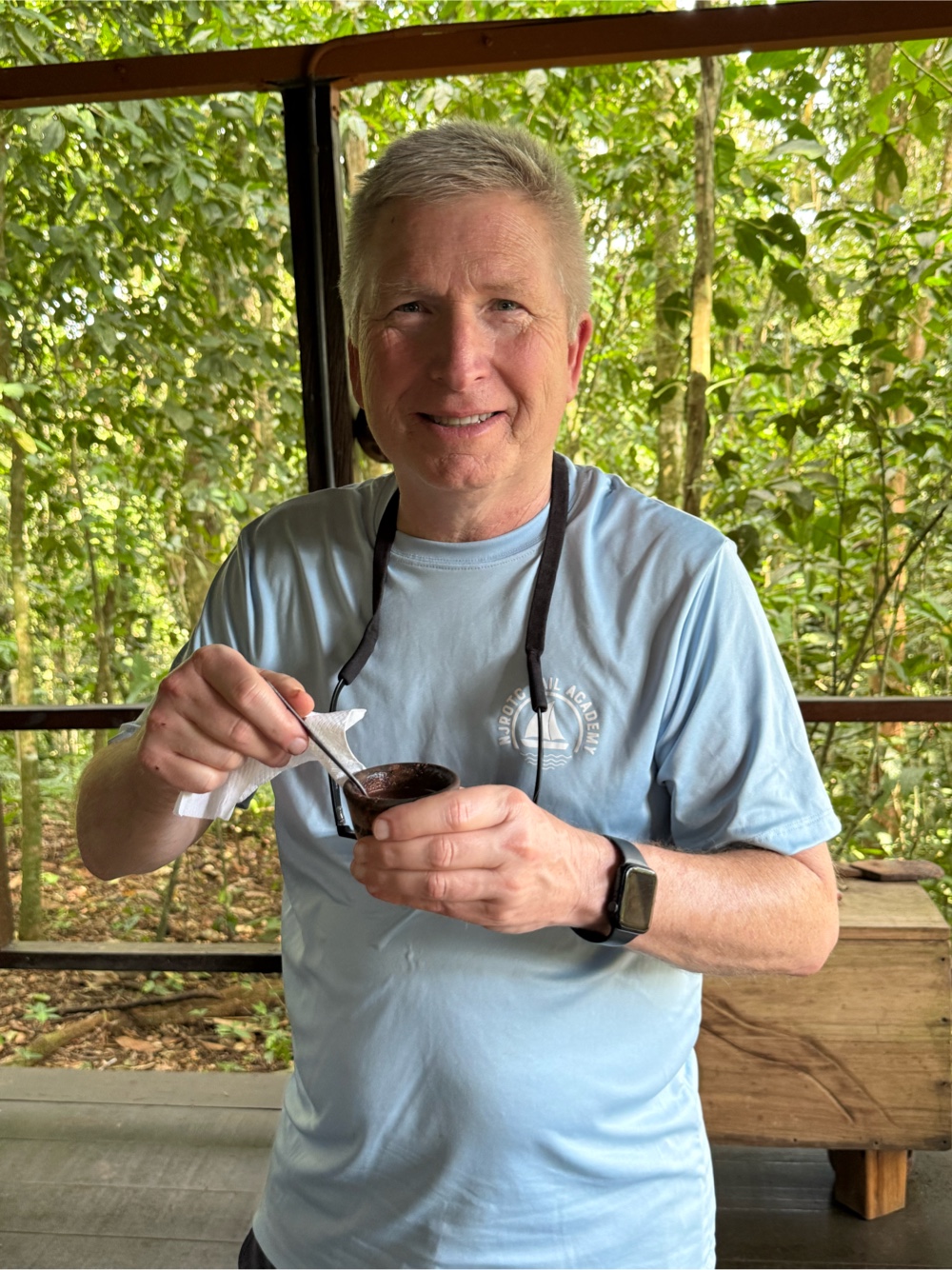
Feelings were mixed on the final product. At 70% chocolate (30% sugar), some kids felt it was too bitter. Others loved it.
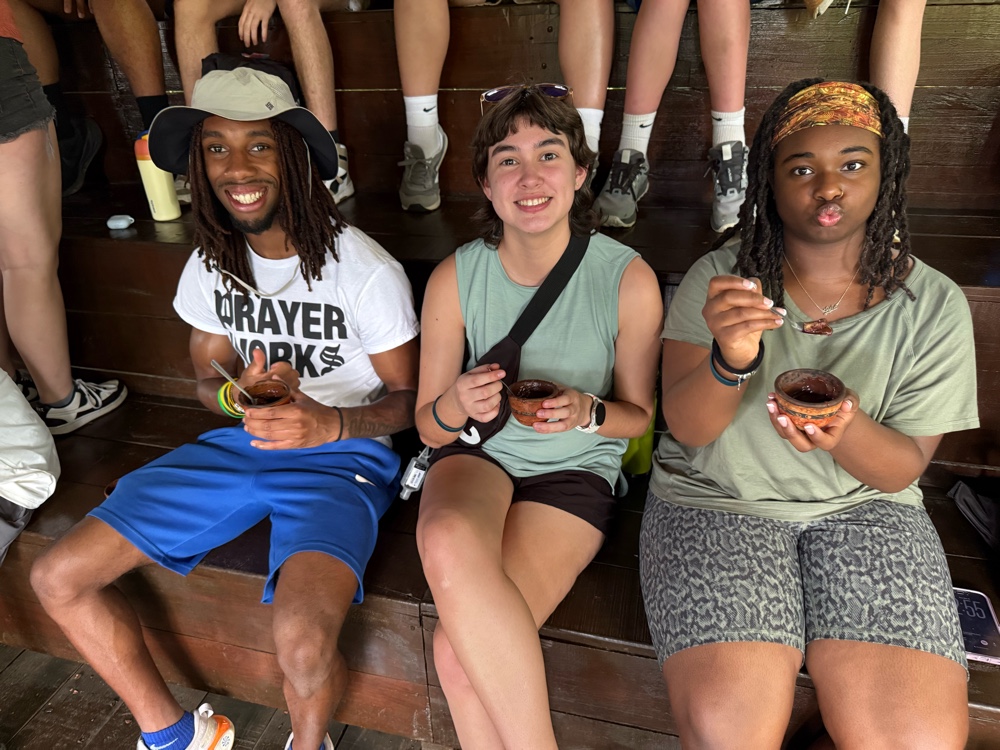
Our last taste was of the finished bar chocolates. There were both dark and milk to try.
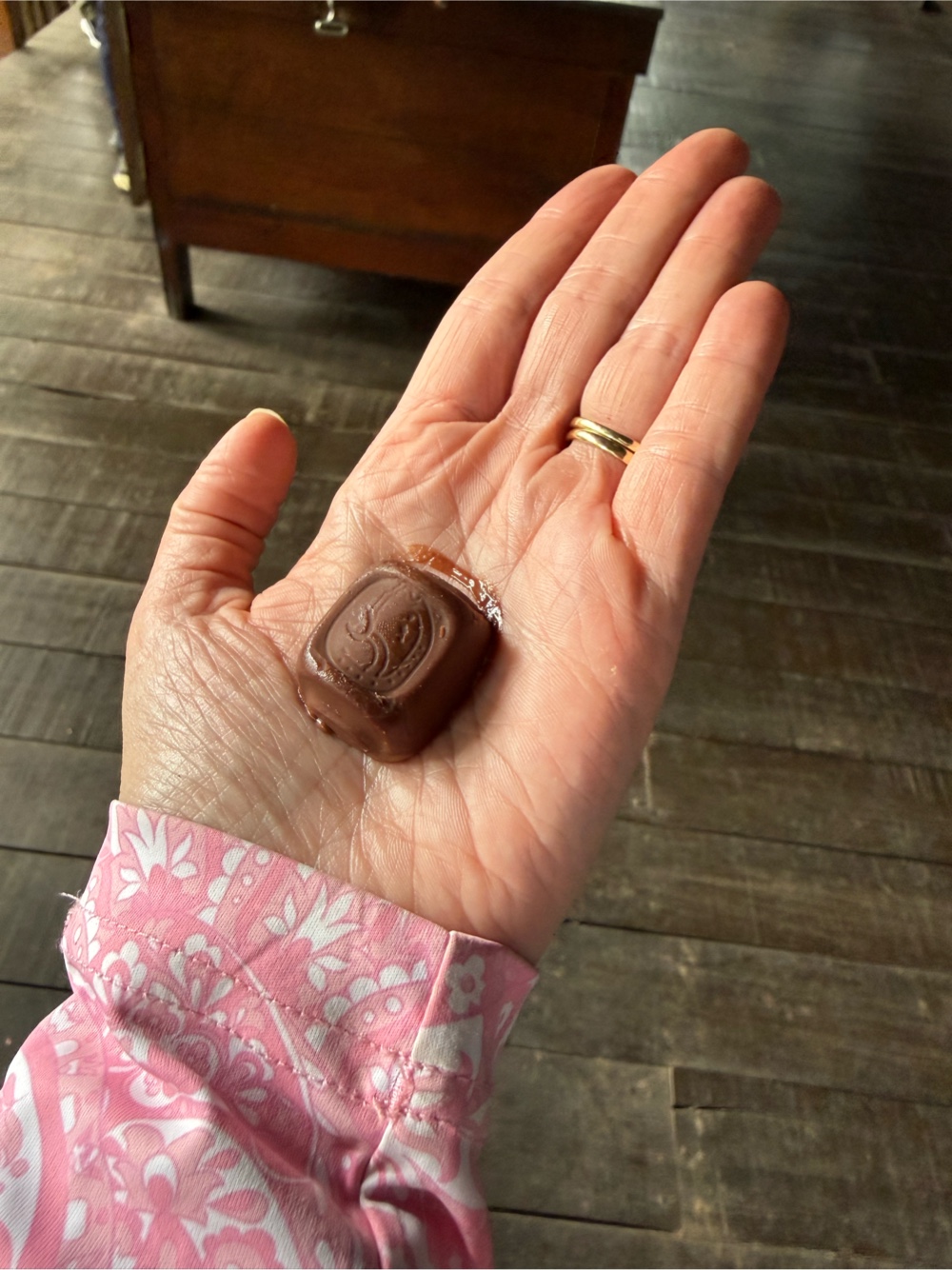
At this point I think we might have been on sugar overload! But what a great experience. We’ve learned so much about how various crops are produced and it’s only day two!

No comments:
Post a Comment