
Florence has 400,000 people and is half the size of Bologna. It is the capital of the Tuscany region and a former capital of Italy. It’s an important city, as it was the birth of the Renaissance and home of the powerful Medici family, which became a political dynasty. Many famous people have lived there - Michelangelo, Dante, Galileo, and DaVinci just to name a few! Amerigo Vespucci, for whom the US is named, is from here too.
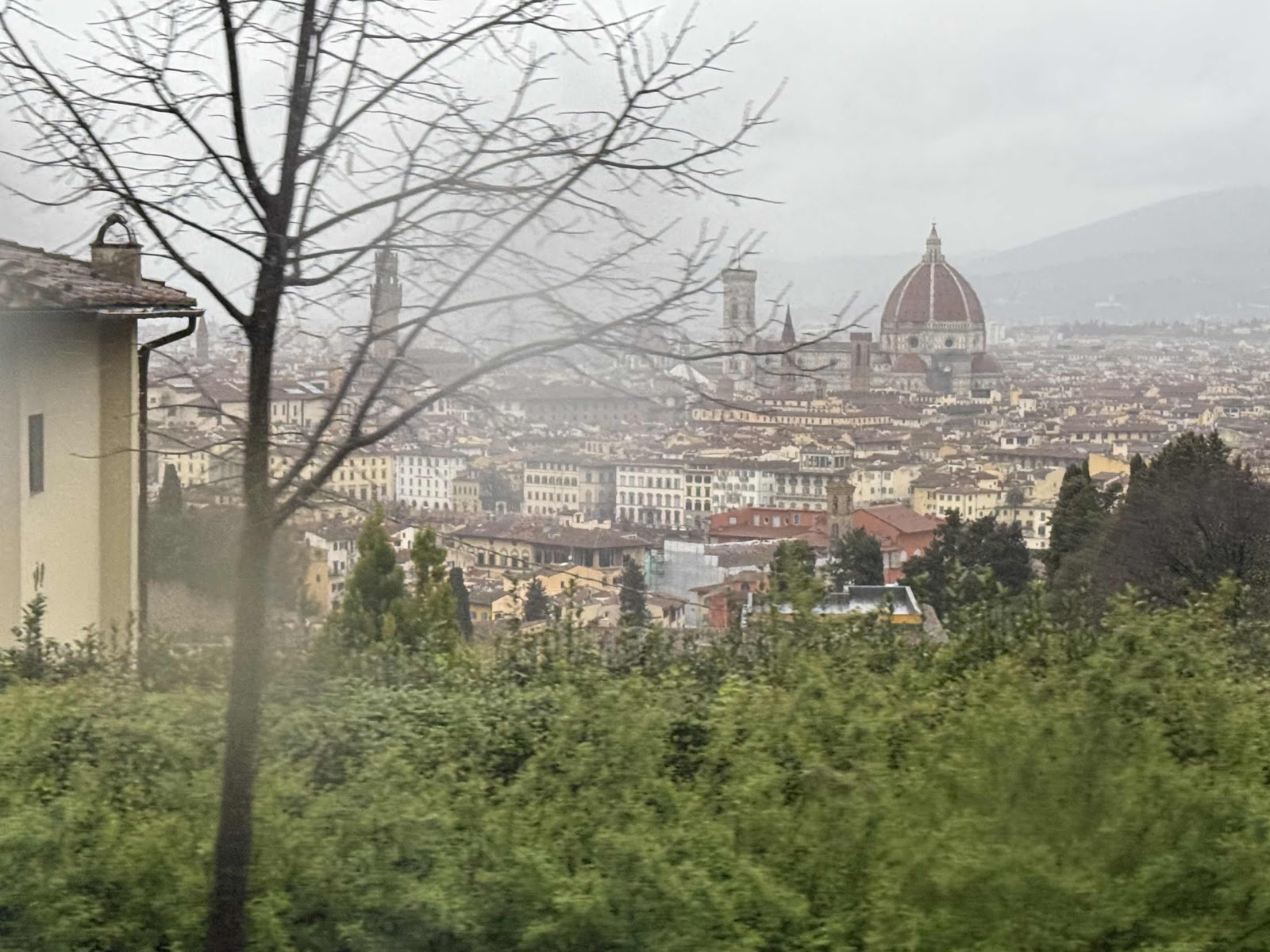
60% of the UNESCO World Heritage sites are in Italy, and of that, half (or 30% of the world!) are in Florence. It’s a beautiful city and even though it rained we enjoyed the sites!
The Medici family is from Florence. They were very rich and invested in the arts as a way of demonstrating influence and power. They eventually became the ruling family and built several palaces through the city.
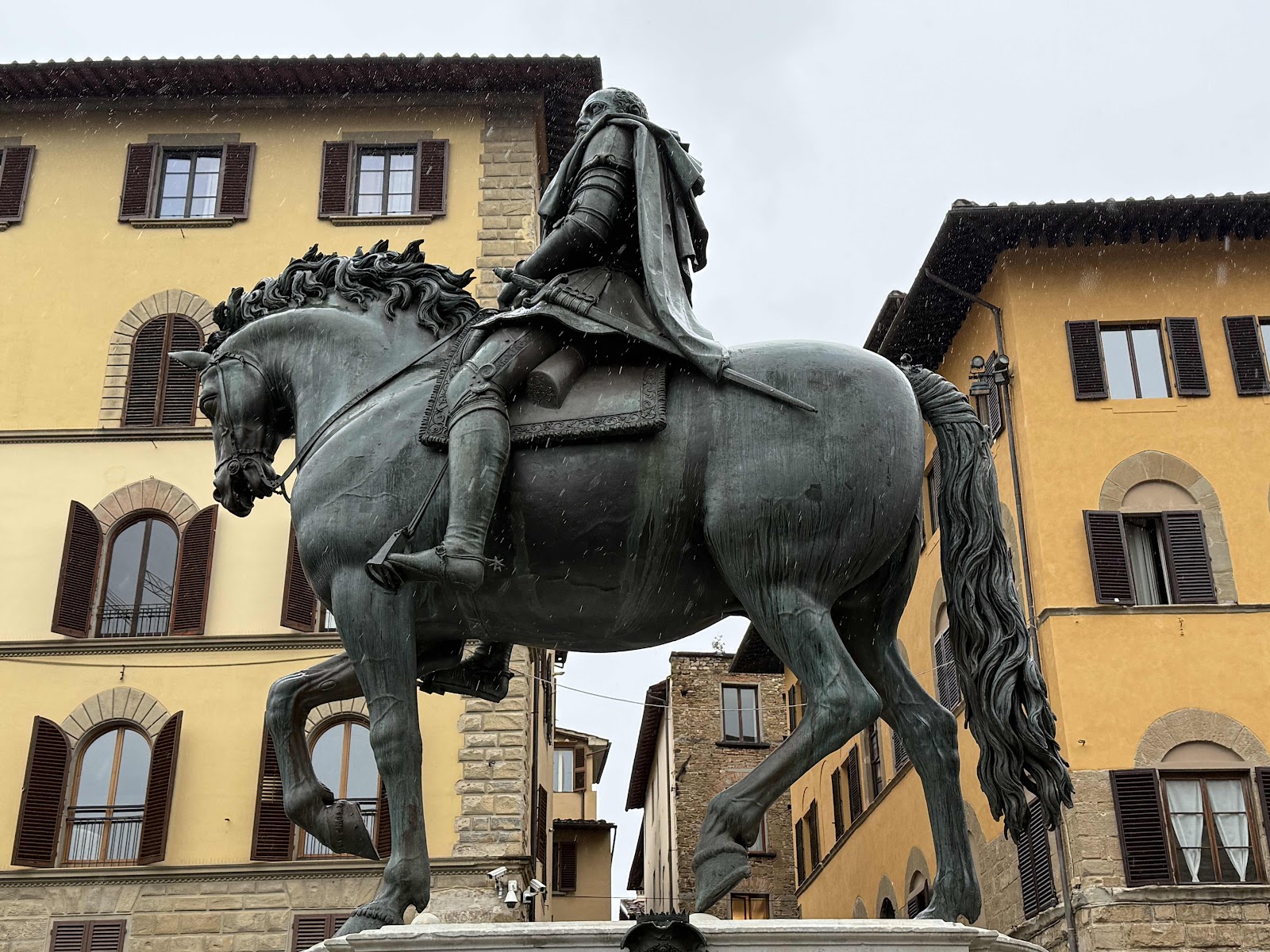
We started in the Piazza della Signoria. A statue of one of the Medicis on a horse is in the square.
This square houses the Palazzo Vecchio, a fortress-like town hall where the current mayor is based. It was formerly a palace for the Medici family.
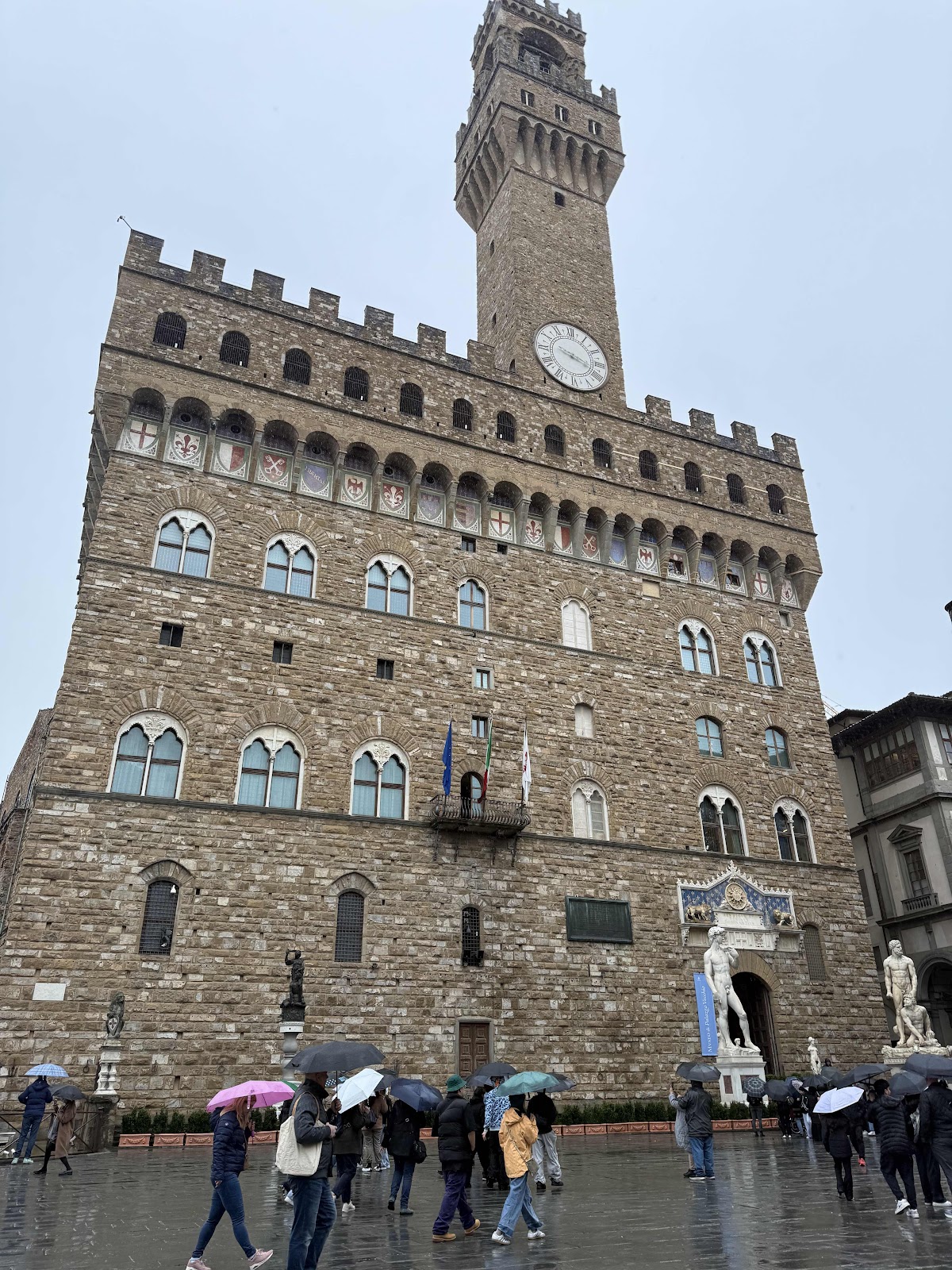
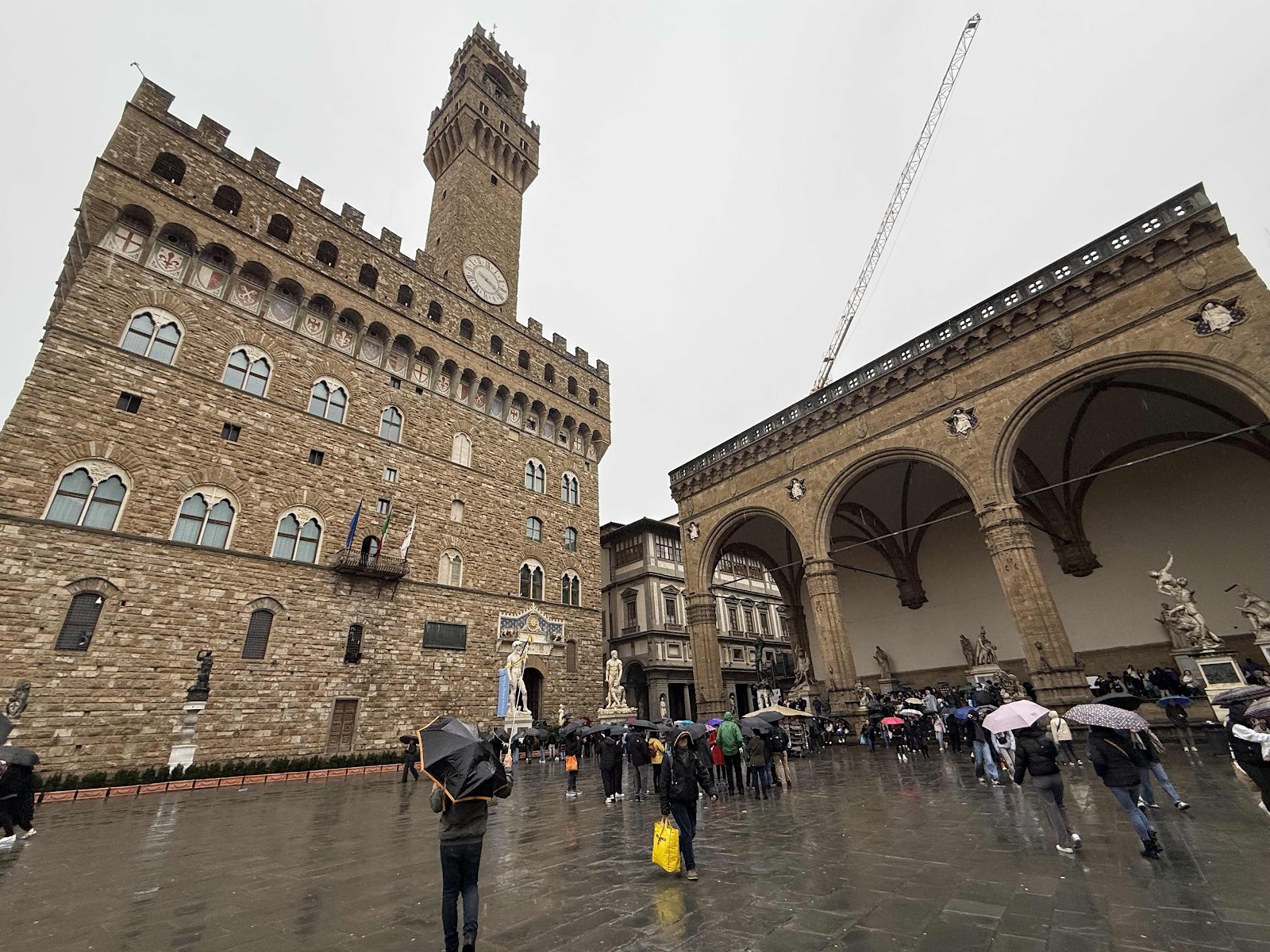
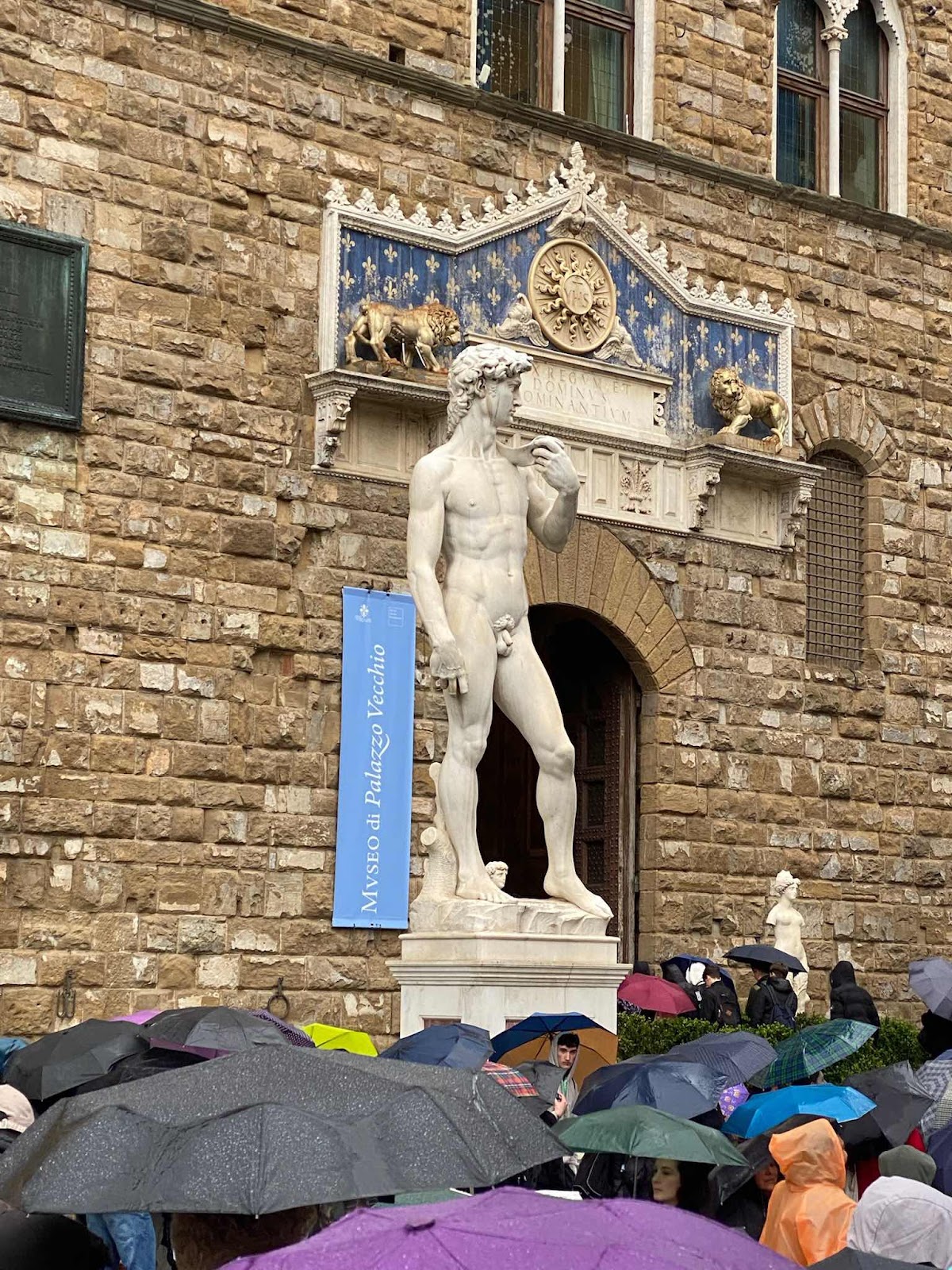
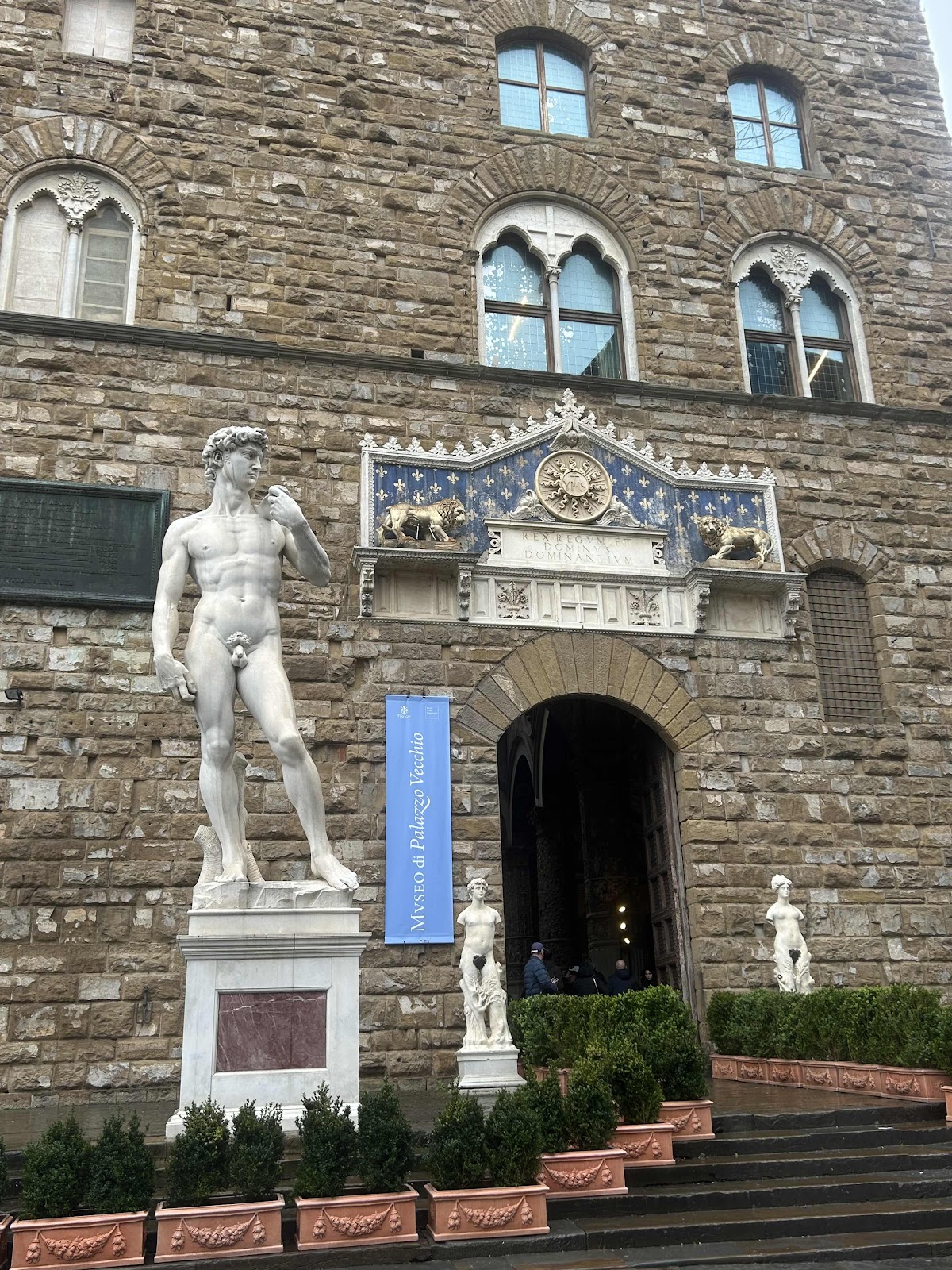
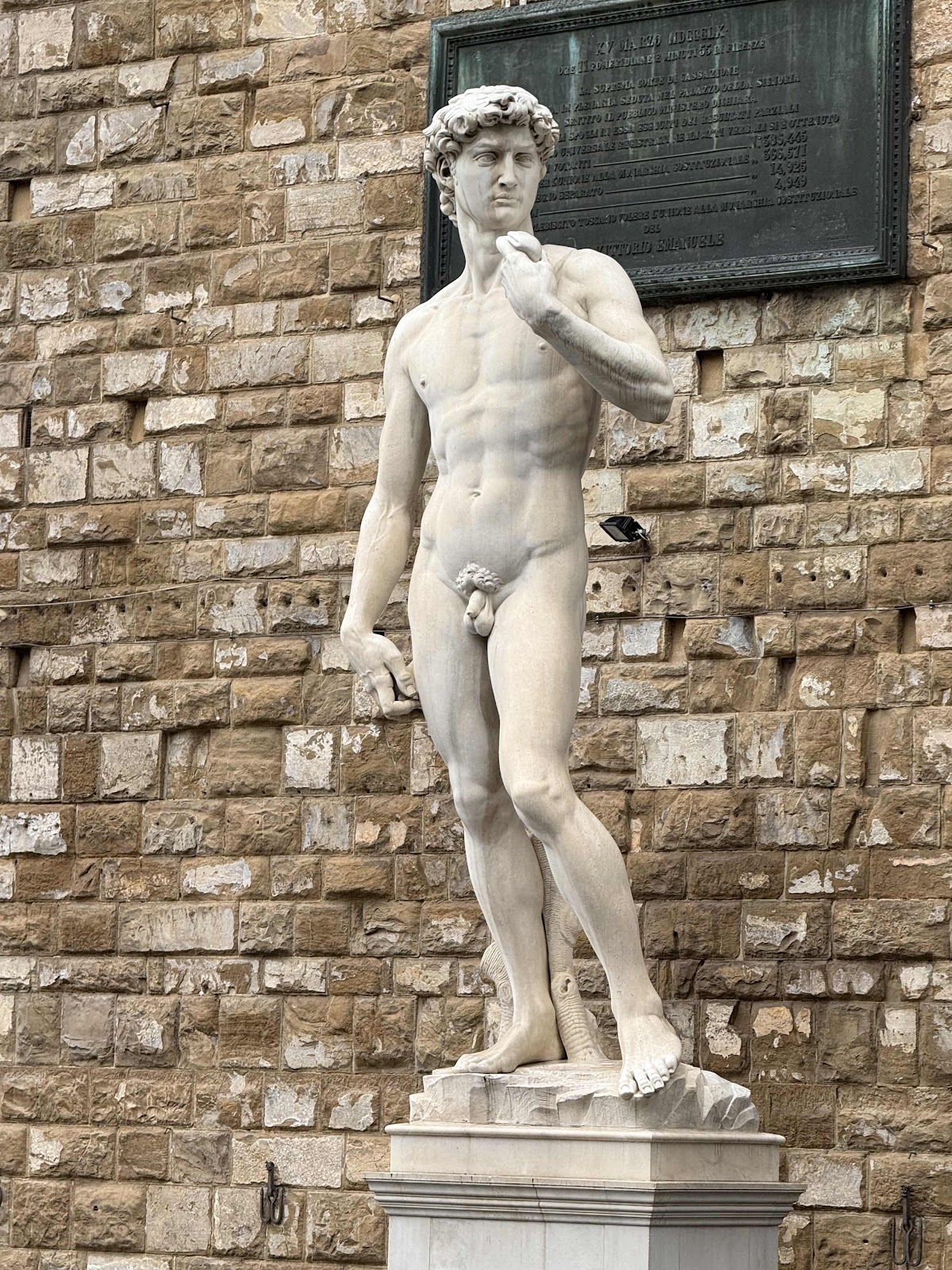
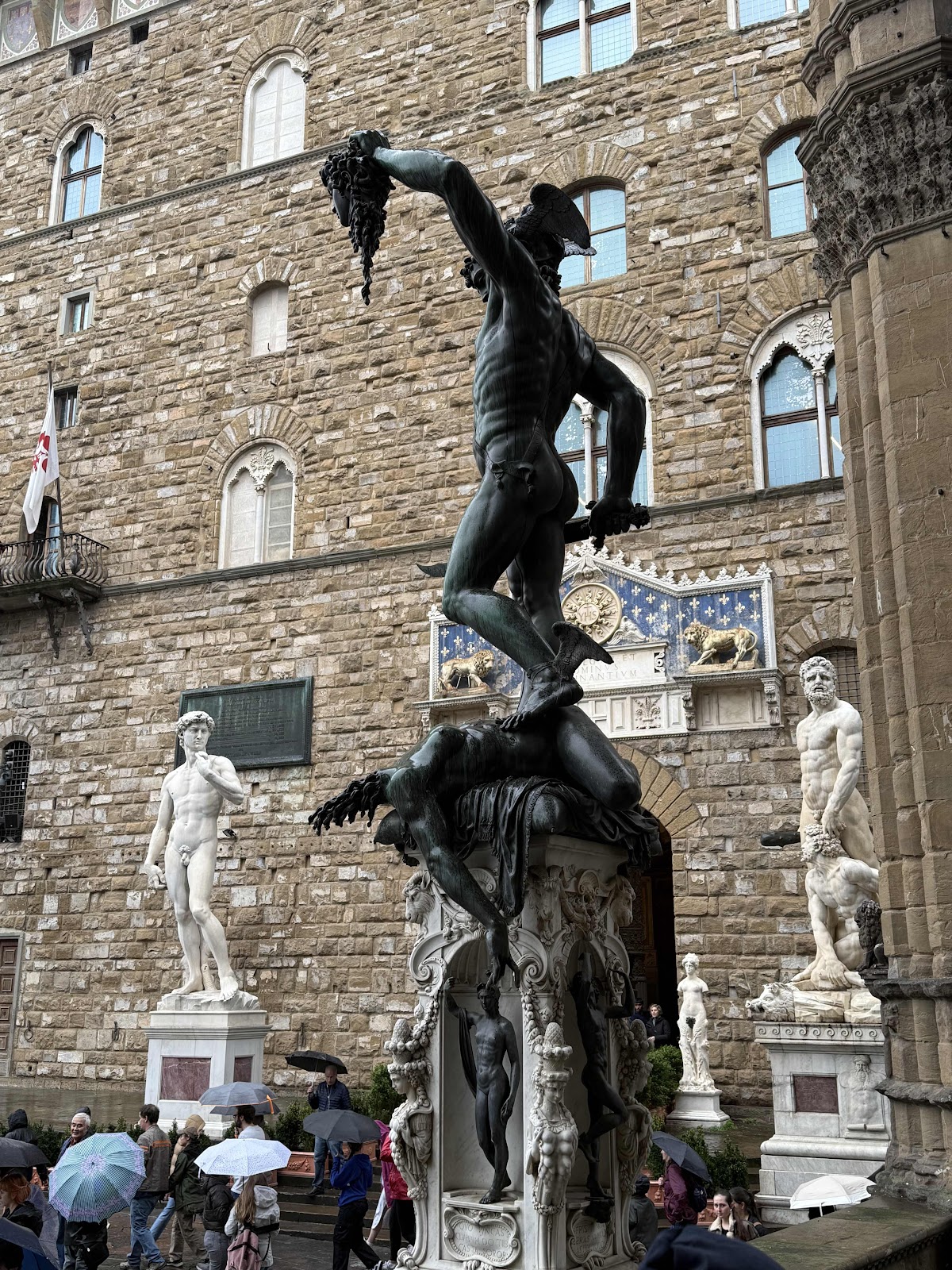
A replica of Michelangelo’s David is right out front (the real thing is in a museum just down the way).
Another Greek myth statue flanks the doorway to the palace.
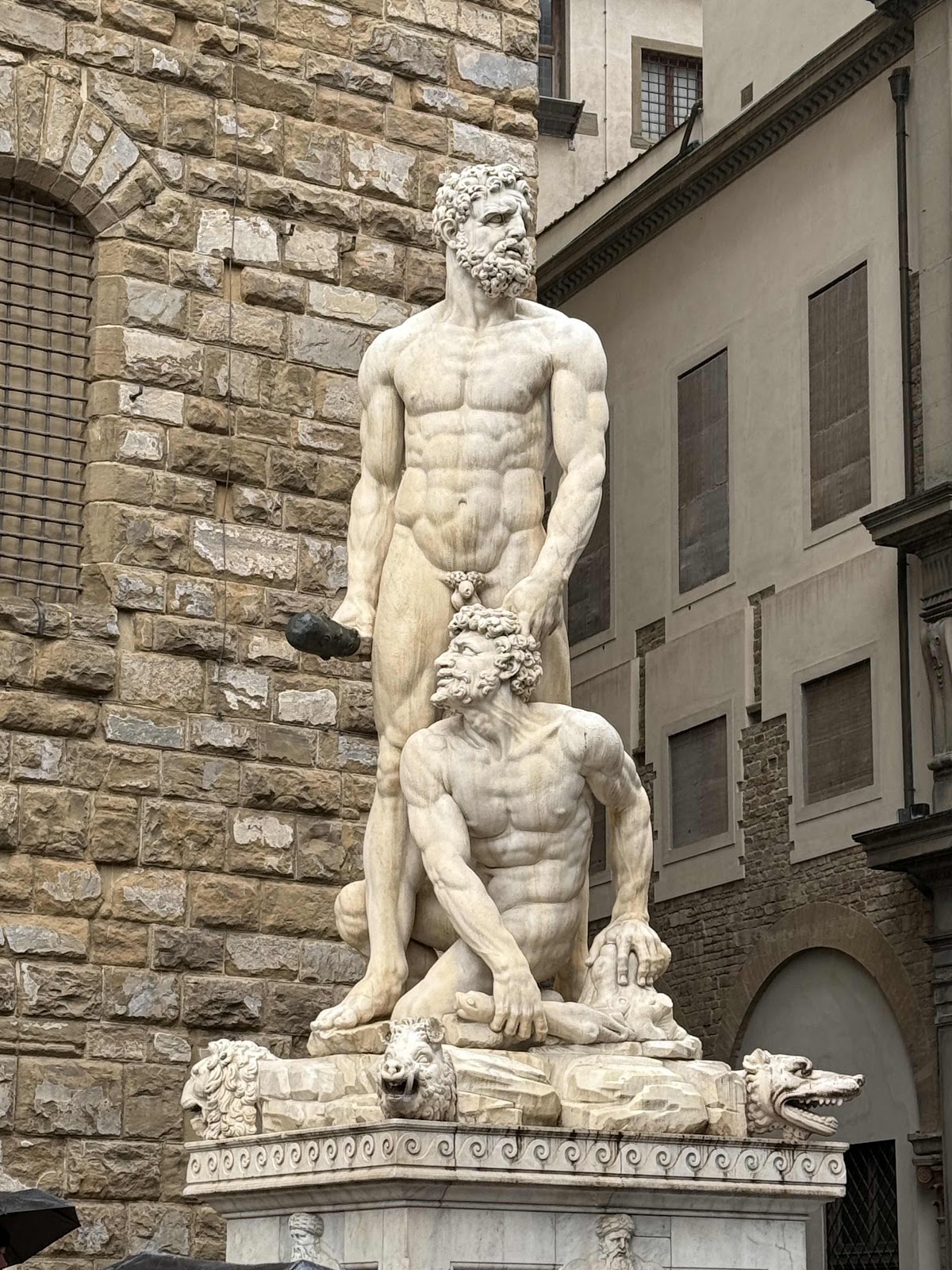
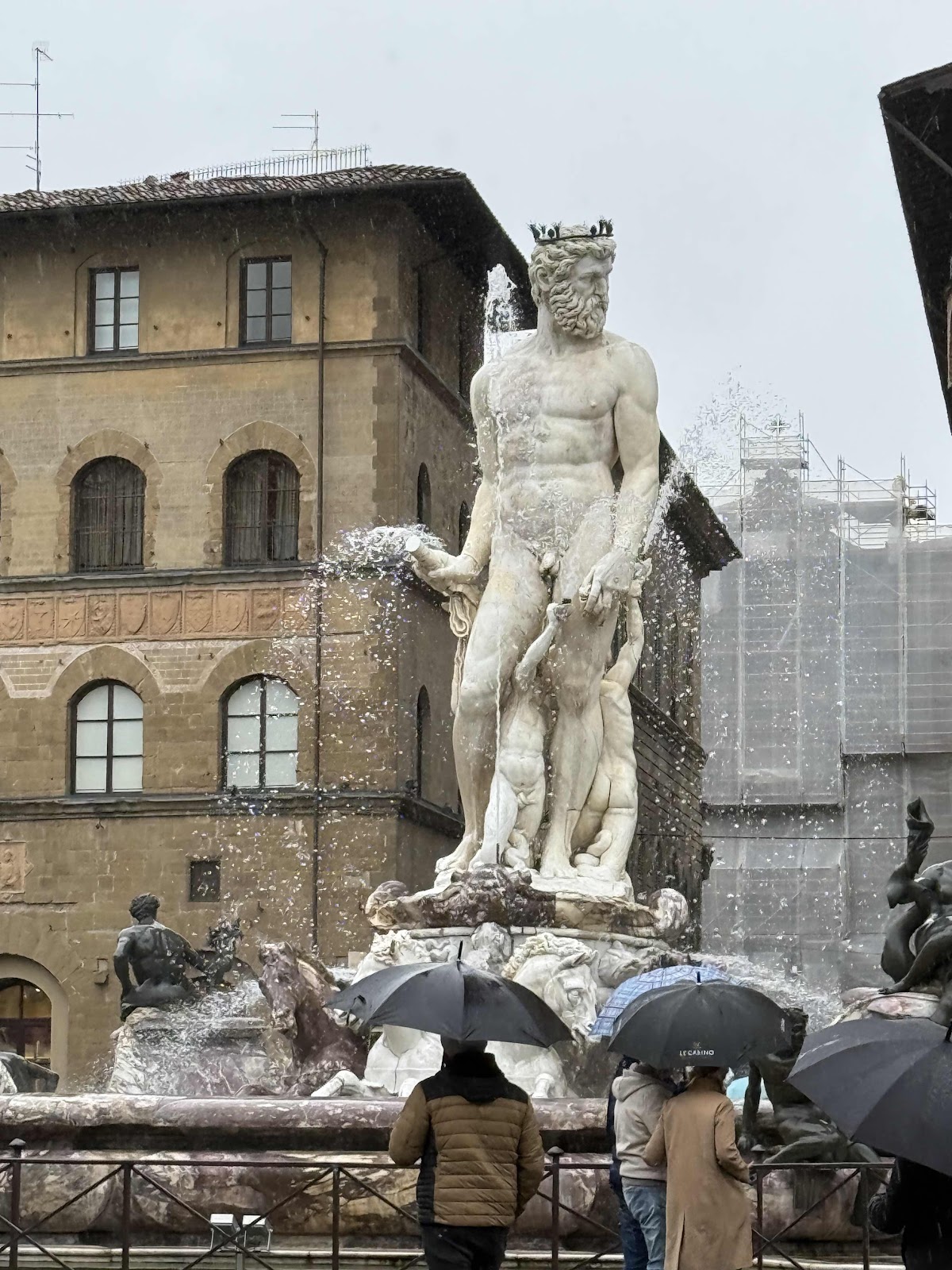
Right next to the palace is the Fountain of Neptune (which features the face of one of the Medicis as a demonstration of his influence).
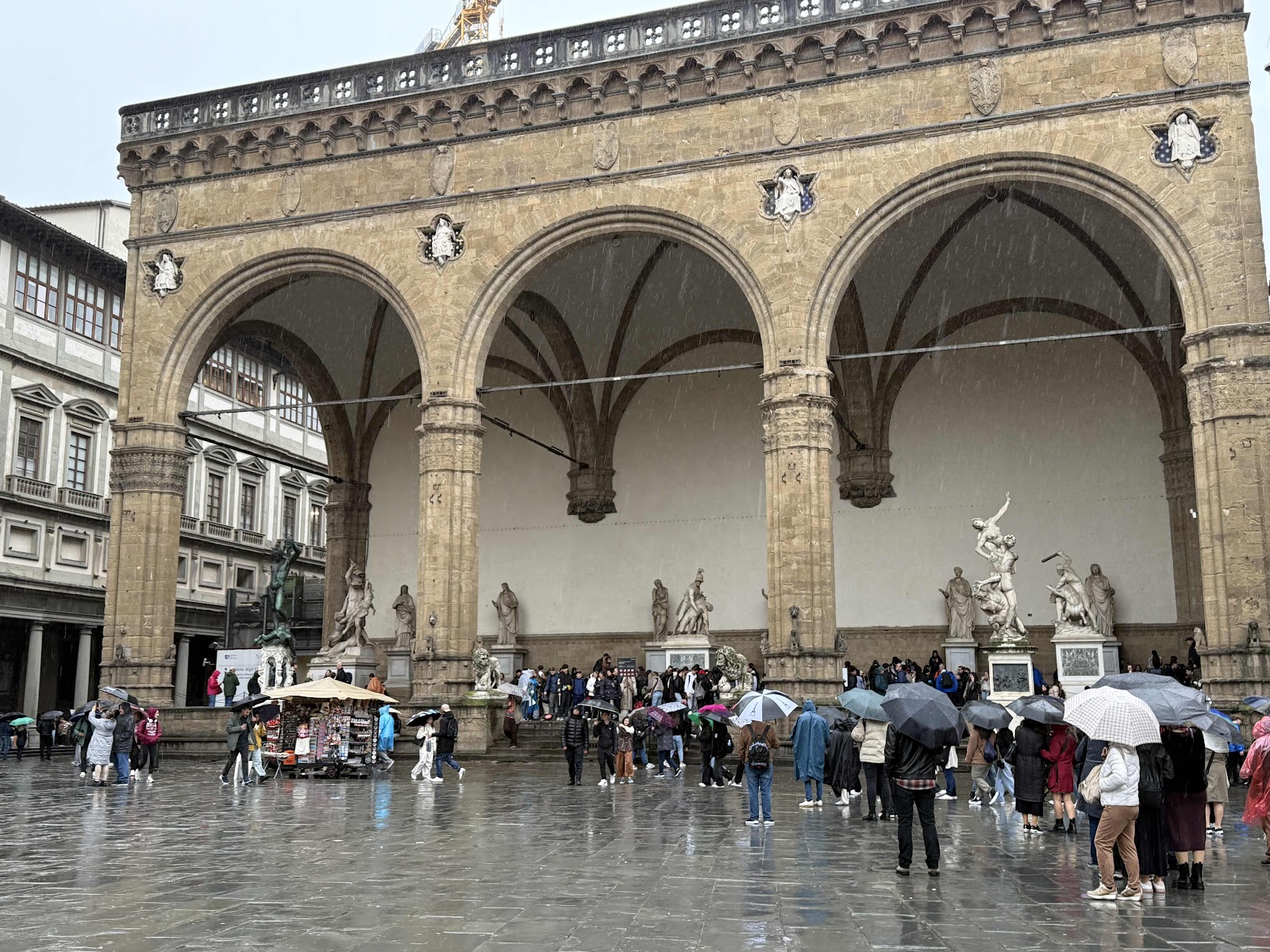
Facing it is the Loggia dei Lanzi, an open-air gallery with statues from ancient myths, which we also explored.
It was quite crowded in here as there were lots of tourists groups in this area today.
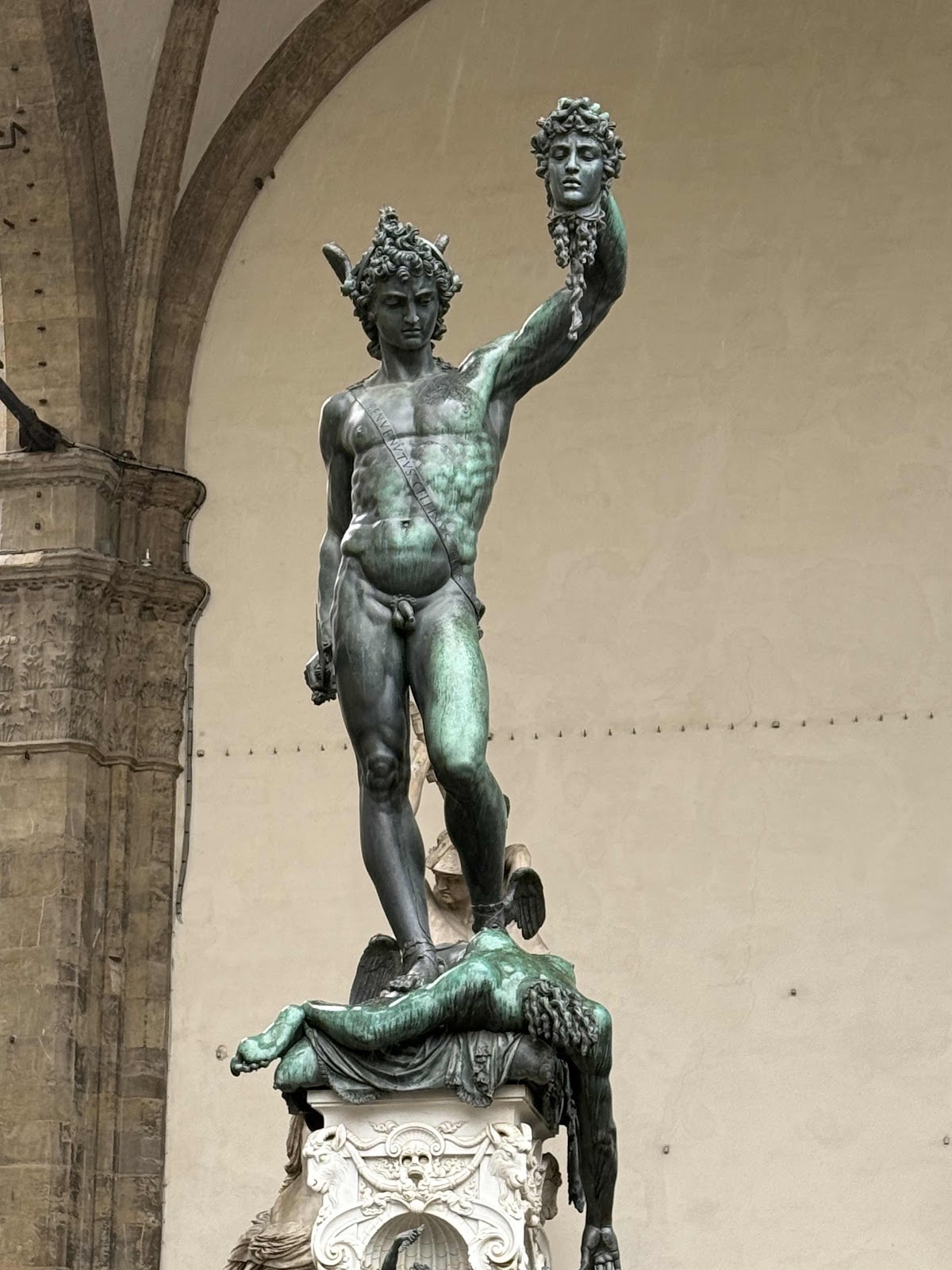
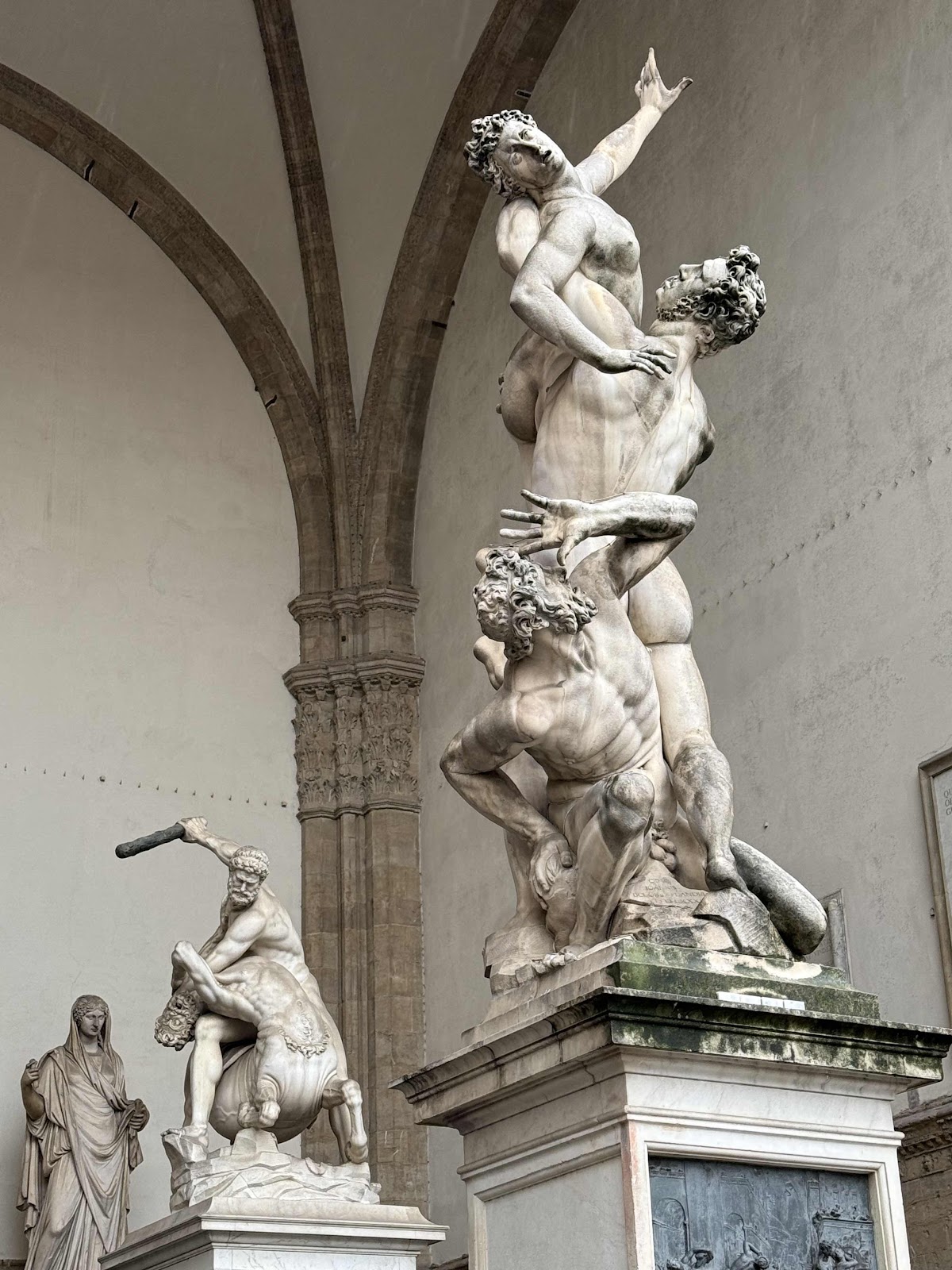
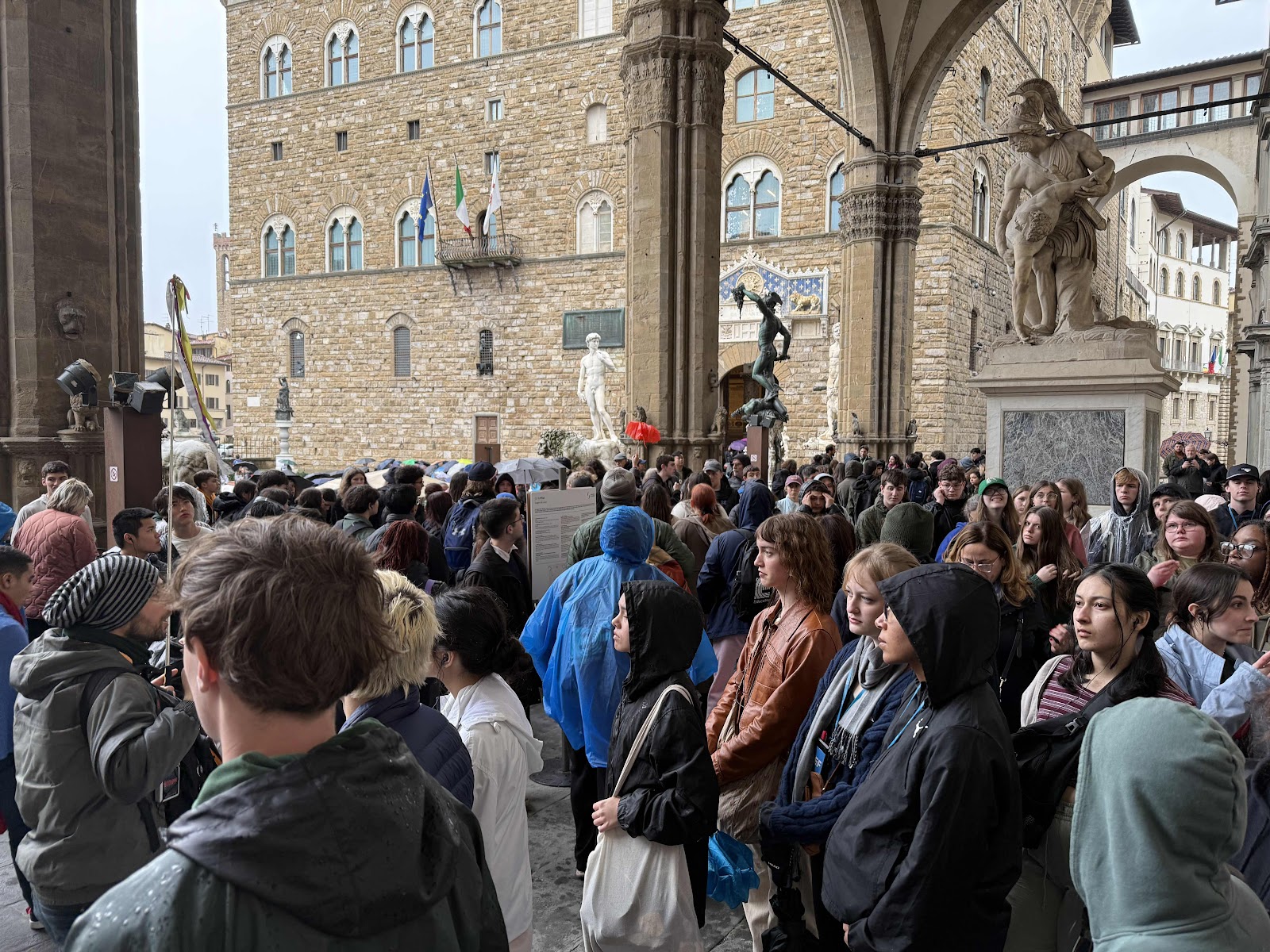
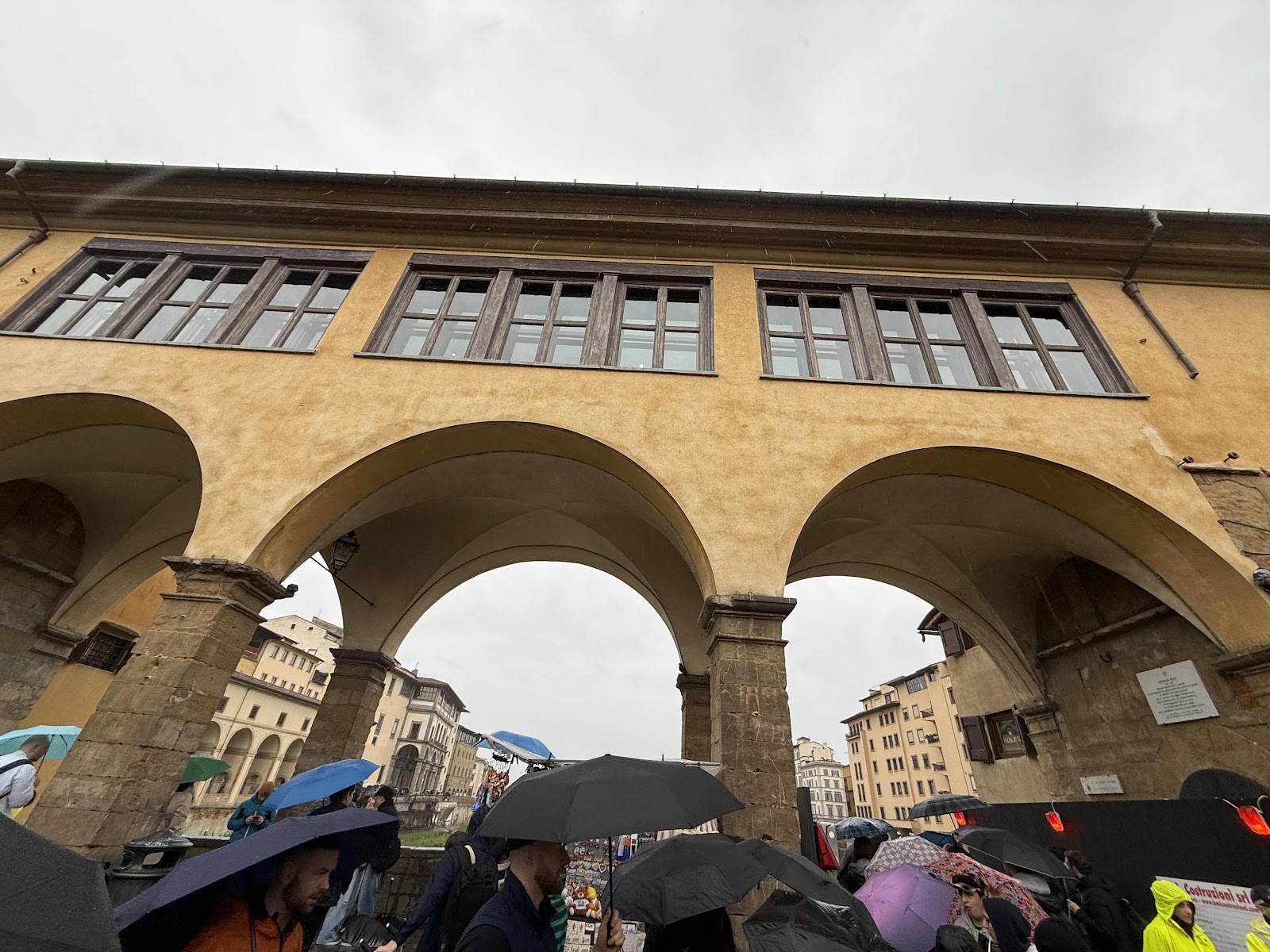
From the loggia, we could see the start of the Medici skywalk, also called the Vasari Corridor, a secret elevated walkway. It was built in 1565 so they could move safely and privately between their home and “office”. The walkway stretches about half a mile from the square to their palace across the river. This walkway was not just for convenience but also for safety as the family had many enemies.
The windows above the arch are the start of the skywalk from the palace through to the next building.
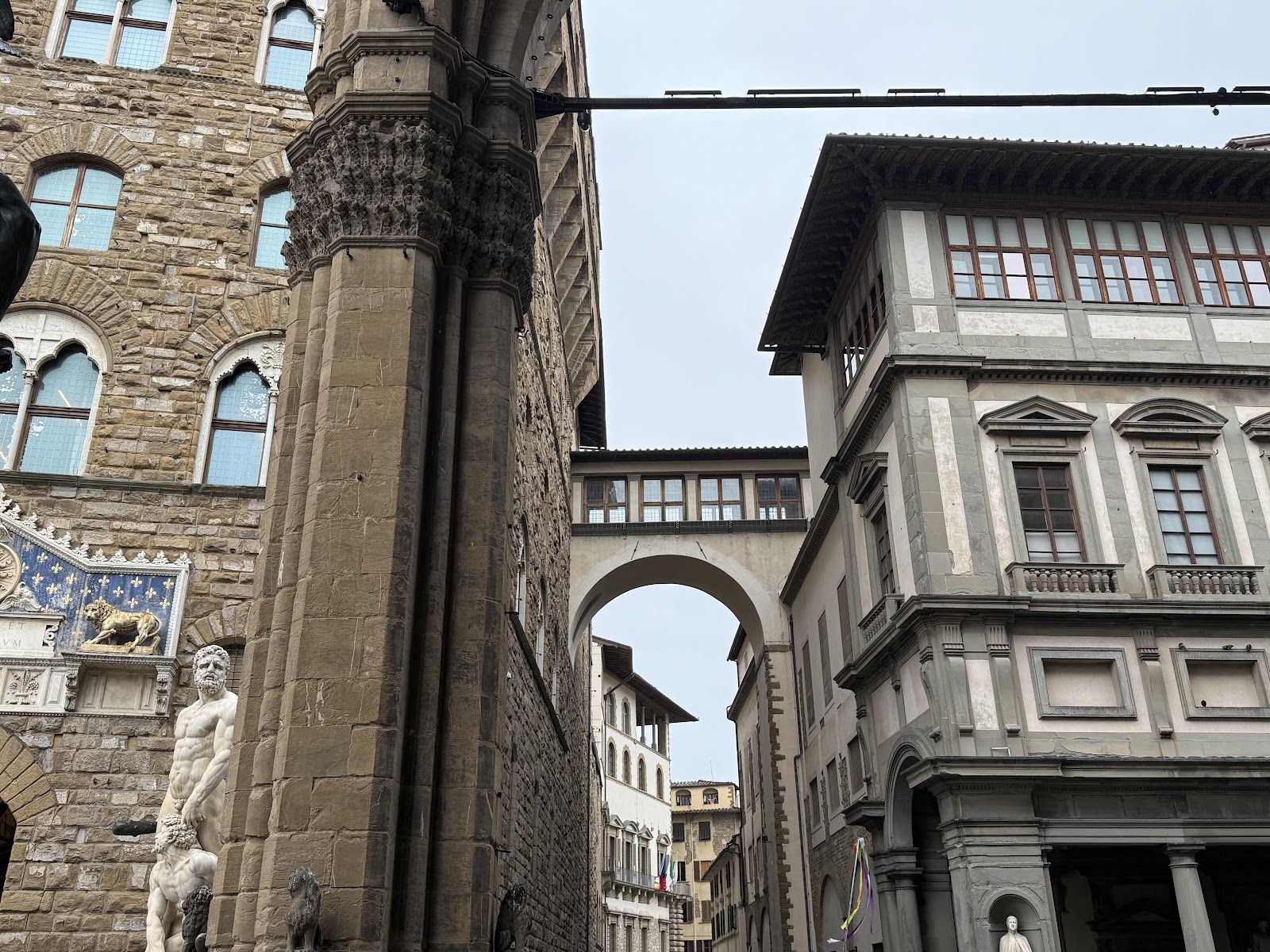
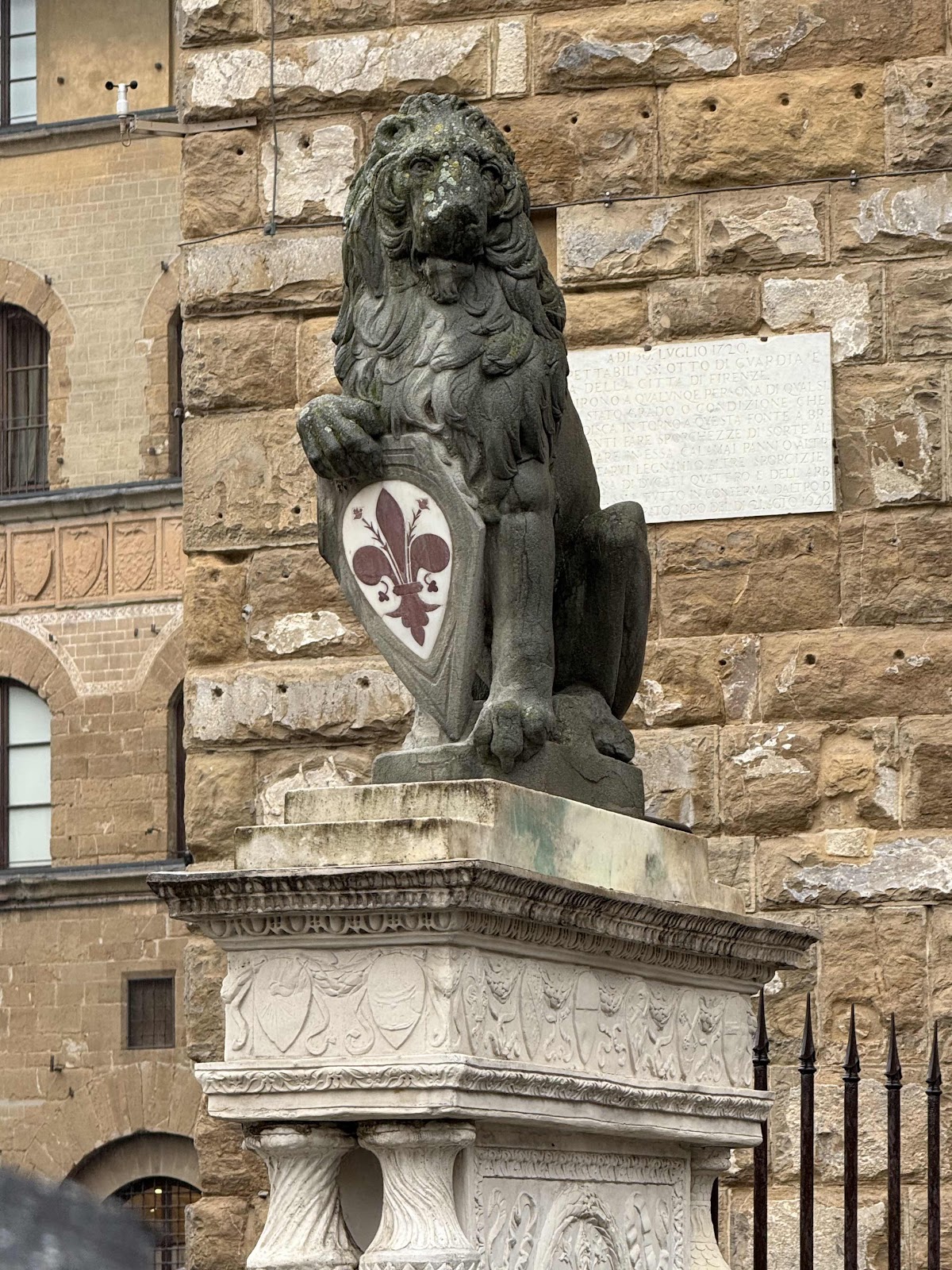
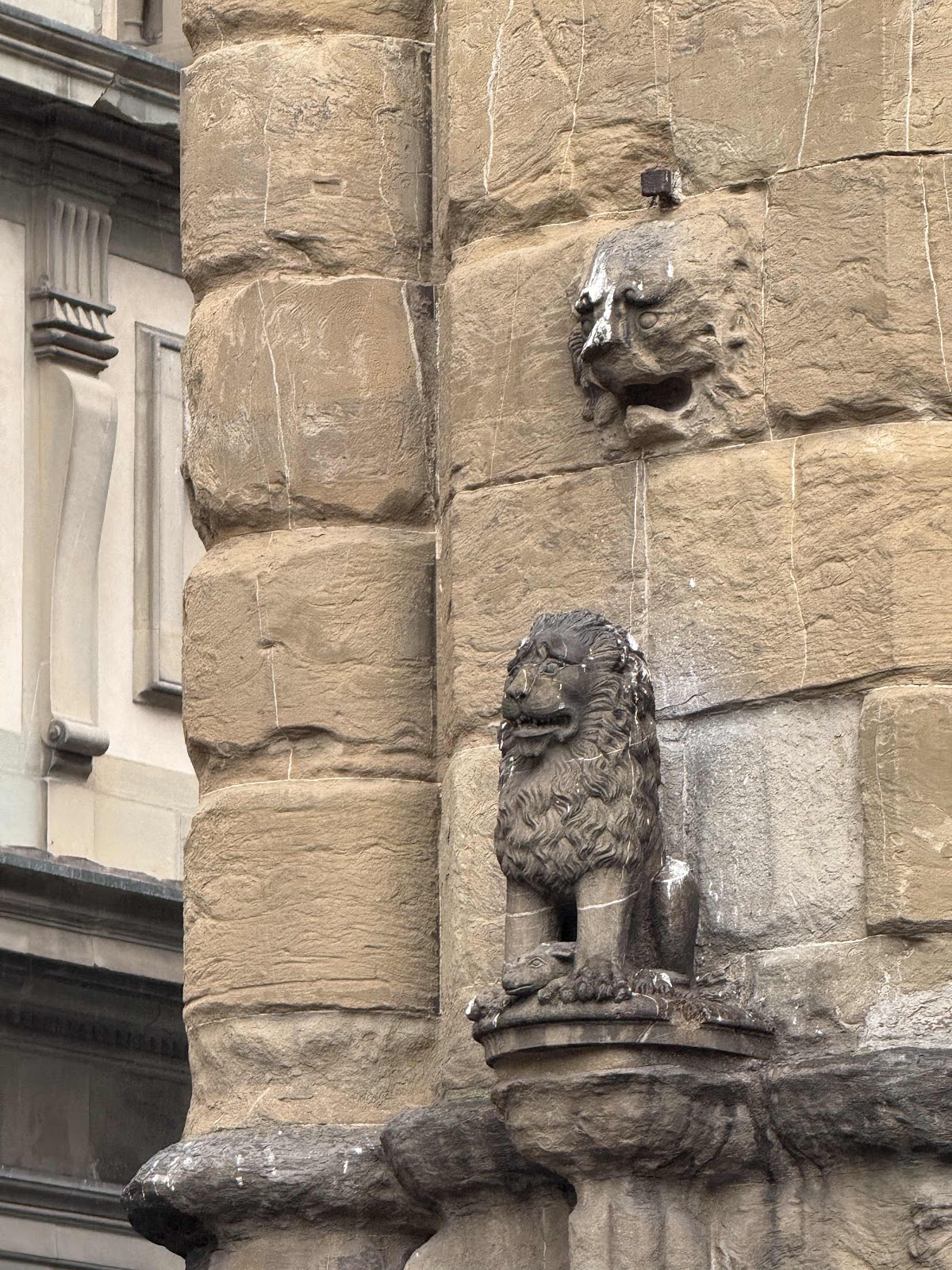
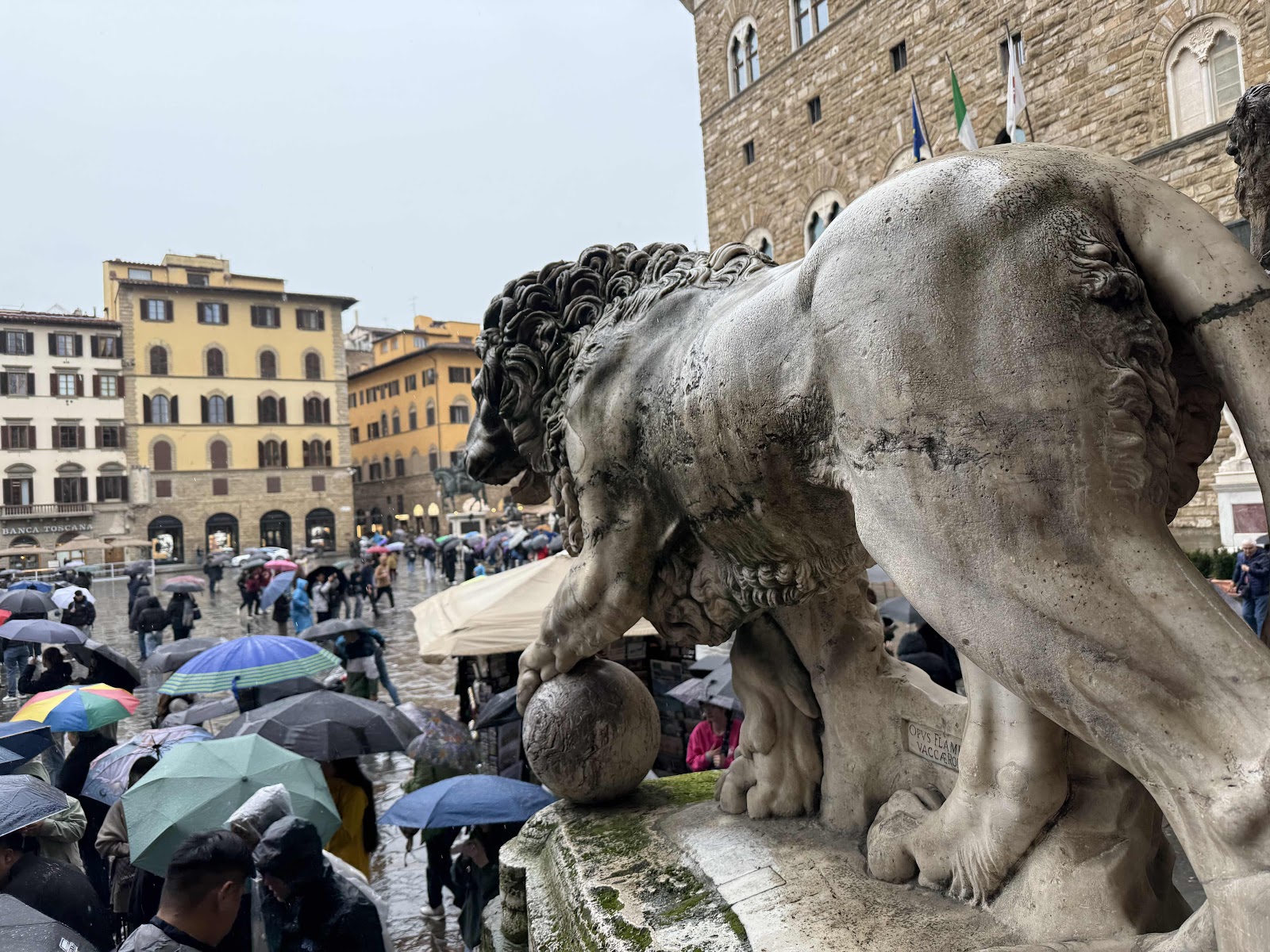
We also saw several lion statues and motifs. This is a symbol of Florence for protecting the city.
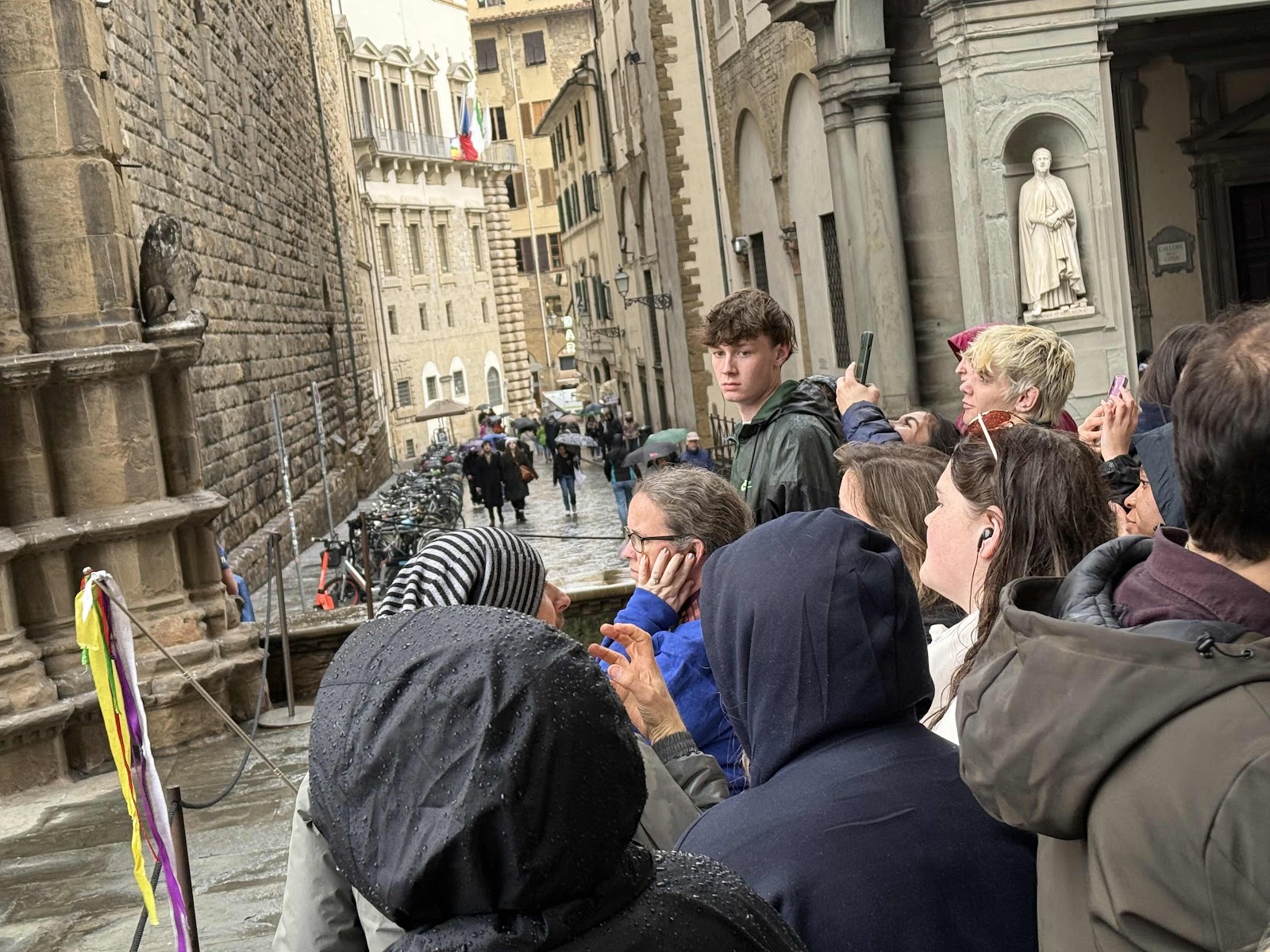
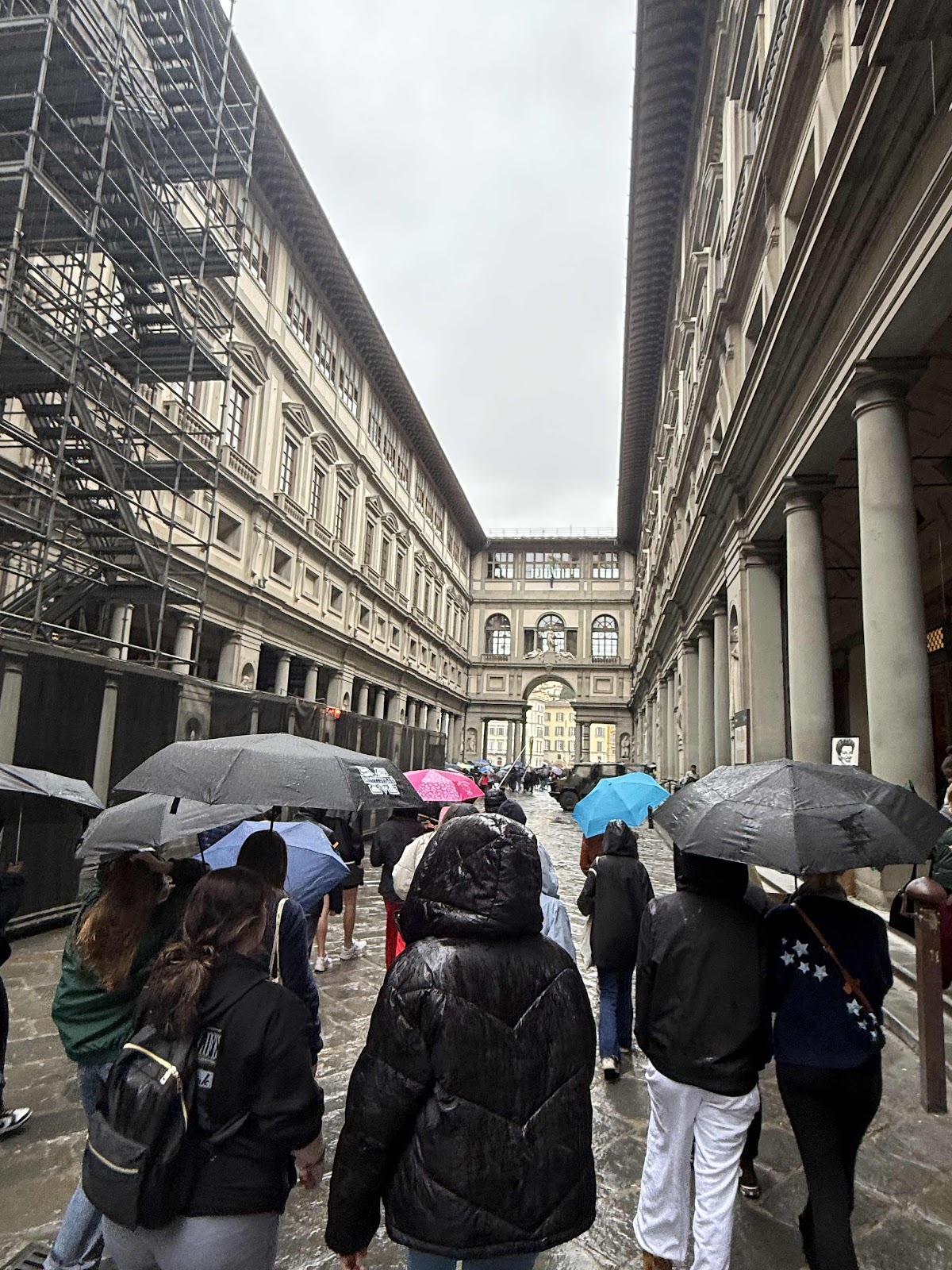
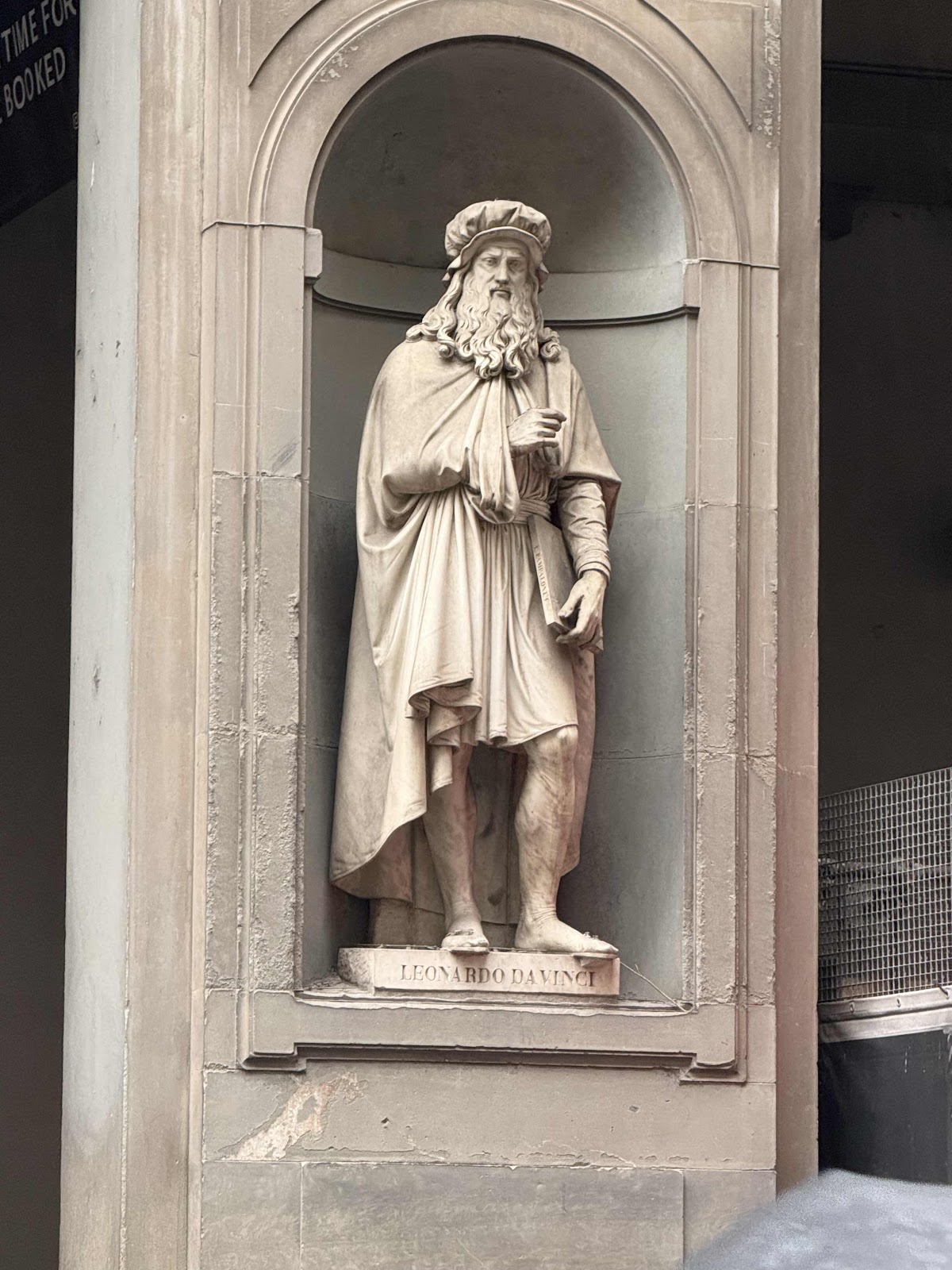
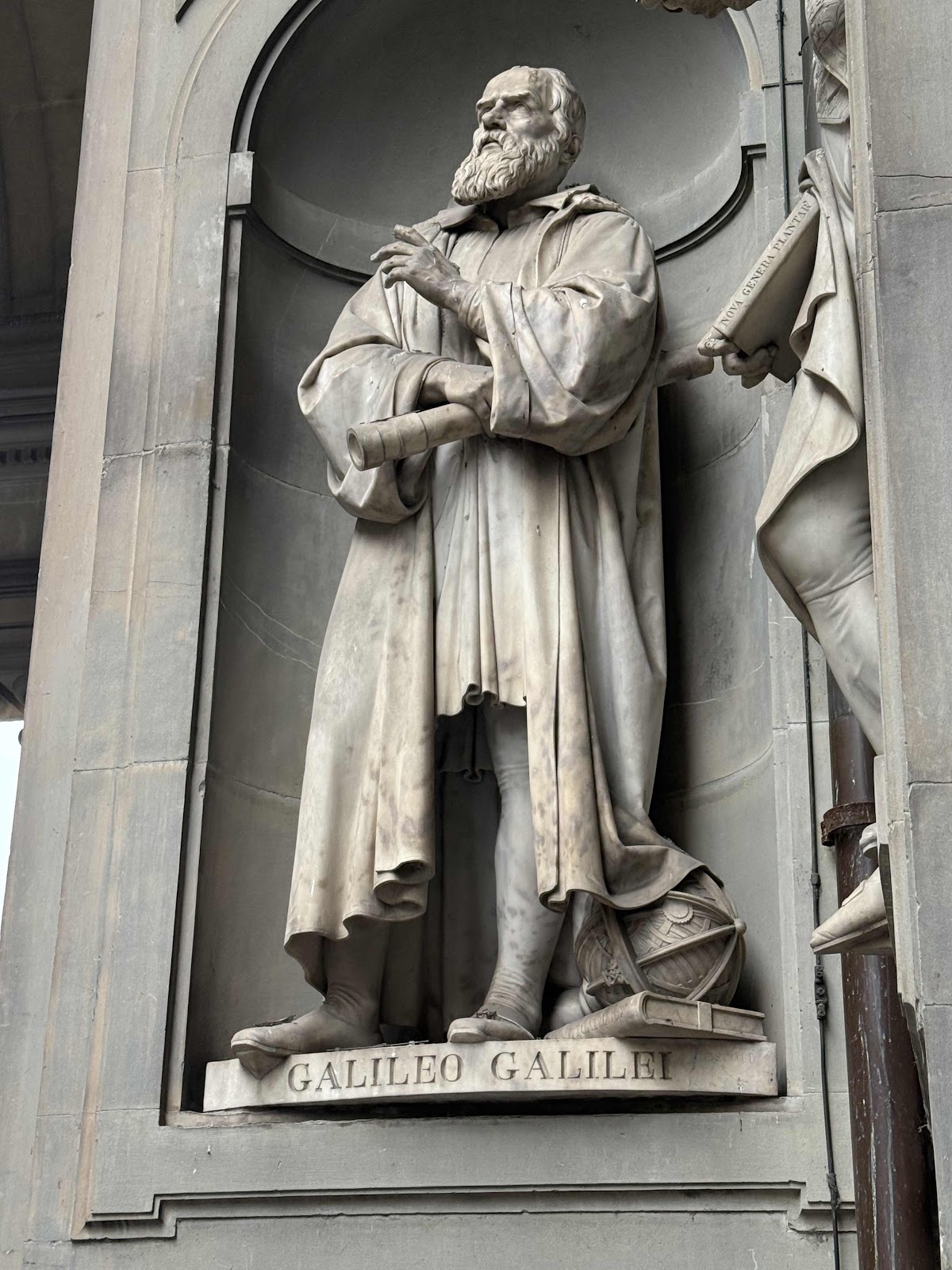
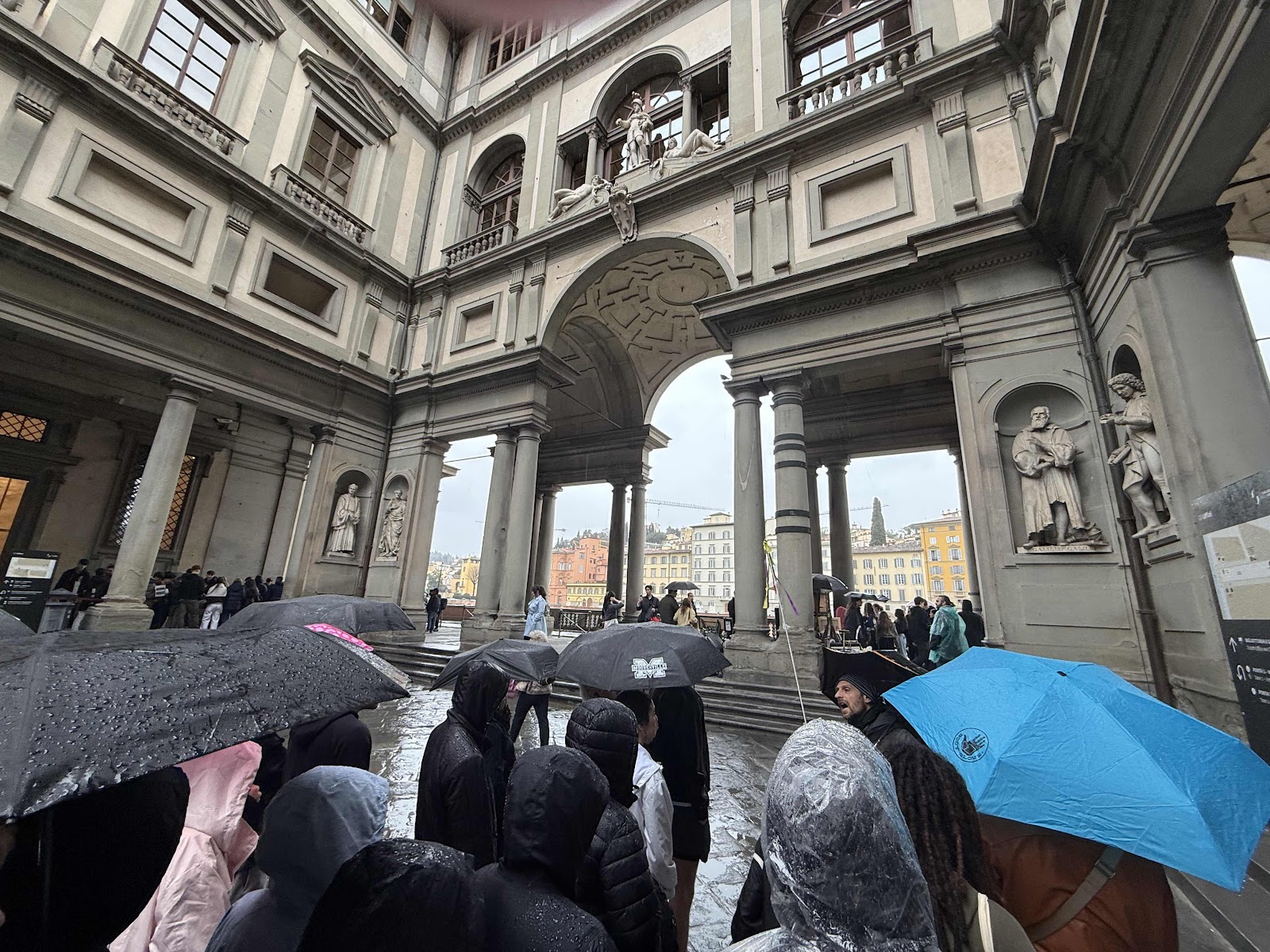
We followed the walkway into the Uffizi (office) colonnade area outside the art museum. This is home to statues of many famous Italians (including Galileo and Leonardo da Vinci.
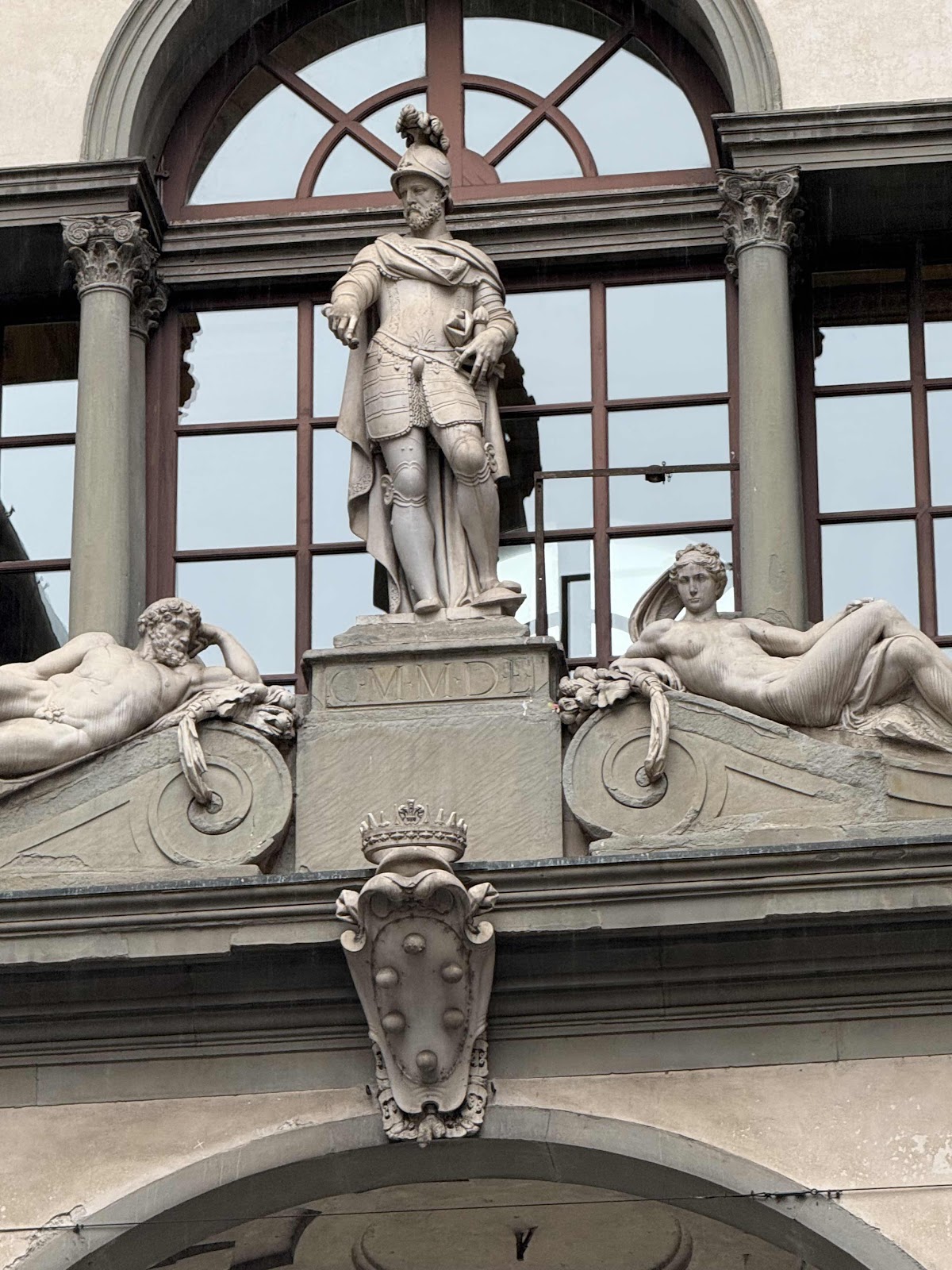
This decoration under the statue is the Medici coat of arms. Some say the round balls represent the planets and the fact that the world should resolve Florence (and the Medicis).
At the end of the gallery is an arch that leads to the river, with a beautiful view of the city over the river.
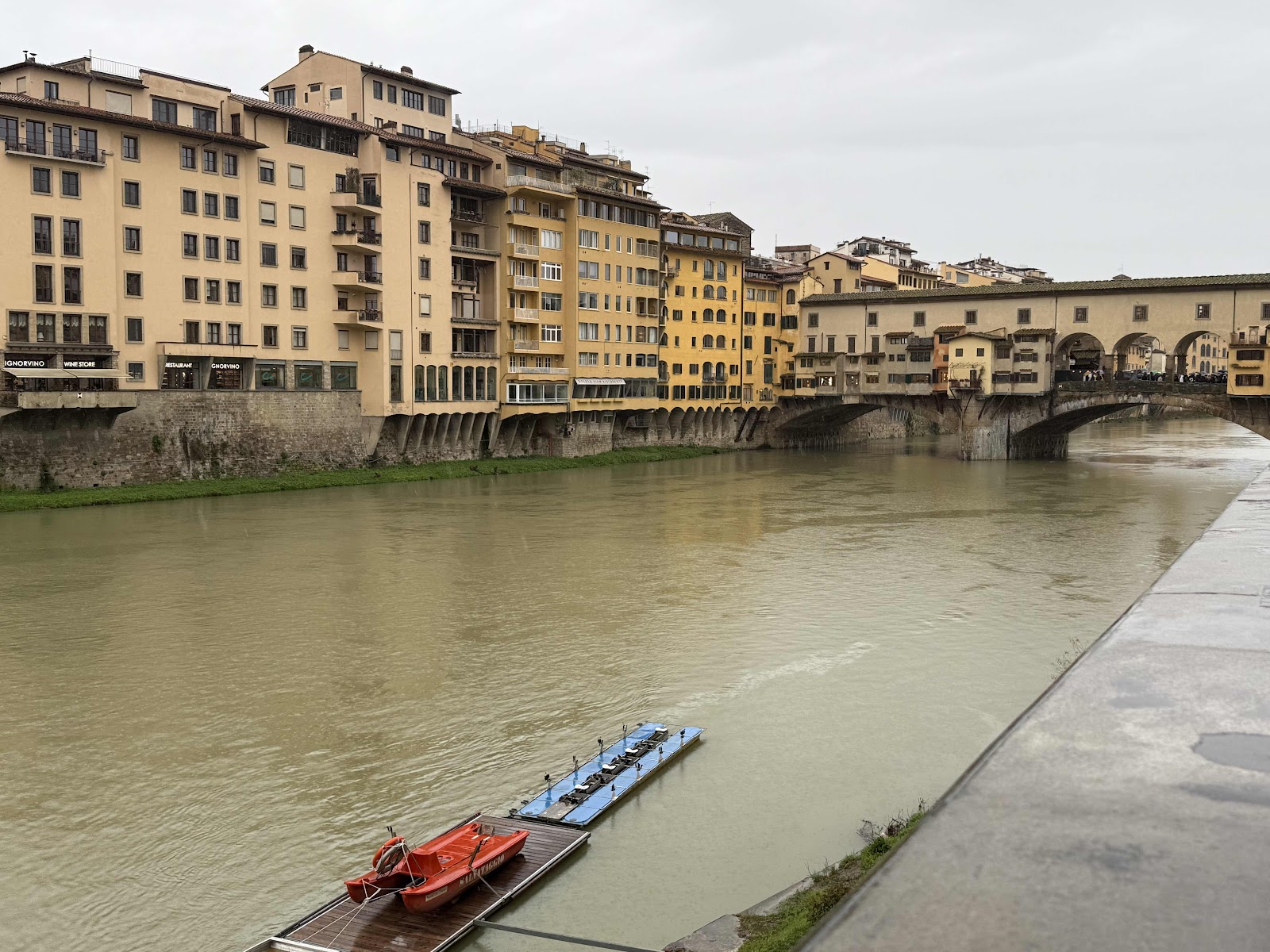
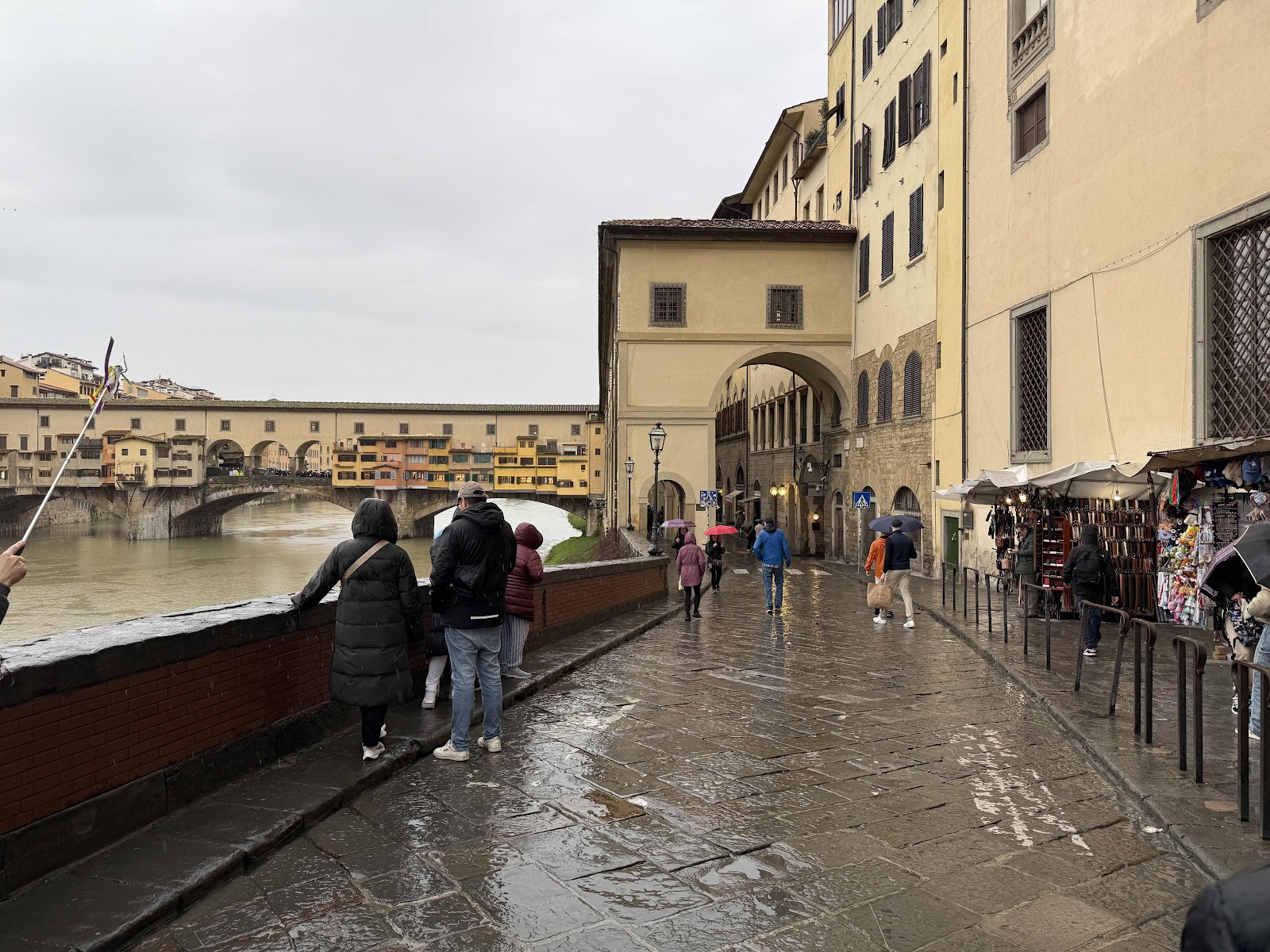
We followed along the skywalk and parallel to the river watching how the skywalk led through private houses and buildings.
This area leads to the Ponte Vecchio where the skywalk crosses the river. This bridge is the oldest in Florence and the most important. The story goes that after the skywalk was built over the existing butcher shops, the smell was unappealing to the Medicis. They ordered the shops moved and in their place only gold could be sold. Today the bridge is full of gold stores.
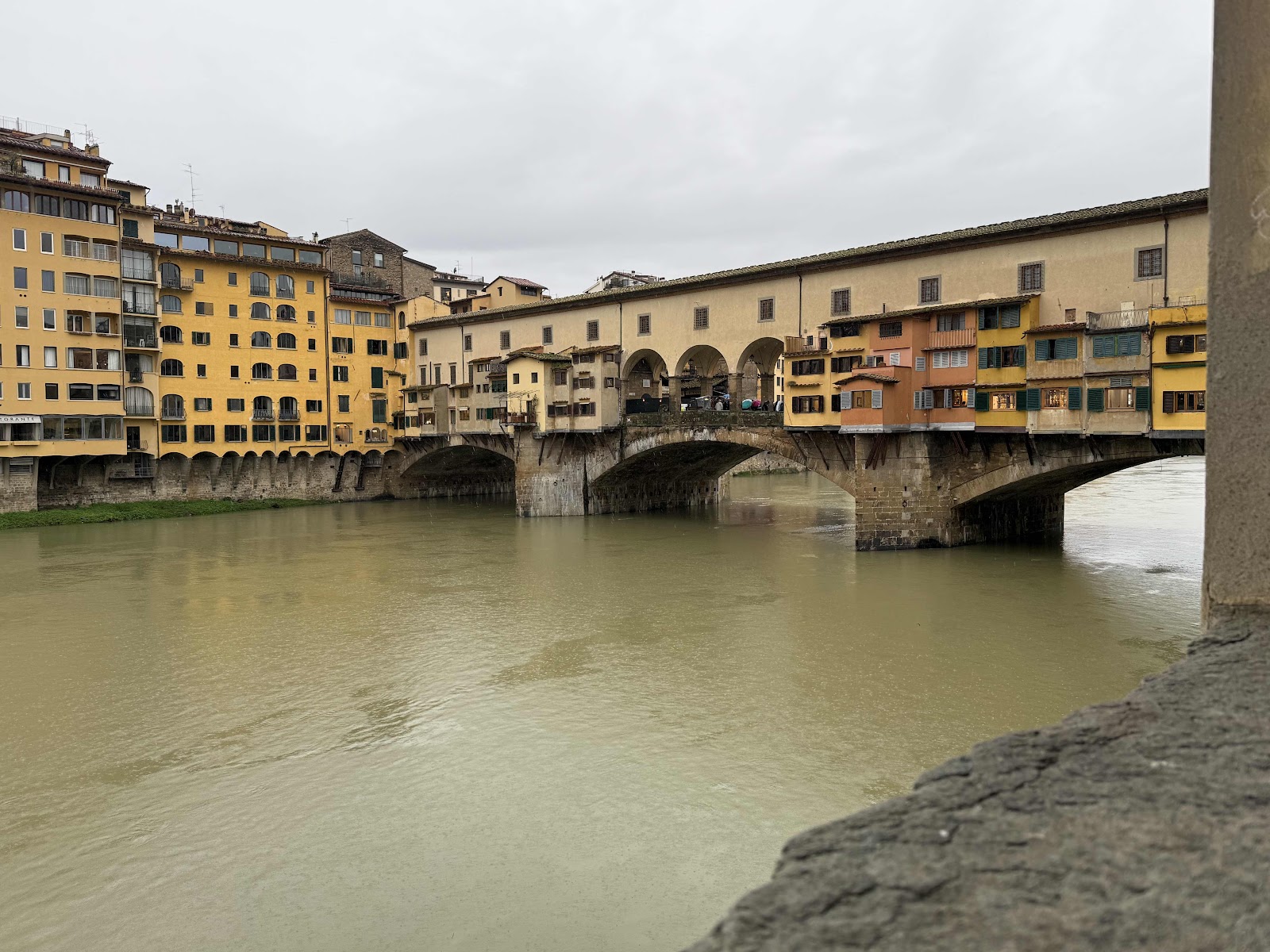
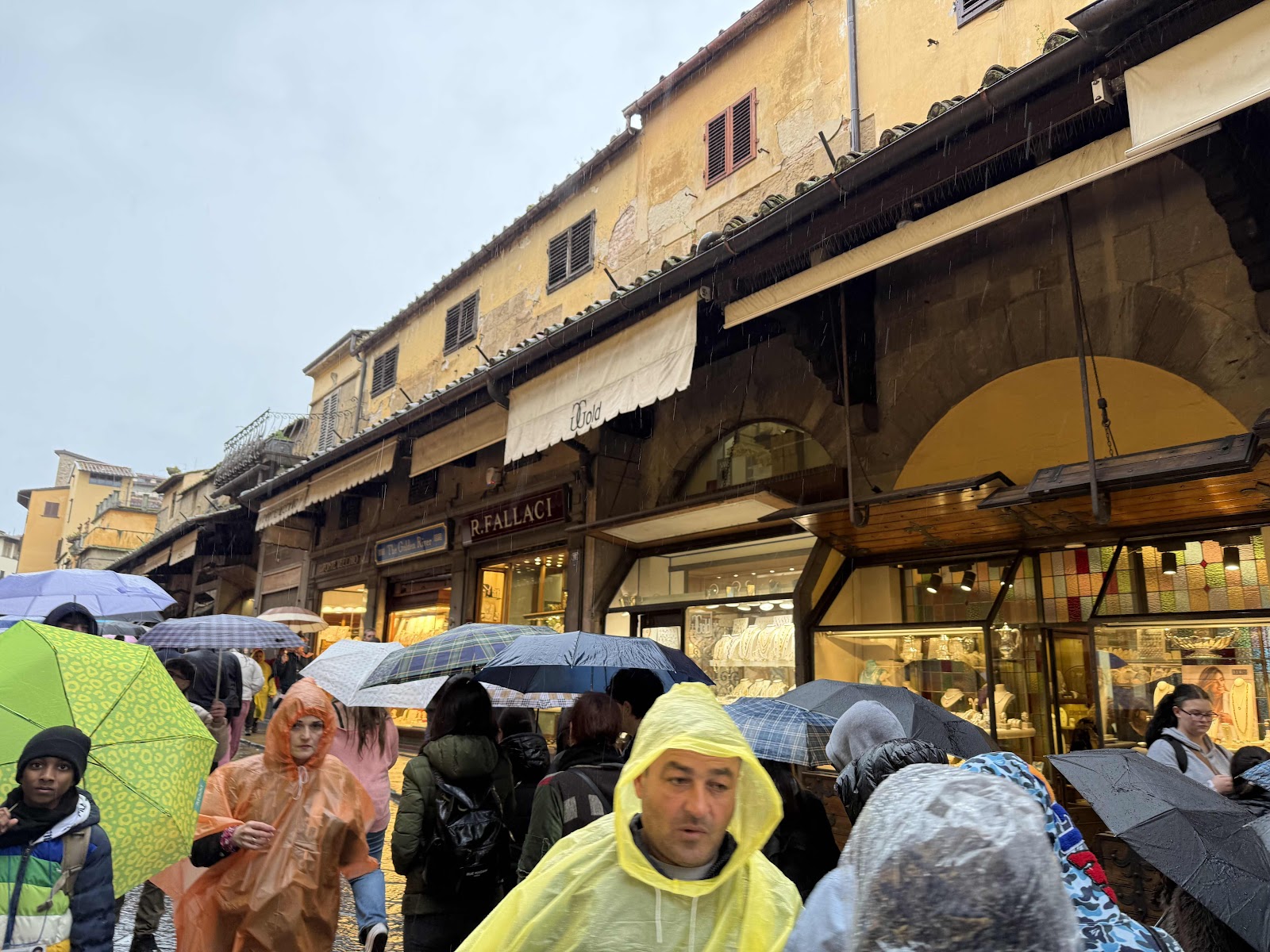
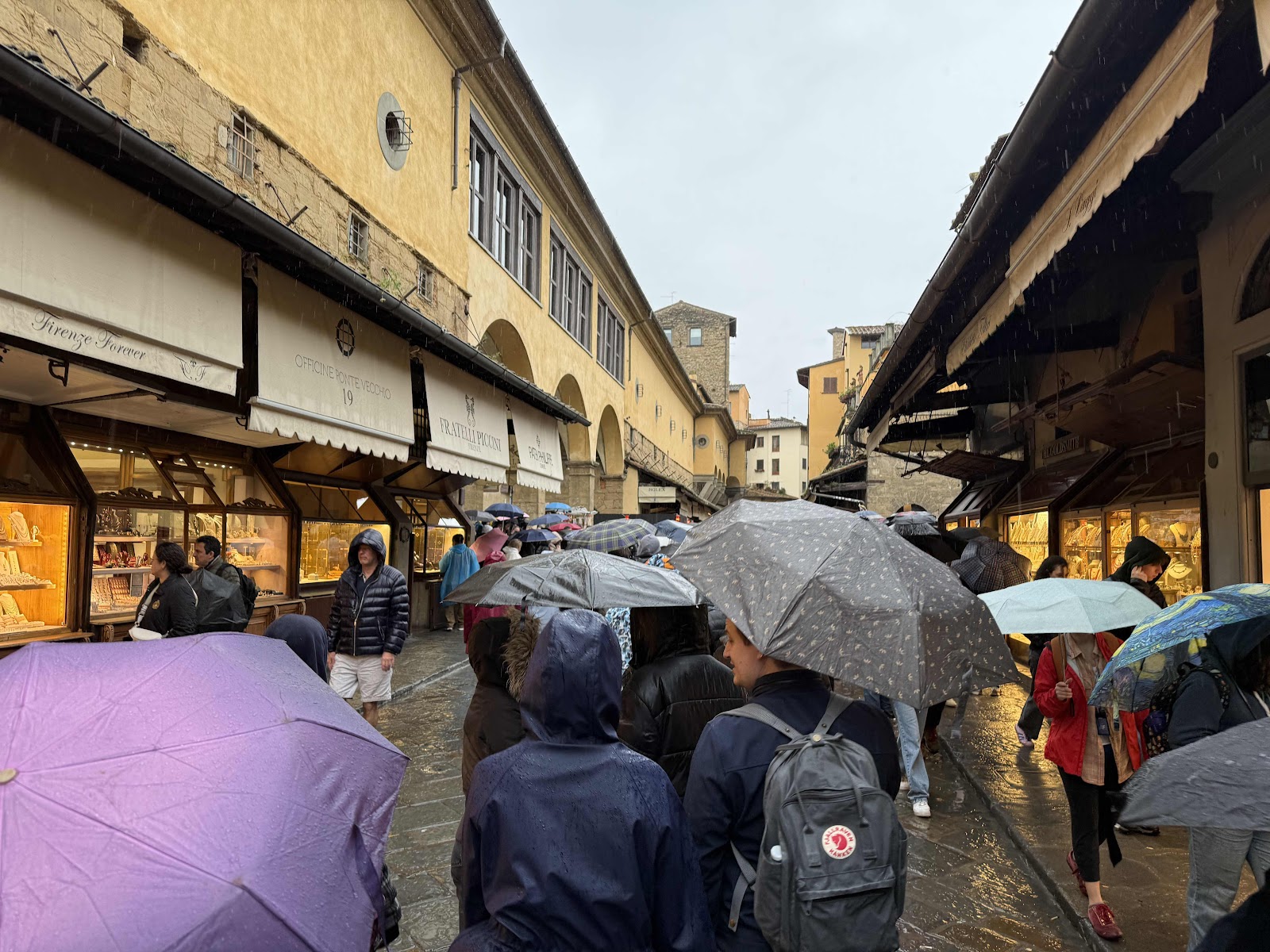
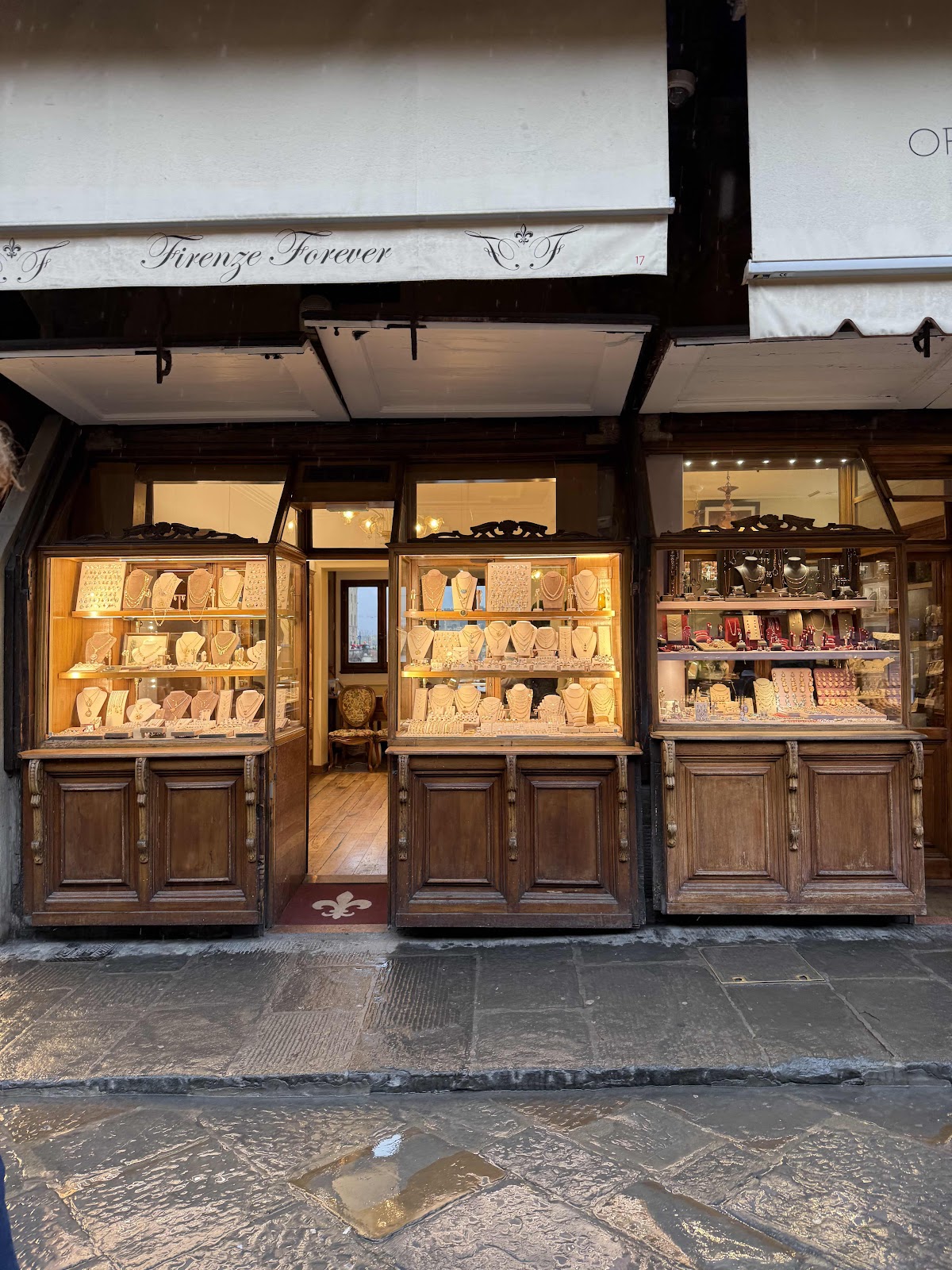
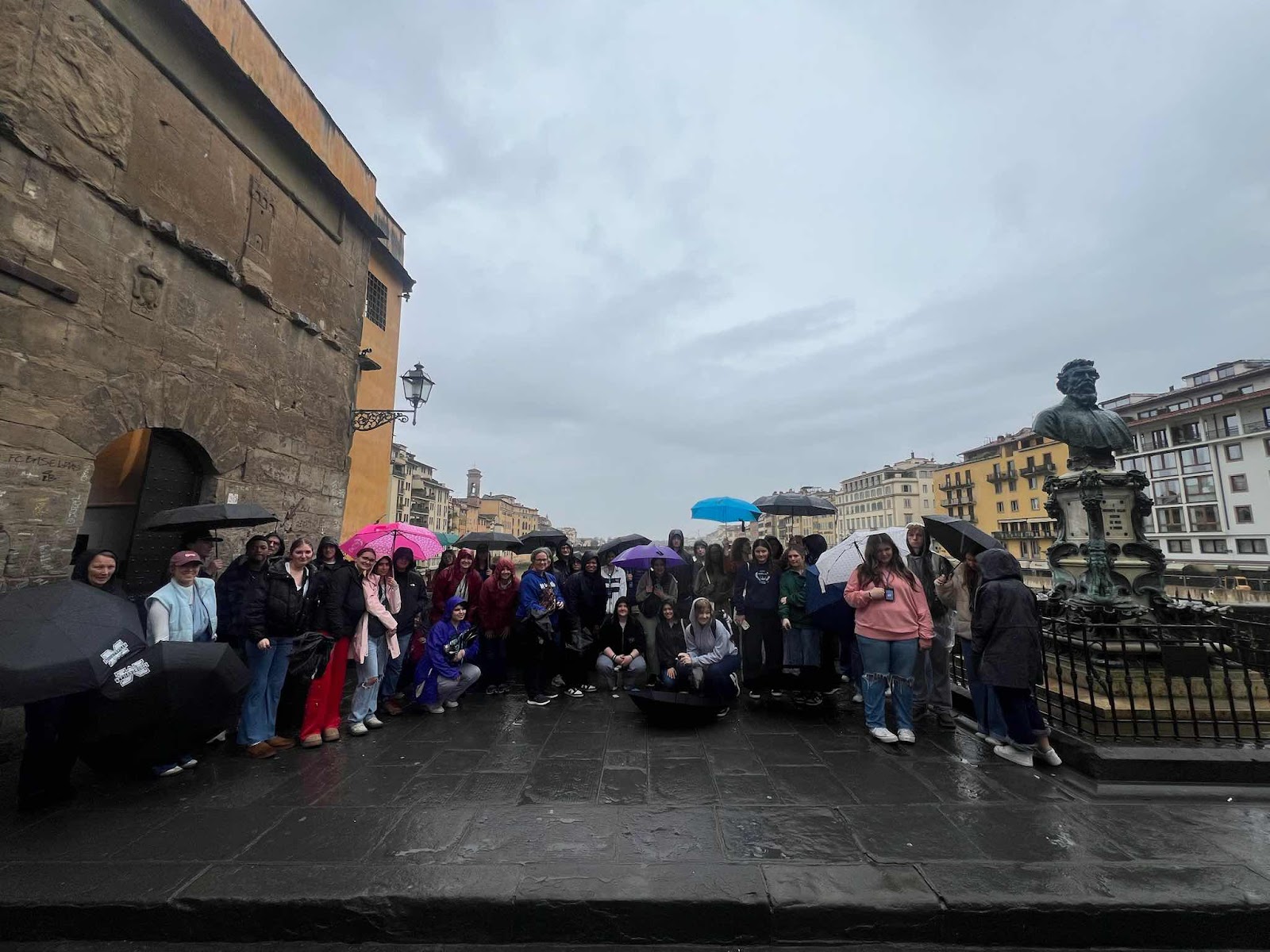
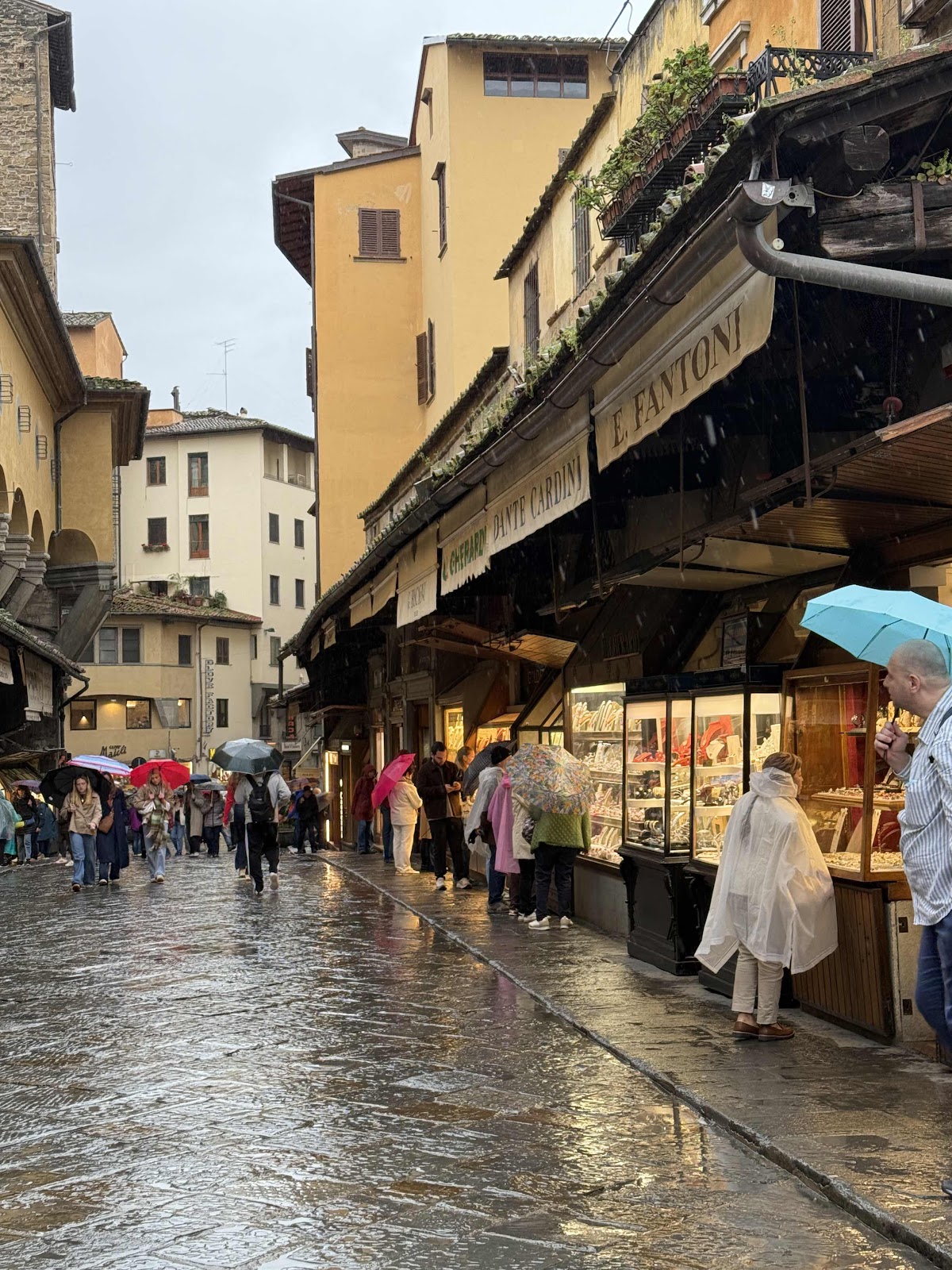
The windows in the middle of the bridge are not original to the 1500s, but were added by Mussolini in advance of Hitler’s visit to the city to make it more impressive. At the end of World War II, the Germans destroyed all of the bridges in Florence except for this one. There’s two main stories as to why - either Hitler decided to save this bridge, or the bridge caretaker dismantled the dynamite set by the German soldiers to save this important piece of history.
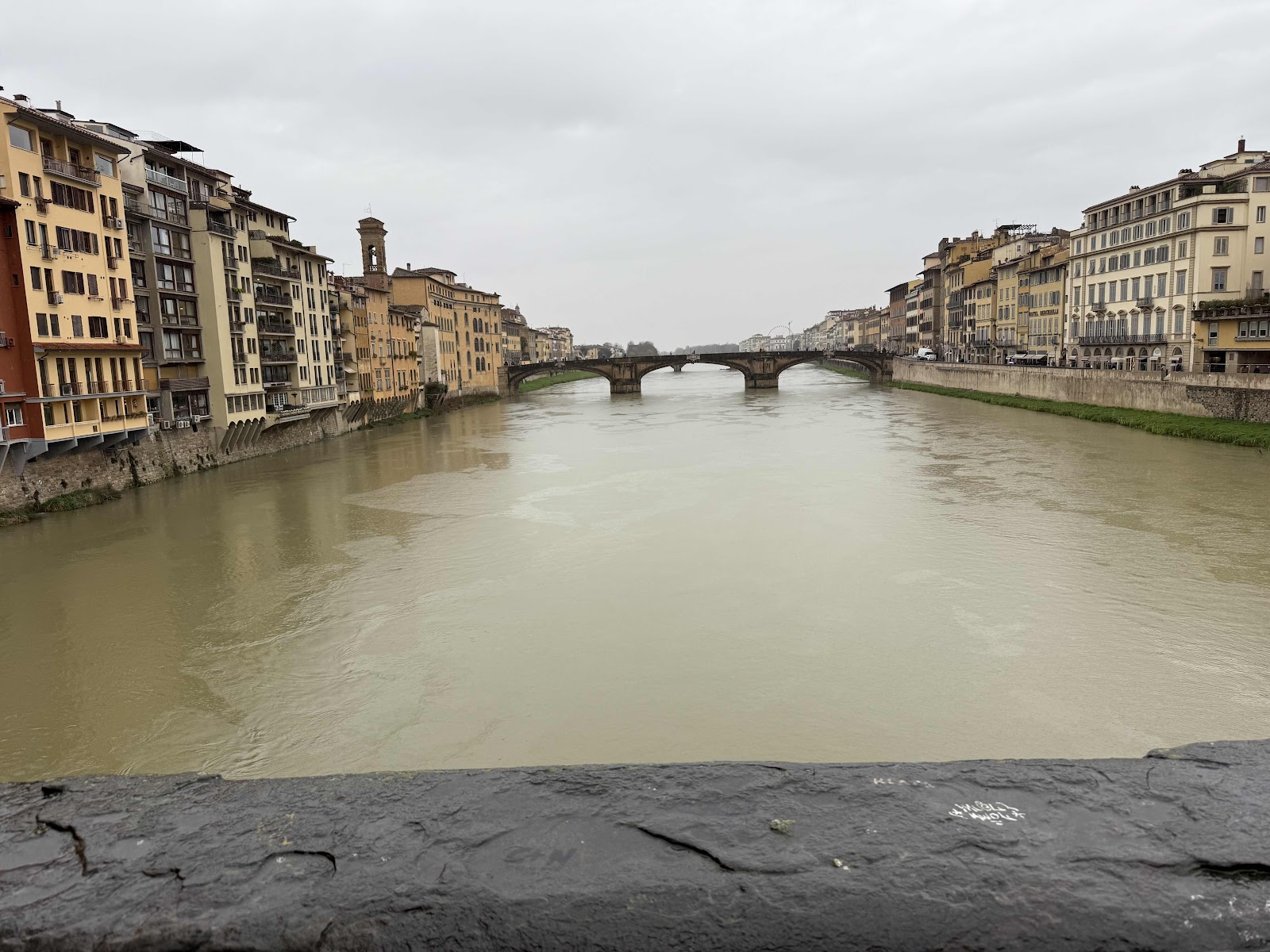
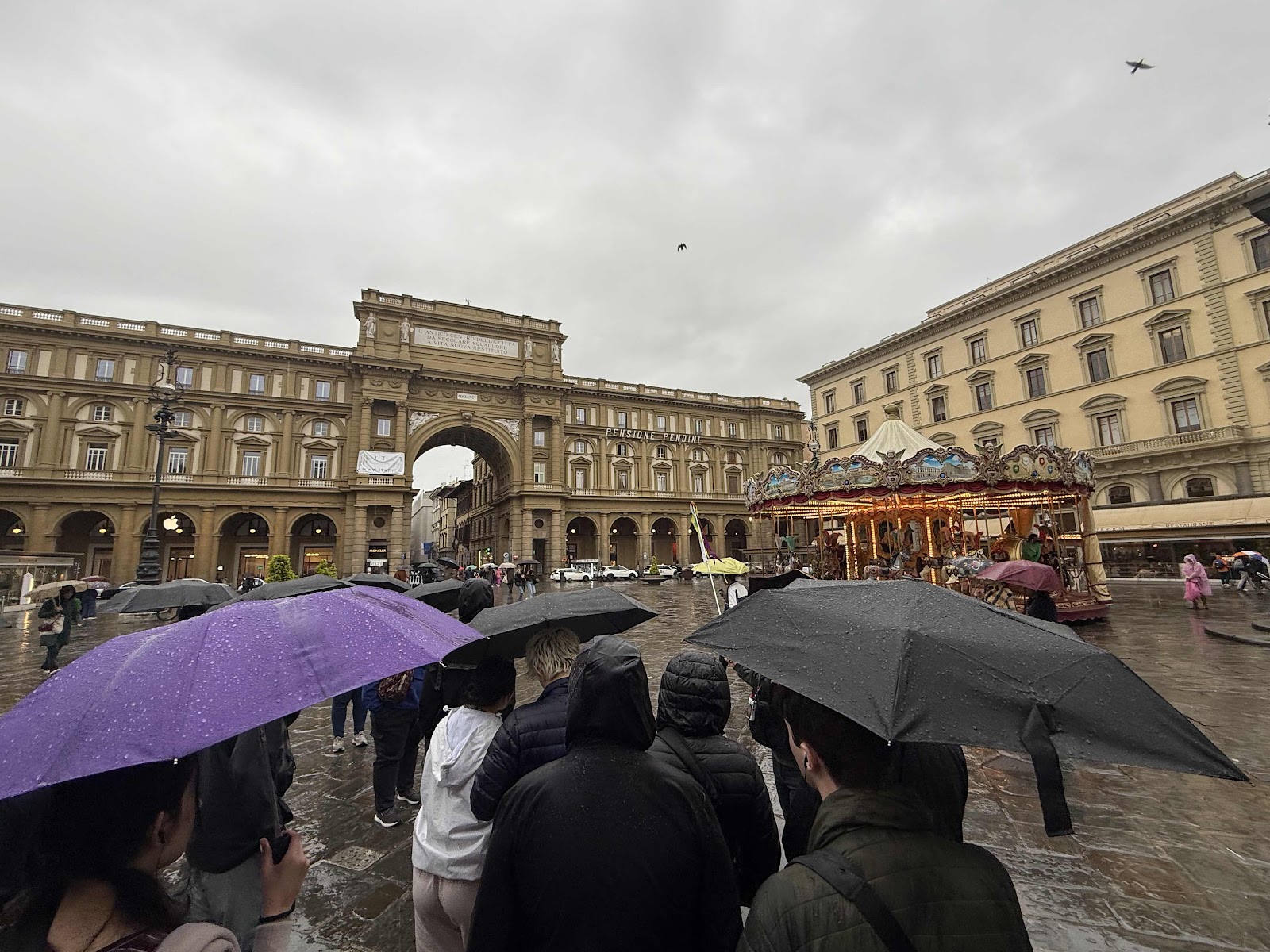
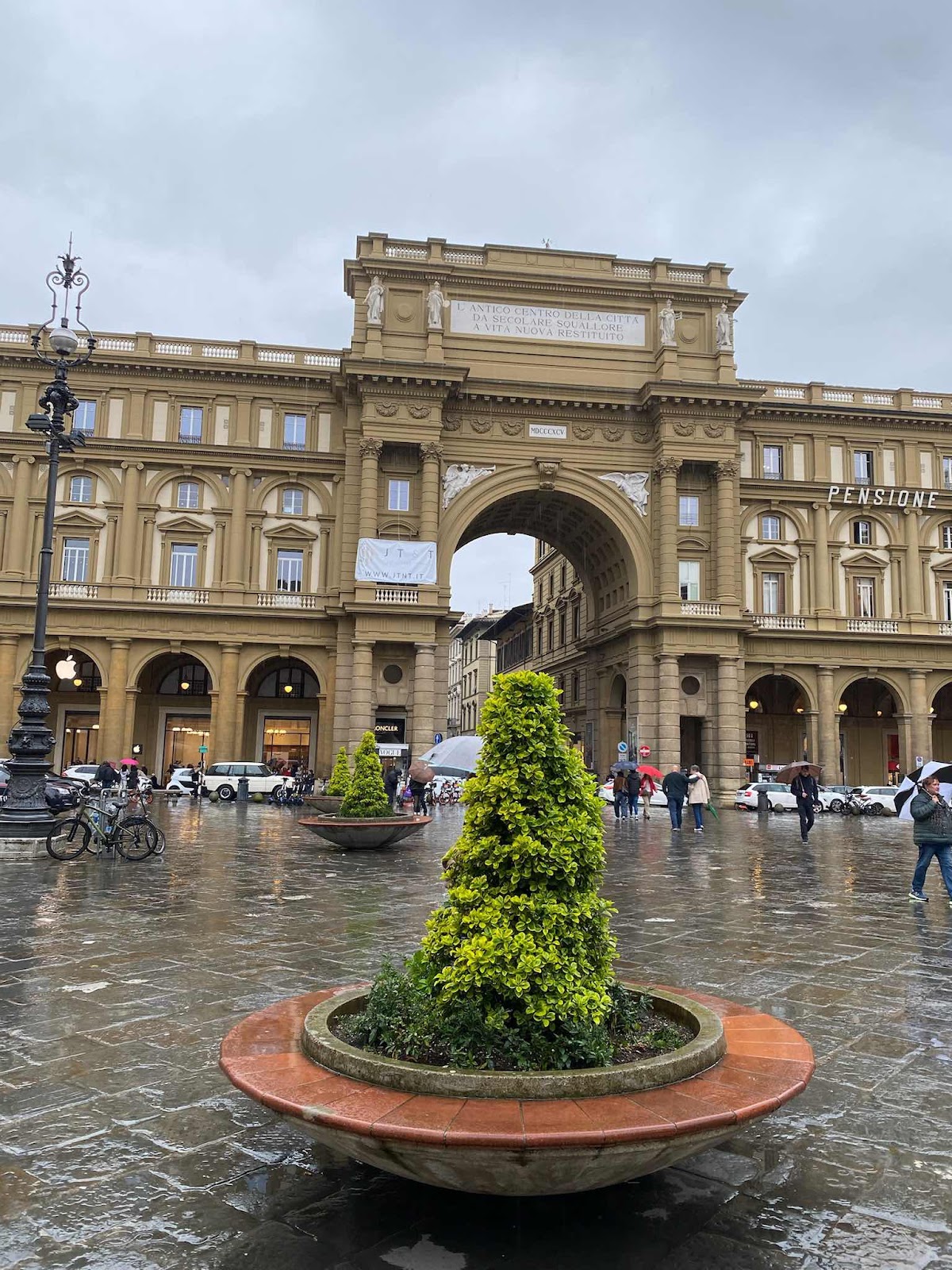
From there we back tracked and moved on to Republic Square. This area was built in the late 1800s to celebrate Florence becoming the 2nd capital of Italy.
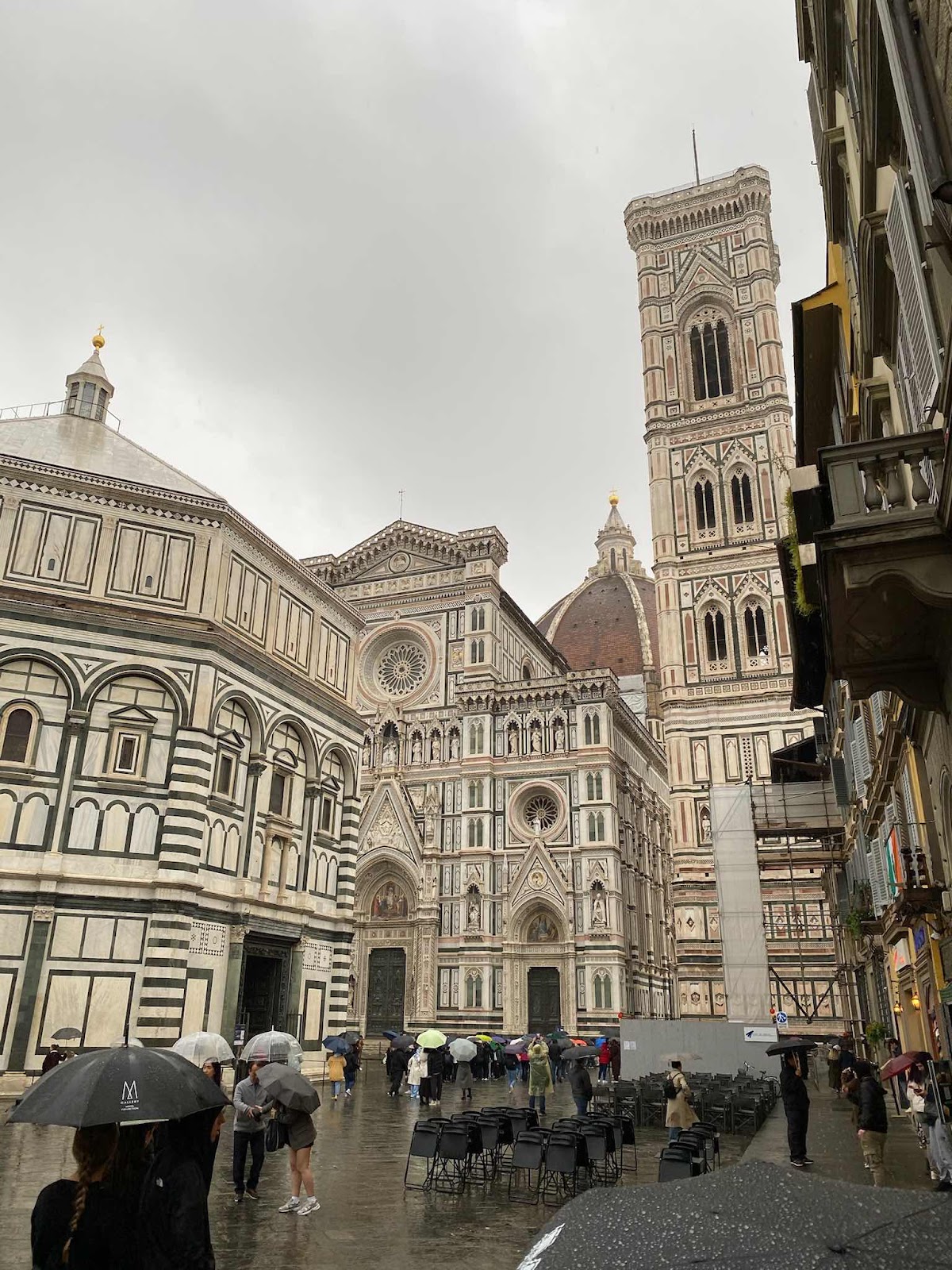
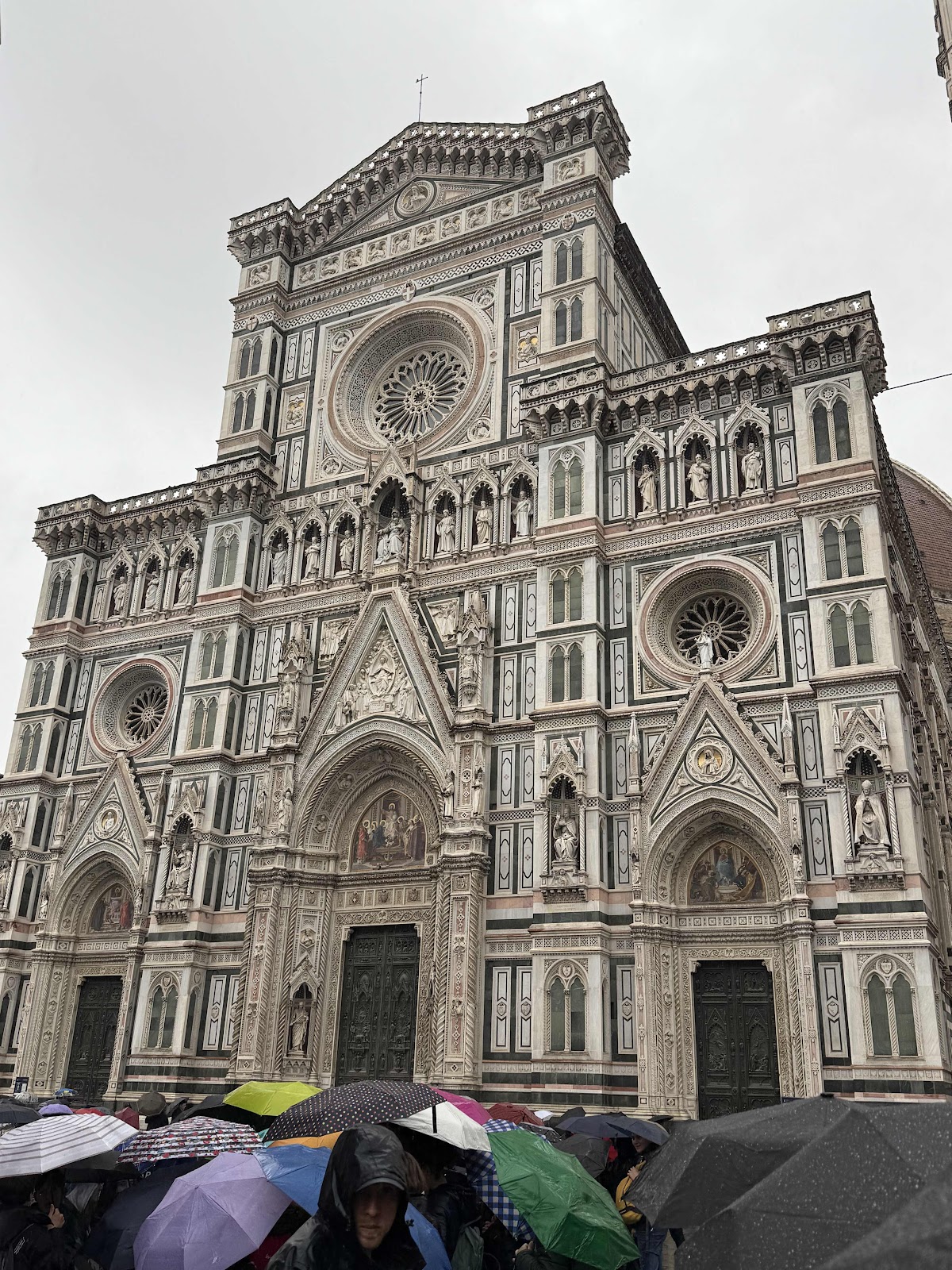
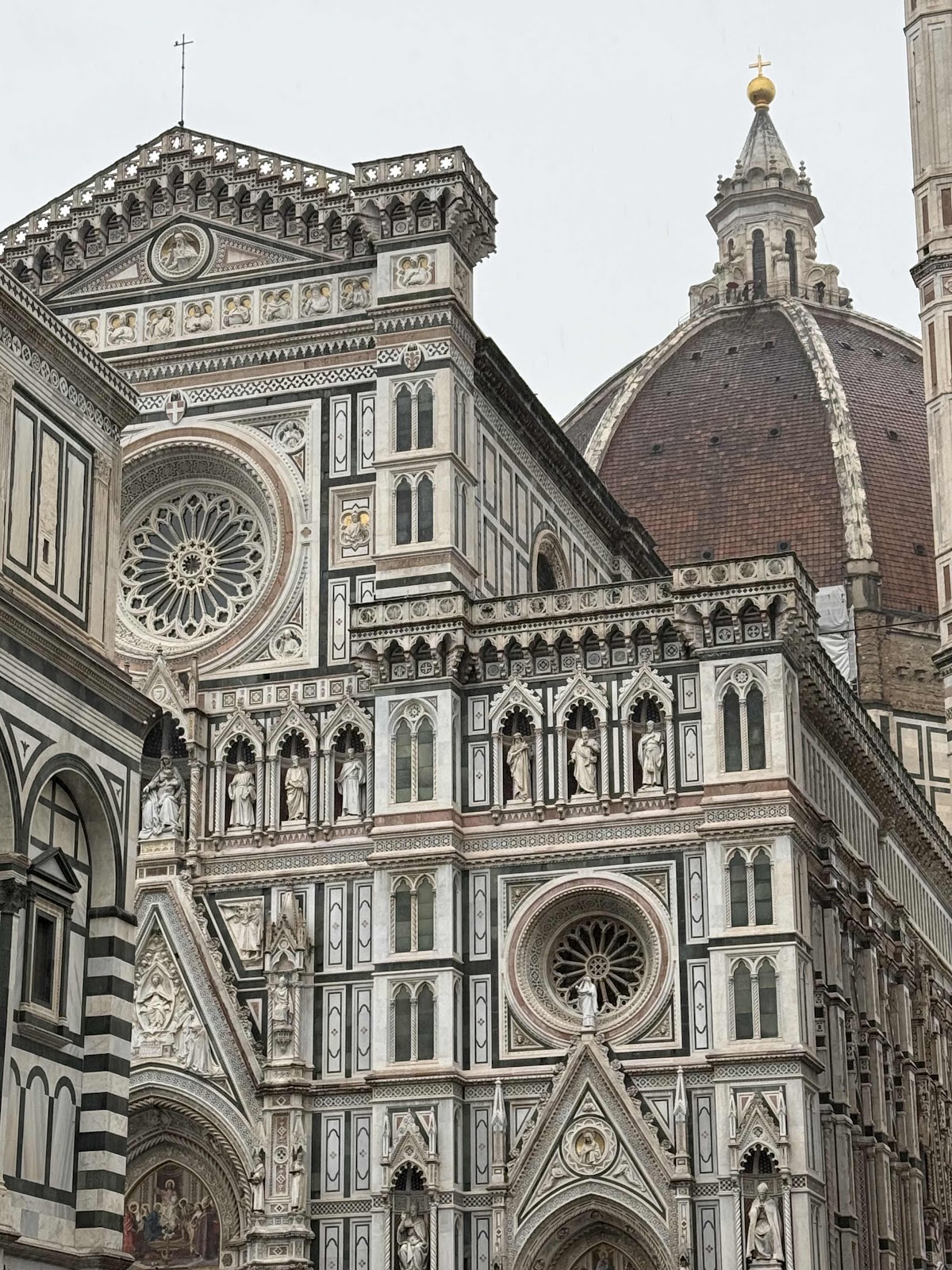
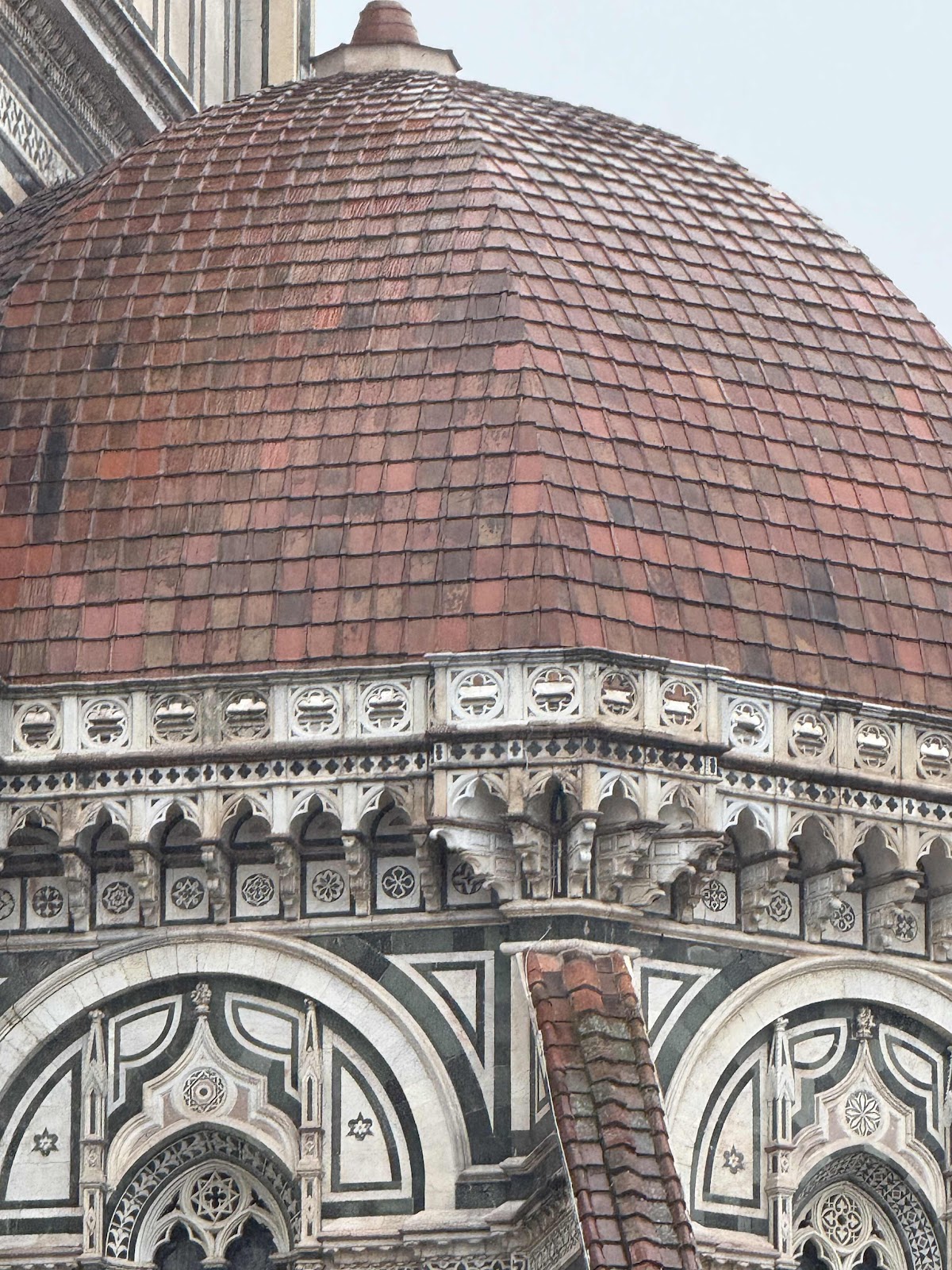
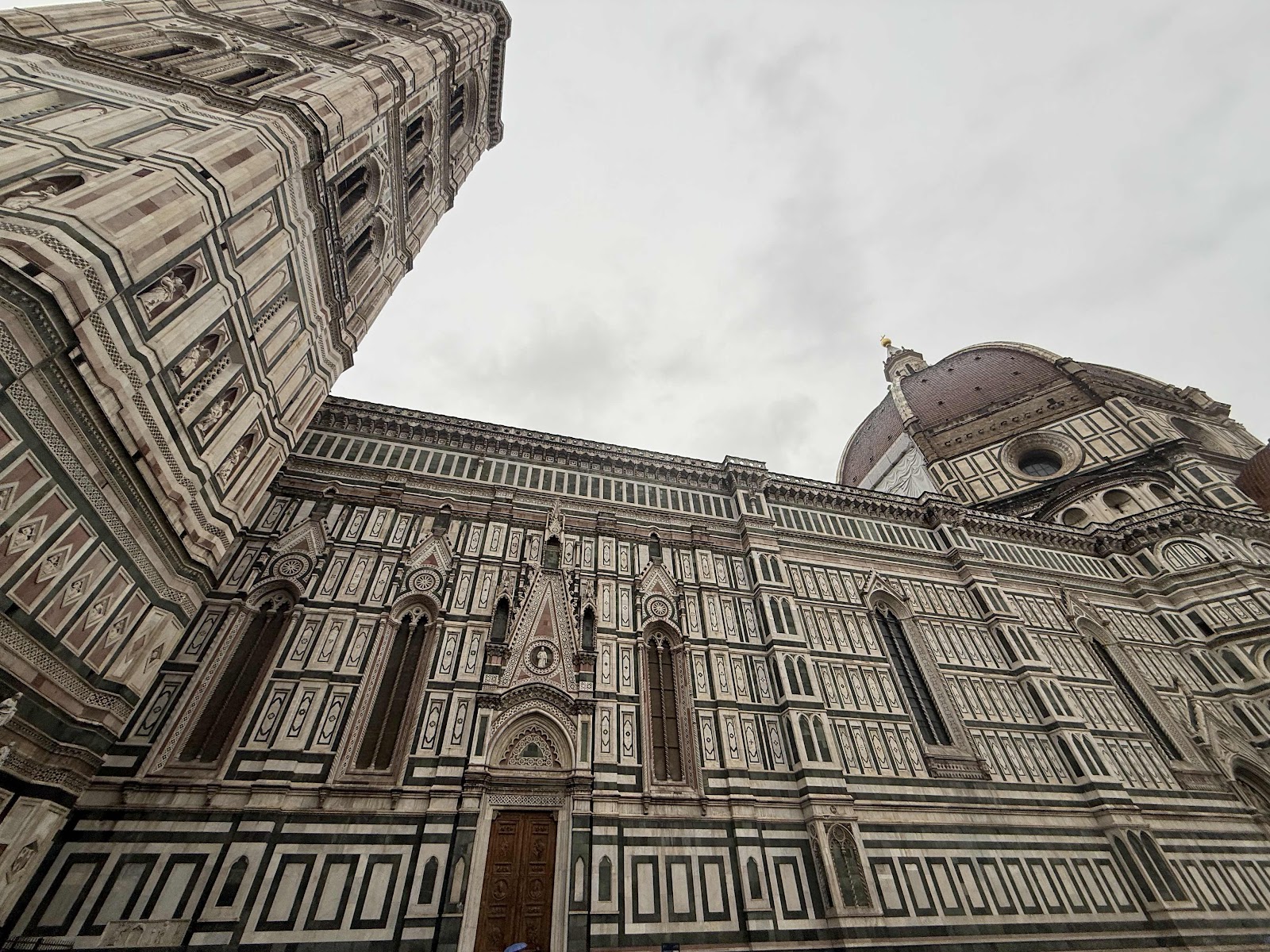
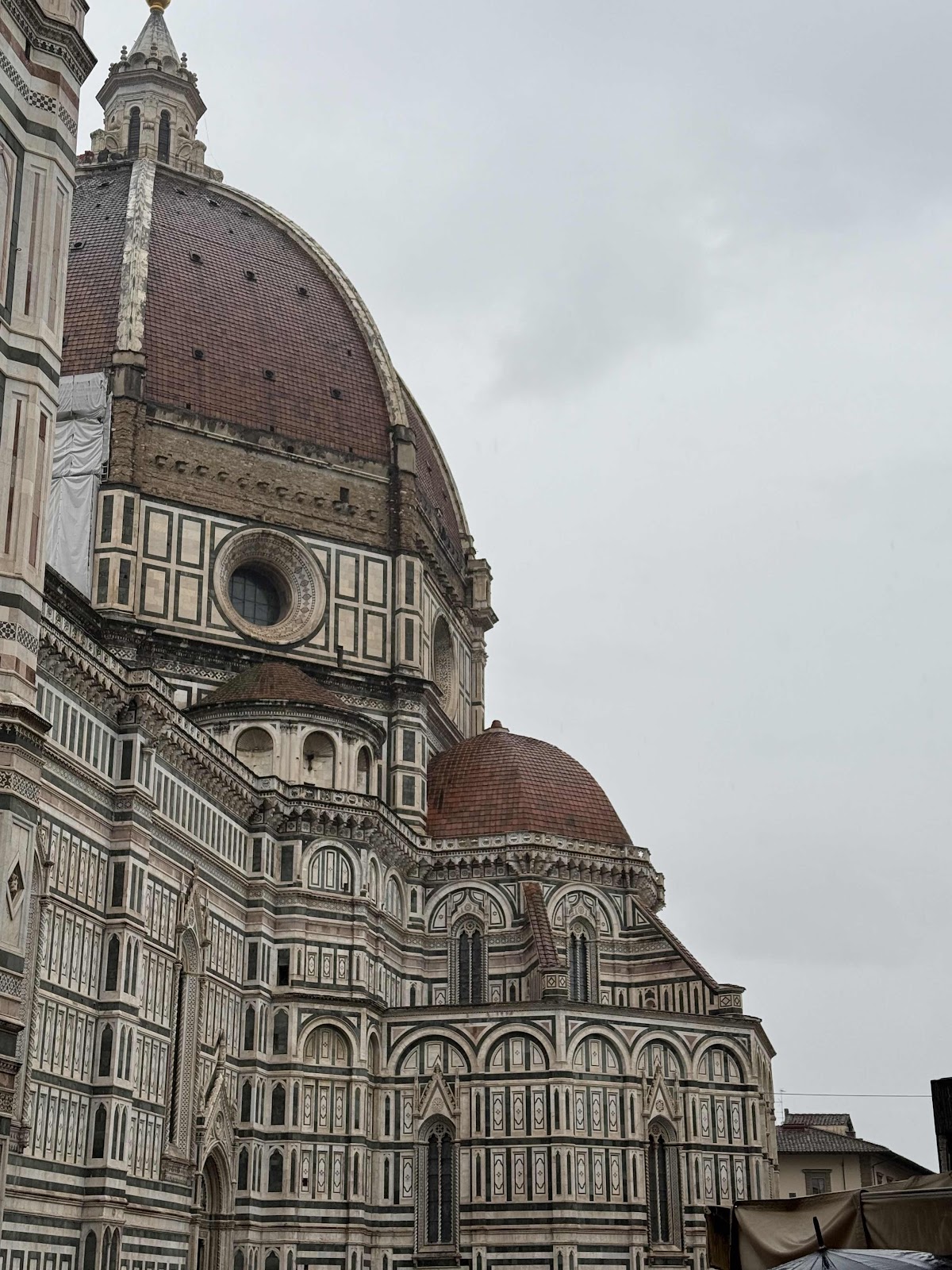
The Duomo in Florence is one of the most famous and beautiful landmarks in Italy! When it was finished it was the largest cathedral in the world and now it’s the 5th largest in Europe. Its real name is the Cathedral of Santa Maria del Fiore, making it a tribute to both the virgin Mary and the city of Florence itself, which is also named for flowers. It’s known for its huge, red-tiled dome designed by Filippo Brunelleschi. The dome was an incredible engineering feat for its time. The engineer even destroyed all of the plans afterward so no one could copy it.
The front of the church
The dome at the back of the church
The bricks were laid in a special pattern to help support the dome’s weight.
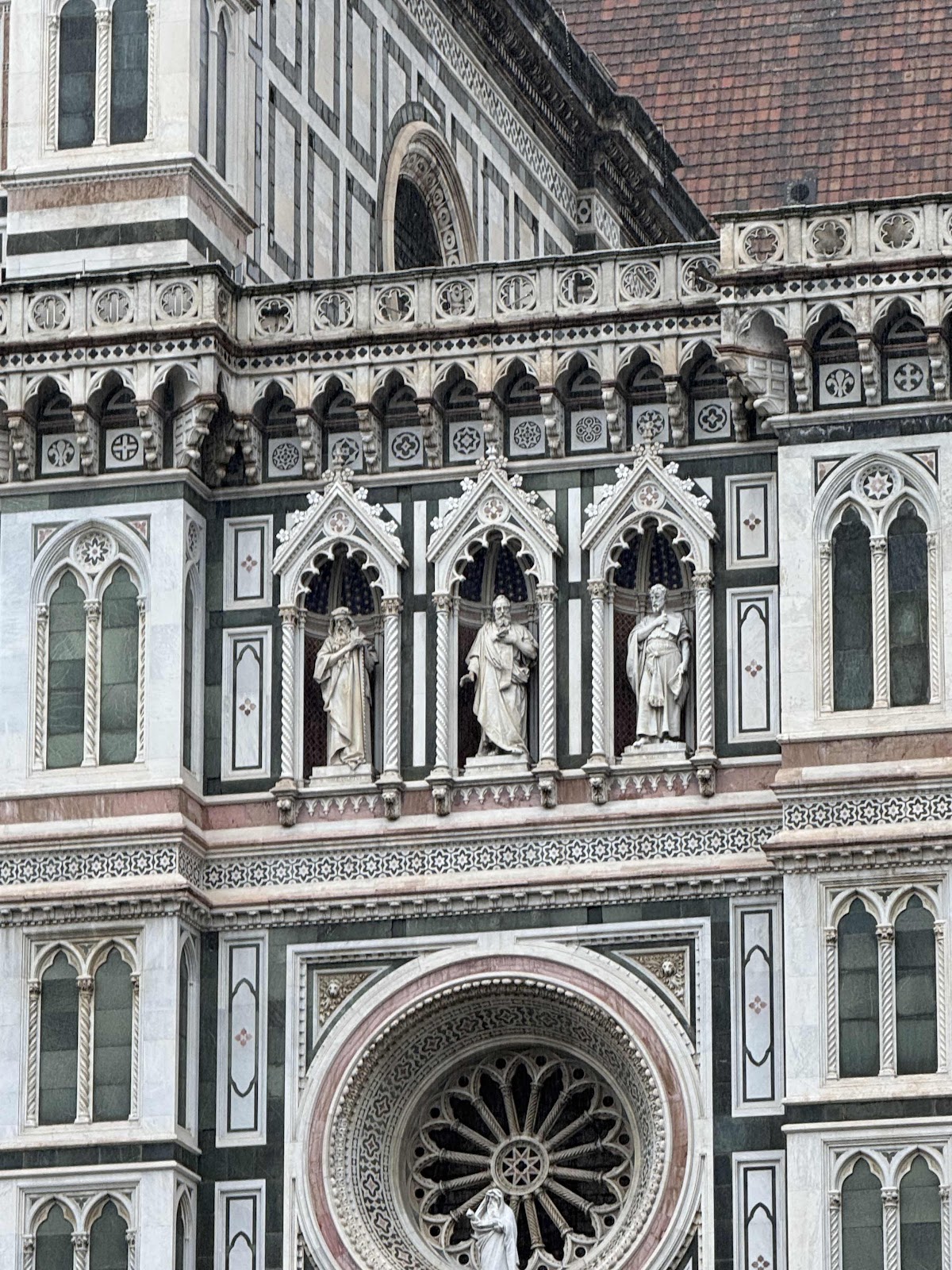
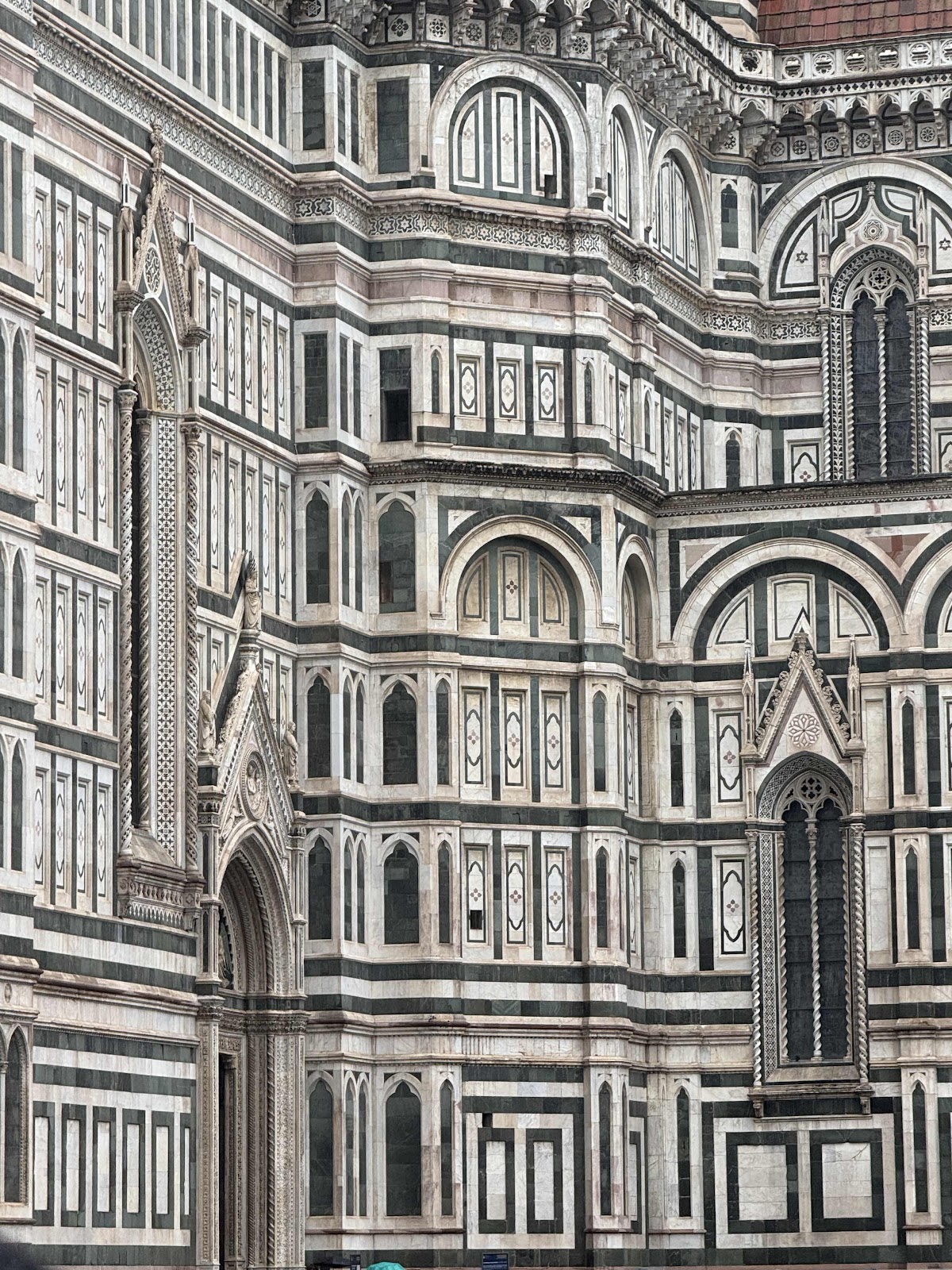
It’s made of white marble with pink and green accents and lots of geometric shapes.
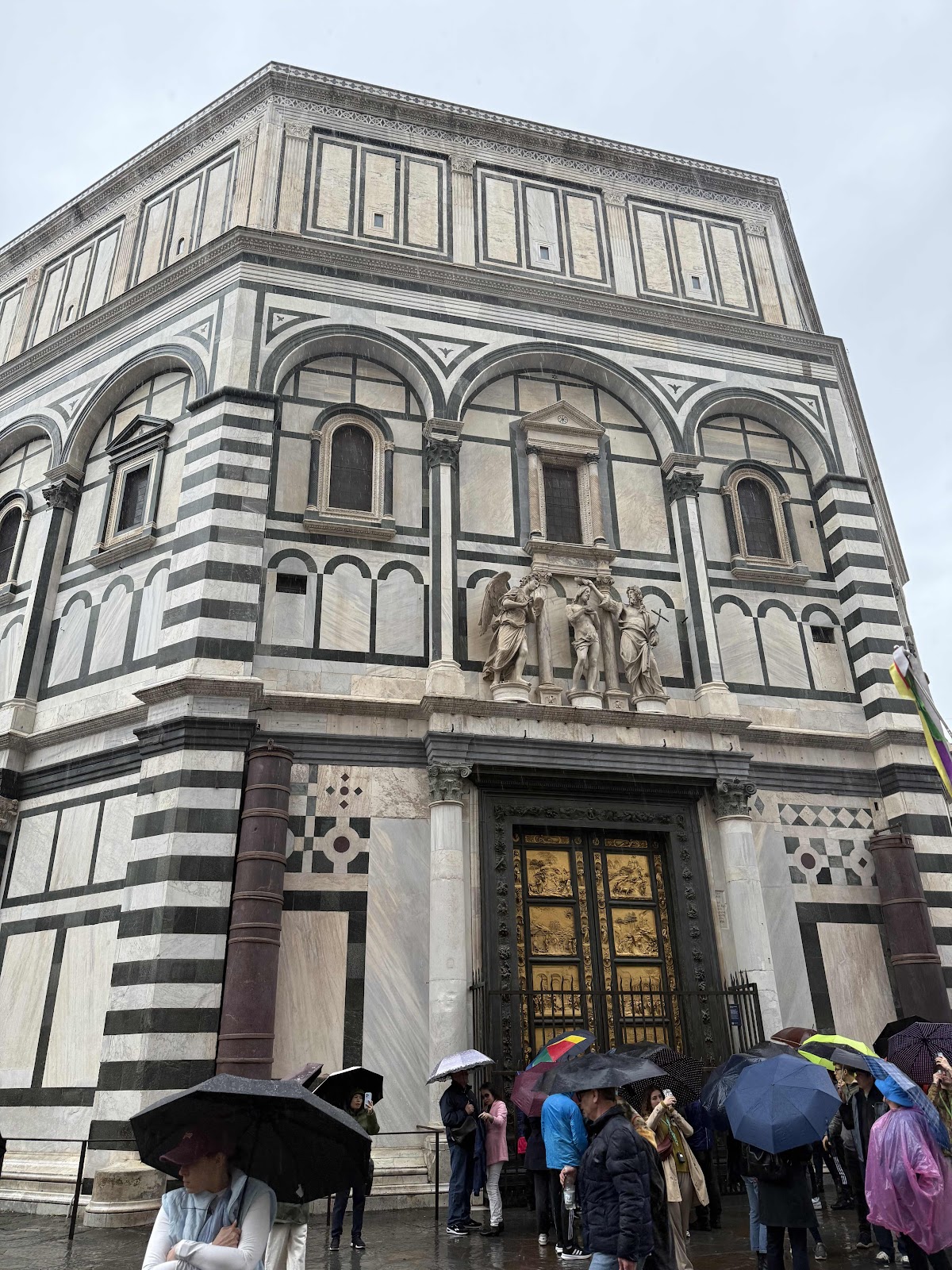
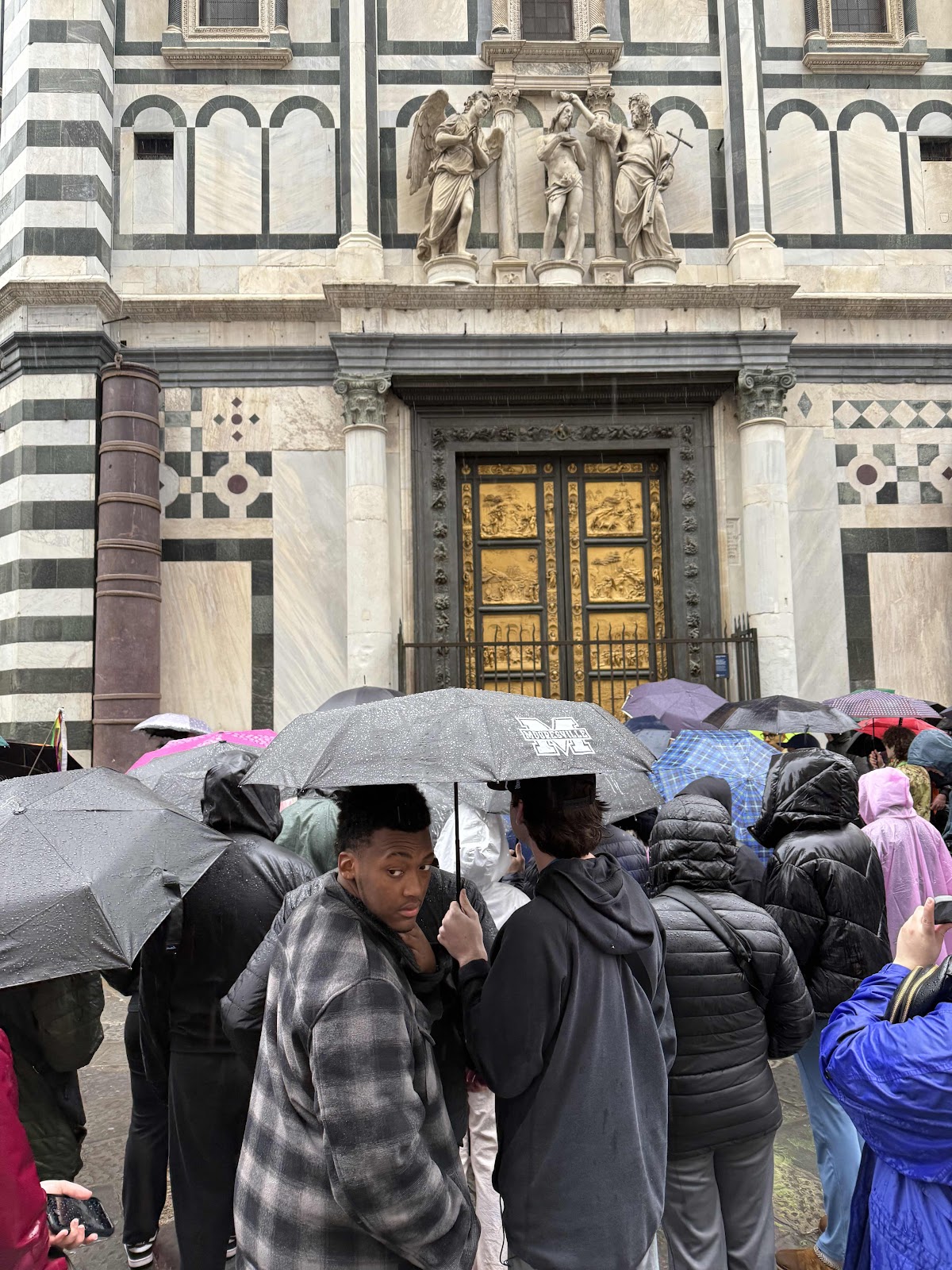
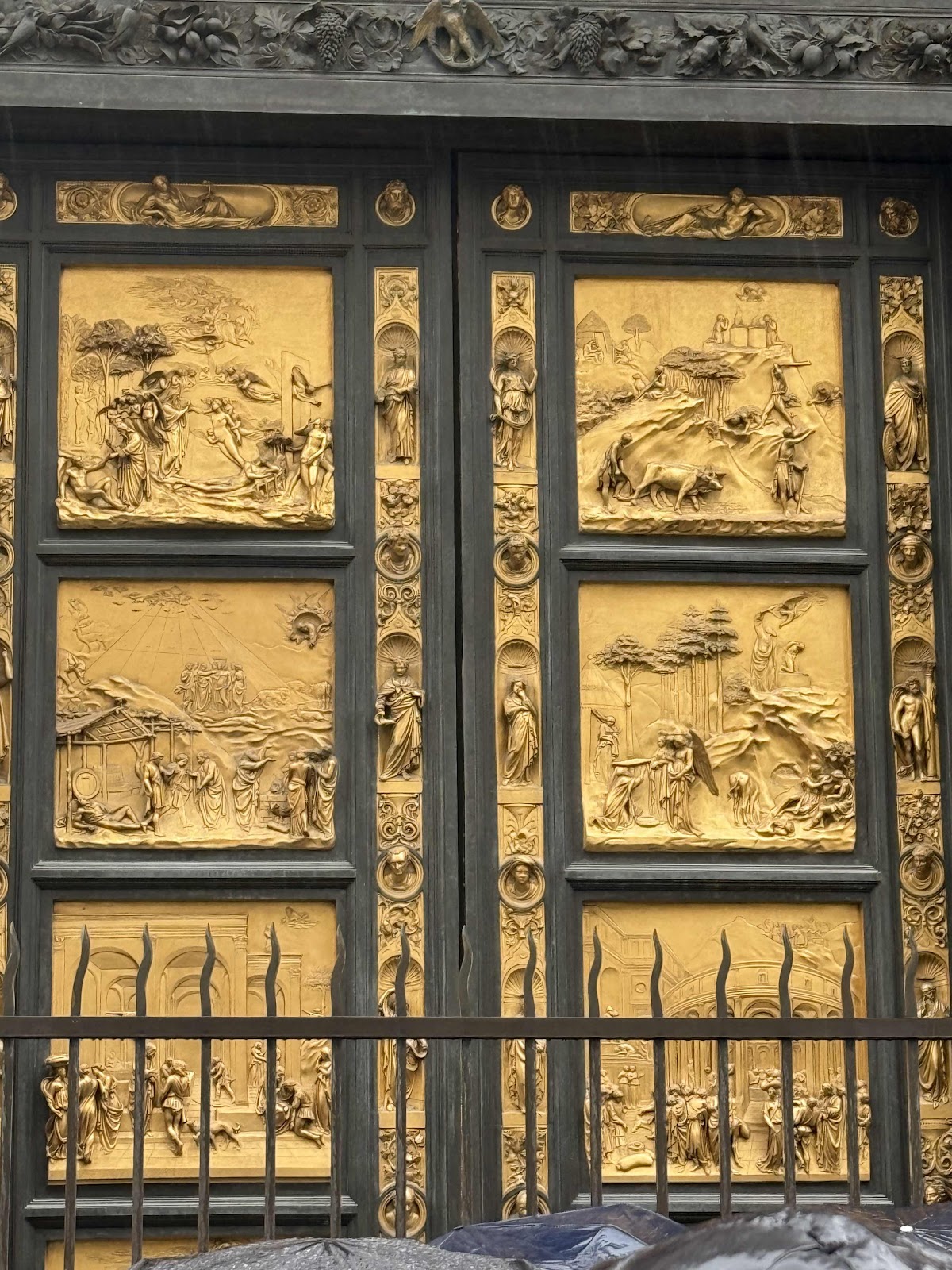
Right next to the cathedral is the Baptistery of St. John, one of the oldest buildings in Florence — it’s over 1,000 years old! The Baptistery is famous for its bronze doors leading out of the baptistery towards the cathedral. The doors are called the "Gates of Paradise," with detailed carvings in gold that tell stories from the Bible.
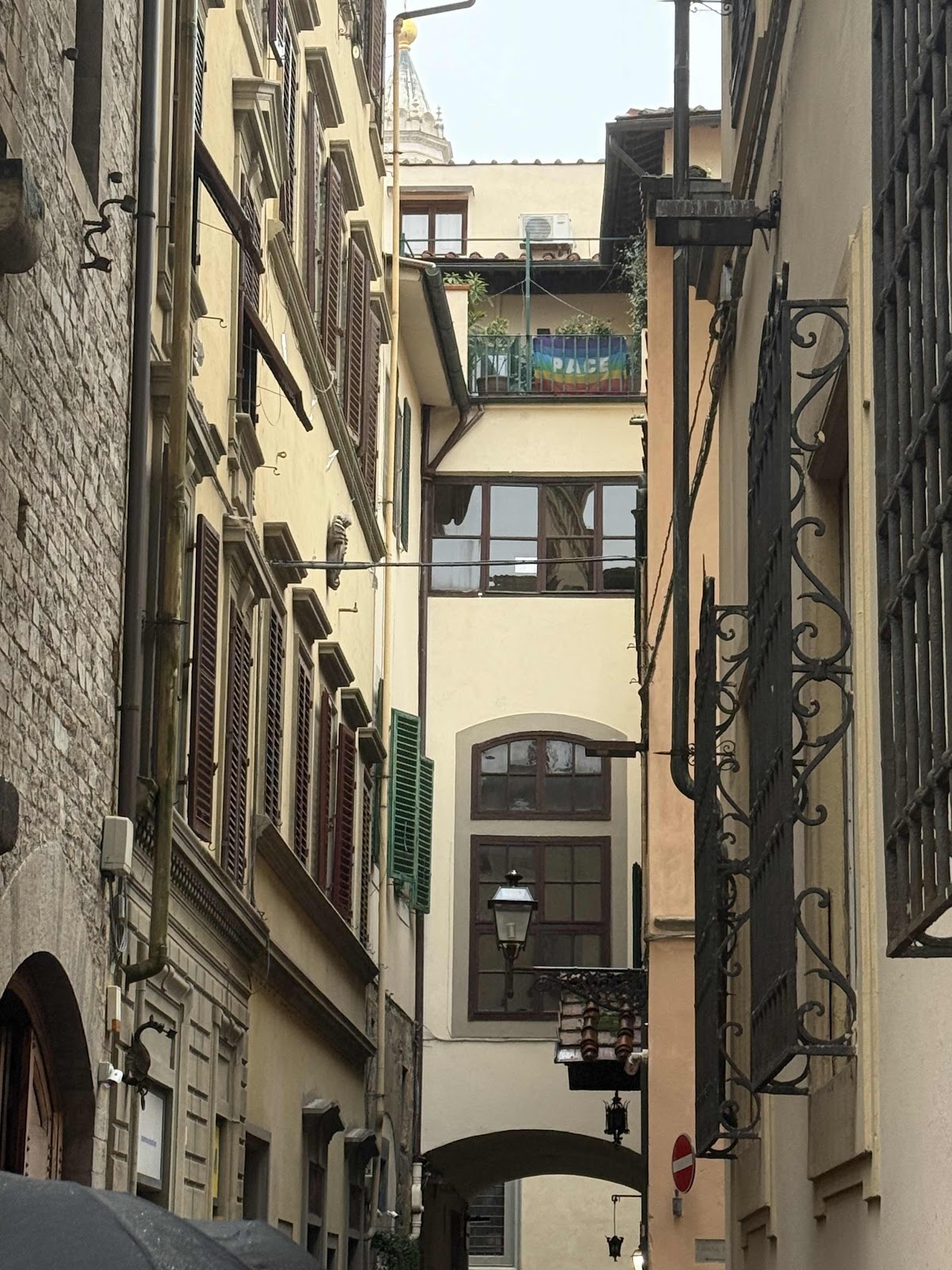
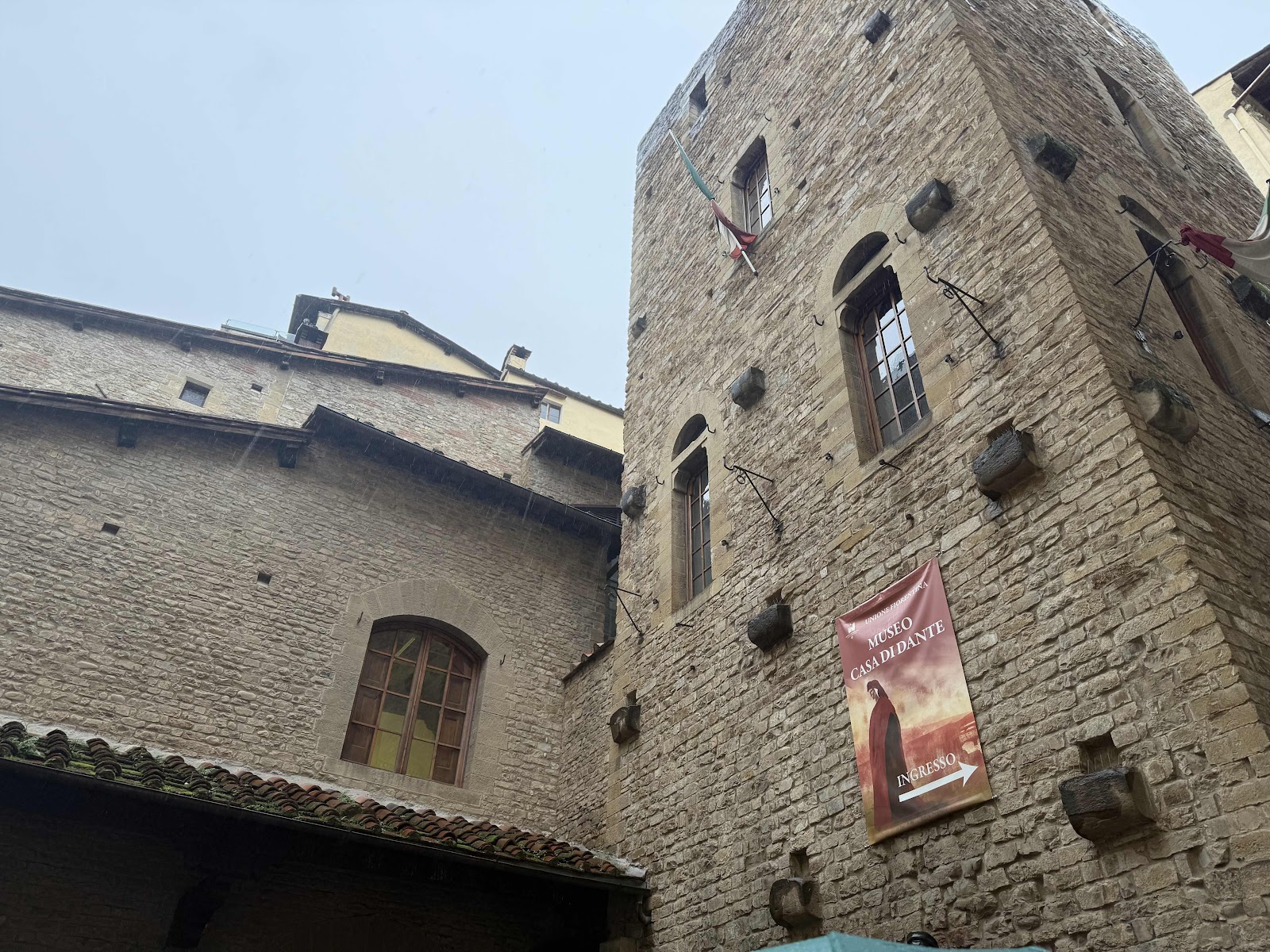
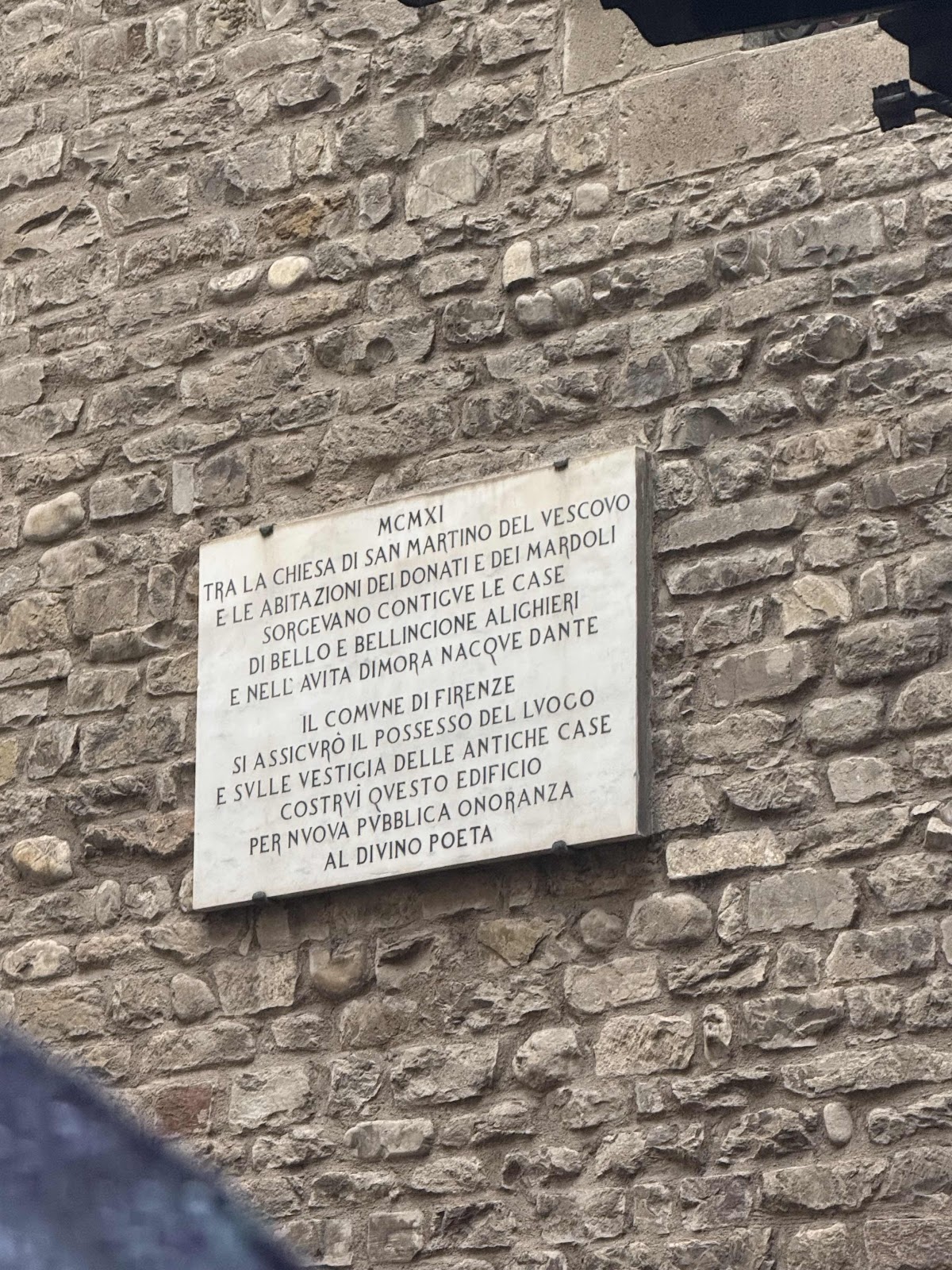
Our next stop was Dante’s house. This is where the poet and author lived, and he is famous for writing The Divine Comedy, including the Inferno. Dante was one of the most important writers in Italy. He stopped writing in Latin and started using the language of the common people, which was new for his time. This is still a very important book in Italy and all students have to read Dante‘s work.
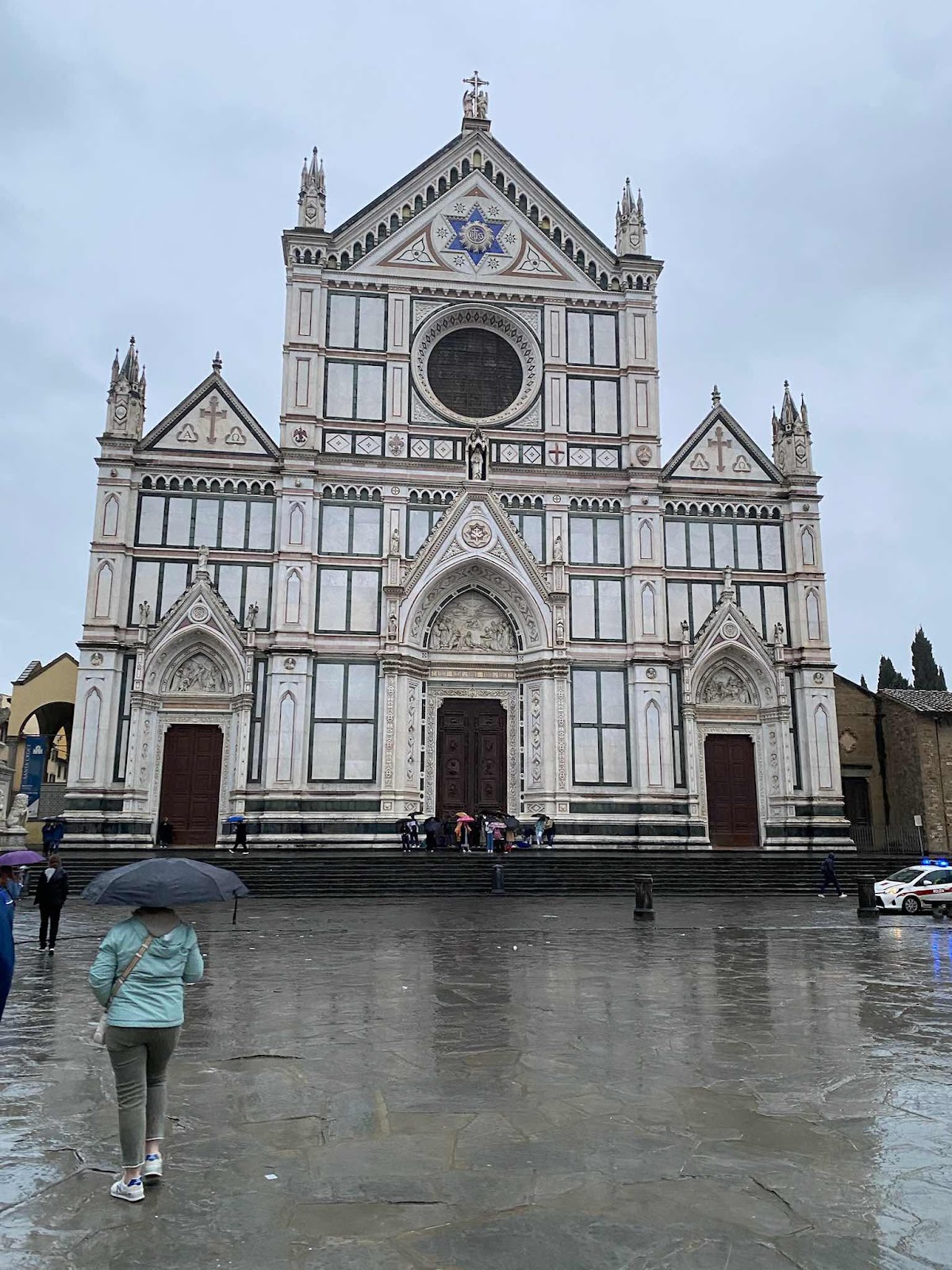
Our final destination was the church of Santa Croce. It’s known as the "Temple of the Italian Glories" because it’s the burial place of some of Italy’s greatest minds — like Michelangelo, Galileo, and Machiavelli.
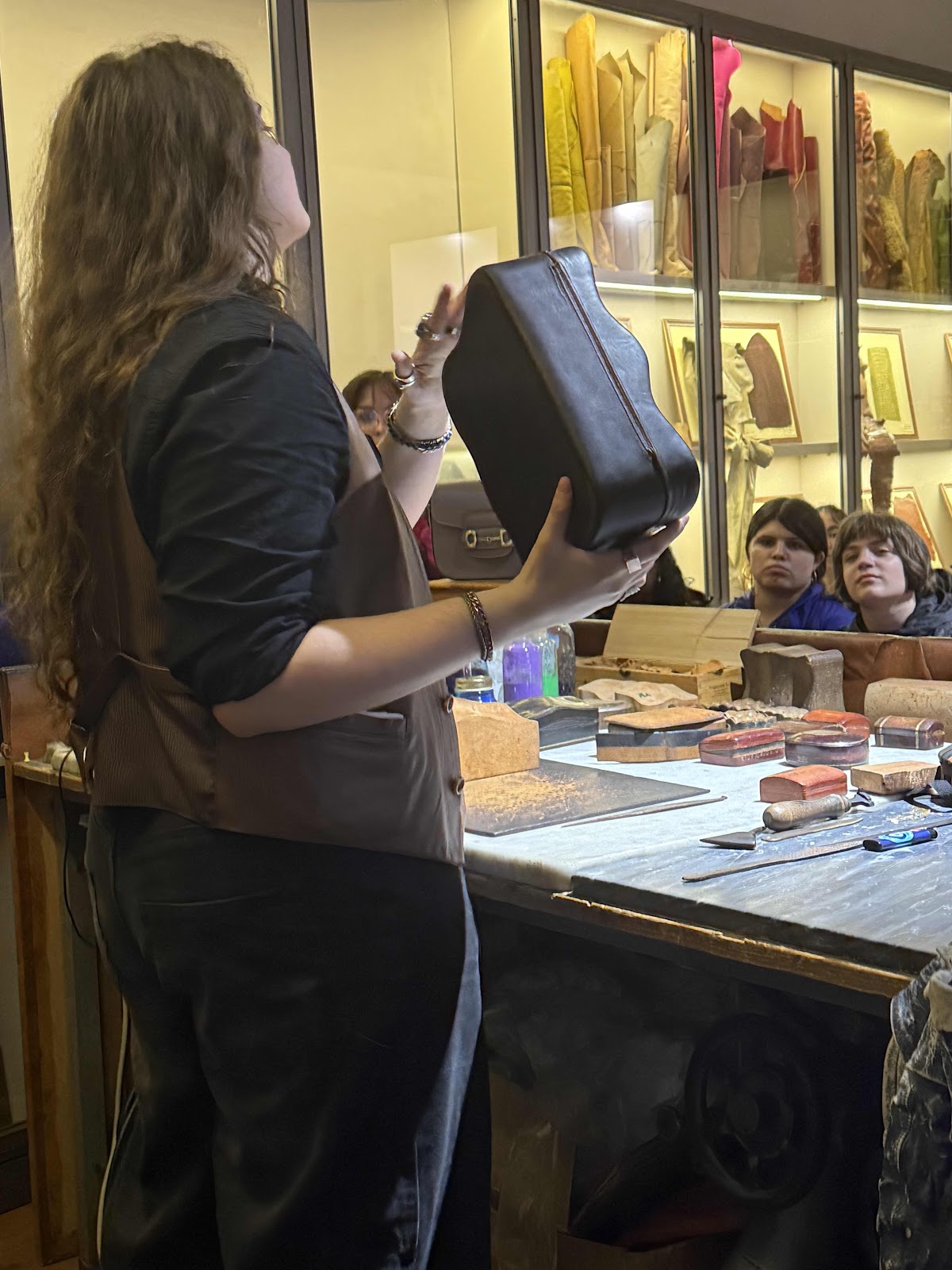
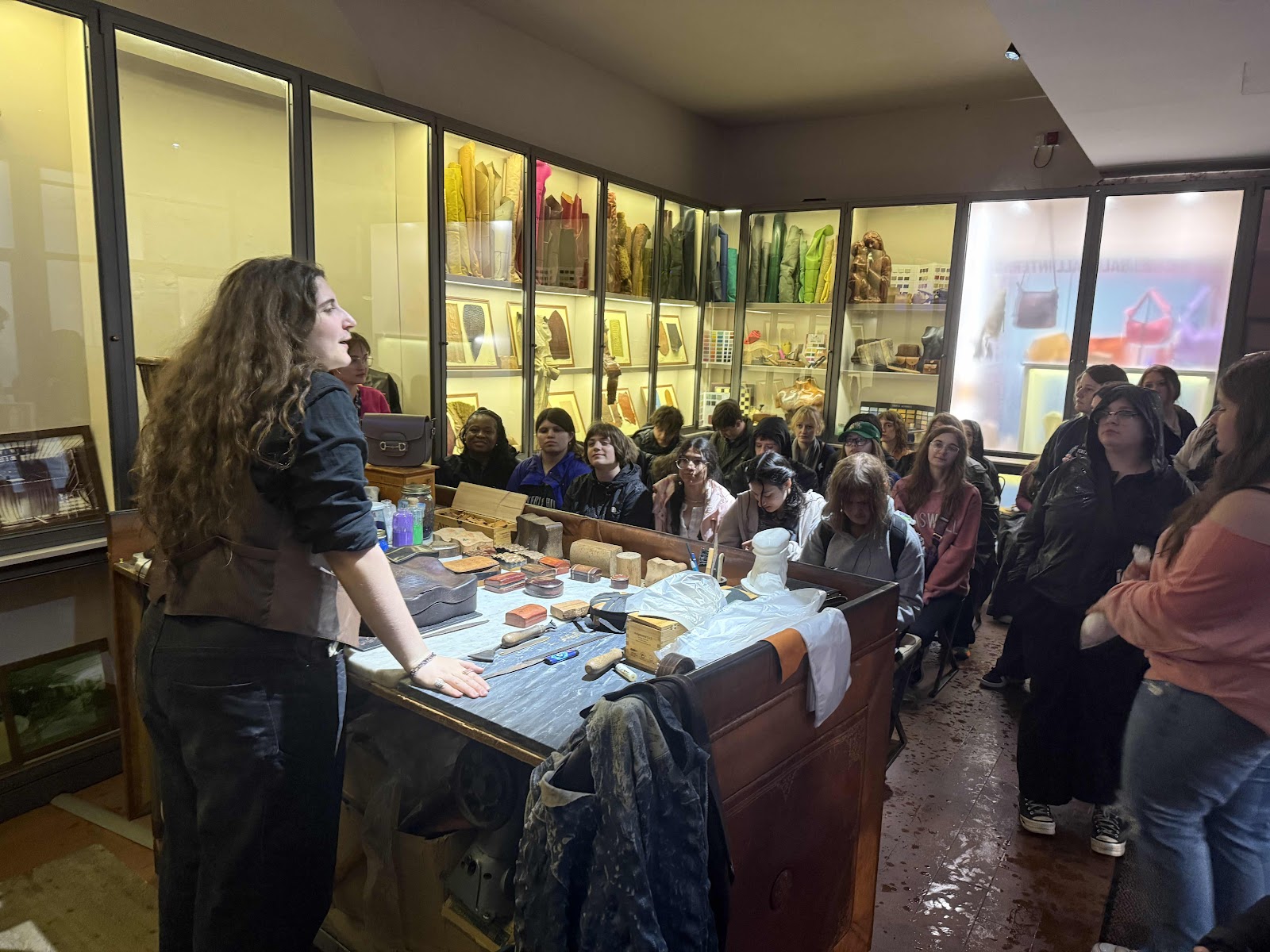
At the end of the walking tour, our local guide took us to a leather shop nearby. There we learned a little about the history of leather in Florence and had some time to shop (and use the bathroom!).
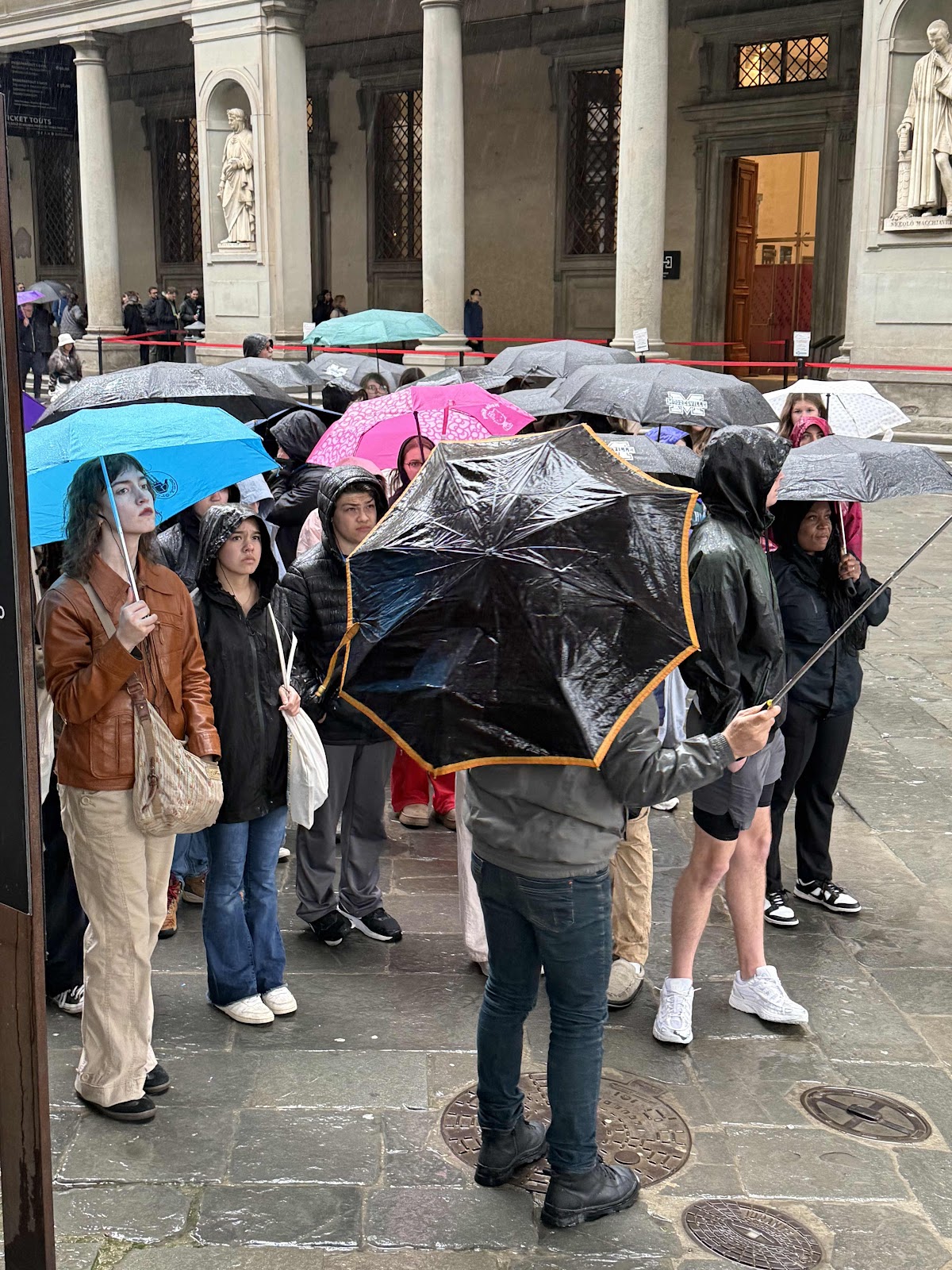
It was a rainy afternoon, but our students were troopers and hopefully picked up a good bit of history!

No comments:
Post a Comment