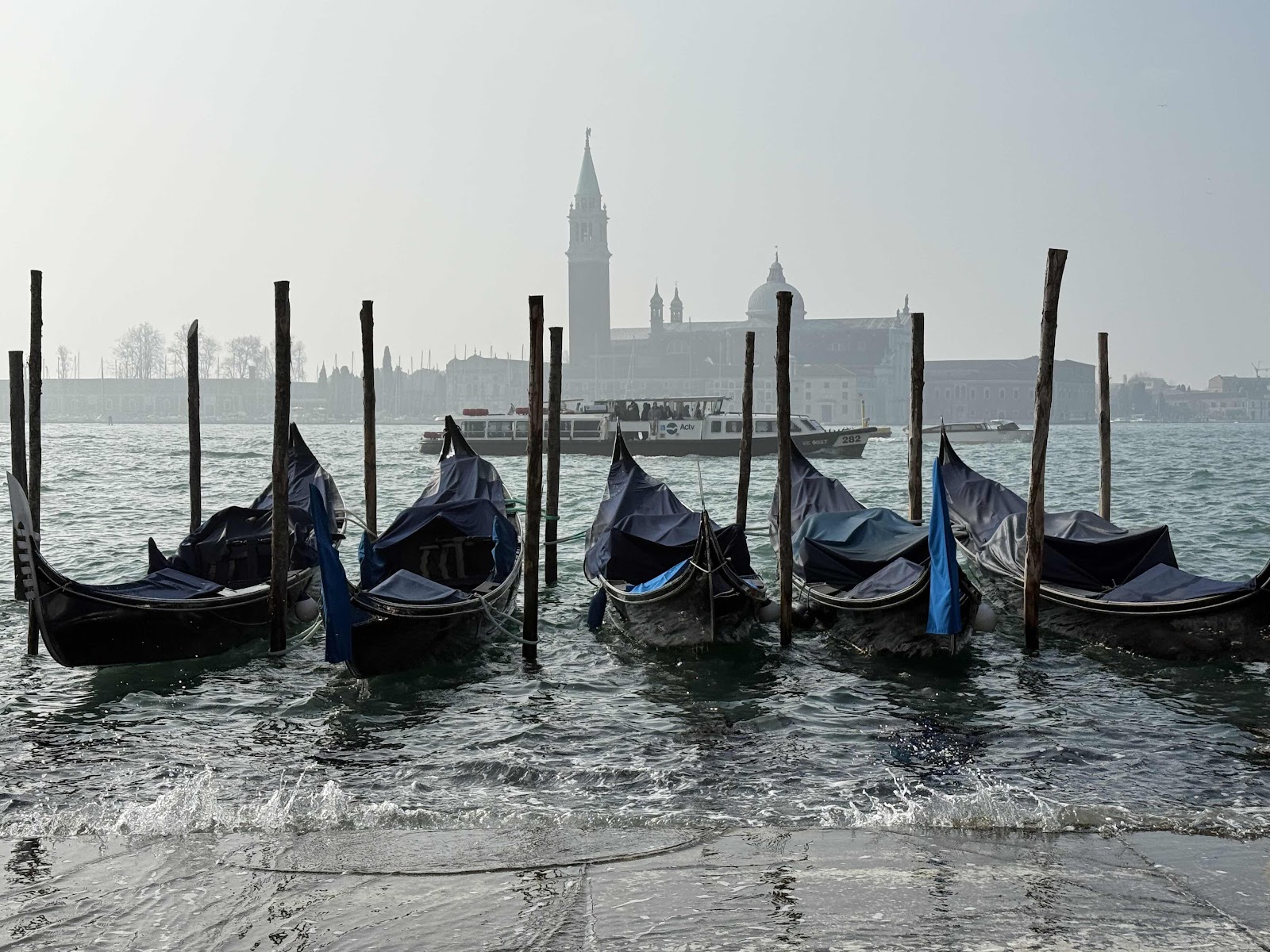
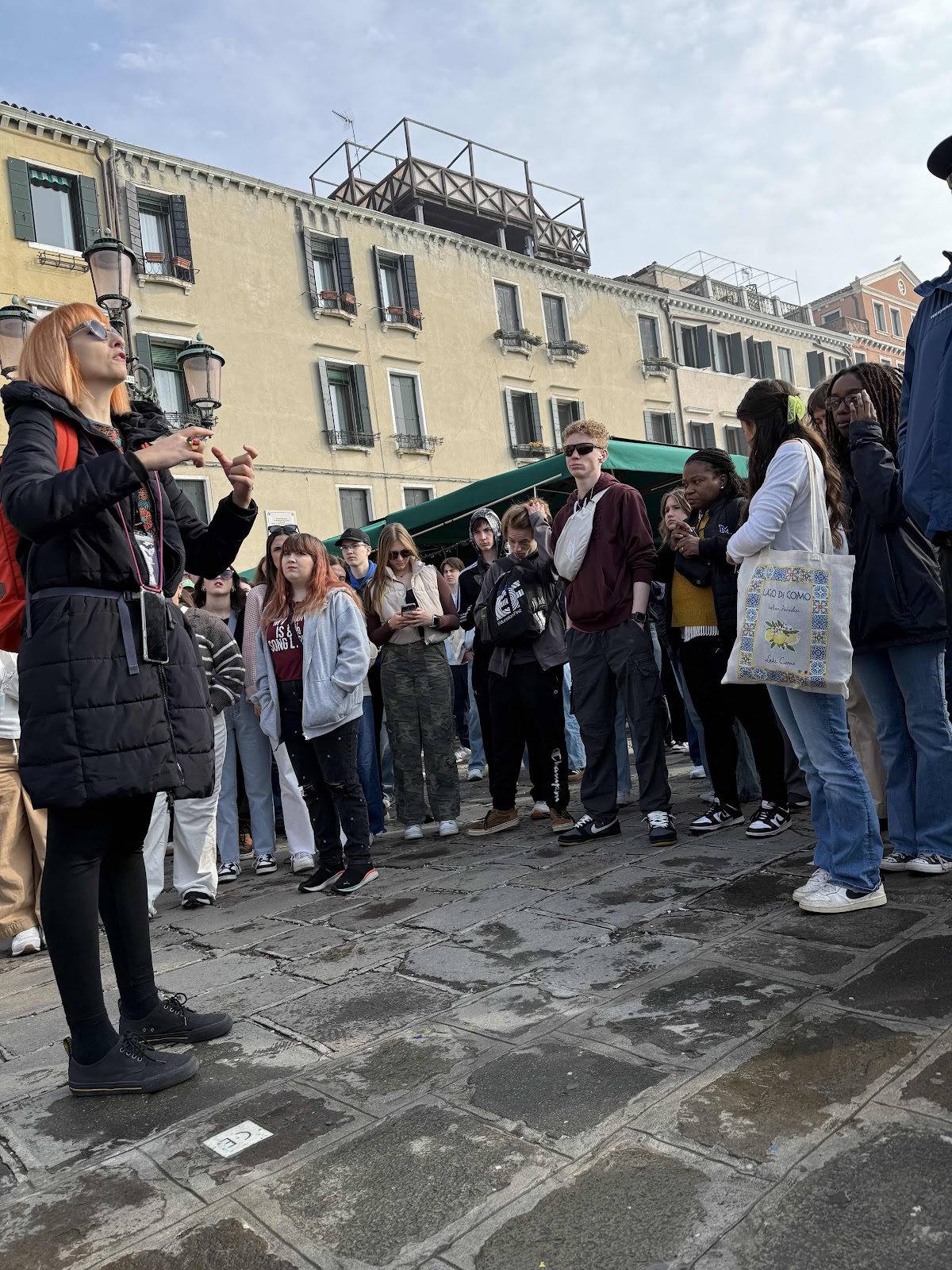
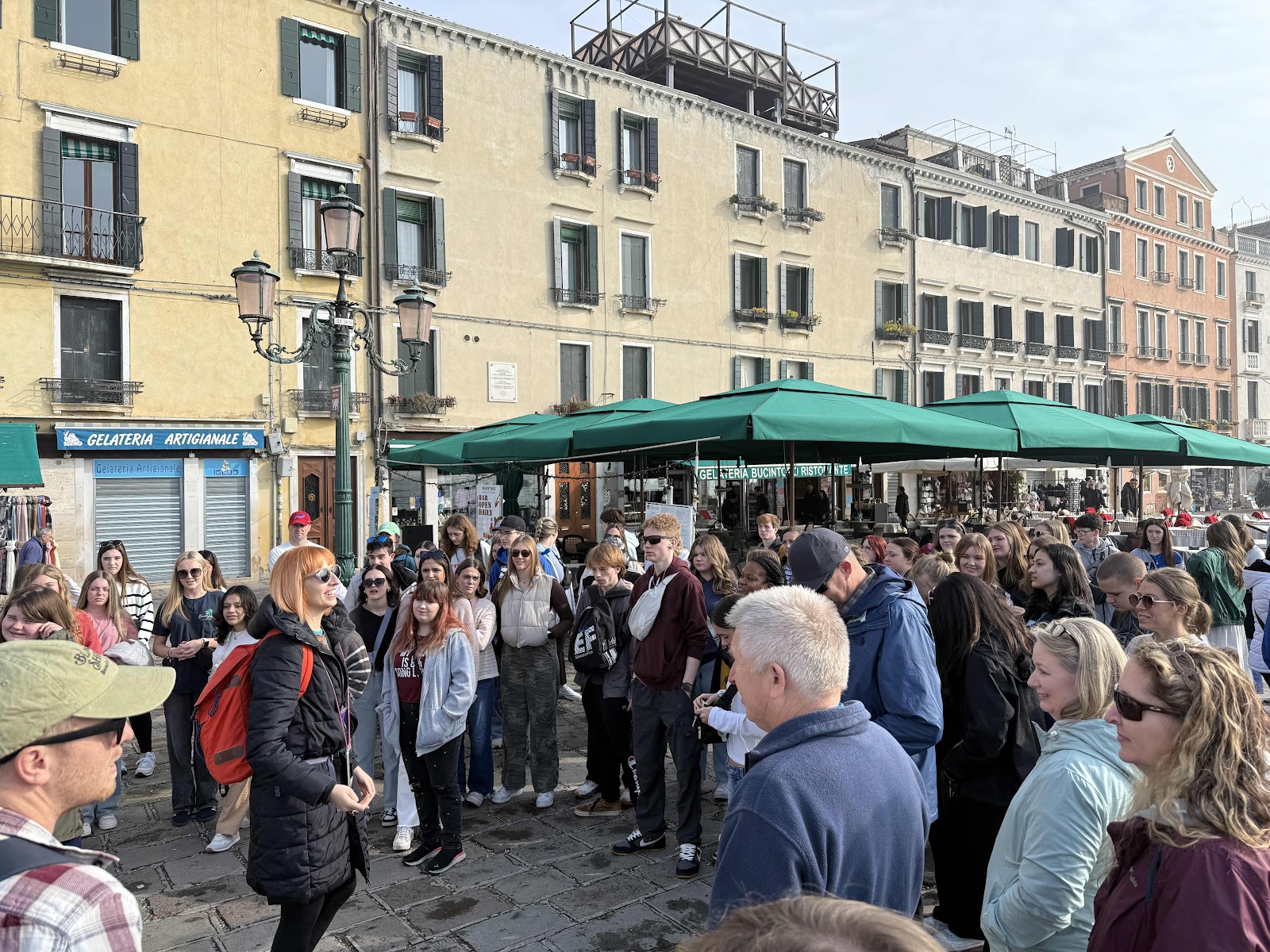
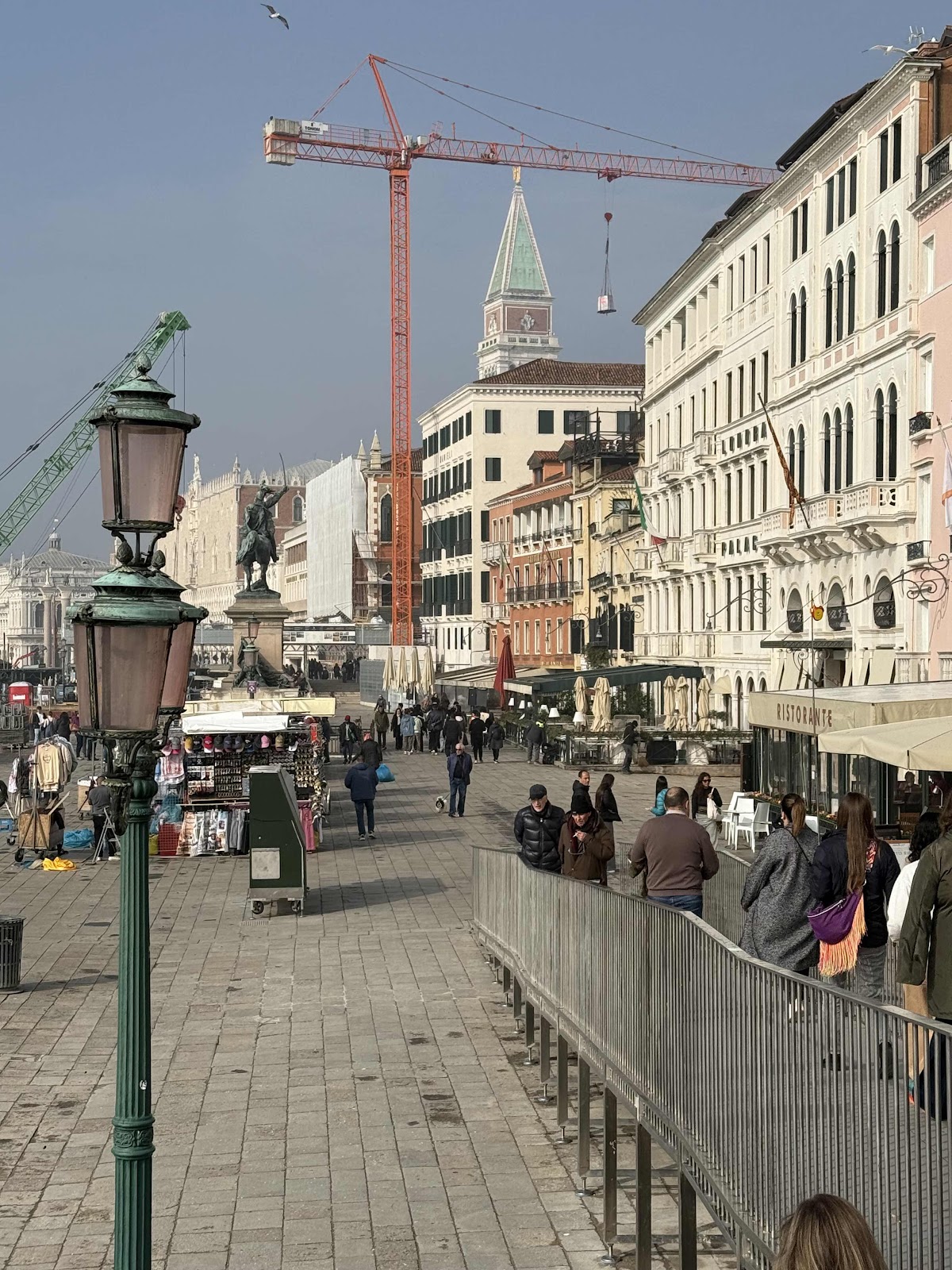
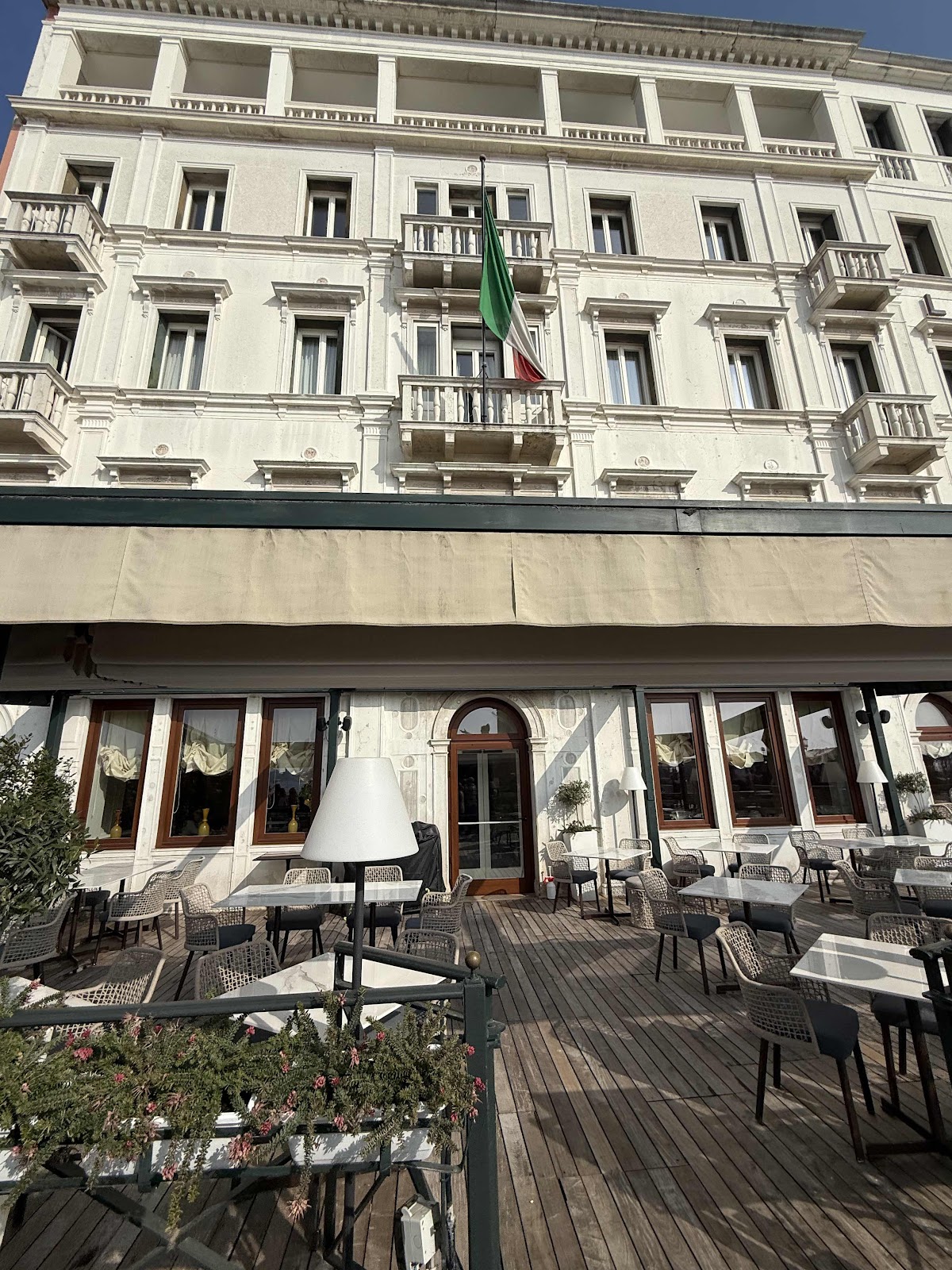
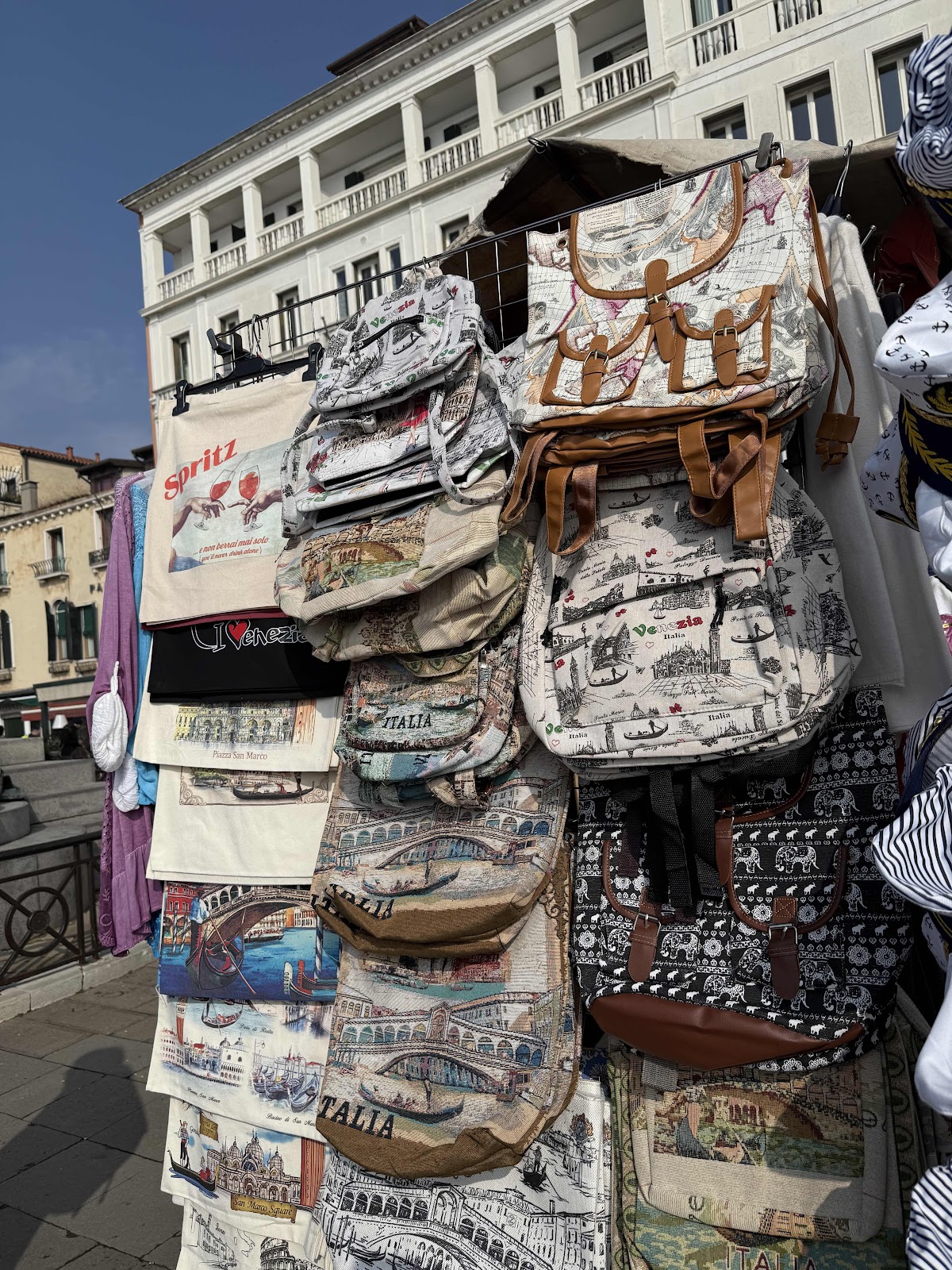
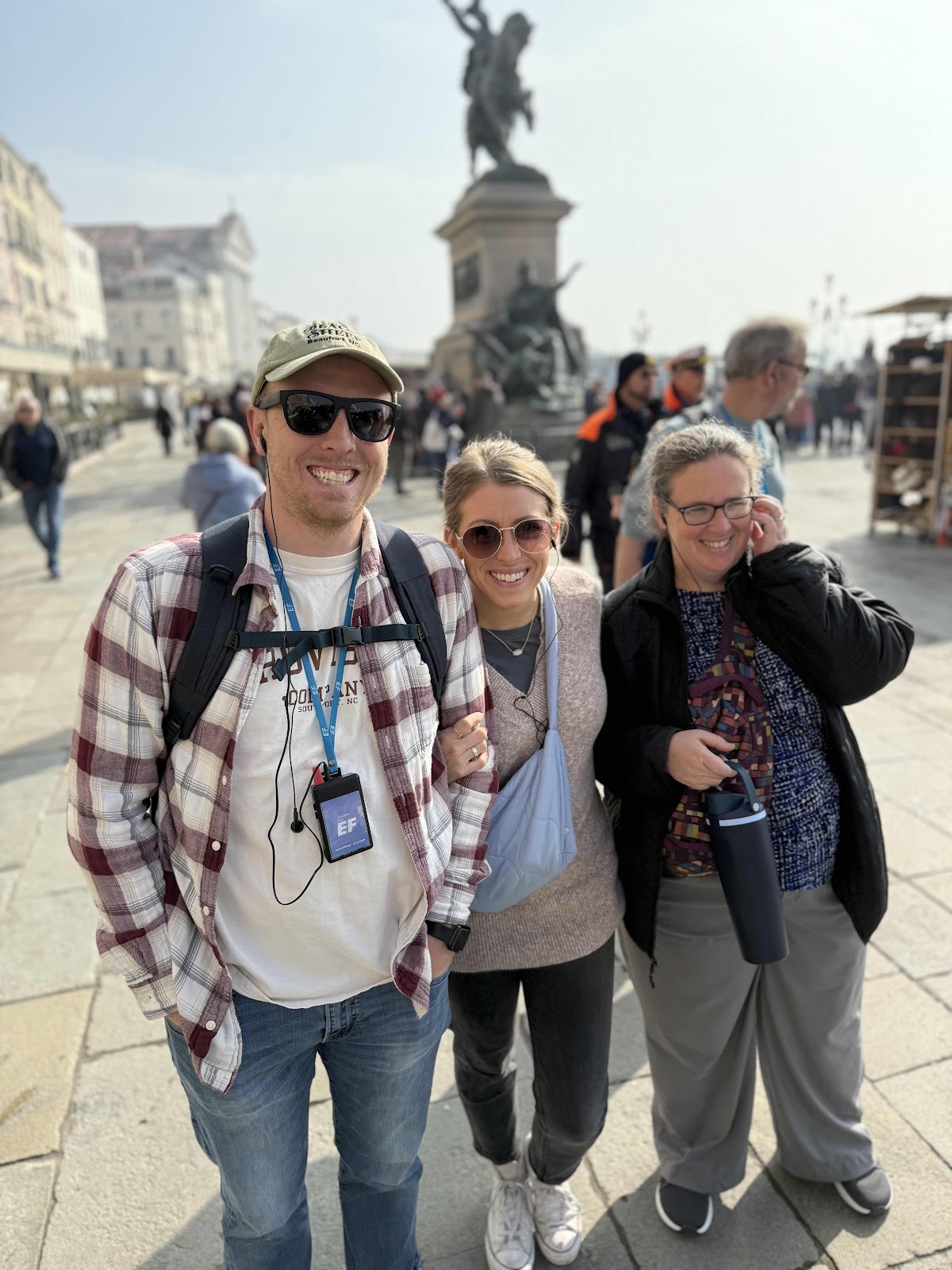
We started with our guided tour with a local guide on the waterfront. It’s a bustling area! We were lucky that EF provided us with whisper devices. These let us listen to everything the local guide had to say in our earbuds. Bus one and bus two were separated, so this walking tour will be from the perspective of bus one. First some photos from the waterfront!
Venice was founded over 1,500 years ago when people started settling on a group of islands in a lagoon to escape invading forces on the mainland. Since the land was soft and marshy, they couldn’t build directly on it, so they created strong foundations by driving wooden pylons deep into the ground. Then, they built their buildings on top of these pylons, which helped keep them steady and safe from sinking.
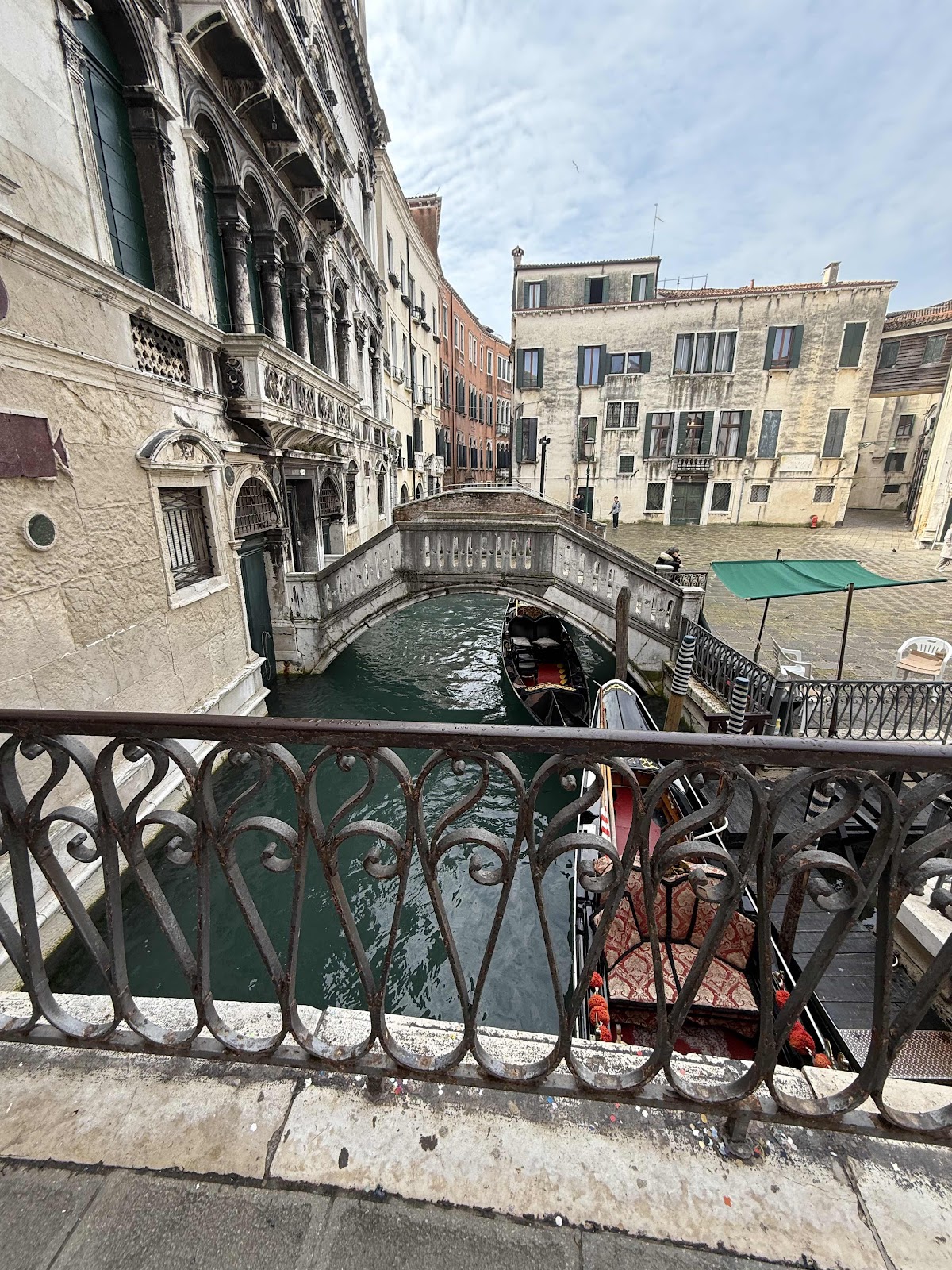
Venice is famous for its bridges, and there are over 400 of them connecting the city’s islands and crossing its canals. Each bridge is unique, and many of them are made from stone, which is an important part of Venice’s history and architecture. The stones used for these bridges were brought from nearby areas like the mainland of Italy and other parts of the Venetian Lagoon.
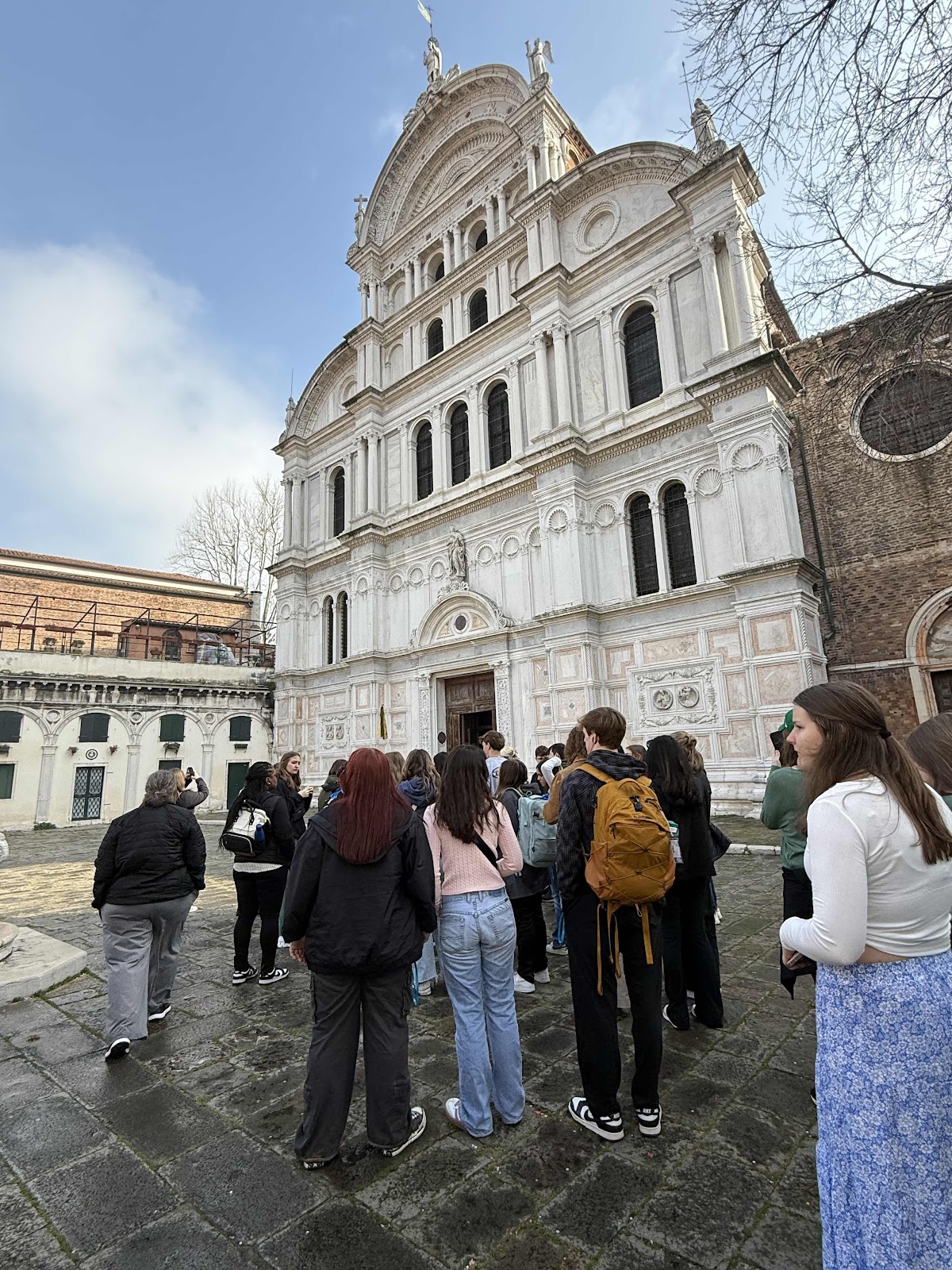
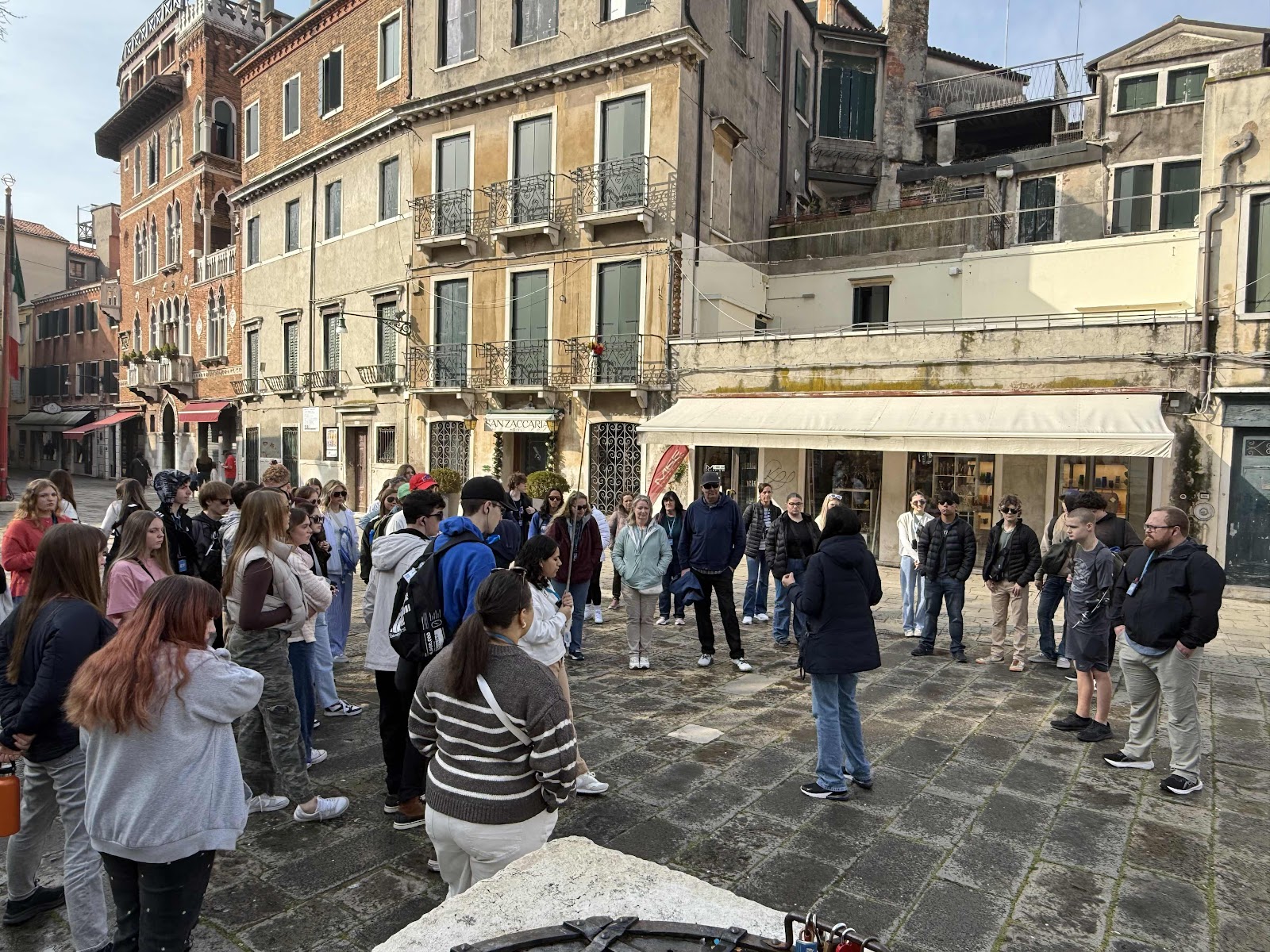
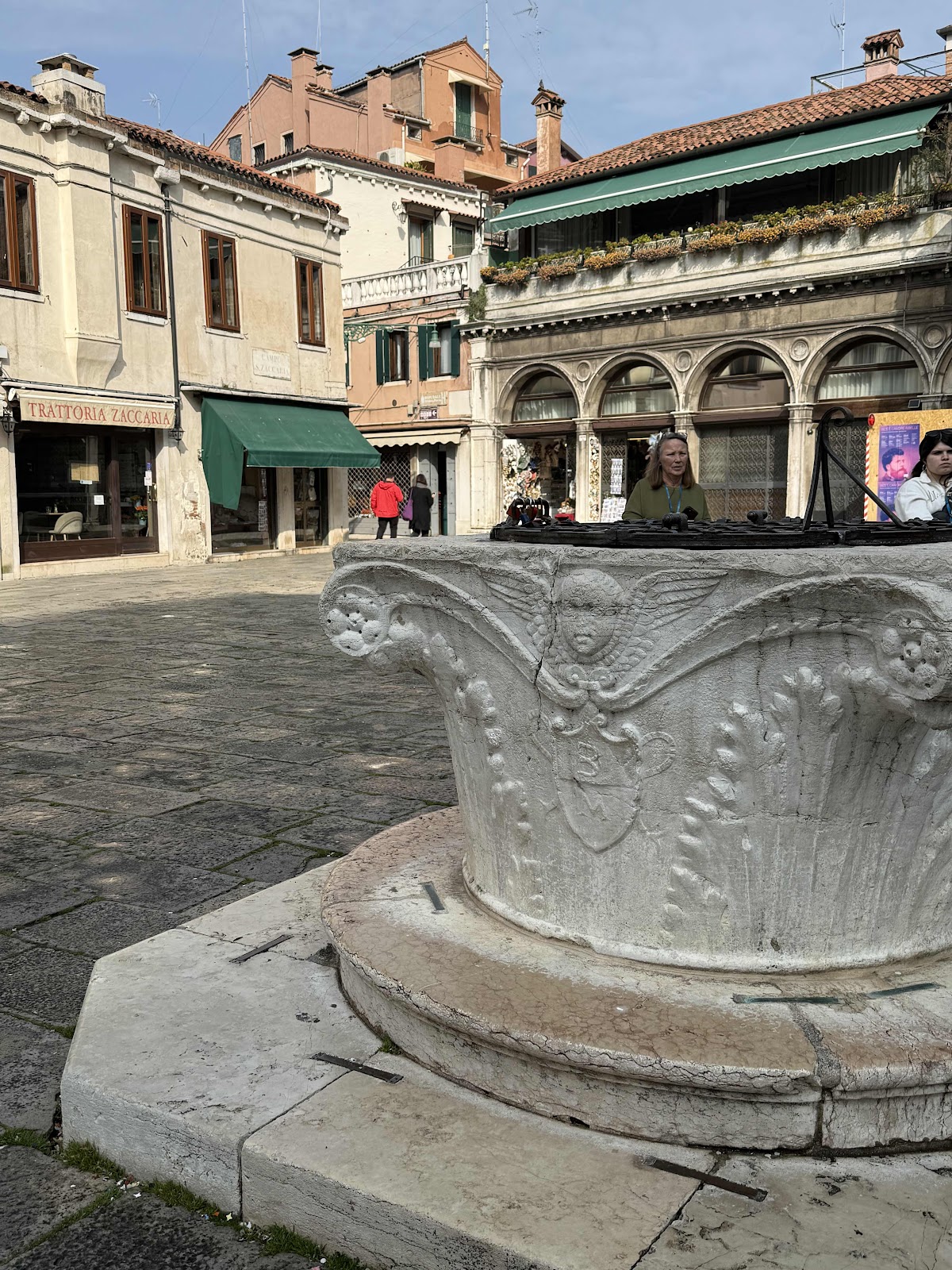
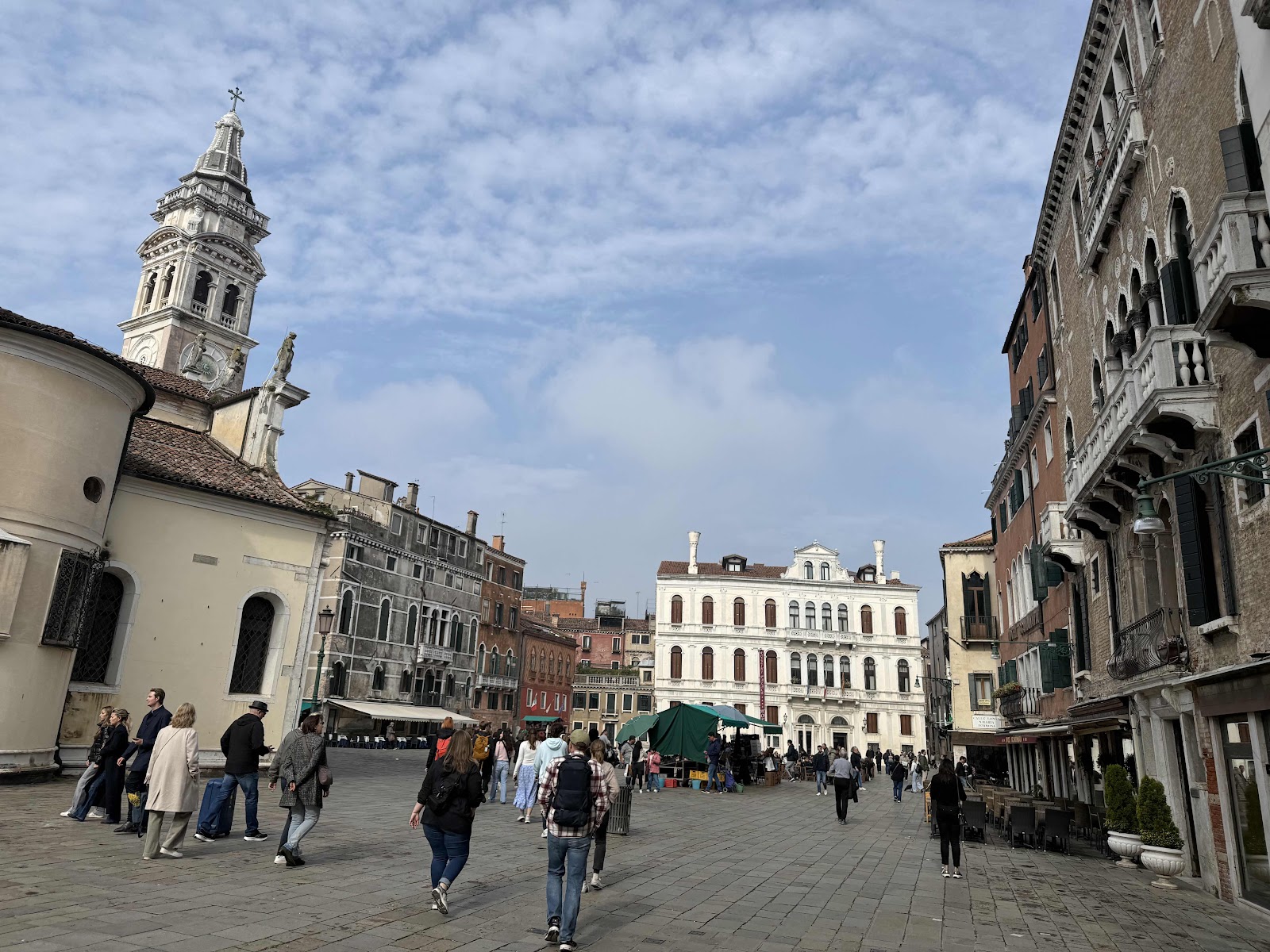
We stopped first at the church in Saint Zachary “square”. In Italian squares are normally called Piazzas - but in Venice they reserve that for only Piazza San Marco All the other squares are called campos. This is also where you find fountains for drinking. Our tour guide told us this water is incredibly clear and pure from the nearby Dolomite Mountains. So it’s free for drinking water, but we have to pay to use the public restrooms ($1.50)!
There are six “districts in Venice and as you pass from one to the next you pass through a stone arch like this one.
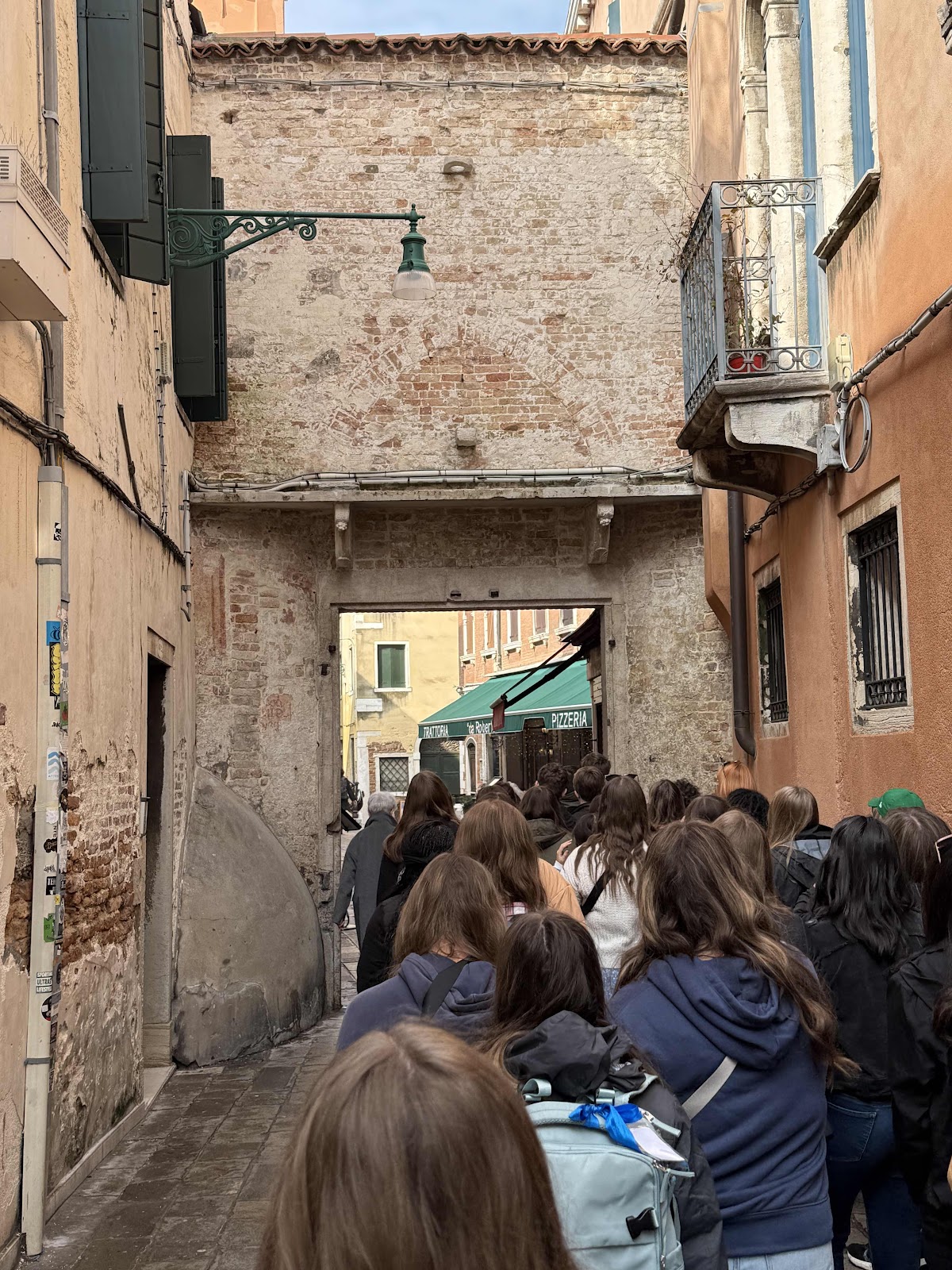
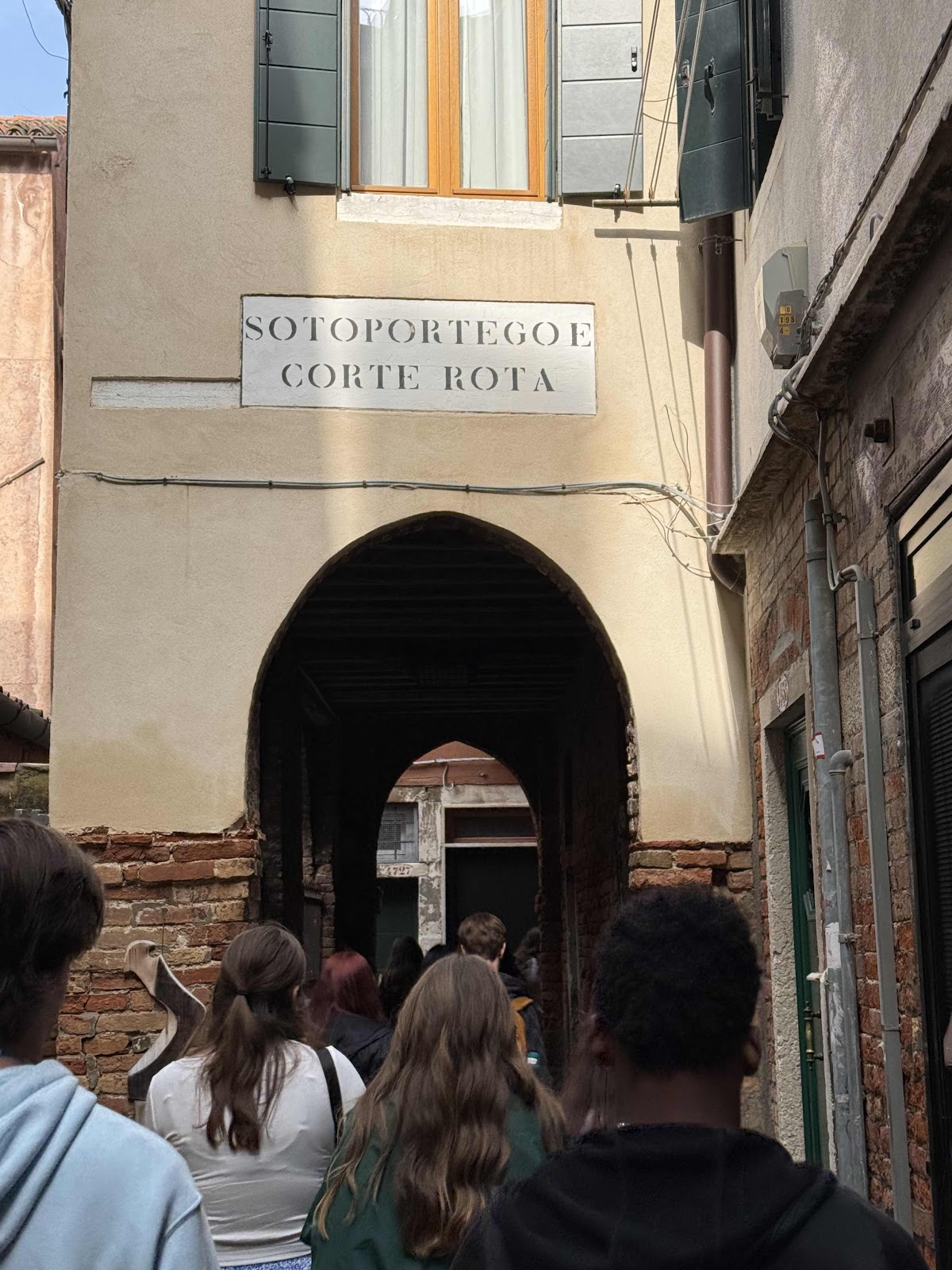
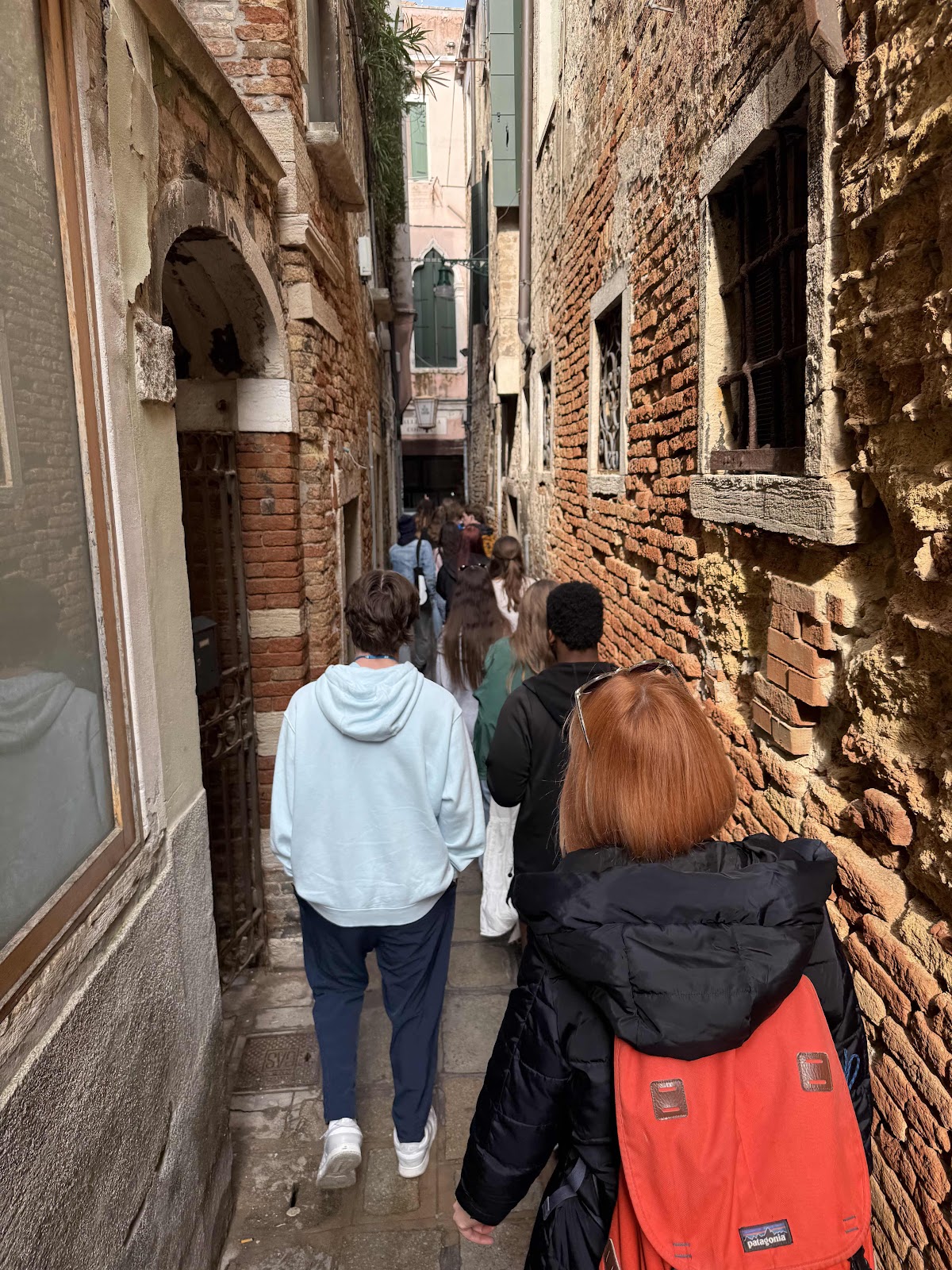
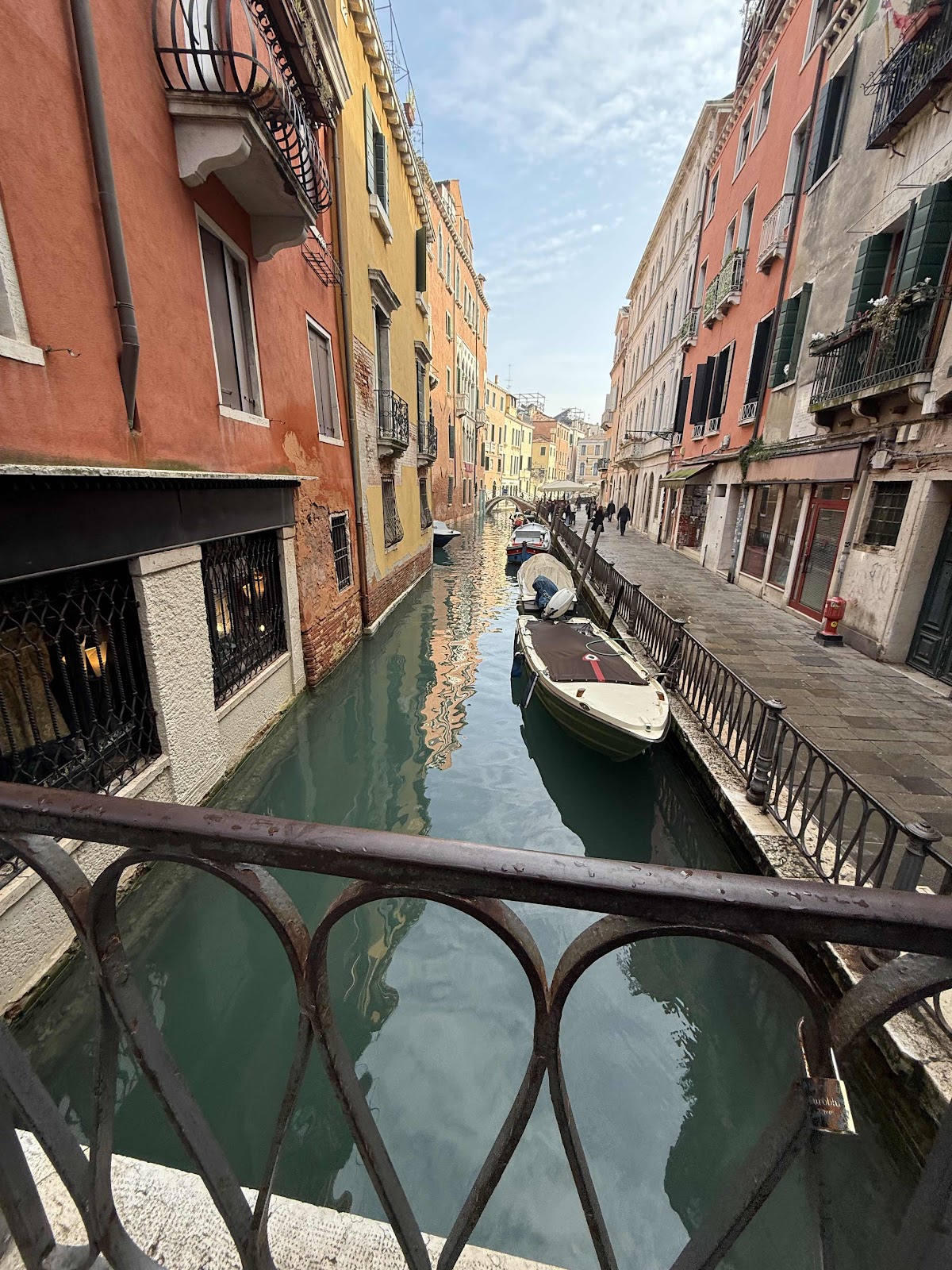
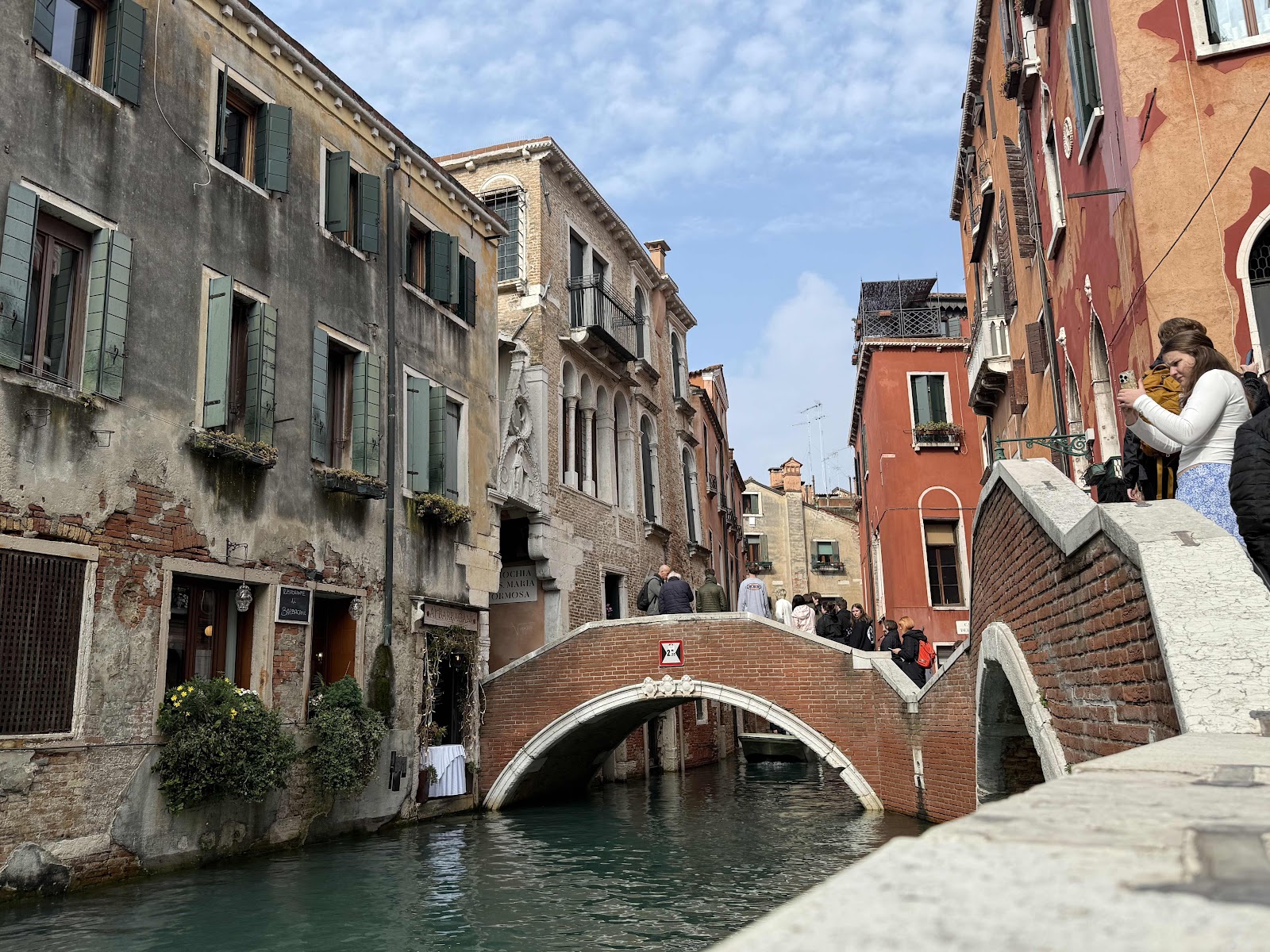
As we get deeper into the city the streets become narrower and little bridges help us pass from area to area.
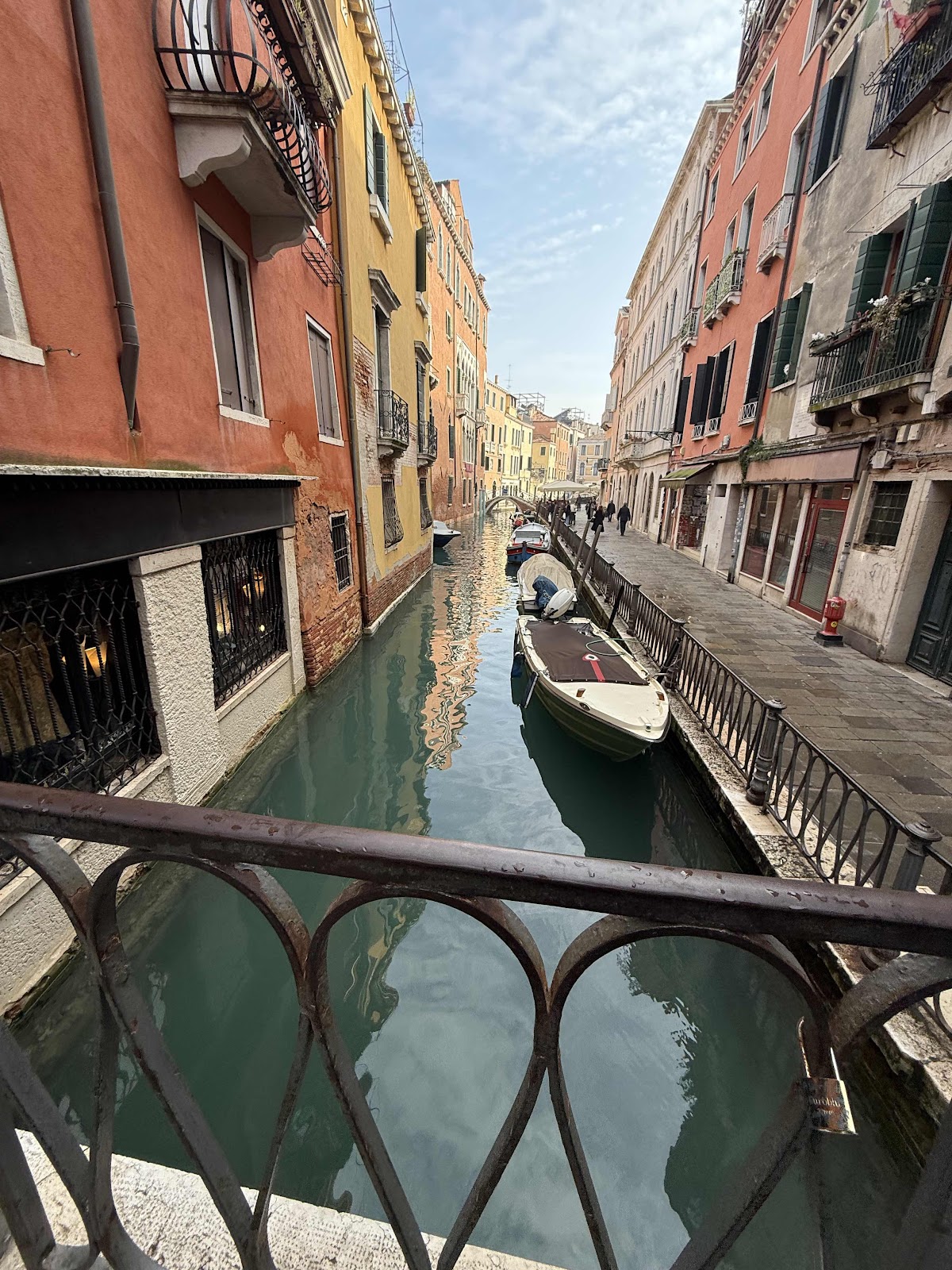
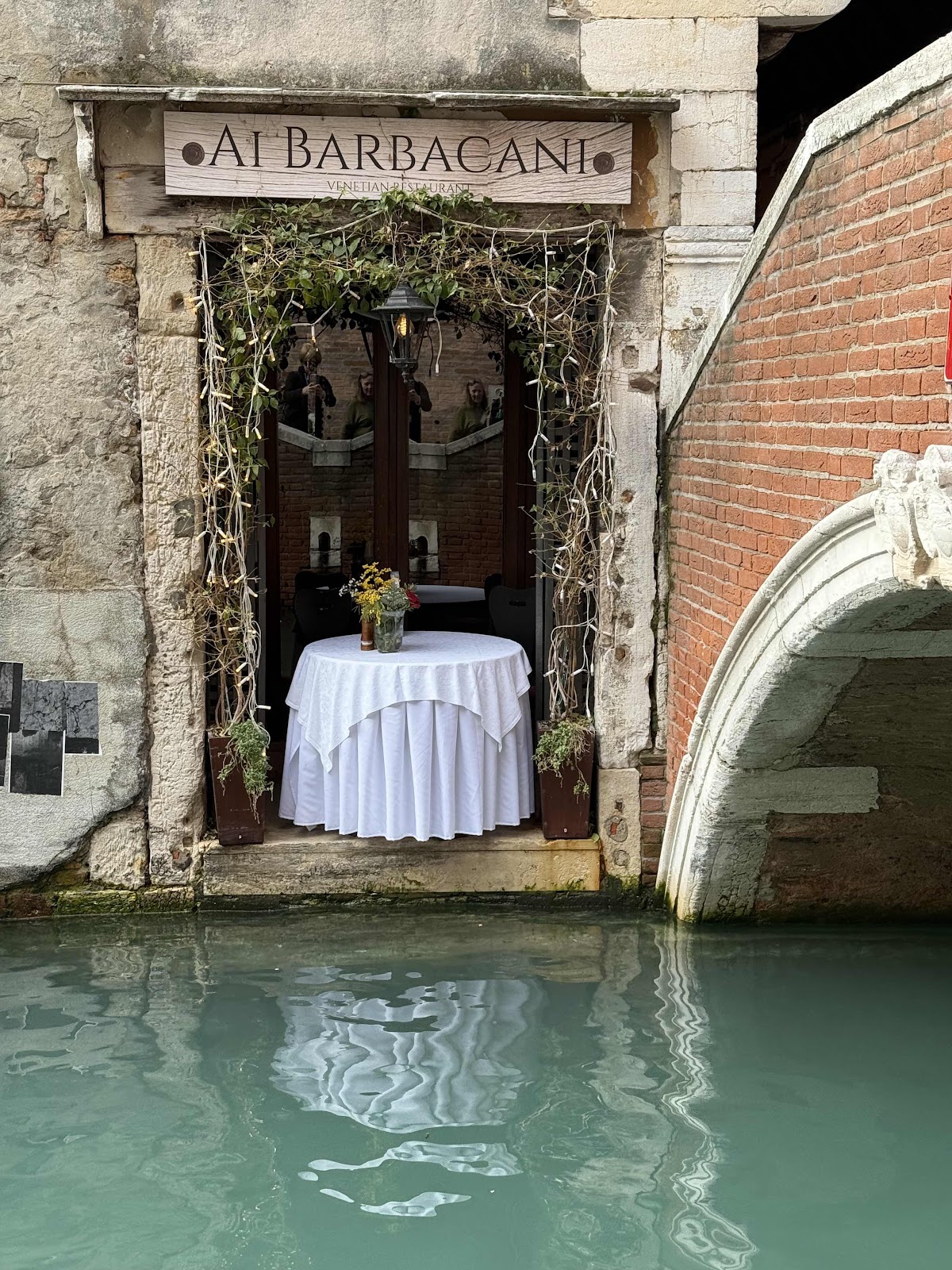
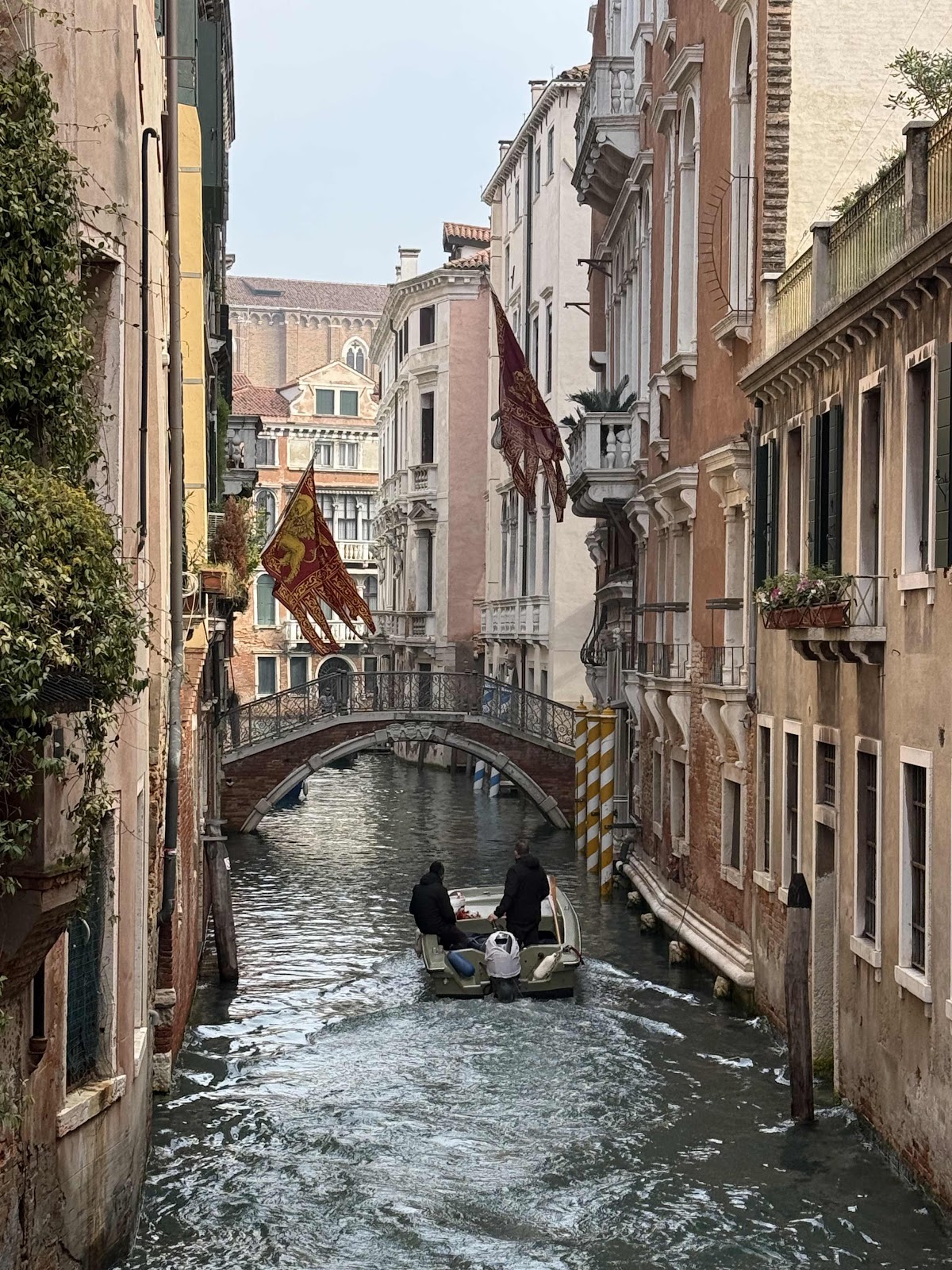
There are 150 “rios” which is what they call the canals.
The island is full of gelato which is the official sweet of the republic. There are even schools to teachhow to make gelato!
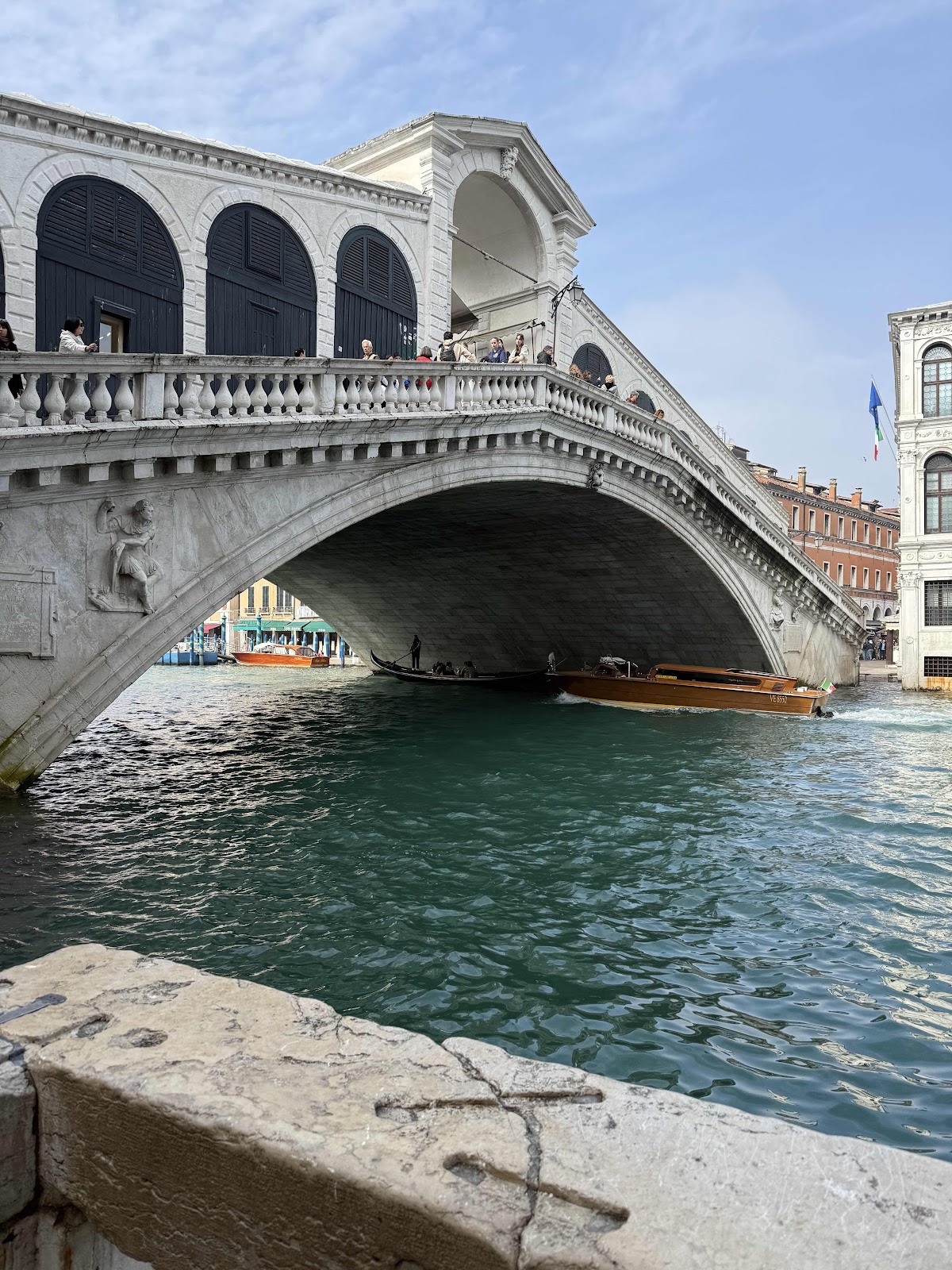
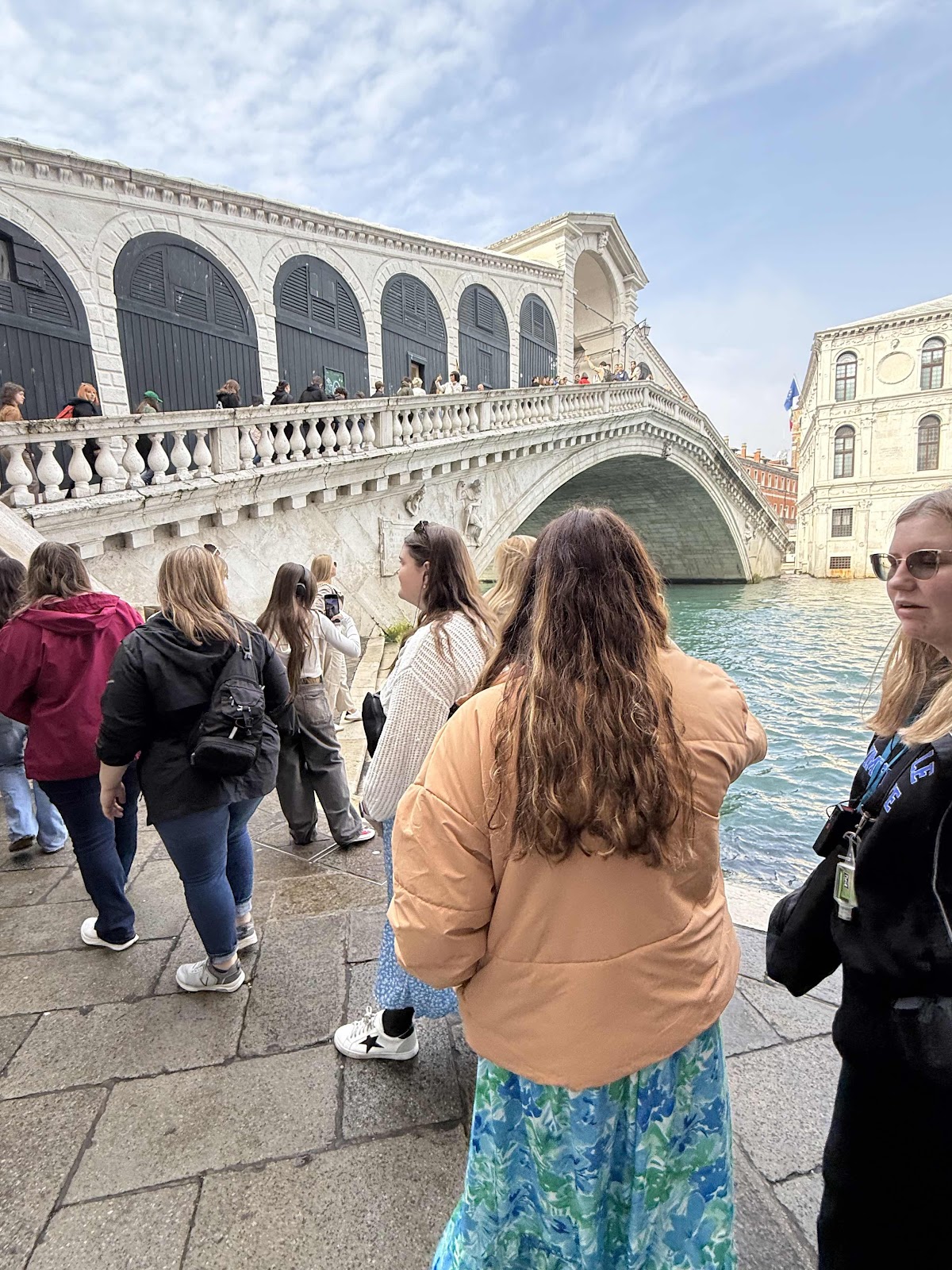
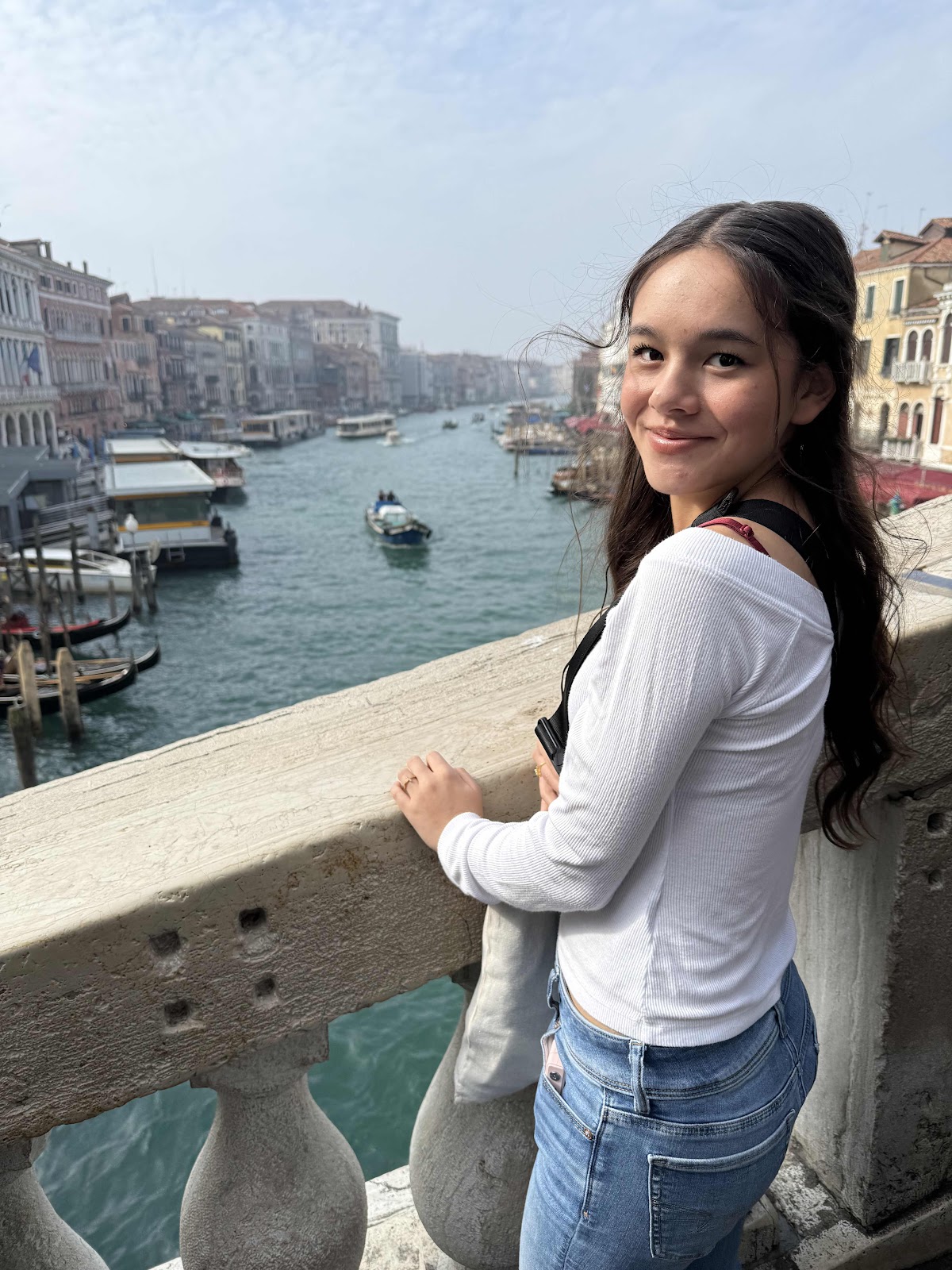
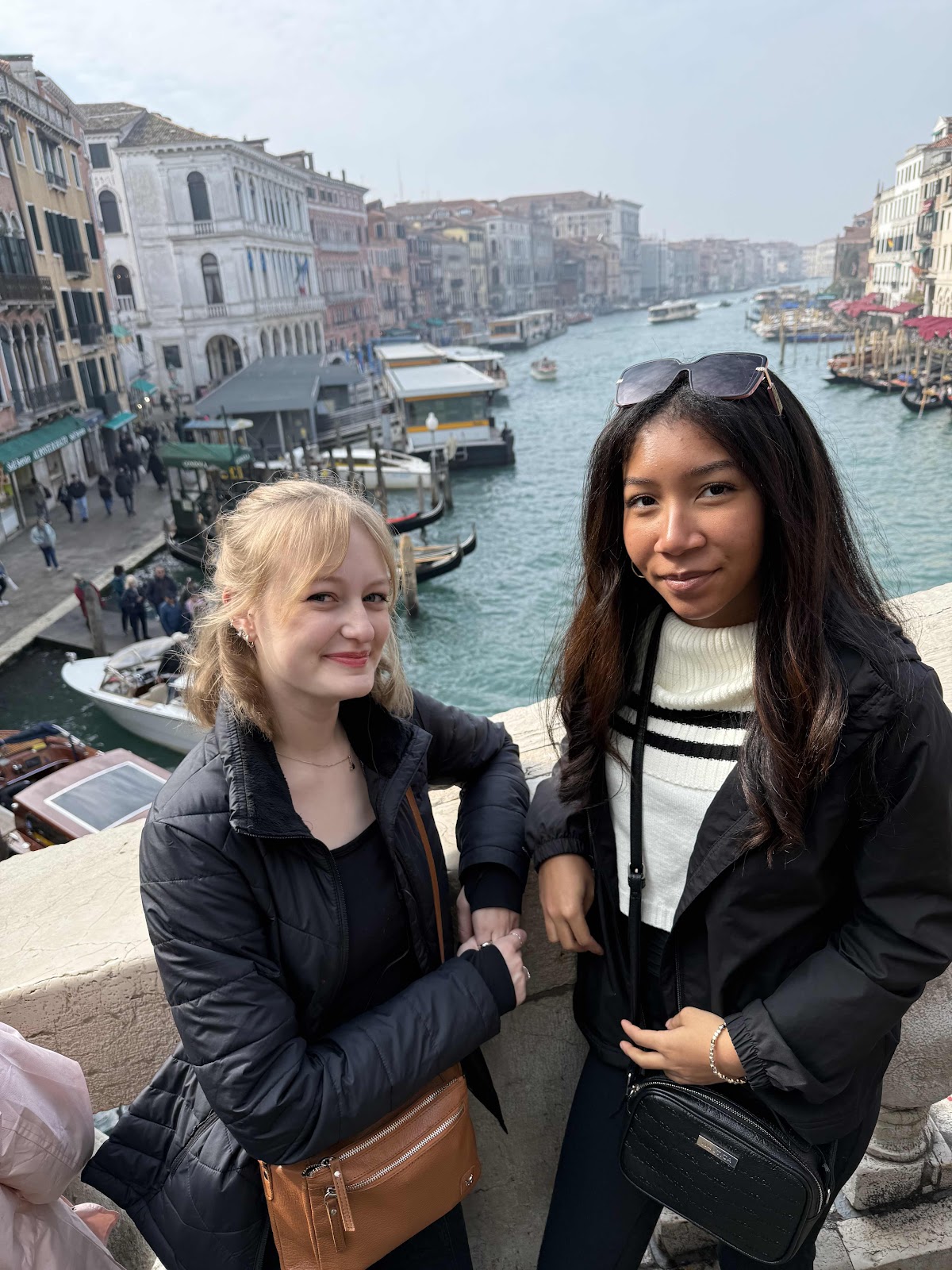
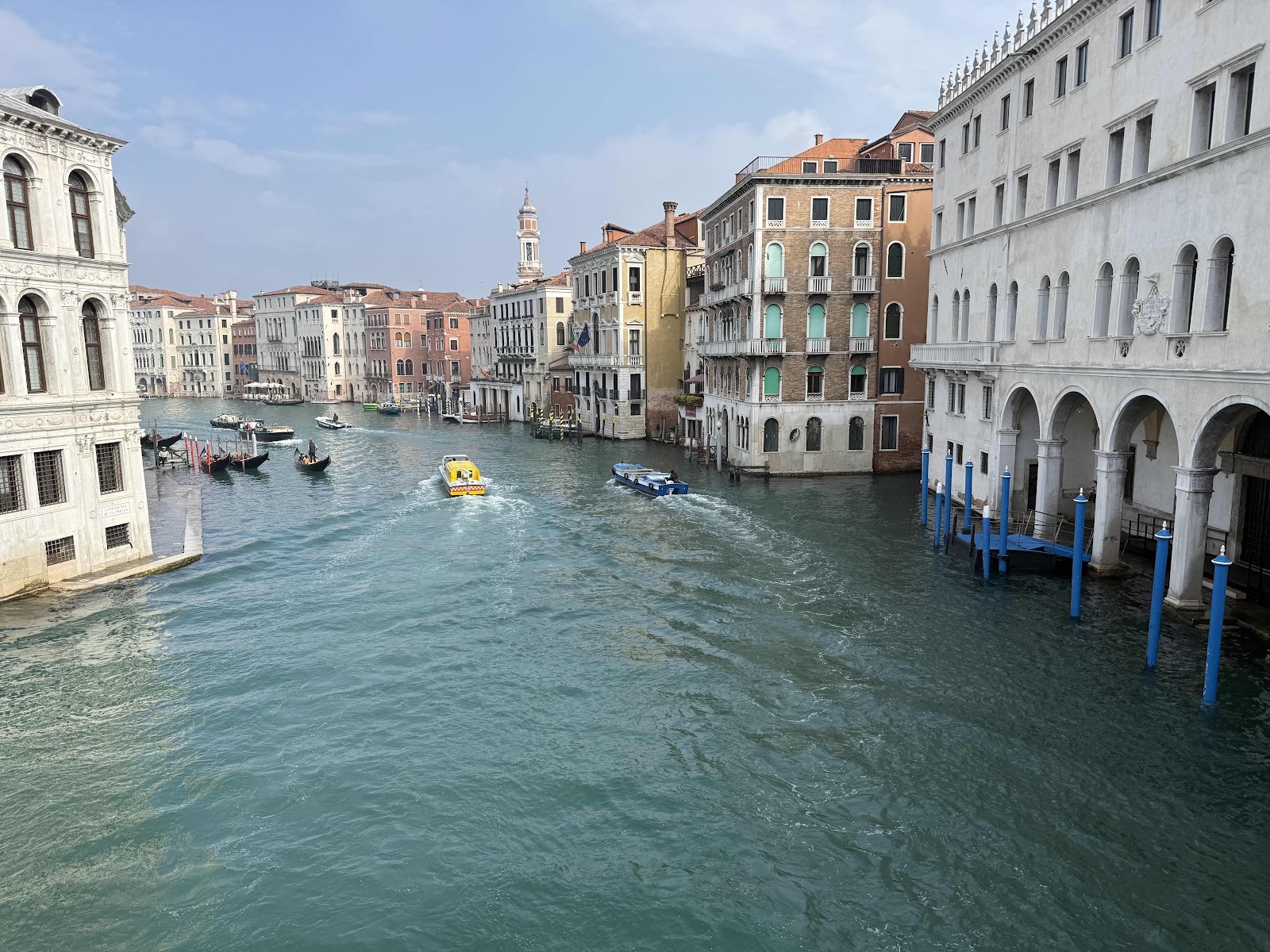
We crossed over to Rialto bridge which was the first one built in the district that wasn’t a wooden bridge. Underneath it runs the Grand Canal which is the main road in the city.
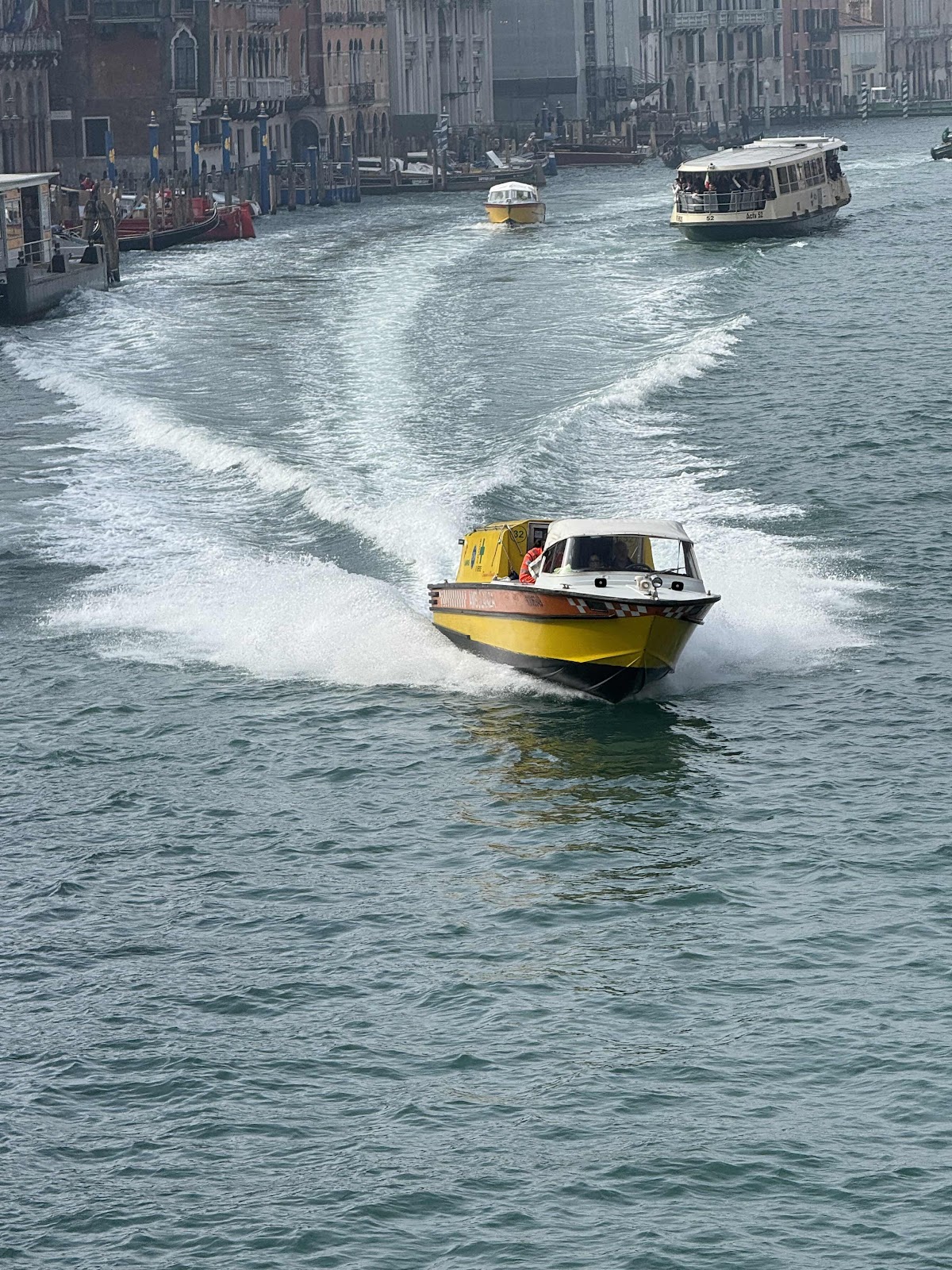
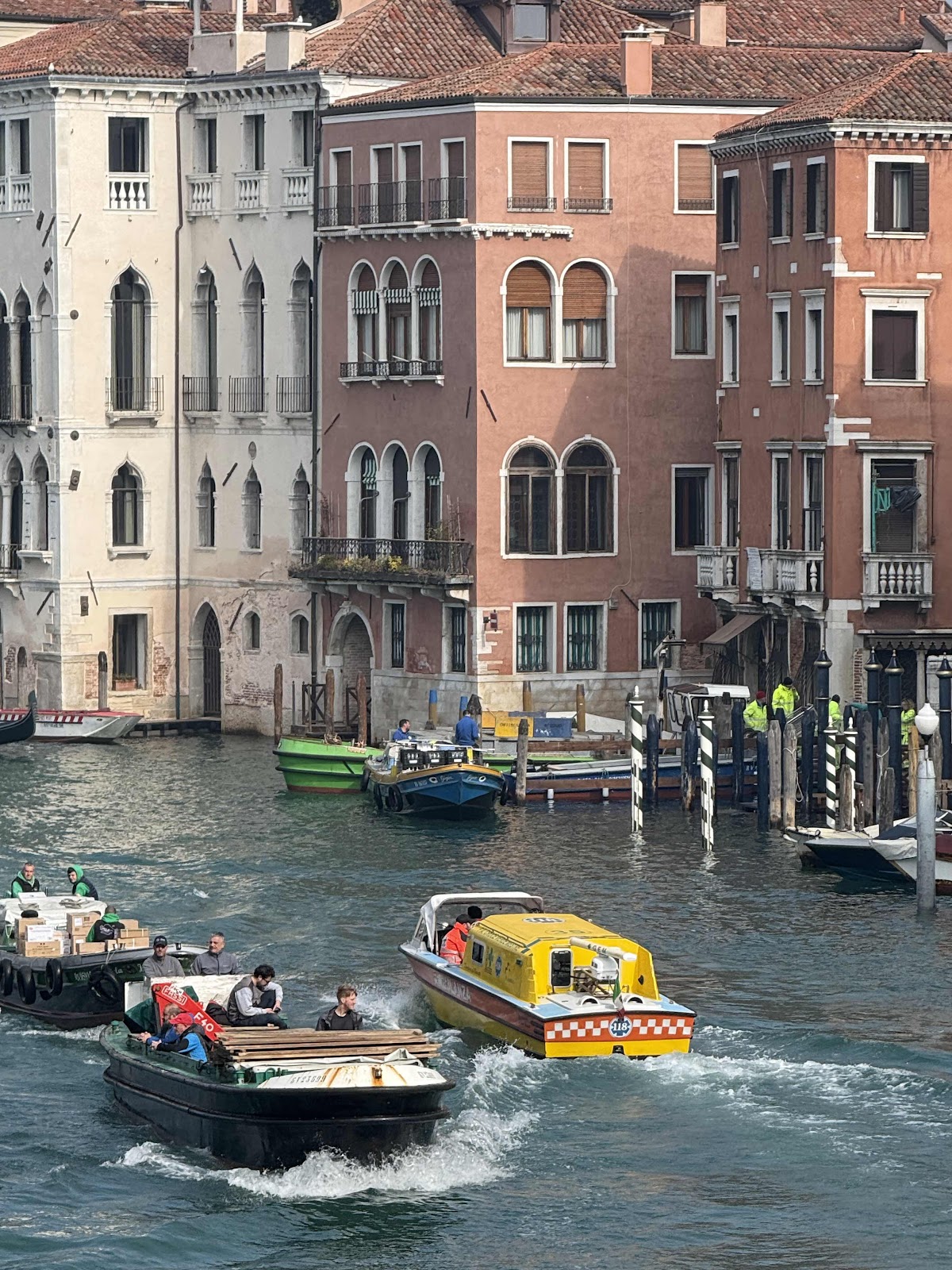
The yellow boat is an ambulance boat! When it comes through everyone has to stop just like on the road!
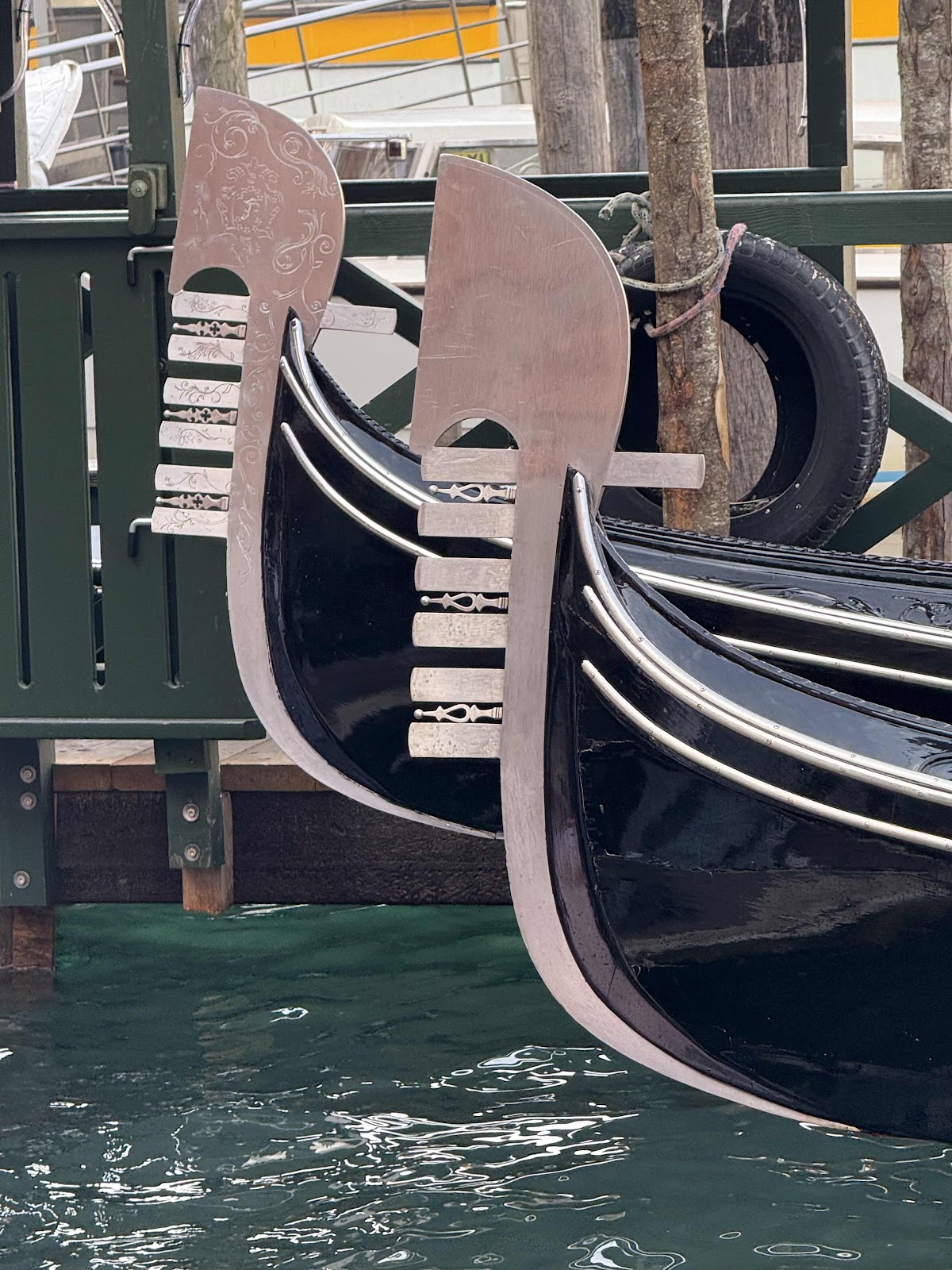
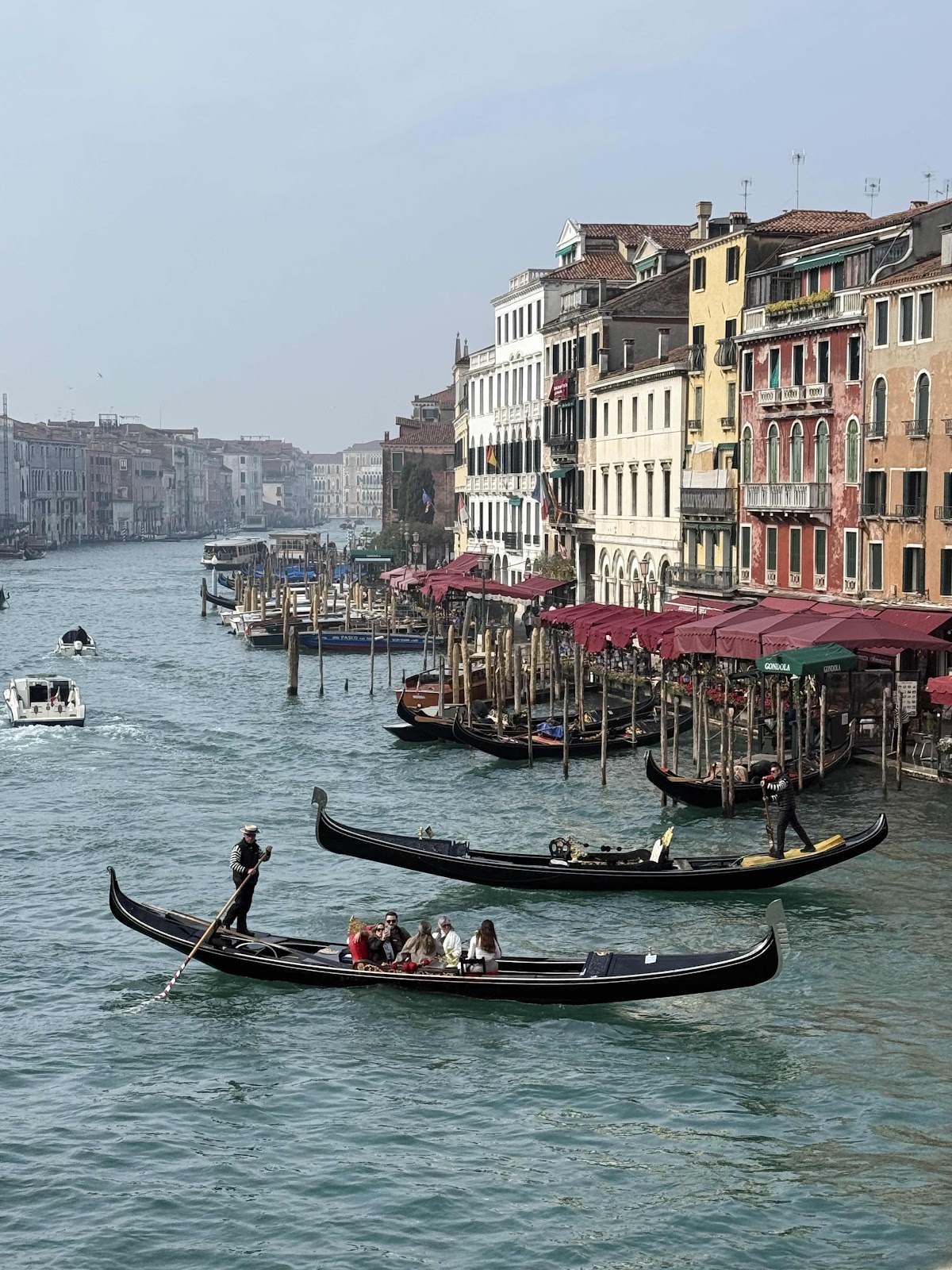
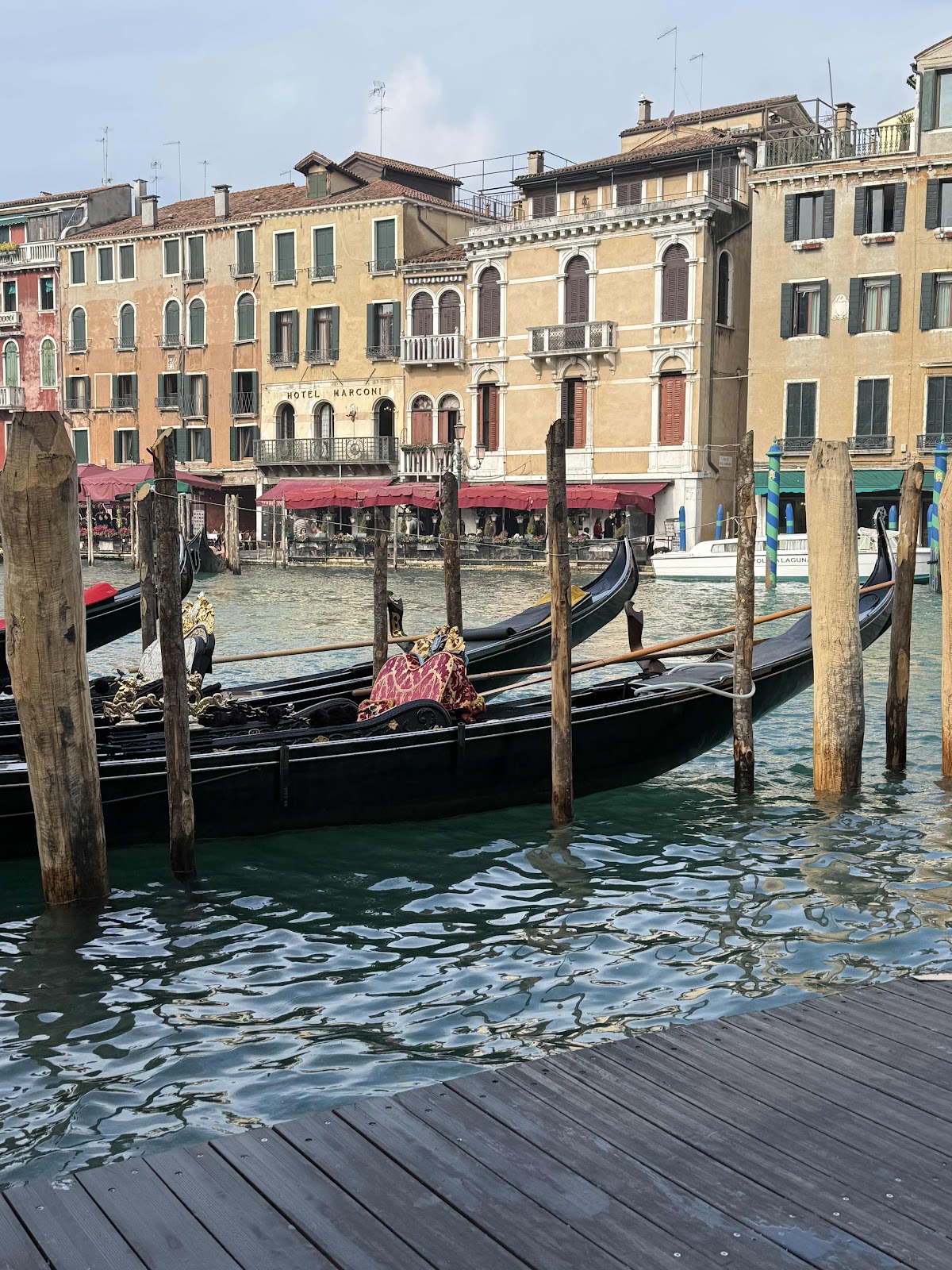
Gondolas used to many different colors and have always served as water taxis. But after the plague in the 1600s, the government pained them all black and now they are still black. Gondoliers have to have special training for at least two years and learn at least two languages, then pass an examination. Each gondola for the Grand Canal can hold five people plus the gondolier.
The lacy lines on the front of thegondola represent the islands around a Venice as well as the Rialto bridge (the arch at top). This very front of the gondola represents important parts of Venetian history.
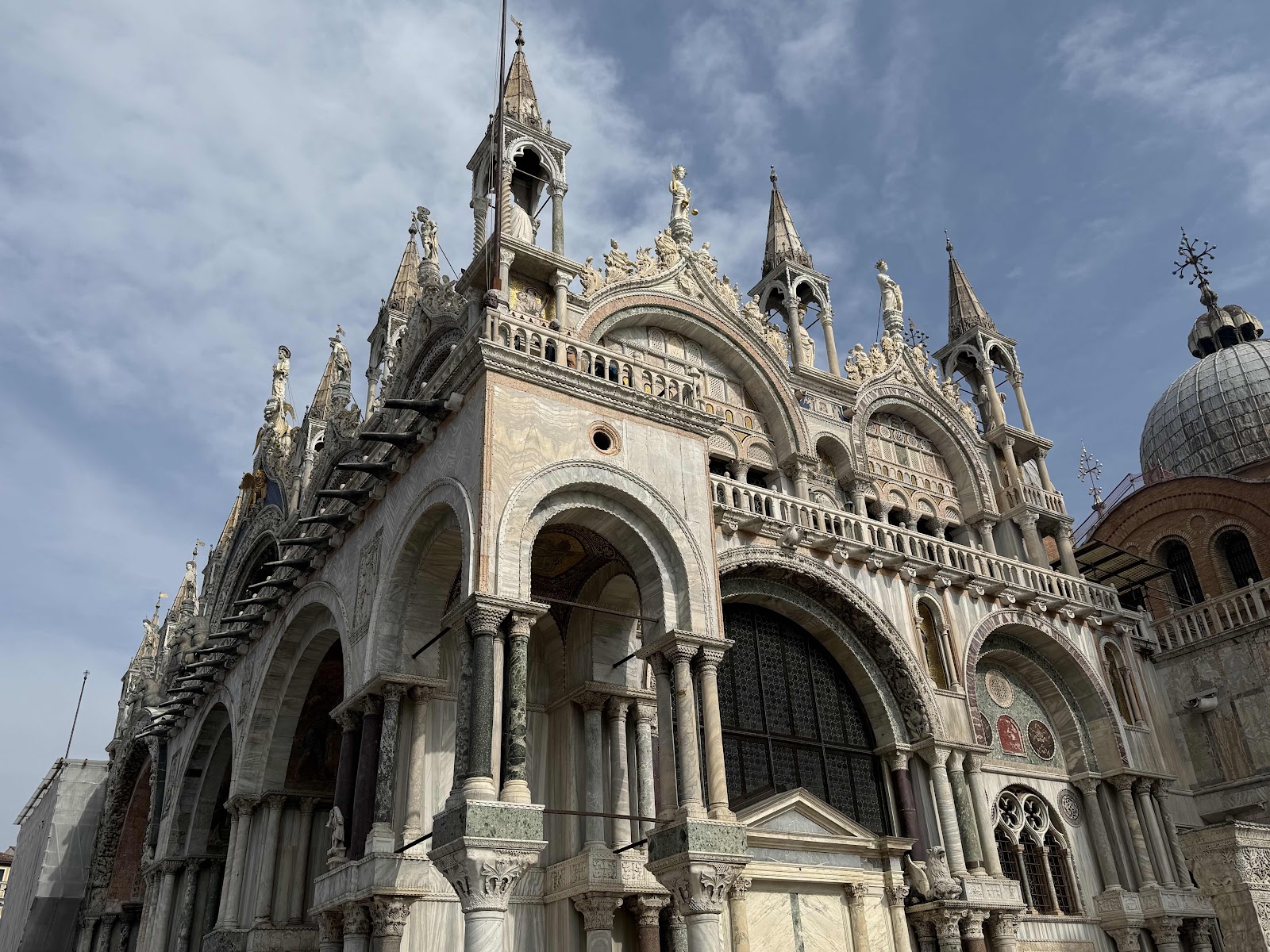
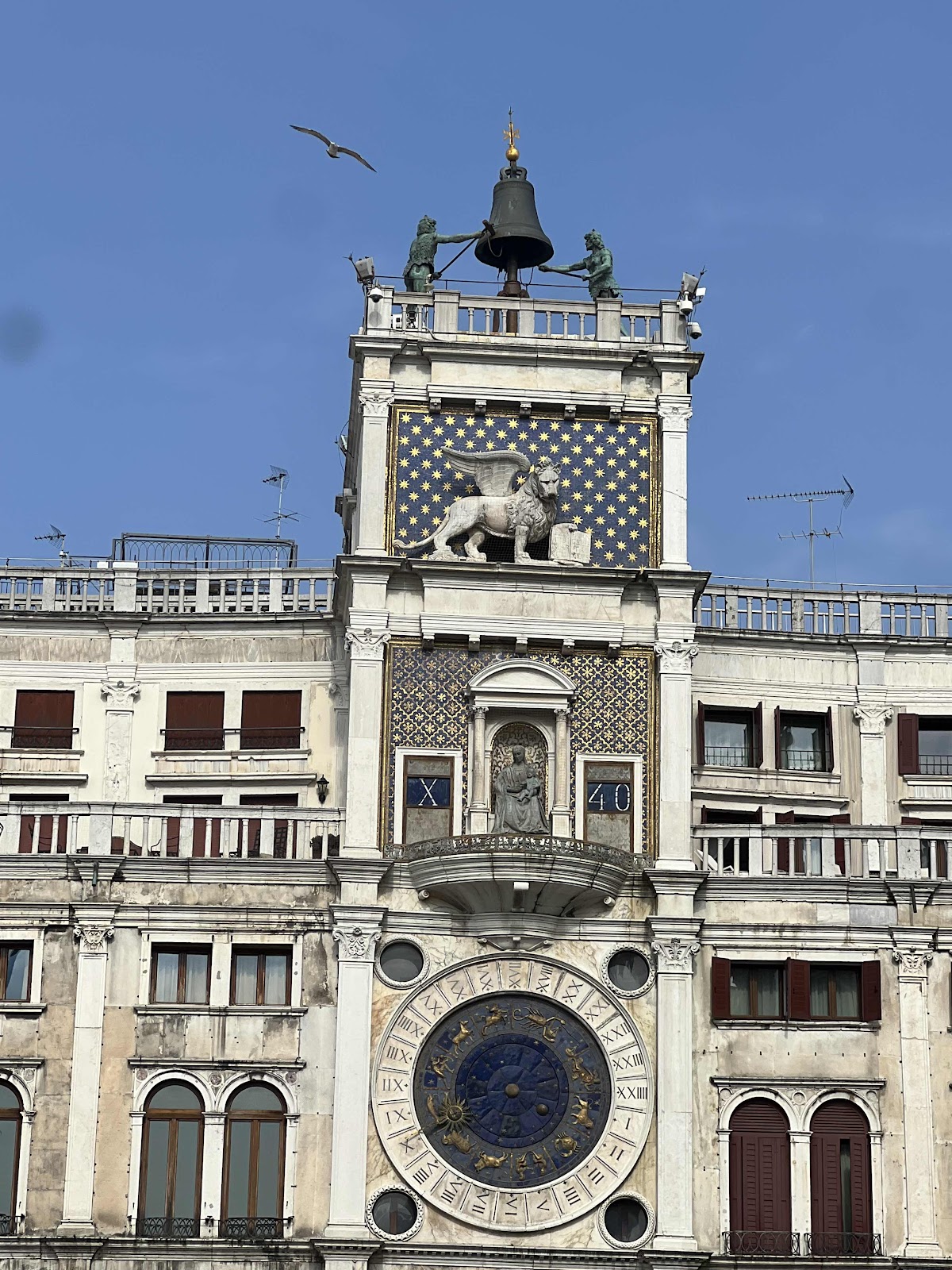
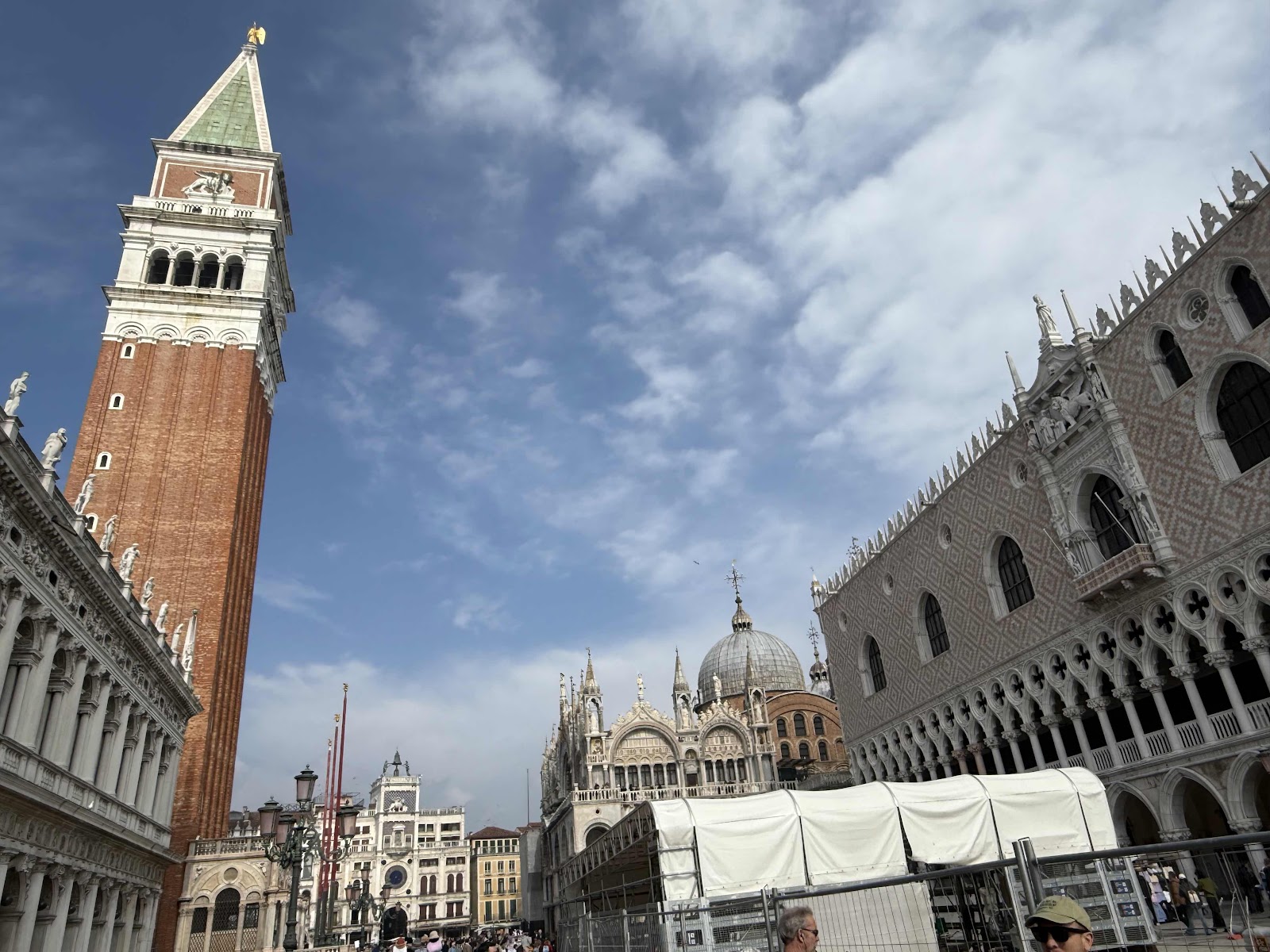
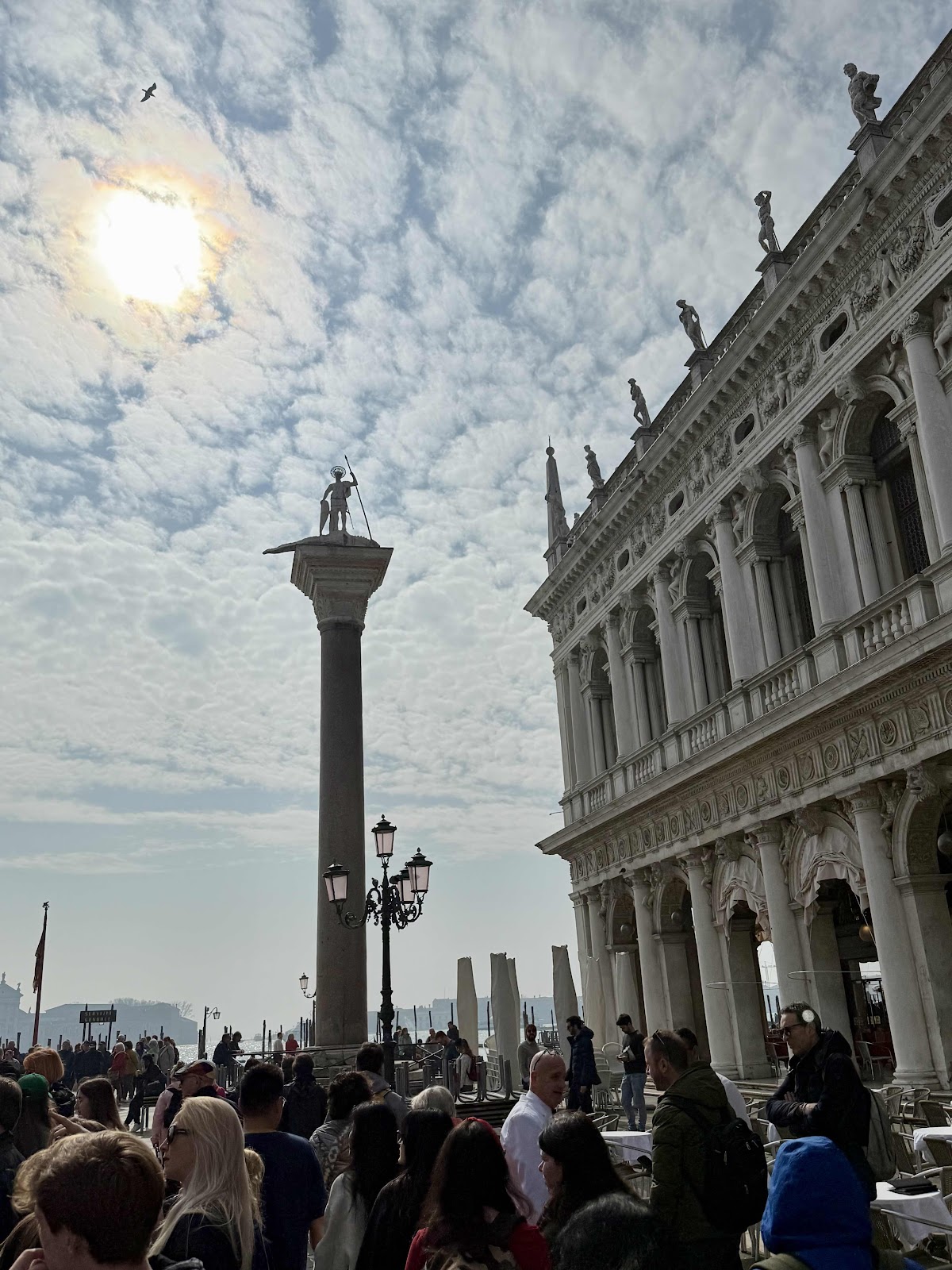
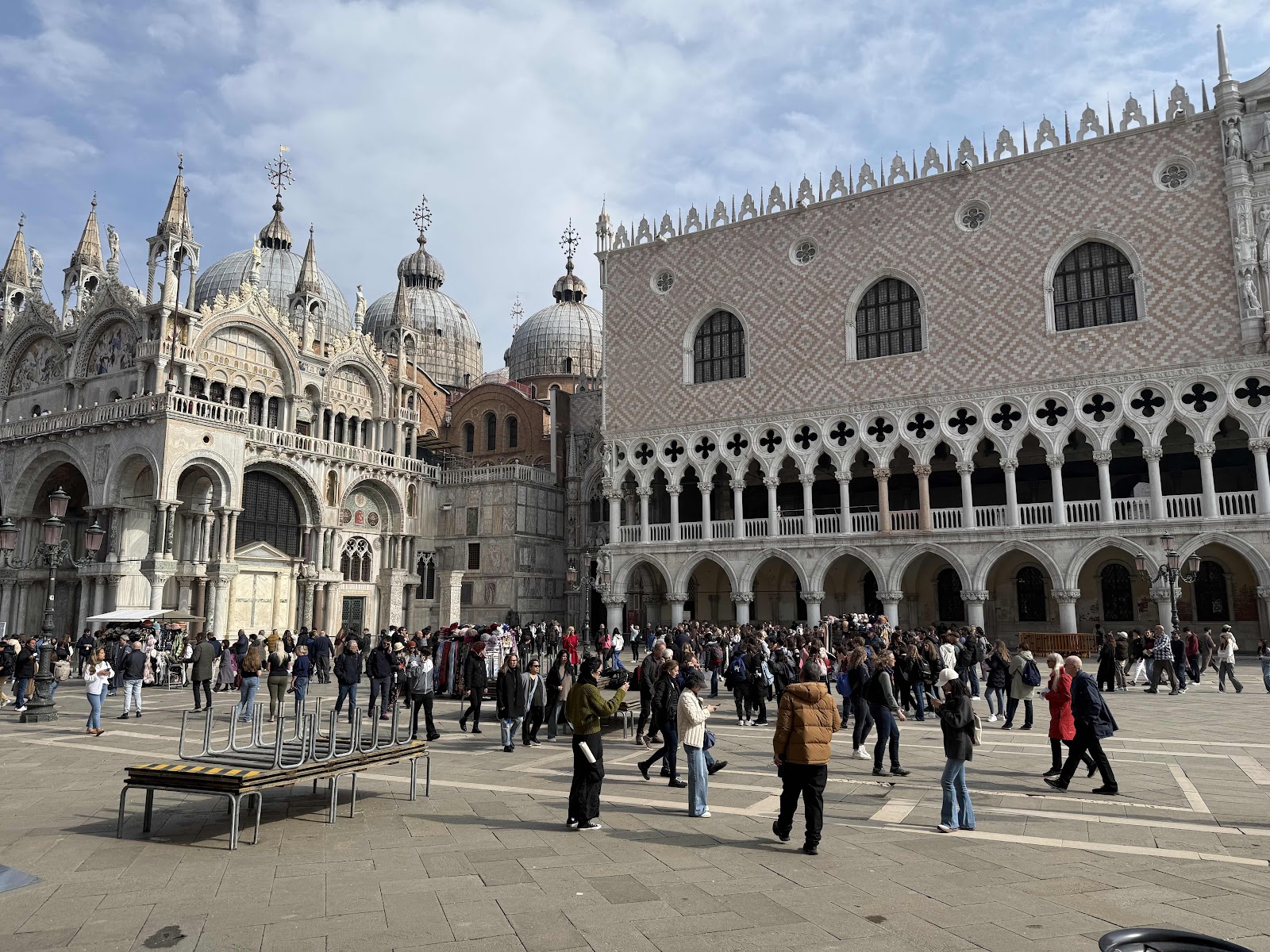
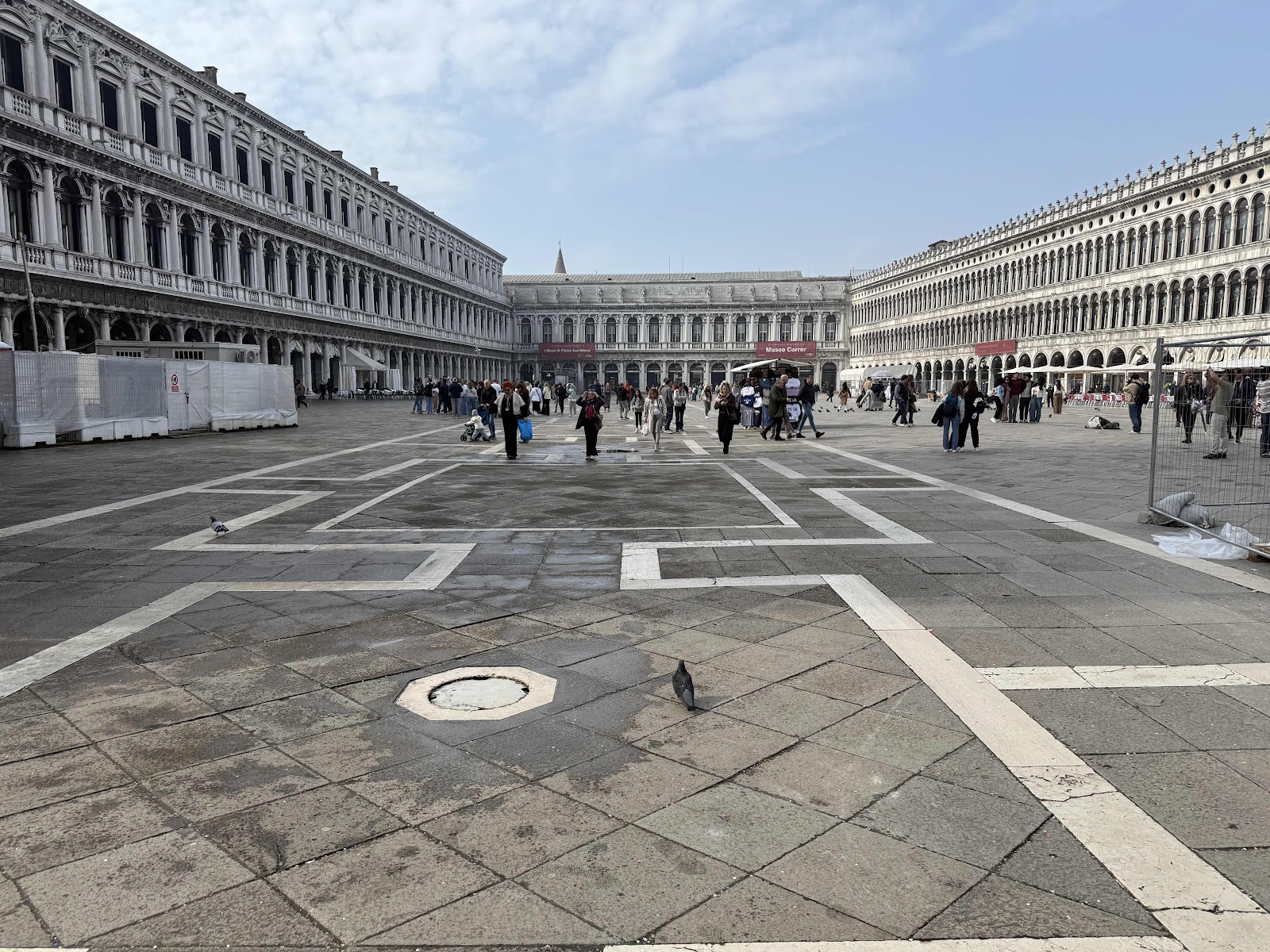
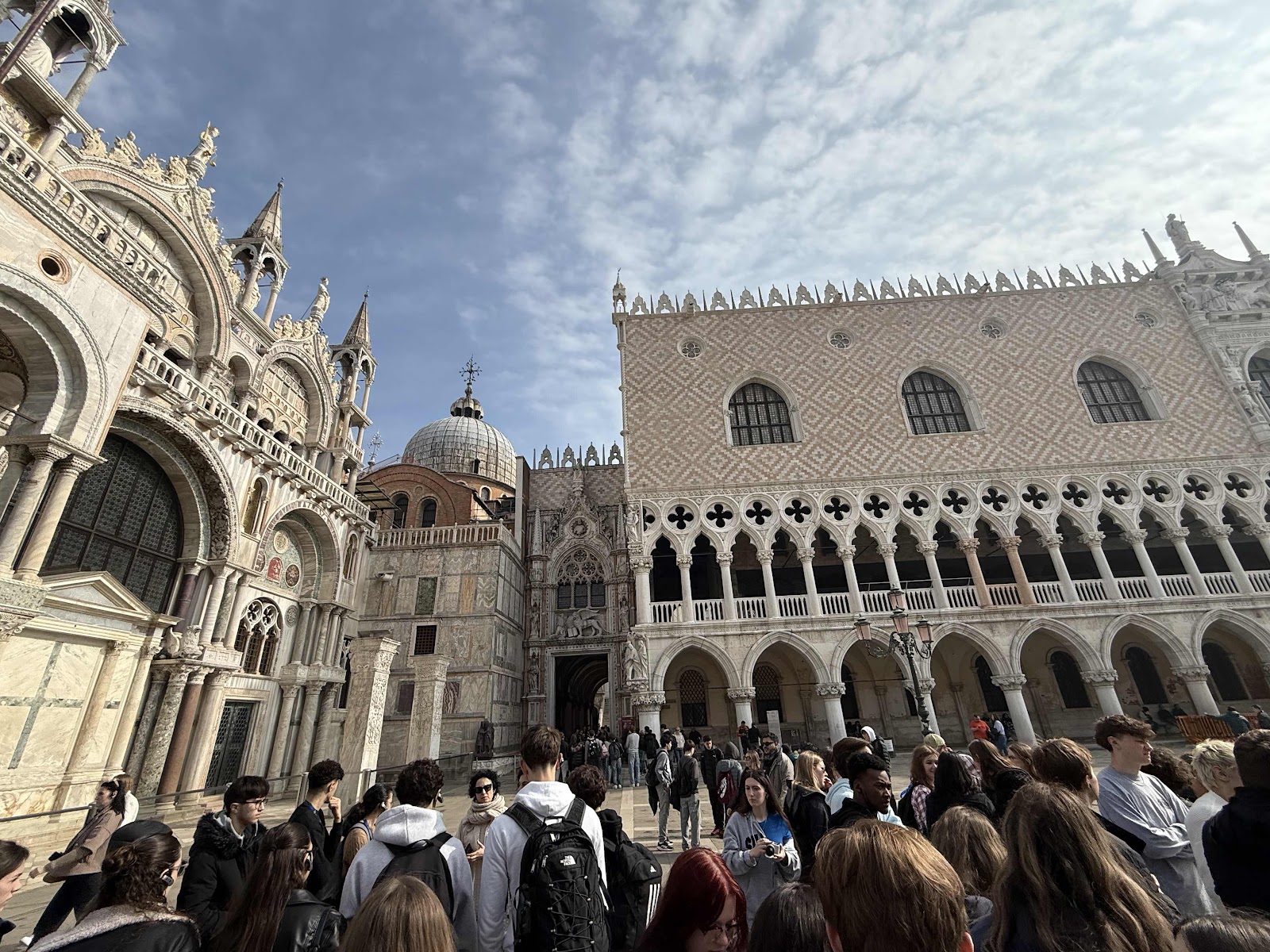
We wound through the narrow streets and shopping district to Saint Mark’s Square. It was built in 1400 and the site of several executions and one of the first prisons in the city. It is one of the biggest squares in
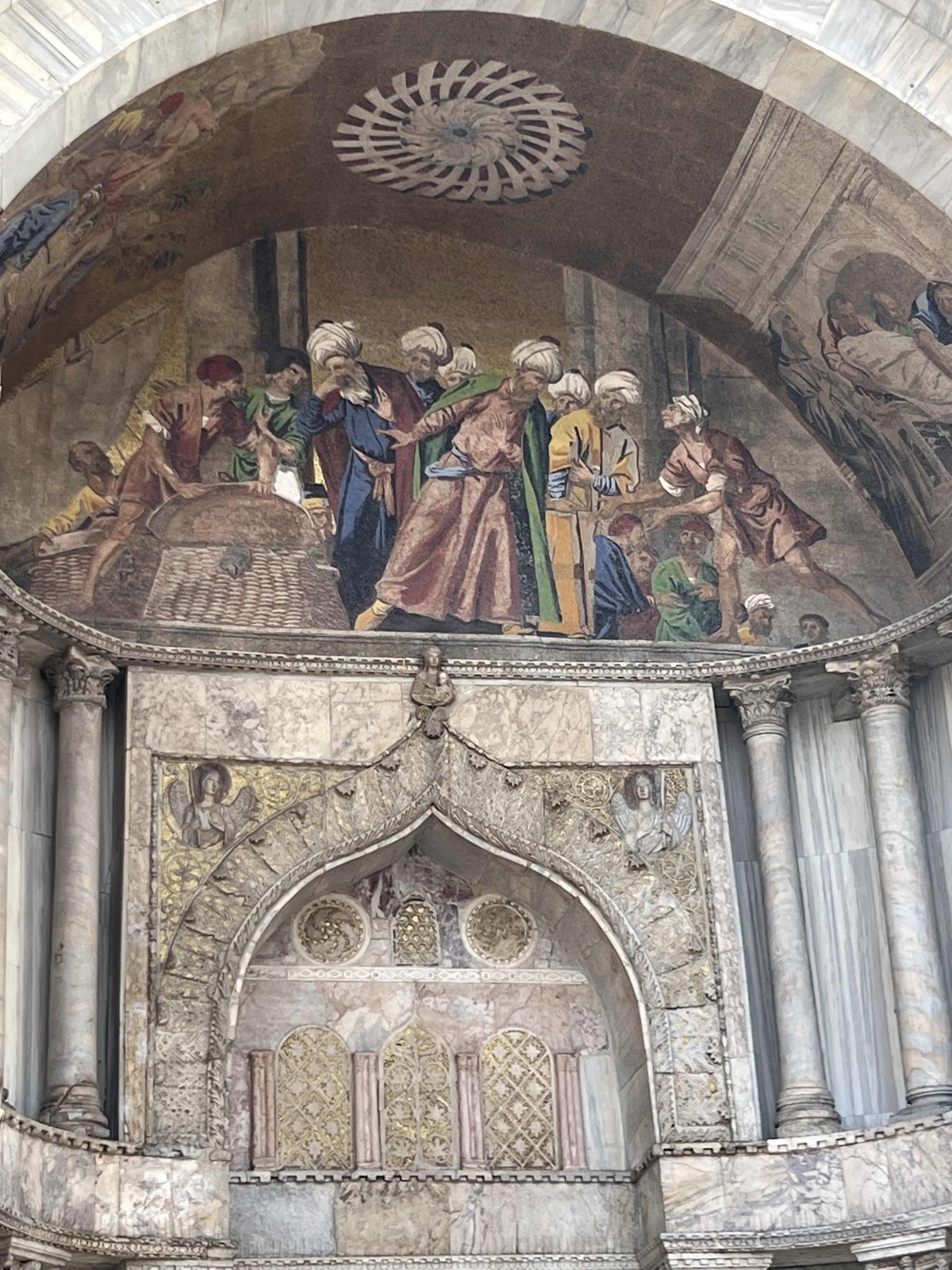
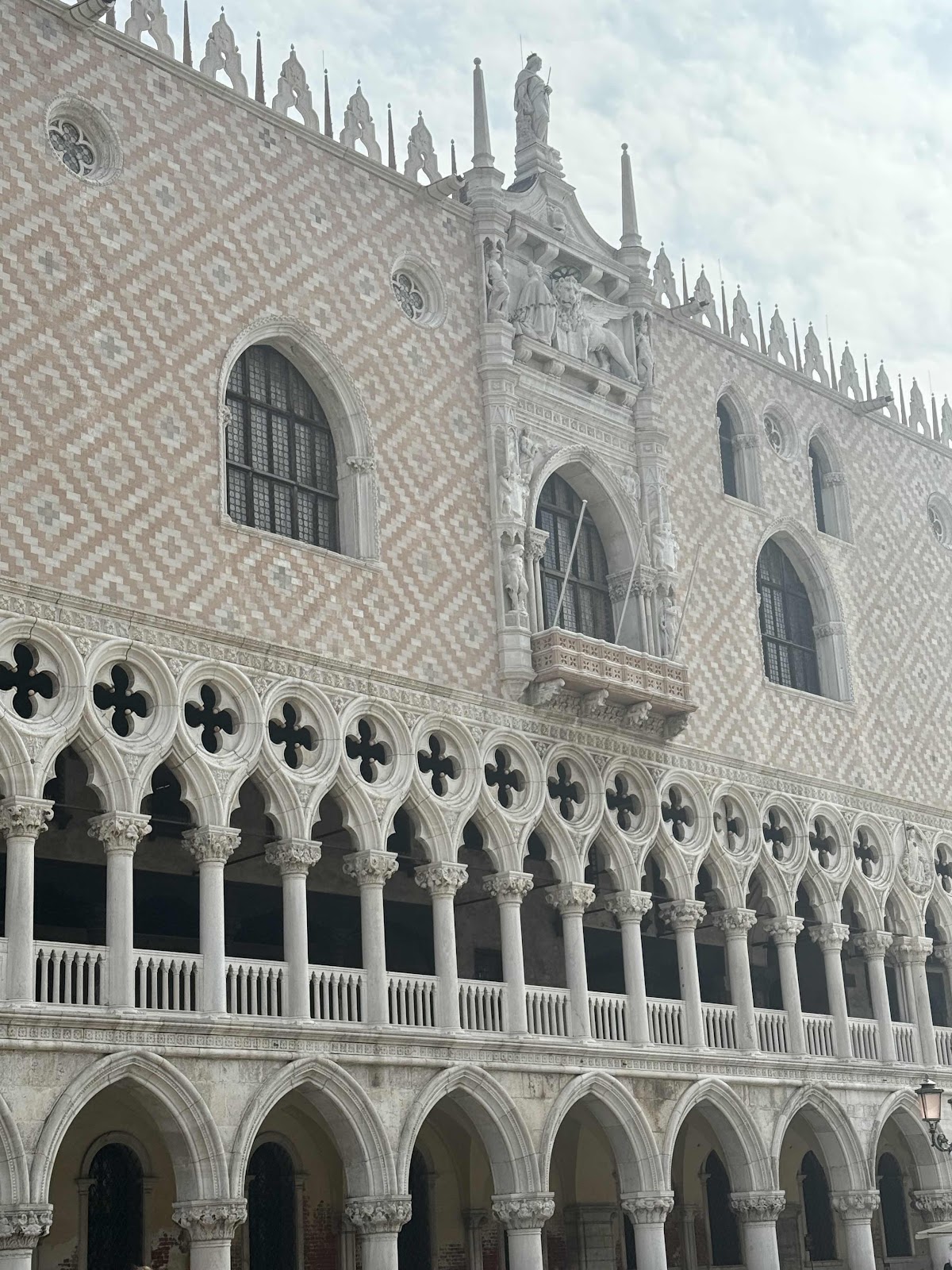
Europe. It was the seat of the government, called the Doge, and the courts, as well as the Basilica of Saint Mark. The tall columns and tile here are typical of Islamic/Spanish Renaissance architecture, there really is quite a mix of architecture styles throughout the whole square!Italians smuggled Saint mark’s body out of Egypt by telling the Muslims that they were moving a basket of pork. Since the Muslims would not touch it, they were successful! That’s what’s seen in this illustration.
Building Piazza San Marco in Venice took centuries, with construction beginning as early as the 9th century, with the main structures around it being built and expanded over several hundred years. It wasn’t a quick project—more like a long, ongoing effort to make the square the center of Venetian power, culture, and religion.
As for the Doge, he was the elected ruler of Venice for over a thousand years! The title “Doge” comes from the Latin word for “leader,” and the Doge was the head of both the government and the military. Unlike kings, Doges were elected by a group of noblemen, kind of like electing a Pope
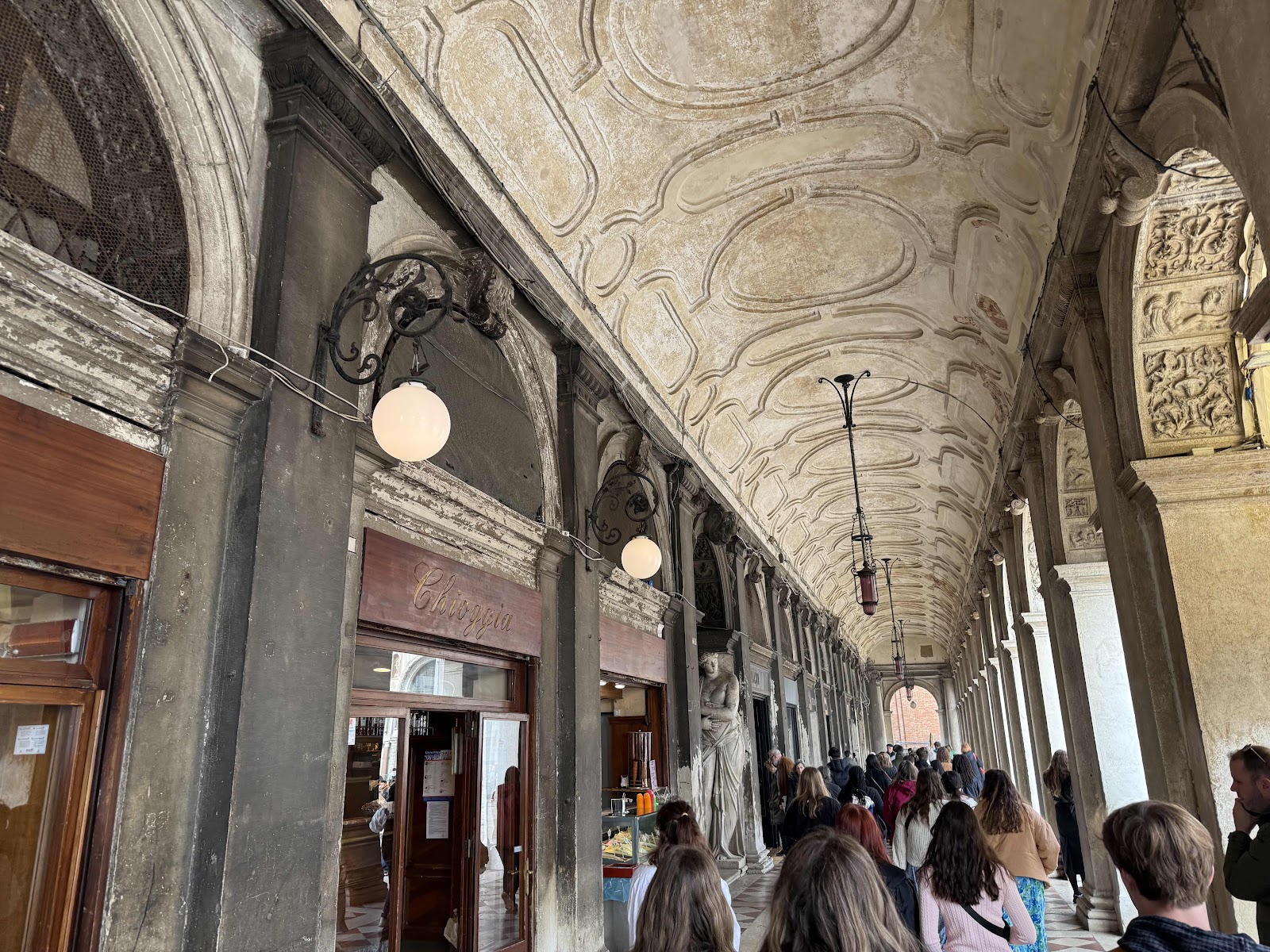
Don’t you wish all walkways were this scenic??
Next up - gondola ride! Check the Instagram for more photos of our kids on the move is this beautiful city!!


No comments:
Post a Comment